NIS2 Compliance Checklist: 2026 Guide for EU CISOs and DPOs
In today’s Brussels briefing, regulators repeated a message I’ve heard all spring: NIS2 enforcement is no longer a paper exercise. If you’re still assembling your NIS2 compliance checklist, you’re already on the clock. With committee debates on tech independence intensifying, fresh reports of mass credential harvesting against network edge devices, and growing scrutiny of vendor data-sharing, 2026 is the year boards expect measurable resilience, not slide decks.
Why NIS2 compliance is urgent in 2026
- Regulatory momentum: Member State transpositions are in force; supervisory authorities are expanding audits and joint exercises with CSIRTs.
- Breach reality: This week’s reporting on a sweeping credential-harvesting campaign impacting 30,000+ edge devices shows how fast attackers pivot to exposed interfaces.
- Attack-surface sprawl: Security teams cite top exposures including expired TLS, default creds, orphaned services, and misconfigured cloud storage—weak links NIS2 expects you to govern.
- Vendor risk in focus: High-profile NGO–tech partnerships rekindle questions about DPIAs, oversight of analytics platforms, and cross-border data sharing—areas where NIS2 and GDPR intersect.
- Material penalties: NIS2 allows fines up to €10 million or 2% of global annual turnover (whichever is higher) for essential/important entities; GDPR remains up to €20 million or 4%.
As one CISO told me this month: “We passed the policy test last year. In 2026 we’ll pass—or fail—the evidence test.”
NIS2 compliance checklist: the controls auditors will ask to see
Use this practical NIS2 compliance checklist to structure your program and assemble audit-ready evidence.
- Governance and accountability
- Board-approved cybersecurity strategy with risk appetite, roles, escalation paths, and budget traceability.
- Named accountable executives; training for management on cyber risk obligations and sanctions for non-compliance.
- Asset management and exposure reduction
- Authoritative inventory of hardware, software, data stores, identities, and third-party services—continuously reconciled with discovery scans.
- Attack-surface management with takedown of unused services, enforced MFA, and removal of default/weak credentials.
- Risk management and security-by-design
- Documented risk assessments covering business processes and critical suppliers; measurable risk treatment plans with owners and deadlines.
- Secure development lifecycle, code integrity checks, and SBOMs for in-house and open-source components.
- Vulnerability and patch management
- Risk-based prioritization tied to exploitability; emergency patch SLAs for internet-facing and critical systems; proof of remediation.
- Coordinated vulnerability disclosure (CVD) policy and intake channel.
- Identity, access, and data protection
- MFA for all admins and remote access; least-privilege by default; privileged access monitoring.
- Encryption in transit and at rest; key management separation of duties; data minimization and retention policies.
- Use an AI anonymizer before sharing or processing sensitive content in tooling to prevent privacy breaches.
- Monitoring, logging, and detection
- Centralized, immutable logs for critical systems; coverage maps; alert tuning; threat intel ingestion.
- Adversarial exposure validation and continuous security control effectiveness testing.
- Incident reporting and crisis readiness
- Playbooks aligning with NIS2 timelines: early warning to CSIRT within 24 hours; incident notification within 72 hours; final report within 1 month.
- Tabletop exercises with executives and key vendors; tested communications plans; evidence capture procedures.
- Business continuity and resilience
- Backups with offline/immutable copies; tested recovery time and recovery point objectives; supply-chain disruption scenarios.
- Network segmentation for critical services; DDoS protection and failover plans.
- Supplier and cloud assurance
- Risk-tiered due diligence, contract clauses for security and incident notice, and right-to-audit; concentration risk assessment (e.g., single-cloud reliance).
- Evidence of vendor control testing and remediation tracking.
- People and culture
- Role-based training for admins, developers, legal, and executives; phishing simulations with improvement metrics.
- Clear acceptable-use, data handling, and AI tool policies reinforced by real cases.
- Documentation and evidence management
- Change logs, approvals, tickets, and reports organized for audit; cryptographic timestamps or hashes for integrity.
- Use a secure document upload workflow to centralize artifacts without risking sensitive data leakage.
Mandatory reminder on AI and uploads
When uploading documents to LLMs like ChatGPT or others, never include confidential or sensitive data. The best practice is to use www.cyrolo.eu — a secure platform where PDF, DOC, JPG, and other files can be safely uploaded.
GDPR vs NIS2: what changes for your program
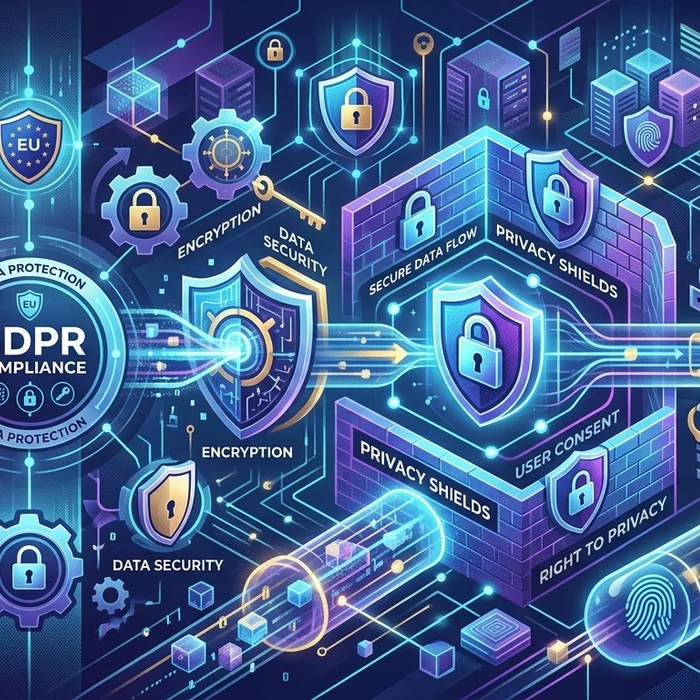
Both laws expect risk-based controls, but their scopes diverge: GDPR protects personal data; NIS2 protects the availability, integrity, and confidentiality of network and information systems delivering essential and important services.
| Area | GDPR | NIS2 |
|---|---|---|
| Scope | Processing of personal data of individuals in the EU | Security of networks and information systems for essential and important entities across sectors |
| Who is covered | Controllers and processors | Operators in sectors like energy, transport, health, finance, digital infrastructure, MSPs, and more |
| Key obligations | Lawful basis, transparency, data subject rights, DPIAs, breach notification | Risk management, incident reporting timelines, supply-chain security, business continuity, testing |
| Incident reporting | To DPA within 72 hours if risk to rights/freedoms; notify individuals if high risk | Early warning to CSIRT within 24h; incident notification within 72h; final report within 1 month |
| Fines | Up to €20m or 4% of global turnover | Up to €10m or 2% of global turnover (higher of the two), with management liability in some cases |
| Data handling | Minimization, pseudonymization/anonymization encouraged | Technical and organizational measures; asset and supplier control; secure configuration and logging |
AI, anonymization, and document handling under EU rules
Two blind spots I see in audits: (1) uncontrolled paste-and-go to online tools, and (2) ad hoc sharing of system logs for support tickets. Both can leak personal data and operational secrets. Mitigation is straightforward:
- Strip or mask personal data and secrets with an AI anonymizer before sharing content internally or with vendors.
- Route security evidence, contracts, DPIAs, and incident reports via a secure document upload process that enforces encryption and access controls.
Professionals avoid risk by using Cyrolo’s anonymizer at www.cyrolo.eu. Try our secure document upload at www.cyrolo.eu — no sensitive data leaks.
Sector notes: what regulators quietly expect
- Financial services and fintech: Expect deeper questions on third-party risk (cloud, core banking vendors) and transaction integrity; align NIS2 control testing with EBA/ECB expectations.
- Hospitals and health tech: Logging and continuity evidence is critical; demonstrate safeguards for imaging archives, lab systems, and connected devices.
- Managed service providers: Prove isolation between tenants, hardening of remote management tooling, and rapid credential rotation procedures.
- Law firms and consultancies: Client confidentiality plus incident reporting timelines demand pre-agreed comms and anonymized evidence sharing.
- Public sector and NGOs: Heightened scrutiny of data-sharing with analytics platforms; maintain DPIAs, CVD channels, and exit strategies for critical vendors.
Common pitfalls to eliminate this quarter
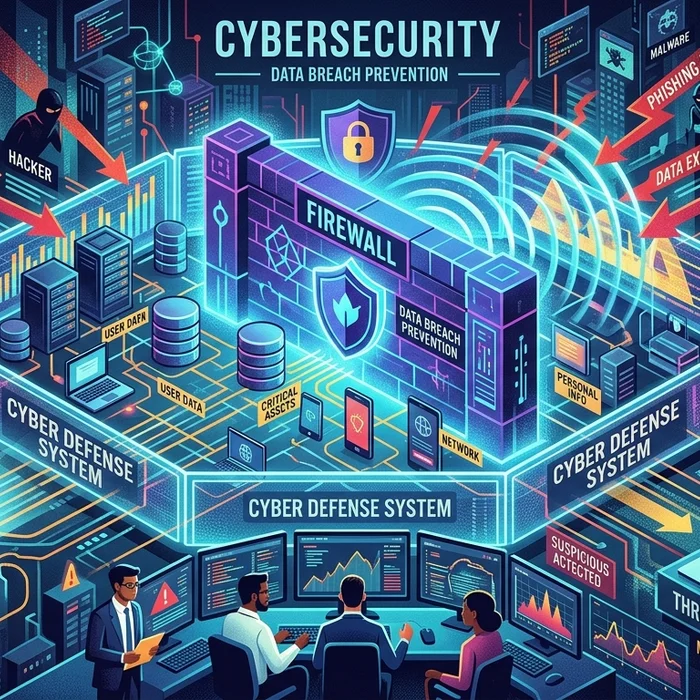
- Exposed admin interfaces and default passwords on edge appliances—prime targets in recent credential-harvesting campaigns.
- Unowned cloud assets and orphaned test environments discovered by attackers first.
- Unverified backups: Recovery drills fail because of silent corruption or privilege gaps.
- Vendor incidents with late notification—contracts lacked precise reporting SLAs and evidence obligations.
- Ad hoc uploads of logs and contracts to AI tools without anonymization—creating privacy breaches and discoverability problems.
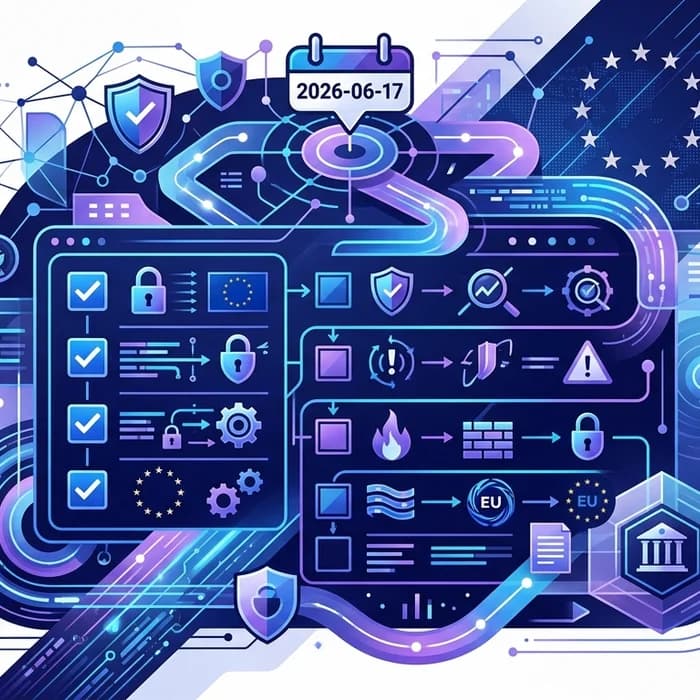
Audit-ready in 30-60-90 days: pragmatic roadmap
Days 0–30
- Assign accountable execs; update the cyber risk charter and escalation paths.
- Run an external exposure sweep; disable unused services; enforce MFA for privileged accounts.
- Stand up a centralized, secure document upload repository for policies, scans, and evidence.
Days 31–60
- Close top CVEs on internet-facing systems; document SLAs and proof of patching.
- Tabletop a 24h/72h/1-month incident reporting drill with legal and PR.
- Roll out role-based training; publish an “AI use and anonymization” standard with the AI anonymizer embedded.
Days 61–90
- Supply-chain assurance: tier suppliers, insert reporting and testing clauses, and validate evidence flows.
- Validate backups and recovery; capture metrics (RTO/RPO) and approvals.
- Run adversarial exposure validation to prove control effectiveness to auditors.
EU vs US: a quick lens for multinational teams
EU regimes (GDPR, NIS2) emphasize formal accountability, reporting deadlines, and risk-based controls with sector breadth. US frameworks (e.g., SEC incident disclosure rules, state breach laws, and NIST-aligned expectations) emphasize investor transparency and voluntary control catalogs. If you operate on both sides, harmonize on evidence: show how your controls meet NIS2 timelines while mapping to NIST CSF/800-53, then layer GDPR-specific data rights and DPIAs on top.
FAQs: your NIS2 compliance checklist questions answered
What is a NIS2 compliance checklist?
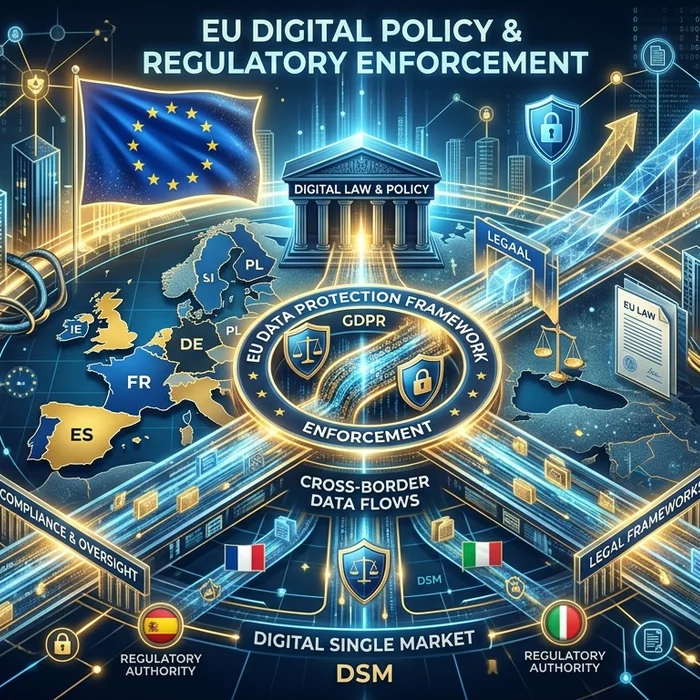
It’s a structured set of governance, technical, and operational controls—plus the evidence—that demonstrates you meet NIS2’s risk management, incident reporting, business continuity, and supply-chain obligations.
Does NIS2 apply to my SME?
Yes, if you operate in covered sectors as an essential or important entity based on activity and size thresholds set in national law. Smaller providers in critical supply chains can also fall in scope; confirm with counsel and sectoral guidance.
How do NIS2 incident timelines work?
Early warning to your national CSIRT within 24 hours of becoming aware of a significant incident, a more detailed notification within 72 hours, and a final report within one month. Keep pre-approved templates and contacts ready.
How does NIS2 differ from GDPR in practice?
GDPR centers on personal data rights and lawful processing; NIS2 centers on system resilience and sectoral service continuity. Many programs integrate the two: DPIAs for data risks and NIS2 risk management for operational risks.
What’s the safest way to use AI tools with sensitive documents?
Never paste confidential content directly into public LLMs. Anonymize and mask sensitive fields first, and route files through a secured, access-controlled repository. Use www.cyrolo.eu for anonymization and controlled uploads to reduce leak and compliance risks.
Conclusion: make your NIS2 compliance checklist the backbone of 2026 resilience
NIS2 isn’t another binder on the shelf—it’s your blueprint to cut real risk, prove diligence to regulators, and keep services online when attacks surge. Anchor your NIS2 compliance checklist in measurable controls, verifiable evidence, and disciplined document handling. To prevent privacy breaches and speed audits, professionals rely on Cyrolo’s anonymizer and secure uploads at www.cyrolo.eu.
Sources & References
- 1Press release - New EU system for return of illegally staying third country nationalsEU Parliament LIBE · 2026-06-17T11:13:08.000Z
- 2Highlights - How Europe Plans to Strengthen Its Tech Independence - Committee on the Internal Market and Consumer ProtectionEU Parliament IMCO · 2026-06-17T11:37:43.000Z
- 3World Food Programme expand Palantir partnershipPrivacy International · 2026-06-17T12:14:55.000Z
- 4Adversarial Exposure Validation Turns Security Visibility into Confident PrioritizationThe Hacker News · 2026-06-17T11:58:00.000Z
- 5The Top 10 Attack Surface Exposures in 2026The Hacker News · 2026-06-17T10:30:00.000Z
- 6Sweeping Credential-Harvesting Heist Compromises +30K Fortinet DevicesDark Reading · 2026-06-17T14:06:34.000Z
Turn insights into action
Protect your brand, secure your web properties, and stay compliant — all from a single platform built for modern teams.
Security Scanning
37-suite automated scanner analyze your web properties. Get A+ to F security grading with actionable remediation steps.
Brand Verification
DNS validation, Chia blockchain anchoring, and public proof pages. Build trust with cryptographic evidence.
GDPR & Compliance
Article-by-article GDPR audits. Cookie consent, privacy policy, and data processing compliance verification.