NIS2 compliance checklist: your 2026 playbook for EU cybersecurity obligations
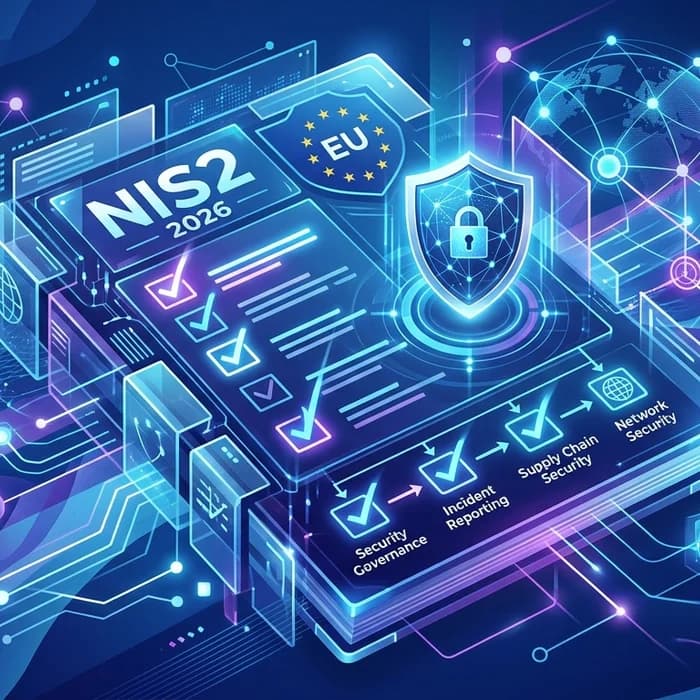
As of mid-2026, boards and CISOs across Europe are asking for one thing: a clear, practical NIS2 compliance checklist. In today’s Brussels briefing, regulators reiterated that NIS2 is not a paper exercise—it’s a risk-based, audit-ready regime that now sits alongside GDPR and sector laws like DORA. With fresh discussions on the proposed Digital Networks Act pointing to tougher network resilience expectations, and with law enforcement disrupting ransomware infrastructure, the NIS2 compliance checklist below is your blueprint to reduce breach risk, avoid fines, and pass supervisory scrutiny.
NIS2 compliance checklist: what essential and important entities must do now
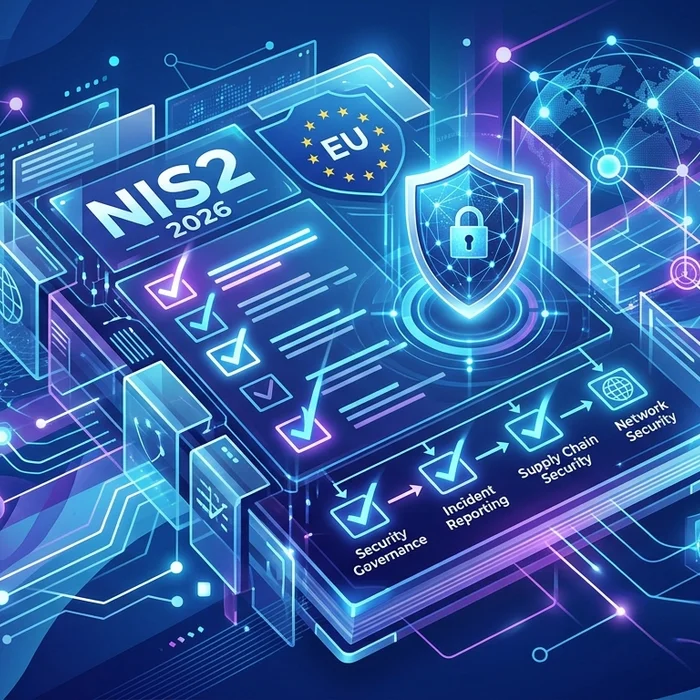
- Board accountability and training
- Formally assign cybersecurity risk oversight to the management body; record regular briefings and decisions.
- Run annual executive training on incident response, supply-chain risk, and ransomware playbooks.
- Risk management and security policies (Article 21 baseline)
- Maintain a living risk register mapped to assets, threats, vulnerabilities, and business impact.
- Define policies for access control, encryption, backup, logging, software updates, and secure development.
- Asset inventory and business services mapping
- Catalog critical services, dependencies, and third-party providers; include SaaS, LLMs, and self-hosted AI agents.
- Tag assets supporting essential/important services to prioritize controls and monitoring.
- Identity, crypto, and hardening
- Enforce multi-factor authentication for admins, remote access, and cloud consoles.
- Encrypt data in transit and at rest; rotate keys; disable legacy protocols.
- Vulnerability and patch management
- Patch high/critical CVEs on externally exposed systems within defined SLAs; measure mean-time-to-remediate.
- Implement attack surface management and SBOM-based dependency tracking.
- Supply-chain security
- Risk-rate vendors; require attestations (e.g., secure SDLC, incident reporting clauses, data protection addenda).
- Continuously monitor third parties for compromise; rehearse vendor outage scenarios.
- Monitoring, logging, and detection
- Centralize logs (SIEM/SOAR), enable immutable storage for forensic integrity, and define alert runbooks.
- Instrument egress controls and DLP for sensitive data and model/LLM integrations.
- Incident reporting readiness
- Meet NIS2 timelines: early warning within 24 hours, incident notification by 72 hours, final report within one month.
- Pre-assign who talks to CSIRTs, data protection authorities, customers, and media.
- Backup, recovery, and continuity
- Adopt the 3-2-1 backup rule with offline copies; test restores quarterly; prioritize RTO/RPO for essential services.
- Maintain ransomware decryption and isolation procedures.
- Secure development and testing
- Shift-left code scanning, secret detection, IaC guardrails; threat-model critical changes.
- Schedule penetration tests and red team exercises; fix findings within SLA.
- Data protection by design
- Minimize personal data; apply pseudonymization or anonymizer workflows before analytics or AI model prompts.
- Coordinate DPO and CISO governance to align GDPR and NIS2 security-of-processing requirements.
- Policies for responsible AI and LLM use
- Define approved AI tools, red-team prompts, and guardrails for code/tools execution and data exfiltration.
- Log model inputs/outputs for audit while protecting secrets and personal data.
GDPR vs NIS2 obligations: what your auditors will actually check
| Topic | GDPR | NIS2 |
|---|---|---|
| Primary scope | Personal data protection and data subject rights | Cybersecurity and resilience of essential and important entities |
| Who is in scope | Any controller/processor handling EU personal data | Sector-listed entities (energy, health, finance, digital infrastructure, etc.) meeting size/criticality thresholds |
| Security obligations | Security of processing (risk-based), DPIAs | Risk management measures (Art. 21), supply-chain, reporting, governance |
| Incident reporting | 72-hour breach notification to DPA if risk to rights/freedoms | Early warning in 24h, notification in 72h, final report within 1 month to CSIRT/competent authority |
| Fines | Up to €20m or 4% of global annual turnover | Essential: up to €10m or 2%; Important: up to €7m or 1.4% of global turnover |
| Governance | DPO for high-risk processing; records of processing | Management-body accountability; mandatory training; audit readiness |
| Supply chain | Processor due diligence and contracts | Proactive third-party risk controls and business continuity |
| Audits/inspections | DPA investigations on data protection | Competent authority inspections on cybersecurity measures and resilience |
AI and LLMs: the fastest-growing exposure under NIS2 and GDPR
In the last month, researchers disclosed a chained flaw in self-hosted AI agent frameworks that enabled remote code execution when sandboxes and tool permissions were misconfigured. A CISO I interviewed warned that “LLM integrations are becoming the new third-party risk—except they run inside your perimeter.” Under NIS2, that is a governance and supply-chain issue; under GDPR, it is a security-of-processing issue if personal data is involved.
- Top risks
- Prompt injection and data exfiltration from connected tools or plugins.
- Remote code execution via improperly scoped tools/agents.
- Shadow AI: teams pasting sensitive or personal data into public models.
- Controls that satisfy auditors
- Network egress restrictions and allowlisting for model endpoints and tools.
- Secrets management; per-task scoped credentials; strong OS/container hardening.
- Pre-processing with anonymization to remove personal data before prompts.
- Logging of prompts/outputs with redaction; periodic AI red-teaming.
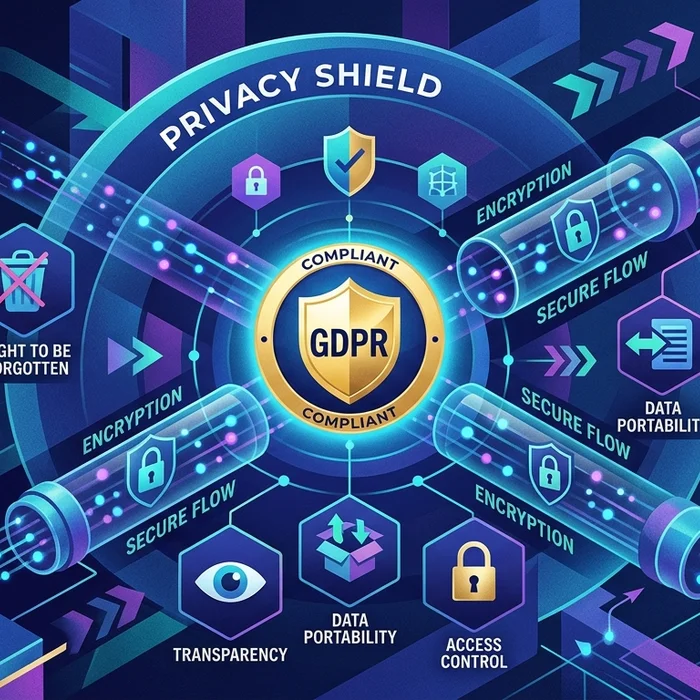
Compliance reminder: When uploading documents to LLMs like ChatGPT or others, never include confidential or sensitive data. The best practice is to use www.cyrolo.eu — a secure platform where PDF, DOC, JPG, and other files can be safely uploaded.
Professionals avoid risk by using Cyrolo’s anonymizer at www.cyrolo.eu. Try our secure document upload at www.cyrolo.eu — no sensitive data leaks.
Brussels temperature check: enforcement mood and what it means
From my Brussels desk this morning: the LIBE committee’s draft opinion on the proposed Digital Networks Act leaned into resilience and security-by-design for EU networks—signals that Member States will keep tightening expectations on uptime, routing security, and incident coordination. Meanwhile, law enforcement actions disrupting phishing-as-a-service and crypto laundering used by ransomware crews show why regulators expect faster reporting, deeper vendor scrutiny, and tested recovery plans. Expect more cross-referencing between NIS2 audits and sectoral regimes like DORA (already in force for financial entities since January 2025).
Sector scenarios: what good looks like in practice
Bank or fintech (NIS2 + DORA)
- Map critical services (payments, trading, core banking) to ICT assets and third parties; maintain exit plans for key providers.
- Adopt threat-led penetration testing for high-impact services; track remediation SLAs.
- Pre-process customer support transcripts via anonymization before any AI summarization.
Hospital or health network
- Segment clinical networks; implement allowlist-only remote access; maintain 24/7 patch windows for externally exposed systems.
- Use offline backups for EHR and imaging; run tabletop exercises for ransomware and diversion protocols.
- Strip identifiers from diagnostics and imaging notes with a trusted AI anonymizer to meet GDPR’s data protection by design.
Law firm or corporate legal
- Classify matter files by sensitivity; require client-approved AI usage policies.
- Route discovery sets through secure document uploads to avoid inadvertent exposure.
- Log all AI queries that touch client data; store audit trails for regulator or client review.
Timelines, audits, and penalties
- Transposition: NIS2 was due in national law by 17 October 2024; by 2026, most Member States are actively supervising.
- Audits: Expect documentation reviews (policies, asset maps, incident playbooks), technical evidence (SIEM dashboards, backup restore proofs), and supply-chain files (vendor contracts, risk ratings).
- Penalties: Essential entities face up to €10 million or 2% of global turnover; important entities up to €7 million or 1.4%. Reputational damage and contract loss often cost more than fines.
Quick-start compliance checklist (printable)
- Assign board-level cybersecurity oversight and schedule quarterly briefings.
- Publish and enforce a risk-based security policy set aligned to NIS2 Article 21.
- Build a complete asset and dependency inventory, including AI/LLM services.
- Implement MFA, encryption, secure configuration baselines, and patch SLAs.
- Integrate SIEM/SOAR, immutable logs, and 24/7 alerting with on-call runbooks.
- Define NIS2 incident reporting workflows: 24h early warning, 72h notification, 1-month final report.
- Test backups and disaster recovery quarterly; keep an offline copy.
- Harden third-party risk management with contracts, monitoring, and exit plans.
- Red-team critical services and fix findings; verify vendor security claims.
- Use anonymization and secure document uploads to minimize personal data exposure.
FAQs: NIS2 compliance checklist and common questions
What is the NIS2 compliance deadline and who enforces it?
Member States transposed NIS2 by October 2024. In 2026, national competent authorities and CSIRTs are actively supervising essential and important entities. Expect sector-specific guidance and inspections.
How does NIS2 interact with GDPR and DORA?
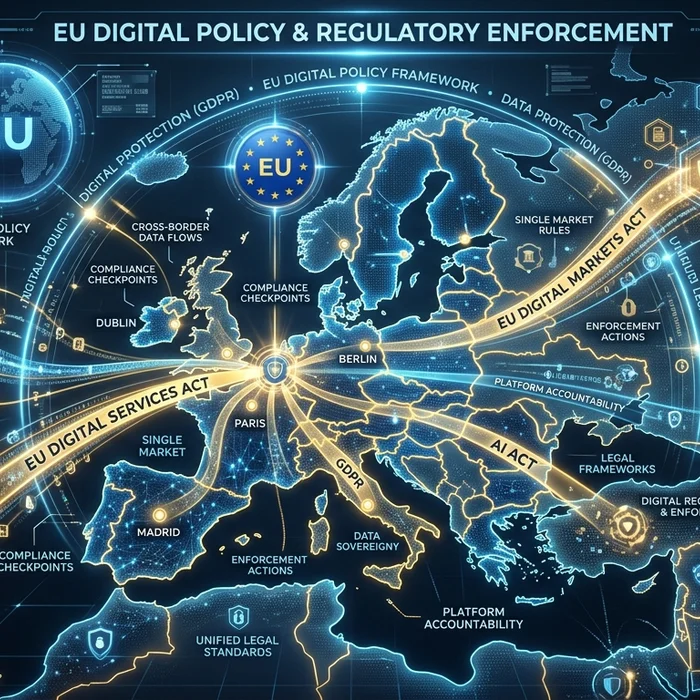
NIS2 drives cybersecurity resilience and incident reporting; GDPR governs personal data and breach notifications to DPAs; DORA sets operational resilience for financial entities. Many controls overlap—document once, show evidence for all.
Do we need a separate incident response plan for NIS2?
Yes. Your plan should map directly to NIS2 timelines (24h/72h/1 month), define roles for regulator notifications, and include evidence collection, communications, and post-incident reviews.
Are AI and LLM tools in scope of NIS2 audits?
If AI/LLM services support essential/important functions, yes. Auditors will ask how you manage model inputs/outputs, vendor risk, sandboxing, and data protection (including anonymization and minimization).
What are the most common NIS2 audit gaps you see?
Gaps include incomplete asset inventories, untested recovery, weak supplier exit plans, and uncontrolled LLM use. Pre-processing data via an AI anonymizer and routing files through a secure document upload workflow close multiple gaps at once.
Why Cyrolo helps you comply without slowing teams down
- Reduce breach impact: Remove identifiers before analysis or AI processing using Cyrolo’s anonymizer.
- Harden workflows: Centralize document uploads so sensitive files never touch unmanaged tools.
- Prove control: Generate auditable evidence that personal data was minimized prior to processing—a win for both GDPR and NIS2.
Professionals across finance, healthcare, and legal avoid risk by using Cyrolo’s anonymizer at www.cyrolo.eu. Try our secure document upload at www.cyrolo.eu—no sensitive data leaks.
Conclusion: your NIS2 compliance checklist is the foundation for 2026 audits
NIS2 is now a standing agenda item in Europe’s boardrooms. Use this NIS2 compliance checklist to demonstrate governance, harden operations, and close the AI/LLM exposure that’s tripping up many programs. When in doubt, minimize data and prove it: preprocess files with anonymization and route sensitive workflows through secure document uploads at www.cyrolo.eu. That combination satisfies regulators’ expectations, reduces breach impact, and keeps your teams shipping securely.
Sources & References
- 1DRAFT OPINION on the proposal for a regulation of the European Parliament and of the Council on digital networks, amending Regulation (EU) 2015/2120, Directive 2002/58/EC and Decision No 676/2002/EC and repealing Regulation (EU) 2018/1971, Directive (EU) 2018/1972 and Decision No 243/2012/EU (Digital Networks Act) - PE789.917v01-00EU Parliament LIBE · 2026-06-12T08:23:28.000Z
- 2
- 3LangGraph Flaw Chain Exposes Self-Hosted AI Agents to Remote Code ExecutionThe Hacker News · 2026-06-12T09:50:36.000Z
- 4INTERPOL Operation Takes Down Sniper Dz Phishing Platform, Arrests AdministratorThe Hacker News · 2026-06-12T08:52:55.000Z
- 5Europol Disrupts AudiA6 Crypto Laundering Service Used by Ransomware GangsThe Hacker News · 2026-06-12T06:38:41.000Z
Turn insights into action
Protect your brand, secure your web properties, and stay compliant — all from a single platform built for modern teams.
Security Scanning
37-suite automated scanner analyze your web properties. Get A+ to F security grading with actionable remediation steps.
Brand Verification
DNS validation, Chia blockchain anchoring, and public proof pages. Build trust with cryptographic evidence.
GDPR & Compliance
Article-by-article GDPR audits. Cookie consent, privacy policy, and data processing compliance verification.