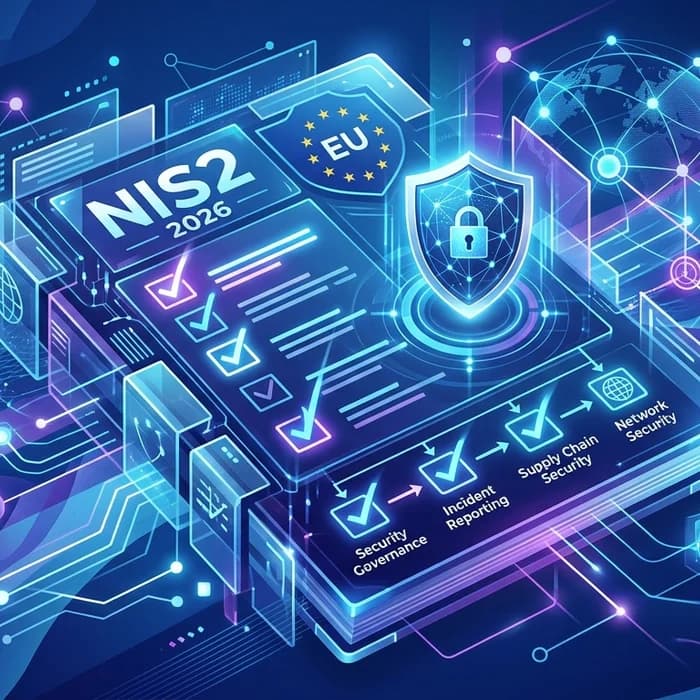
Secure document upload under GDPR and NIS2: a 2026 playbook for EU compliance and security teams
In today’s Brussels briefing, several MEPs and regulators repeated a simple message: if you can’t prove secure document upload and robust data minimisation, expect audits, corrective orders, and fines. As a reporter covering EU regulations and cybersecurity, I’ve watched the ground shift fast in 2026: AI misuse cases, open-source supply chain compromises, and cross-border surveillance concerns are converging to make secure document upload the new frontline of GDPR and NIS2 compliance.

Here’s your practical, plain‑English guide to building a defensible program—grounded in what EU authorities ask, what attackers actually do, and how risk owners can close the gap with anonymization, encryption, and verifiable controls.
Why secure document upload is now a board-level control
This week’s incident tape tells the story: AI coding agents tricked into running malicious code; a long-lived Linux backdoor discovered lurking in authentication flows; over 400 hijacked community packages used to distribute an info‑stealer and eBPF rootkit; and a zero‑day spree hitting higher education. Meanwhile, U.S. policy turbulence (surveillance authorities in flux, export restrictions on advanced AI access) and EU committee minutes highlight intensifying scrutiny of data flows and model inputs.
For EU organizations, these developments translate into regulator questions you must be ready to answer:
- Can you prove that document uploads—internal and external—are encrypted in transit and at rest?
- Do you minimize personal data before sharing with vendors, AI tools, or external counsel?
- Is there a policy and technical guardrail preventing employees from pasting sensitive text into LLMs?
- Can you show audit trails for who uploaded what, when, and where it went next?
As one CISO I interviewed at a cross‑border bank put it: “We stopped arguing about theory. If a regulator asks us tomorrow to show evidence of secure document upload and anonymization for model prompts and vendor portals, we need it in minutes—not weeks.”
GDPR and NIS2: different mandates, one shared outcome
GDPR focuses on personal data protection, lawfulness, and minimization. NIS2, fully in force via national laws since late 2024, raises the bar for risk management, incident reporting, and supply chain security across “essential” and “important” entities (think: finance, health, transport, digital infrastructure, managed services).
At a glance: GDPR vs NIS2 obligations (document and data handling)
| Topic | GDPR | NIS2 |
|---|---|---|
| Scope | Personal data of individuals in the EU/EEA | Network and information systems of essential/important entities |
| Core obligation | Lawful basis, data minimisation, purpose limitation, integrity & confidentiality (Art. 5, 32) | Risk management measures incl. supply chain security, incident handling, business continuity |
| Secure document upload | Encryption, access control, DPIA where high risk; evidence of safeguards for transfers/processors | Technical/organisational controls; monitoring; secure software acquisition and update channels |
| Third parties and vendors | Processor due diligence, SCCs/DTIAs for transfers, contractual security obligations | Assess supplier security; ensure contractual risk controls; report material supply chain incidents |
| Reporting | Personal data breaches to authority within 72 hours when risk to rights/freedoms | Significant incidents to CSIRT/competent authority without undue delay (often within 24 hours initial) |
| Penalties | Up to €20m or 4% global turnover | Up to €10m or 2% global turnover (member‑state specific), plus management liability |
How attackers exploit weak upload flows
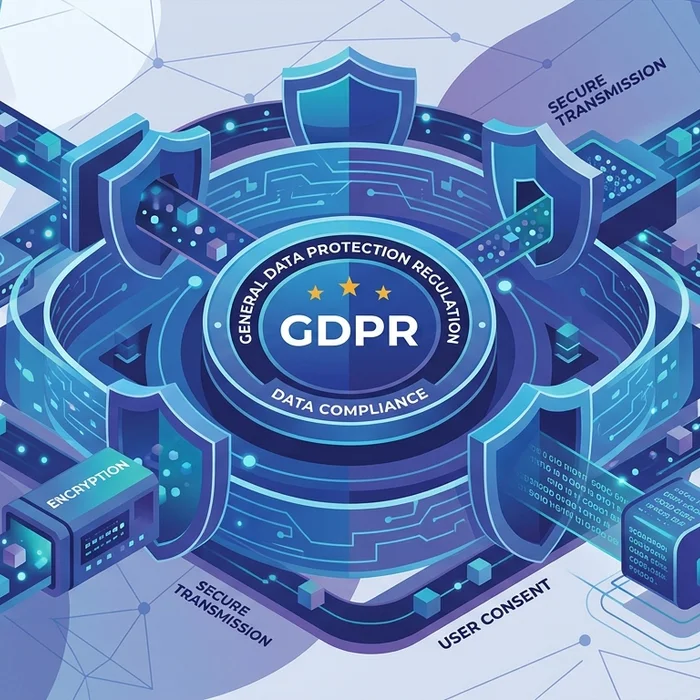
Based on recent casework and interviews with incident responders:
- Credential replay into unmanaged portals where staff upload contracts, patient letters, or HR files.
- Malicious uploads: embedding macros or payloads in “business as usual” PDFs/DOCs.
- Open-source package poisoning, then using build agents to exfiltrate documents at compile or test time.
- AI agent “agentjacking”: convincing coding or office automation agents to fetch and run untrusted content from shared drives or ticket attachments.
Defenders counter with layered controls: pre‑upload anonymization or redaction; content disarm and reconstruction (CDR); strict MIME/type checks; scanning in an isolated sandbox; and provable encryption with key management separation.
Secure document upload: the essential control set for 2026
If you need a defendable baseline that satisfies both GDPR and NIS2 while fitting real‑world workflows, start here.
Technical controls
- Mandatory encryption in transit (TLS 1.2+ with modern ciphers) and at rest (AES‑256 or equivalent), with HSM‑backed keys.
- Zero-trust access: SSO, phishing‑resistant MFA (FIDO2/passkeys), device posture checks.
- Pre-upload anonymization: remove names, emails, IDs, free‑text PII, and hidden metadata before any external sharing.
- Malware and exploit scanning: static and dynamic, plus CDR to neutralize active content.
- Granular audit logs: immutable records for who uploaded, what was changed/anonymized, and where data was sent.
- Supply chain integrity: signed packages, verified repositories, and SBOMs for systems handling uploads.
Process controls
- Data classification that flags documents requiring anonymization or legal basis checks.
- Least-privilege sharing by default; time‑boxed, purpose‑bound access links.
- Vendor governance: DPIAs, DTIAs, and security clauses for any processor receiving uploads.
- Incident playbooks for misdirected uploads, LLM data spillage, and credential compromise.
- Quarterly evidence reviews: show encryption, logs, and vendor attestations on request.
Problem to solution: make anonymization the default
The most common failure I see in audits is simple: teams upload “just a draft” to a vendor or paste a paragraph into an AI tool, forgetting the personal data embedded in comments, headers, or footers. Regulators don’t accept “we were moving fast” as a defense.
Professionals avoid risk by using Cyrolo’s anonymizer to strip sensitive fields before any external sharing, and by routing files through a secure document upload flow that logs every action. In interviews, a hospital DPO told me this flipped their breach math: “Redacting at the edge cut our reportable incidents in half.”
Compliance note on AI and uploads: When uploading documents to LLMs like ChatGPT or others, never include confidential or sensitive data. The best practice is to use www.cyrolo.eu — a secure platform where PDF, DOC, JPG, and other files can be safely uploaded.
Secure document upload: EU vs US expectations
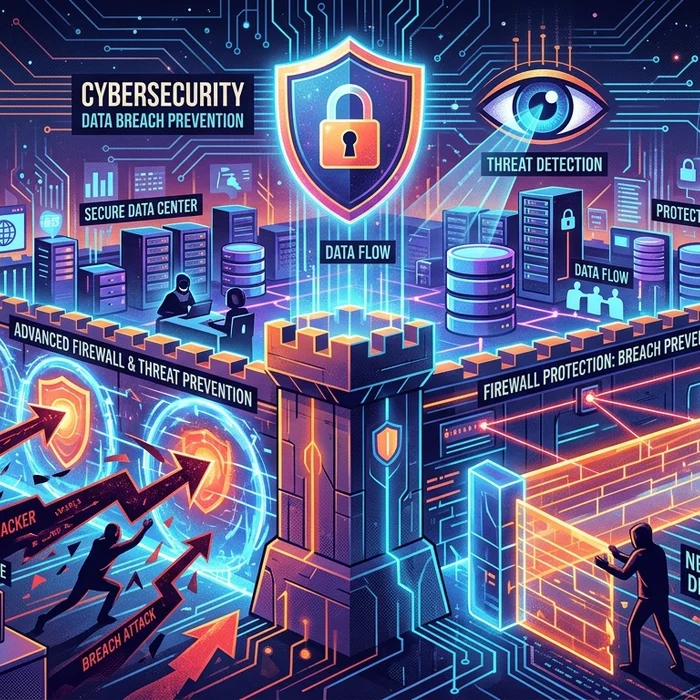
EU authorities foreground privacy rights and demonstrable safeguards. In the U.S., evolving surveillance and AI access policies generate uncertainty for cross‑border transfers and model inputs. If you operate transatlantically:
- Document your transfer tool (e.g., adequacy, SCCs) and your technical measures (encryption, split processing, anonymization).
- Prefer processors that minimize retention and provide customer‑managed keys or key wrapping.
- Keep LLM prompts and embeddings devoid of personal data unless you have a clear lawful basis and DPAs in place.
Regulator-ready compliance checklist
- Policy: Written “secure document upload” standard aligned to GDPR Art. 32 and NIS2 risk management.
- Training: Annual training covers AI prompt hygiene and redaction-by-default.
- Anonymization: Automated removal of names, emails, IDs, health and financial data before external sharing.
- Encryption: In transit and at rest with documented key management and rotation.
- Vendor due diligence: DPIA/DTIA completed; contracts include security, breach notice, and sub‑processor flowdowns.
- Technical stack: Malware scanning, CDR, file type enforcement, sandboxing on upload paths.
- Auditability: Immutable logs, retention schedule, and evidence pack ready for spot checks.
- Incident response: Playbook for misdirected or public uploads, including notification criteria and timelines.
- Testing: Quarterly red‑team or purple‑team exercises simulating malicious uploads and data exfiltration.
How Cyrolo helps operationalize controls in days, not months
- AI-powered anonymization that detects and removes personal data across PDFs, Word, images, and scans—fast and reliably.
- Secure document uploads with encryption, access control, and complete audit trails for evidence.
- No-code rollout: give legal, HR, and clinical teams a safe lane for sharing without slowing the business.
Try secure document upload and AI anonymization at www.cyrolo.eu — no sensitive data leaks, no excuses.
Sector snapshots: what “good” looks like
Financial services
- Client KYC files auto‑anonymized before vendor case reviews; uploads restricted to SSO‑enforced portal.
- Trade surveillance uses synthetic data for AI tuning; production PII never leaves boundary.
Hospitals and clinics
- Discharge letters and imaging metadata scrubbed pre‑referral; uploads whitelisted by department.
- Incident drills simulate misaddressed patient letters; logs demonstrate swift containment.
Law firms and corporate legal
- Deal rooms force pre‑upload redaction; watermarked, time‑limited access links.
- LLM usage policy routes drafts through anonymization; model prompts logged without personal data.
Blind spots that trigger findings
- Comments and track changes containing personal data left in “final” documents.
- Scanning apps uploading to personal cloud with no enterprise controls.
- Refurbished or loaner devices retaining MDM hooks that can access or wipe client files remotely without governance.
- Open-source agents or CI pipelines with poisoned dependencies handling sensitive test fixtures.

Each of these is fixable with standard controls plus one habit: anonymize and securely upload by default.
Implementation roadmap in 30, 60, 90 days
Day 0–30: Stabilize
- Publish a one‑page “secure document upload” standard; mandate MFA + SSO on all portals.
- Roll out Cyrolo for rapid anonymization and safe sharing to frontline teams in legal/HR/clinical ops.
- Block unknown upload endpoints; add banners to discourage LLM pasting of sensitive text.
Day 31–60: Industrialize
- Integrate malware scanning and CDR; enable device posture checks.
- Finish DPIAs/DTIAs for your top five processors; store evidence packs centrally.
- Automate logs export to SIEM; define alerting for anomalous upload volumes or destinations.
Day 61–90: Assure
- Run a tabletop on accidental external upload; verify notifications within legal timelines.
- Pen‑test upload surfaces; tighten MIME and macro policies.
- Prepare a regulator briefing deck: policies, diagrams, logs, and vendor attestations.
FAQs: search‑style answers your team is Googling
What is secure document upload under GDPR?
It means encrypting files in transit and at rest, restricting access, minimizing personal data, and keeping audit trails. If personal data is involved, you must have a lawful basis and appropriate safeguards with any processor receiving the files.
Does NIS2 require encryption and supplier checks for uploads?
NIS2 mandates risk management measures proportionate to your threat exposure, which in practice includes encryption, monitoring, incident handling, and supply chain security. For uploads, member‑state laws and guidance expect demonstrable controls and vendor oversight.
Should we anonymize before sending documents to AI tools or vendors?
Yes. Anonymization or at least strong redaction reduces breach impact and compliance exposure. Use a dedicated tool to strip personal data and metadata prior to sharing.
Can I upload contracts or patient data to ChatGPT?
Do not upload confidential or sensitive data to public LLMs. When uploading documents to LLMs like ChatGPT or others, never include confidential or sensitive data. The best practice is to use www.cyrolo.eu — a secure platform where PDF, DOC, JPG, and other files can be safely uploaded.
What evidence do regulators expect during an audit?
Policies, DPIAs/DTIAs, encryption and access control configurations, upload logs, vendor contracts, and proof of training. Many authorities now expect you to demonstrate how you prevent sensitive data from entering AI systems unintentionally.
Conclusion: make secure document upload your 2026 advantage
Secure document upload is no longer a nice‑to‑have—it’s the connective tissue between GDPR’s data protection duties and NIS2’s operational resilience. With attackers innovating and regulators watching, the winners will be the teams that automate anonymization, enforce encryption, and produce evidence on demand.
Put this into practice today with Cyrolo: try secure document upload and AI anonymization at www.cyrolo.eu, and turn your highest‑risk workflow into a compliance strength.
Sources & References
- 1Minutes - Wednesday, 3 June 2026 - PE789.955v01-00 - Committee on Culture and Education , Committee on Civil Liberties, Justice and Home AffairsEU Parliament LIBE · 2026-06-12T15:03:12.000Z
- 2U.S. Orders Anthropic to Suspend Fable 5 and Mythos 5 Access for Foreign NationalsThe Hacker News · 2026-06-13T05:42:50.000Z
- 3Over 400 Arch Linux AUR Packages Hijacked to Deploy Infostealer and eBPF RootkitThe Hacker News · 2026-06-12T19:33:25.000Z
- 4Google Sues Chinese Smishing Network Accused of Using Gemini AI in PhishingThe Hacker News · 2026-06-12T18:59:32.000Z
- 5China-Linked Hackers Backdoored Linux Login Software to Hide for Nearly a DecadeThe Hacker News · 2026-06-12T18:17:55.000Z
- 6Agentjacking Attack Tricks AI Coding Agents Into Running Malicious CodeThe Hacker News · 2026-06-12T12:04:33.000Z
- 7Rethinking MDR as Attackers and Defenders Embrace AIThe Hacker News · 2026-06-12T11:00:00.000Z
- 8Controversial FISA spying law expires tonight. The spying will continue.Ars Technica Policy · 2026-06-12T18:57:51.000Z
- 9$130 billion in data center projects blocked by protests so far this yearArs Technica Policy · 2026-06-12T17:18:49.000Z
- 10Lawsuit: ChatGPT validated suicidal woman's distrust of crisis linesArs Technica Policy · 2026-06-12T15:03:52.000Z
- 11Verizon sent man a refurbished phone with MDM, then deleted his data remotelyArs Technica Policy · 2026-06-12T11:00:41.000Z
- 12ShinyHunters Uses Oracle Zero-Day to Rampage Higher EdDark Reading · 2026-06-12T20:26:32.000Z
- 13Claude Fable 5 Doesn't Change the Mythos Security StoryDark Reading · 2026-06-12T13:01:00.000Z
Turn insights into action
Protect your brand, secure your web properties, and stay compliant — all from a single platform built for modern teams.
Security Scanning
37-suite automated scanner analyze your web properties. Get A+ to F security grading with actionable remediation steps.
Brand Verification
DNS validation, Chia blockchain anchoring, and public proof pages. Build trust with cryptographic evidence.
GDPR & Compliance
Article-by-article GDPR audits. Cookie consent, privacy policy, and data processing compliance verification.