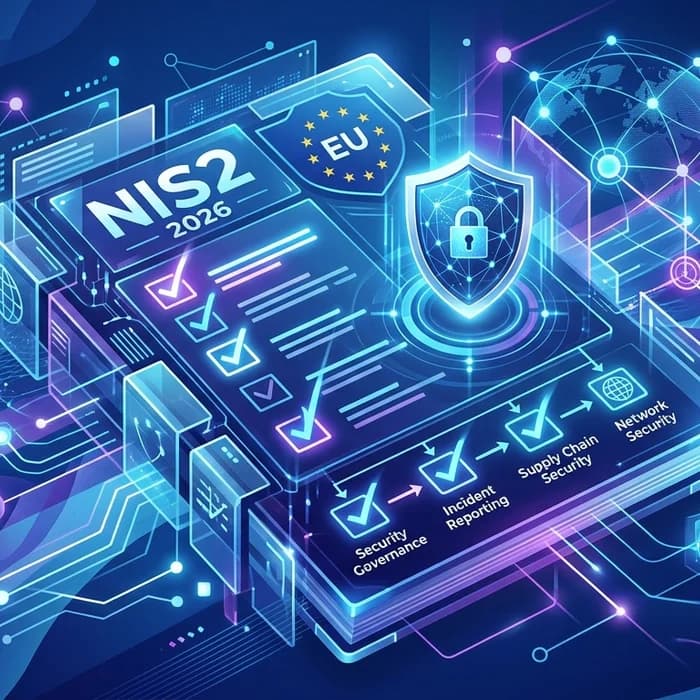
AI Anonymizer for GDPR and NIS2 Compliance: June 2026 EU Briefing and Practical Guide
In today’s Brussels briefing, lawmakers underscored a reality privacy and security teams already feel: generative AI and cross-border data flows are outpacing old playbooks. If you handle incident reports, vendor assessments, or legal files, an AI anonymizer is now table stakes for GDPR and NIS2 compliance—reducing personal data exposure while preserving analytic value. From IMCO’s signal on updated AI rules to fresh moves on European Business Wallets, and even a new U.S. state ban on selling precise location data, the direction of travel is clear: tighter controls, stricter audits, and higher expectations for secure document processing.

Professionals avoid risk by using Cyrolo’s anonymizer at www.cyrolo.eu. Try our secure document upload at www.cyrolo.eu—no sensitive data leaks.
Why an AI anonymizer is now essential under EU regulations
- GDPR: Core duties remain unchanged—lawful basis, minimization, purpose limitation, data subject rights. Regulators continue issuing multimillion-euro fines (up to €20 million or 4% of global turnover) where personal data is mishandled, including in analytics and testing environments.
- NIS2: By 2026, supervisory authorities are escalating security audits for “essential” and “important” entities across energy, finance, healthcare, digital infrastructure, and more. Administrative fines can reach up to €10 million or 2% of worldwide turnover for essential entities, with board-level accountability.
- AI systems and tooling: IMCO’s June signal on updated AI rules reinforces a risk-based approach for high-risk systems and data governance. Even if your model isn’t “high-risk,” inputs and prompts often contain personal data—making upstream anonymization crucial for safe use.
As one CISO I interviewed put it: “Our biggest exposure wasn’t production—it was the documents analysts uploaded to tools for triage. The fix was upstream anonymization with audit trails.”
Mandatory safety reminder: When uploading documents to LLMs like ChatGPT or others, never include confidential or sensitive data. The best practice is to use www.cyrolo.eu — a secure platform where PDF, DOC, JPG, and other files can be safely uploaded.
What Brussels signaled this week—and why it matters
- IMCO: Agreement reached on updated AI rules. Expect continued scrutiny of training data, evaluation datasets, and model transparency. Practical takeaway: set a default workflow that strips or masks personal data before any AI-assisted analysis.
- European Business Wallets: IMCO’s opinion on establishing wallets for company credentials points to standardized, verifiable attributes. That reduces fraud but increases responsibility: any document you attach to wallet flows must respect minimization and, where possible, be anonymized or pseudonymized.
- Customs Authority in Lille: A centralized authority will demand robust data exchange across borders. Supply-chain security teams should anticipate more audits and request evidence of anonymization when exchanging manifests, invoices, and inspection reports.
- LIBE/INTA joint focus: Data protection expectations are edging into every domain touching cross-border flows, trade, and mobility. Your governance maturity will be tested on logs, DPIAs, and breach reporting discipline.
- Across the Atlantic: Massachusetts just voted to ban the sale of precise location data. EU firms with U.S. users should revisit data broker relationships and SDK telemetry. Regulators everywhere are closing the tap on sensitive data commerce.
GDPR vs NIS2: who must do what right now
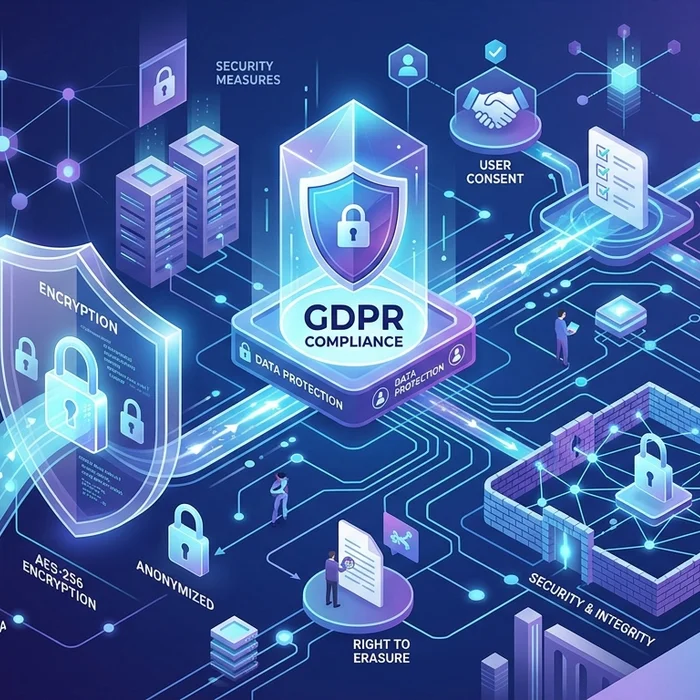
| Obligation Area | GDPR (Data Protection) | NIS2 (Cybersecurity) |
|---|---|---|
| Scope | Personal data processing by controllers/processors in or targeting the EU | Security and incident management for essential/important entities across critical sectors |
| Core Duty | Lawfulness, fairness, transparency, minimization; protect personal data | Risk management, supply-chain security, incident detection/response, resilience |
| Incident Reporting | Notify DPA “without undue delay” (typically within 72 hours) if risk to rights/freedoms | Early warning within 24 hours; incident notification and final report deadlines vary by severity |
| Data Handling | Prefer anonymization/pseudonymization; DPIAs for high-risk processing | Protect operational and personal data in logs, tickets, and intelligence feeds |
| Governance | DPO for certain organizations; records of processing; processor contracts | Board accountability; security policies; testing and auditing; supplier oversight |
| Penalties | Up to €20m or 4% of global turnover | Up to €10m or 2% (essential); up to €7m or 1.4% (important), depending on Member State transposition |
| Proof to Regulators | Policies, DPIAs, RoPA, breach logs, processor DPAs, evidence of minimization/anonymization | Risk assessments, incident playbooks, detection metrics, supplier due diligence, audit results |
Practical workflow: from secure document uploads to safe analysis
- Collect: Centralize inputs (incidents, vendor docs, contracts) into a secure intake.
- Classify: Flag personal data, special categories (health, biometrics), and confidential fields.
- Anonymize before AI: Use an AI anonymizer to mask names, IDs, emails, addresses, case numbers, and free-text PII while preserving analytical structure.
- Analyze safely: Route the sanitized text to your chosen model or analytics pipeline. Keep prompts and outputs in the same secured boundary.
- Document: Log runs, rules applied, and exceptions for auditor-ready evidence.
- Retain/Dispose: Apply retention schedules; keep only what’s necessary and delete raw PII where feasible.
Do this with secure document uploads and controlled anonymization to reduce breach exposure and audit friction.
Try our secure document upload at www.cyrolo.eu—no sensitive data leaks. Professionals avoid risk by using Cyrolo’s anonymizer at www.cyrolo.eu.
Compliance checklist (fast track)
- Map data flows: identify where personal data enters AI-assisted workflows.
- Default-anonymize: enforce pre-processing that strips or masks personal data by design.
- Role-based access: restrict who can view originals vs. anonymized copies.
- Supplier controls: require anonymization evidence in contracts and SOC runbooks.
- Incident drill: simulate a breach involving AI tools; test 24–72h reporting clocks.
- Audit trails: maintain logs of anonymization runs, model usage, and exceptions.
- DPIAs: refresh impact assessments when adding AI features or new datasets.
- Training: brief SOC and legal teams on prompt hygiene and redaction pitfalls.
From the field: AI phishing and overworked SOCs
Security leaders tell me AI-accelerated phishing is hammering Tier 1 analysts with alert volume. One bank’s SOC manager described doubling triage capacity by pushing attachments and email bodies through an anonymization gate before any ML enrichment—preventing accidental leakage of customer identifiers into third-party tools. Result: safer correlation, faster response, and cleaner evidence for NIS2 reporting.

- Banks and fintechs: Mask IBANs, account numbers, PANs, and KYC files before model-based scoring.
- Hospitals: Strip patient identifiers from imaging reports or discharge notes before LLM-assisted summaries.
- Law firms: Anonymize case bundles and discovery sets prior to review analytics; preserve footnote/linkage integrity.
- Industrial SOCs: Redact operator names and badge IDs in OT incident narratives; keep equipment descriptors intact.
Avoid these 5 anonymization mistakes
- Inconsistent rules: Using different redaction patterns across teams breaks traceability; standardize masks and hashing.
- Over-redaction: Removing too much destroys utility. Aim for structured replacements (e.g., PERSON_1, DATE_1) to maintain context.
- Forgetting images: PDFs and screenshots often hold PII in embedded images; run OCR-aware anonymization.
- Leaky metadata: DOC/PDF properties, EXIF, or hidden revisions can betray identities; scrub metadata on upload.
- No audit log: Without a record of what was removed, you’ll struggle to prove minimization to regulators.
FAQ
What is an AI anonymizer and how is it different from simple redaction?
An AI anonymizer detects direct and indirect identifiers across text, tables, and images, then replaces them consistently (not just black boxes). It preserves document structure so analytics and search remain useful while removing personal data risk.
Does anonymized data fall outside GDPR?
Truly anonymized data—where re-identification is not reasonably possible—falls outside GDPR. Pseudonymized data is still personal data. Regulators check technique robustness, consistency, and whether auxiliary data could re-identify subjects.

How does NIS2 change what my SOC must do?
NIS2 expands sectors, sets tighter incident timelines, and expects supply-chain and data governance maturity. That includes securing evidence handling: anonymize personal data in tickets, alerts, and attachments before external sharing or tool ingestion.
Is it safe to upload internal documents to general-purpose LLMs?
Use extreme caution. Many tools aren’t designed for regulated data. When uploading documents to LLMs like ChatGPT or others, never include confidential or sensitive data. The best practice is to use www.cyrolo.eu — a secure platform where PDF, DOC, JPG, and other files can be safely uploaded.
What do auditors expect to see as proof of minimization?
Policies, DPIAs, technical controls, logs of anonymization runs, and samples showing consistent masking. Bonus points for reproducible pipelines and supplier attestations.
Key differences EU vs US: practical takeaways
- EU: Comprehensive regimes (GDPR/NIS2) with broad territorial scope and high fines. Strong emphasis on data minimization and rights.
- US: Fragmented but hardening. State moves like Massachusetts’ location data ban tighten sensitive data handling. Federal sectoral rules fill gaps.
- Global lesson: Expect auditors to ask “Why did you process personal data at all?” An AI anonymizer lets you answer, “We didn’t, unless strictly necessary—and here’s the log.”
Conclusion: make an AI anonymizer your 2026 compliance win
The signals from Brussels—and beyond—are unambiguous: more scrutiny on data inputs, tougher security expectations, and less tolerance for “oops, the model saw PII.” Building an AI anonymizer step into your workflows reduces GDPR and NIS2 exposure, streamlines audits, and protects customers. Start with secure document uploads and consistent masking, then scale across teams and suppliers.
Get started today with anonymization and uploads at www.cyrolo.eu. Your next audit—and your customers—will thank you.
Sources & References
- 1Video of a committee meeting - Monday, 8 June 2026 - 12:30 - Committee on International Trade - Committee on Civil Liberties, Justice and Home AffairsEU Parliament LIBE · 2026-06-08T13:47:31.000Z
- 2Press release - Briefing on the entry into application of the EU Migration Pact with lead MEPsEU Parliament LIBE · 2026-06-08T11:46:53.000Z
- 3OPINION on the proposal for a regulation of the European Parliament and of the Council on the establishment of European Business Wallets - PE786.736v03-00EU Parliament IMCO · 2026-06-08T12:43:02.000Z
- 4Subject files - Agreement Reached on Updated AI Rules - Committee on the Internal Market and Consumer ProtectionEU Parliament IMCO · 2026-06-08T11:43:12.000Z
- 5Subject files - Lille Designated as the Seat of the New EU Customs Authority - Committee on the Internal Market and Consumer ProtectionEU Parliament IMCO · 2026-06-08T11:07:09.000Z
- 6Massachusetts votes to pass new privacy rights bill that bans sale of precise location dataTechCrunch Privacy · 2026-06-08T13:26:03.000Z
- 7AI Phishing Is Crushing SOCs with Alert Volume: How to Reduce Tier 1 OverloadThe Hacker News · 2026-06-08T13:19:13.000Z
- 8⚡ Weekly Recap: Instagram Account Hacks, Android Zero-Day, GitHub Worm and MoreThe Hacker News · 2026-06-08T13:18:57.000Z
- 9The Hardest ForkThe Hacker News · 2026-06-08T11:53:00.000Z
- 10VerdantBamboo Deploys BSD Variant of BRICKSTORM on Linux AppliancesThe Hacker News · 2026-06-08T10:27:32.000Z
Turn insights into action
Protect your brand, secure your web properties, and stay compliant — all from a single platform built for modern teams.
Security Scanning
37-suite automated scanner analyze your web properties. Get A+ to F security grading with actionable remediation steps.
Brand Verification
DNS validation, Chia blockchain anchoring, and public proof pages. Build trust with cryptographic evidence.
GDPR & Compliance
Article-by-article GDPR audits. Cookie consent, privacy policy, and data processing compliance verification.