NIS2 compliance checklist: your 2026 playbook for GDPR alignment and breach-proof operations
In the wake of stepped-up enforcement, a practical, field-tested NIS2 compliance checklist is now table stakes for EU organizations that deliver essential or important services. From 24-hour early warnings to board accountability and supply-chain due diligence, NIS2 tightens the screws well beyond GDPR’s data protection lens. In today’s Brussels briefing, regulators emphasized “credible incident reporting and verifiable risk controls” as the line between a manageable inquiry and a costly sanction.

Why NIS2 matters in 2026: enforcement bite, GDPR overlap, and real deadlines
- Scope expansion: NIS2 covers “essential” and “important” entities across energy, transport, health, finance, digital infrastructure, public administration, and more, including many medium-sized firms via sectoral thresholds.
- Fines and liability: Administrative fines can reach at least €10 million or 2% of global turnover for essential entities, and at least €7 million or 1.4% for important entities. Executives can face temporary bans for egregious non-compliance.
- Faster reporting: Early warning to the national CSIRT within 24 hours for significant incidents, followed by a 72-hour notification and a final report within one month.
- GDPR interplay: NIS2 targets service resilience and security of network and information systems; GDPR governs personal data. Incidents can trigger both regimes—expect parallel notifications to CSIRTs and Data Protection Authorities.
- Audit reality: Security audits and evidence requests now extend to board minutes, supplier risk files, vulnerability management outputs, and proof that sensitive data wasn’t exposed during investigations or AI-assisted analysis.
NIS2 compliance checklist: 15 steps security, legal, and ops teams can action this quarter
- Board ownership and reporting lines
- Document named executive accountability for NIS2 risk management and incident oversight.
- Schedule quarterly board briefings with metrics: MTTR, patch latency, phishing rates, vendor risk tiers.
- Scope and classification
- Map which services, facilities, and IT/OT assets fall within NIS2 sectors and national thresholds.
- Classify systems by criticality; tag data flows that cross borders or touch personal data.
- Risk management baseline
- Adopt a recognized framework (ISO 27001/2, NIST CSF 2.0) and maintain a living risk register with owners and due dates.
- Vulnerability and patch management
- Scan continuously; prioritize exploitation-in-the-wild; document SLAs (e.g., critical vulns ≤7 days); evidence exceptions.
- Identity and access controls
- MFA by default, least privilege, privileged access management, session recording on admin actions.
- Network segmentation and OT protection
- Separate IT from OT; apply allow-listing and secure remote access; log all changes on critical controllers.
- Business continuity and incident response
- Tabletop and live-fire exercises; maintain playbooks covering ransomware, supply-chain compromise, and cloud identity abuse.
- 24h/72h/1-month reporting muscle memory
- Pre-draft CSIRT templates; rehearse evidence collection, legal privilege, and parallel GDPR notification where personal data is impacted.
- Supplier and cloud due diligence
- Tier vendors by criticality; require incident notification clauses, right-to-audit, SBOMs, and secure development attestations.
- Secure document handling during incidents and audits
- Ban ad hoc uploads of logs, tickets, or screenshots to public tools; maintain a secure channel for evidence exchange.
- Try our secure document upload at www.cyrolo.eu — no sensitive data leaks.
- Data minimization and redaction at source
- Strip or mask personal data in tickets, knowledge bases, and threat intel packages by default to reduce GDPR exposure.
- Professionals avoid risk by using Cyrolo’s anonymizer to redact names, emails, IDs, and faces before sharing.
- Security monitoring and detection engineering
- Ensure telemetry coverage for identity, endpoints, SaaS, and cloud control planes; write detections for token abuse and unauthorized inbox rules.
- Employee training with measurable outcomes
- Role-specific modules for SOC, service owners, and executives; track participation, pre/post test scores, and phishing resilience.
- Assurance and internal audit
- Quarterly control testing; pen tests on internet-facing assets; red team exercises that include vendor pivot scenarios.
- Documentation and evidence vault
- Centralize policies, playbooks, audit trails, vendor questionnaires, and change logs with immutable timestamps for regulator requests.
GDPR vs NIS2: what changes for security leaders
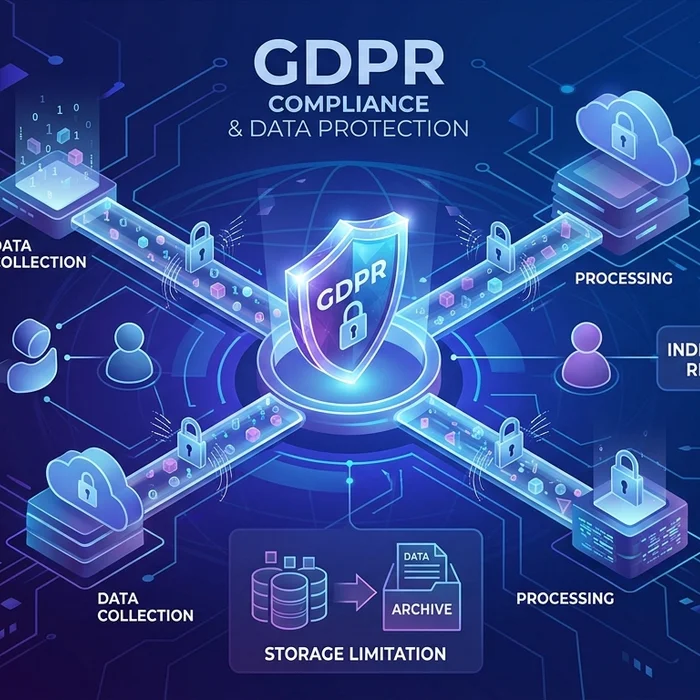
A frequent question I hear from CISOs—most recently from a major EU hospital—“We’re already GDPR mature; what’s new?” Short answer: governance depth, sector scope, supplier accountability, and the speed/format of incident reporting. Here’s a quick comparison:
| Area | GDPR | NIS2 |
|---|---|---|
| Primary focus | Protection of personal data and data subjects’ rights | Security and resilience of network and information systems |
| Who’s in scope | Controllers and processors handling personal data | Essential and important entities in defined sectors (incl. many medium-sized) |
| Incident reporting | Supervisory Authority within 72 hours of becoming aware of a personal data breach | CSIRT early warning in 24 hours; notification in 72 hours; final report in 1 month for significant incidents |
| Fines (indicative) | Up to 4% of global turnover or €20 million (whichever higher) | At least up to €10 million or 2% (essential); €7 million or 1.4% (important) |
| Supplier obligations | Processor contracts; data processing agreements | Broader supply-chain security, SBOMs, incident clauses, and right-to-audit for critical vendors |
| Board accountability | Strategic responsibility; DPO where required | Explicit management accountability; possible temporary bans for severe non-compliance |
Practical field notes: banks, hospitals, and law firms under NIS2
- Bank/fintech: I spoke with a CISO who consolidated admin access to SaaS and core banking via a single PAM workflow; phishing-led session hijacks plummeted 40%. They now pre-redact customer identifiers in fraud tickets using an AI anonymizer to keep GDPR and NIS2 notifications cleaner.
- Hospital: OT segmentation and allow-listed remote access were non-negotiable after a clinical system outage. Incident evidence—screenshots, vendor chat transcripts—goes through a secure document upload workflow to prevent accidental PHI exposure.
- Law firm: For eDiscovery and breach reviews, partners banned public LLMs and mandated redaction before external counsel sharing. Result: lower regulator friction and faster, precise notifications.
Reporting timelines meet cyber insurance reality
European underwriters I’ve interviewed confirm a 2026 trend: premiums easing for clean-risk profiles but exclusions widening for nation-state activity, systemic SaaS failures, and unpatched known vulns. Translation: you’ll pay less only if you can prove disciplined basics and supply-chain scrutiny. Recent mass-issue account takeover bugs and email rule abuses remind us that identity-layer controls and rapid triage are decisive. Build audit-ready proof of:
- Timely patching of actively exploited CVEs.
- MFA and conditional access on all external portals, including email.
- Immutable logs, plus clear 24h/72h reporting packets.
- Vendor incident clauses and real contact paths, not just PDFs.
Stop AI-fueled data leaks: anonymize and control uploads
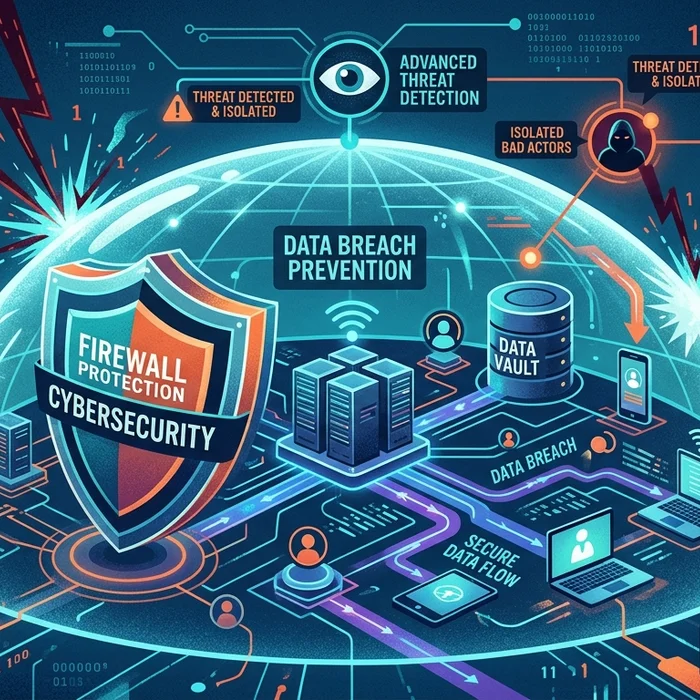
Investigations move fast; teams paste logs, contracts, and screenshots into AI tools to summarize and search. That’s where compliance quietly breaks. The fix is process and tooling:
- Default to redaction: run tickets, emails, PDFs, and images through an AI anonymizer before sharing with vendors, auditors, or LLMs.
- Use a sealed upload lane: centralize document uploads so evidence never leaks into unmanaged clouds.
- Maintain an evidence ledger: hash files and capture reviewer/recipient metadata for regulator-ready provenance.
Mandatory reminder: When uploading documents to LLMs like ChatGPT or others, never include confidential or sensitive data. The best practice is to use www.cyrolo.eu — a secure platform where PDF, DOC, JPG, and other files can be safely uploaded.
Quick compliance checklist to brief your board
- Named executive accountable for NIS2, with quarterly metrics.
- Documented scope: systems, data flows, and critical suppliers.
- 24h/72h/1-month incident reporting templates rehearsed.
- Patch SLAs for exploited CVEs; evidence of exceptions.
- MFA, PAM, and session logging for admins across cloud and SaaS.
- OT/IT segmentation and allow-listed remote access where relevant.
- Vendor clauses: incident notice, SBOM, right-to-audit.
- Centralized, secure evidence handling and anonymization.
- Internal audit cycle with findings tracked to closure.
EU vs US: different roads, same destination
While the EU leans on binding obligations and audits, several US agencies are experimenting with voluntary AI and cybersecurity testing regimes. But as one Washington security lead told me last week, hollowed-out testing teams and budget whiplash are straining oversight. The EU’s approach—clear scopes, set timelines, and tangible penalties—creates urgency. For EU entities, the opportunity is to turn that urgency into competitive trust: show customers and regulators you can operate securely at speed.
FAQ: your NIS2 questions answered
What sectors fall under NIS2, and does it hit medium-sized companies?
Yes, NIS2 covers essential and important entities across energy, transport, health, drinking water, wastewater, digital infrastructure, public administration, finance, space, postal/courier, and more. Many medium-sized firms are in scope based on sector definitions and national thresholds.
How do GDPR and NIS2 notifications interact during a breach?
If personal data is impacted, you likely notify the Data Protection Authority under GDPR within 72 hours. If the incident is significant for service continuity or security, you must also notify your national CSIRT under NIS2 within 24 hours (early warning), then 72 hours, then a final report within one month.
What belongs in a NIS2 early warning within 24 hours?
Initial impact assessment, suspected cause, affected services, mitigations underway, and whether cross-border effects are likely. Keep a pre-approved template ready and rehearse filling it with real telemetry.
Is an AI anonymizer acceptable for regulator-facing evidence?
Yes—provided it preserves integrity and auditability. Anonymize to minimize personal data exposure, but maintain hashes, chain-of-custody, and the ability to reconstruct originals under legal privilege. Try www.cyrolo.eu for compliant redaction and secure handling.
Do cyber insurers recognize NIS2 controls?
Increasingly, yes. Underwriters discount for provable basics—patched exploited CVEs, MFA, vendor clauses, reporting drills—and may exclude losses where these are absent. Your NIS2 evidence vault often doubles as your insurance dossier.
Conclusion: make your NIS2 compliance checklist operational, not ornamental
NIS2 is no longer an abstract directive; it’s an operational discipline with regulators expecting speed, proof, and accountable leadership. Turn your NIS2 compliance checklist into muscle memory: automate patching, rehearse 24h reporting, and control data flows with redaction and secure uploads. To cut risk today, professionals use Cyrolo’s anonymizer and secure document upload at www.cyrolo.eu. Build the evidence now; future audits will thank you.
Sources & References
- 1
- 2Trump plan to test AI models has a problem—US security teams were gutted by DOGEArs Technica Policy · 2026-06-03T18:11:15.000Z
- 3Cyber Insurance Rates Are Dropping, but Exclusions WidenDark Reading · 2026-06-03T19:10:58.000Z
- 4Coding Gaffe Exposes Microsoft 365 Accounts to Widespread TakeoverDark Reading · 2026-06-03T19:00:41.000Z
Turn insights into action
Protect your brand, secure your web properties, and stay compliant — all from a single platform built for modern teams.
Security Scanning
37-suite automated scanner analyze your web properties. Get A+ to F security grading with actionable remediation steps.
Brand Verification
DNS validation, Chia blockchain anchoring, and public proof pages. Build trust with cryptographic evidence.
GDPR & Compliance
Article-by-article GDPR audits. Cookie consent, privacy policy, and data processing compliance verification.