Secure document uploads in 2026: GDPR and NIS2 compliance, practical controls, and why anonymization is now non‑negotiable
In Brussels this week, policymakers again stressed the basics: protect personal data at the source, prove your controls work, and be ready for audits. For most organizations, that starts with secure document uploads. If staff can upload PDFs, scans, contracts, or medical images safely—without leaking personal data—you reduce breach exposure, meet GDPR duties, and satisfy NIS2 security expectations.
As a reporter covering EU rules and incident response, I keep hearing the same refrain from CISOs and DPOs: “Our riskiest moment is when a human moves a document.” After the latest HTTP/2 “bomb” denial‑of‑service disclosure affecting major web servers, resilience is back in focus too. Availability, integrity, and confidentiality all converge on one humble workflow: getting files into your systems without creating tomorrow’s headline.
Why secure document uploads decide your GDPR and NIS2 fate
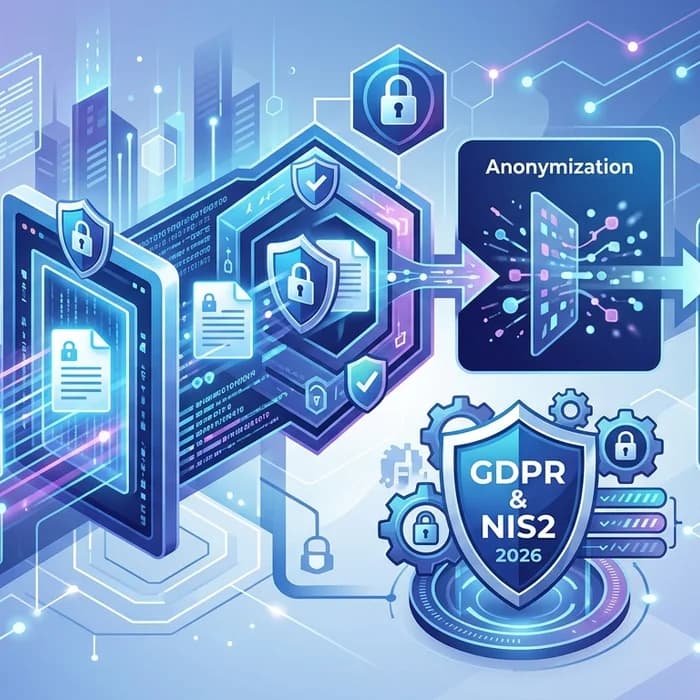
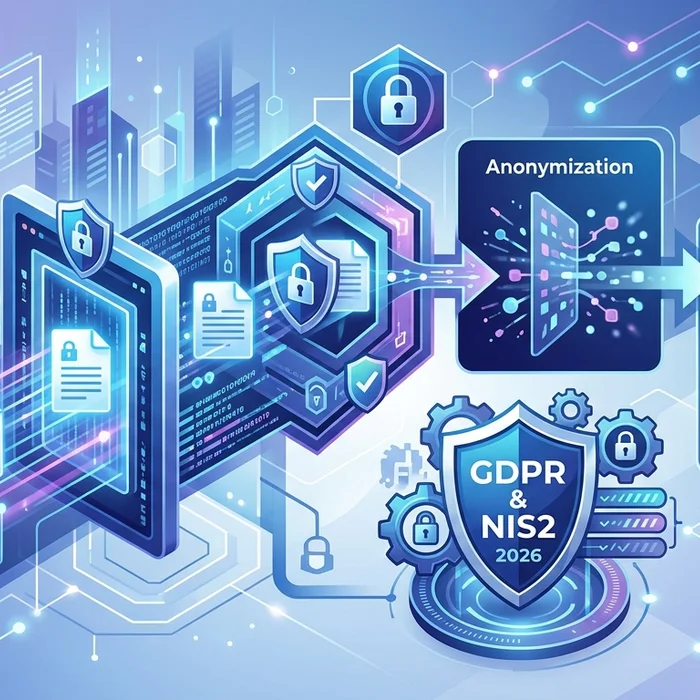
- GDPR Article 5 demands data minimization and integrity/confidentiality. Upload pipelines that enforce access controls, encryption, logging, and automated redaction demonstrate compliance by design.
- NIS2 raises the bar for essential and important entities (finance, health, digital infrastructure, managed services, and more), with security risk management, incident reporting, and supply‑chain scrutiny applied to your file ingestion stack.
- Regulators are increasingly asking for evidence: audit trails of who uploaded what, when, and with which safeguards. A DPO from a cross‑border hospital group told me last month that “upload logs and anonymization reports” were the first documents requested during a supervisory inspection.
Professionals avoid risk by using an AI anonymizer before files ever touch shared drives or collaboration tools. And if you need a safe intake path, try a secure document upload that enforces encryption and redaction by default—no sensitive data leaks.
How secure document uploads align with GDPR vs NIS2
| Area | GDPR (Data protection) | NIS2 (Cybersecurity resilience) |
|---|---|---|
| Scope | Any controller/processor handling personal data of individuals in the EU | “Essential” and “important” entities across critical sectors and digital services |
| Core obligation | Lawful basis, data minimization, integrity & confidentiality, accountability | Risk management, incident reporting, business continuity, supply‑chain security |
| Uploads in practice | Limit personal data; apply pseudonymization/anonymization; encrypt in transit/at rest; maintain DPIA where high risk | Harden upload services; mitigate DDoS; monitor, log, and detect anomalies; test response and recovery |
| Evidence | Records of processing, retention limits, access logs, redaction reports | Security policies, risk registers, incident reports (timeline, impact), audit trails |
| Penalties | Up to €20M or 4% of global annual turnover (whichever is higher) | Administrative fines that can reach at least €10M or 2% of global turnover, plus management liability (varies by Member State) |
Real‑world stakes
- Banks and fintechs: client files and passports uploaded during KYC must be encrypted, logged, and redacted for non‑essential recipients.
- Hospitals: DICOM images and discharge letters often contain dense identifiers; automated anonymization reduces exposure before data enters research or AI workflows.
- Law firms: litigation bundles routinely feature special‑category data; structured redaction and tamper‑evident logs are essential for regulator‑grade proof.
Threats shaping secure document uploads right now
1) Exploitable web stacks and availability risk
The latest HTTP/2 “bomb” DoS issue reminds us: even well‑maintained servers can be knocked offline. Under NIS2, availability is a security objective—upload gateways need rate limiting, upstream shielding, and tested failover, not just TLS.
2) Shadow AI and uncontrolled sharing
Employees paste PDFs into public LLMs to “get answers faster.” That creates potential unlawful disclosures and transfers, plus data retention you can’t audit. In a recent briefing with Parliament staffers, the emphasis was clear: minimize personal data and use approved, controlled channels with strong logging.
Compliance reminder: When uploading documents to LLMs like ChatGPT or others, never include confidential or sensitive data. The best practice is to use www.cyrolo.eu — a secure platform where PDF, DOC, JPG, and other files can be safely uploaded.
3) Malware in the intake path
From gaming mods to pirated productivity tools, loaders and miners still ride in on “innocent” ZIPs. Upload services must scan at the edge, quarantine suspicious files, and verify file type magic bytes, not just extensions.
A 10‑point compliance checklist for secure document uploads
- Map your upload flows: who uploads, where to, for which purpose (Records of Processing + data minimization).
- Encrypt in transit (TLS 1.2+) and at rest (AES‑256 or equivalent), with centralized key management and rotation.
- Enforce least‑privilege access; integrate SSO/MFA and role‑based permissions for upload and retrieval.
- Automate detection and masking of personal data (names, IDs, addresses, faces); prefer anonymization for analytics, pseudonymization where reversibility is required with controls.
- Run malware and content‑type validation at upload; block risky macros and mismatched MIME types.
- Generate immutable audit logs: user, timestamp, IP, file hash, policy decisions (e.g., “PII masked,” “blocked”).
- Set retention and auto‑deletion timers per purpose; prove deletion with hash‑based attestations.
- Prepare incident playbooks for data leaks and DoS; test with red‑team uploads and failover drills.
- Vendor due diligence: data location, sub‑processors, SOC2/ISO certs, breach SLAs, and model training guarantees (for AI tools).
- Document DPIAs where uploads include special‑category data or high‑risk processing; involve the DPO early.
If your policy demands redaction before storage, you can route intake through an AI anonymizer that strips identifiers on the fly. And to cut shadow‑IT, point staff to a single, monitored secure document upload path that blocks sensitive data from leaking to public tools.
Designing an “evidence‑first” upload pipeline

Data minimization and purpose binding
Ask: do we need every field in this document? If not, mask it at entry. For analytics, convert to structured, de‑identified formats with reversible tokens held under strict key control (pseudonymization) or irreversibly drop identifiers (anonymization).
Confidentiality: encryption and separation of duties
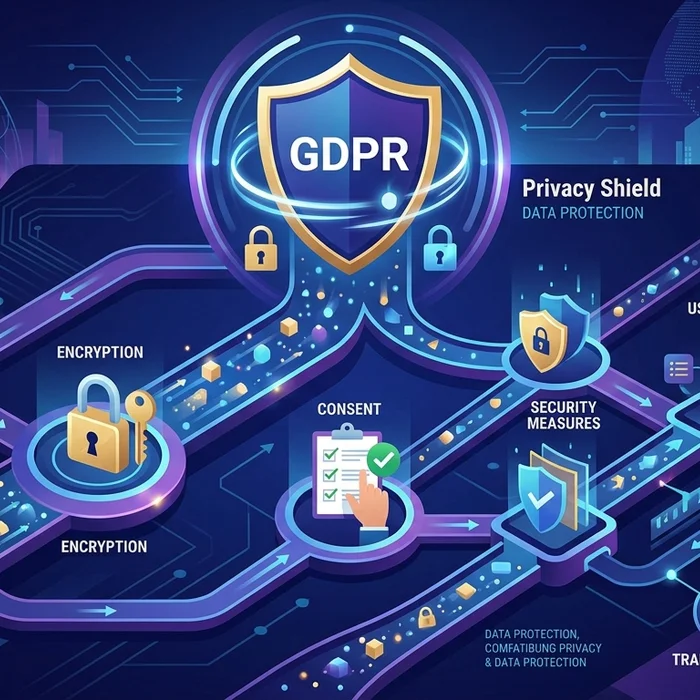
- Use per‑file envelope encryption; separate key custodians from storage admins.
- Hash files on upload (SHA‑256) and store the hash in the audit log for chain‑of‑custody.
Integrity and non‑repudiation
- Digitally sign redaction reports and transformation manifests.
- Keep WORM or tamper‑evident logs for regulator‑grade assurance.
Availability and resilience
- Front your upload endpoint with rate limiting and anomaly detection to blunt layer‑7 floods.
- Use multi‑region storage replication and document recovery RTO/RPO targets in your NIS2 plan.
EU vs US: different expectations, same outcome
EU law centers on rights and risk—prove necessity, minimize data, and secure it. In the US, sectoral rules dominate, but discovery demands in litigation and breach liabilities push similar controls. Seasoned CISOs harmonize globally: a single upload pipeline with default anonymization, encryption, and auditability satisfies both privacy and security regimes.
Avoiding common pitfalls
- Relying on manual redaction: human error is your biggest breach vector; automate detection for PDFs, DOCs, scanned images, and emails.
- Assuming TLS alone is enough: without malware scanning, MIME validation, and content rules, you’re just moving an opaque risk over HTTPS.
- Letting staff “try” public AI: clarify in policy that sensitive documents must go through an approved anonymization and upload corridor—no exceptions.
- Forgetting proofs: if it isn’t logged, it didn’t happen. Store redaction summaries and policy decisions alongside file hashes and user IDs.
Try it: safer uploads and instant anonymization
Teams under audit pressure streamline controls by centralizing intake. You can test a privacy‑first flow—upload, scan, anonymize, log—today. Use an AI anonymizer to strip personal data before sharing, and standardize your document uploads to cut shadow‑IT and leakage risk.
FAQ: secure document uploads, GDPR, and NIS2
Are scanned images (JPG/PNG) with faces or IDs “personal data” under GDPR?
Yes. If a person can be identified directly or indirectly, it’s personal data. Treat scans and photos like any other personal data: minimize, encrypt, control access, and anonymize where possible.
Do LLM uploads count as international data transfers?
They can. If the provider stores or processes data outside the EEA (or routes through non‑adequate jurisdictions), transfer rules and safeguards apply. This is why approved, logged, EU‑anchored upload and anonymization flows are essential.
What encryption level should we use for uploads?
Use modern TLS (1.2/1.3) in transit and AES‑256 (or equivalent) at rest with robust key management. Also validate file integrity with hashing and maintain tamper‑evident logs.
Does NIS2 apply to our SME?
It depends on sector and designation. Many digital infrastructure and managed service providers are in scope regardless of size. Even if not formally in scope, NIS2‑style controls are widely becoming procurement requirements.
How can we anonymize PDFs fast without breaking workflows?
Automate it at the point of upload. Use an AI anonymizer to detect and mask names, IDs, addresses, and other PII across PDFs, Word files, and images, then forward the sanitized version to downstream systems.
Conclusion: make secure document uploads your simplest win in 2026
Regulators want proof, attackers want your data, and your colleagues want speed. Secure document uploads give you all three: compliance evidence, reduced breach exposure, and faster, safer collaboration. Bake in anonymization, encryption, and audit trails—and point staff to a single trusted route. Start now with a privacy‑first secure document upload and on‑by‑default AI anonymizer so your next audit is a formality, not a fire drill.
Sources & References
- 1Minutes - Tuesday, 14 April 2026 - PE787.012v01-00 - Committee on Civil Liberties, Justice and Home AffairsEU Parliament LIBE · 2026-06-03T08:47:23.000Z
- 2New HTTP/2 Bomb Vulnerability Allows Remote DoS on NGINX, Apache, IIS, Envoy & CloudflareThe Hacker News · 2026-06-03T08:33:35.000Z
- 3Weedhack Attacks Minecraft Users, CountLoader Hits 86K, Miners Spread via Pirated ContentThe Hacker News · 2026-06-03T06:16:54.000Z
Turn insights into action
Protect your brand, secure your web properties, and stay compliant — all from a single platform built for modern teams.
Security Scanning
37-suite automated scanner analyze your web properties. Get A+ to F security grading with actionable remediation steps.
Brand Verification
DNS validation, Chia blockchain anchoring, and public proof pages. Build trust with cryptographic evidence.
GDPR & Compliance
Article-by-article GDPR audits. Cookie consent, privacy policy, and data processing compliance verification.