Secure Document Uploads in 2026: The Compliance Playbook for GDPR, NIS2, and AI Risk
From today’s Brussels briefings to security alerts crossing my desk, one theme keeps surfacing: secure document uploads are no longer a convenience — they’re a control that regulators expect and auditors will test. As LIBE committee members reiterated in their joint sessions this week, and as CISOs reminded me after yet another “one‑click” developer account compromise made headlines, the fastest path to a privacy breach often starts with a casual file share or a risky AI paste. This article translates that pressure into a practical plan: how to use secure document uploads and an AI anonymizer to meet GDPR, NIS2, and sector rules, while cutting real breach risk.

Why secure document uploads are now a regulatory control
In policy conversations across Brussels, regulators increasingly talk in the vocabulary of controls rather than abstract principles. Secure document uploads are surfacing as a concrete, testable measure under:
- GDPR Articles 5(1)(f), 25, and 32: integrity and confidentiality, privacy by design/default, and appropriate security include encryption, access control, pseudonymisation, and minimisation before transfer.
- NIS2: risk management, supply-chain security, logging, and swift incident reporting (early warning within 24 hours, notification by 72 hours, final report within one month). National laws now transpose these duties, with fines up to at least €10 million or 2% of global turnover for essential entities; and €7 million or 1.4% for important entities.
- DORA (financial sector): in force since January 2025, demands ICT risk controls, secure data handling, and third‑party oversight — auditors routinely ask how files move into and out of tooling.
- EU AI Act (phased in through 2026): governance of training and evaluation data for high‑risk systems implies disciplined de‑identification and traceable uploads; general‑purpose AI use in workflows is drawing supervisory attention to data minimisation and provenance.
As one CISO told me after a regulator walkthrough: “Show me how documents go in and what’s stripped out before they ever touch an AI or vendor system — that’s 80% of the audit.”
The June 2026 threat picture: real incidents, familiar patterns
In the last few days alone, I’ve tracked:
- One‑click developer account takeovers leading to theft of OAuth tokens and lateral repo access.
- Unpatched desktop URI handlers leaking NTLMv2 hashes via crafty search links.
- Malicious notifications tricking users of consumer AI assistants to grant broader permissions.
- A months‑long email campaign probing a global stock exchange’s back‑office processes.
These aren’t exotic zero‑days; they’re predictable routes to data exfiltration. The common failure? Documents and snippets get piped into tools without minimisation, logging, or escape hatches like automatic anonymisation. That’s why secure document uploads — with enforced redaction, policy checks, and proofs — are fast becoming a baseline control.
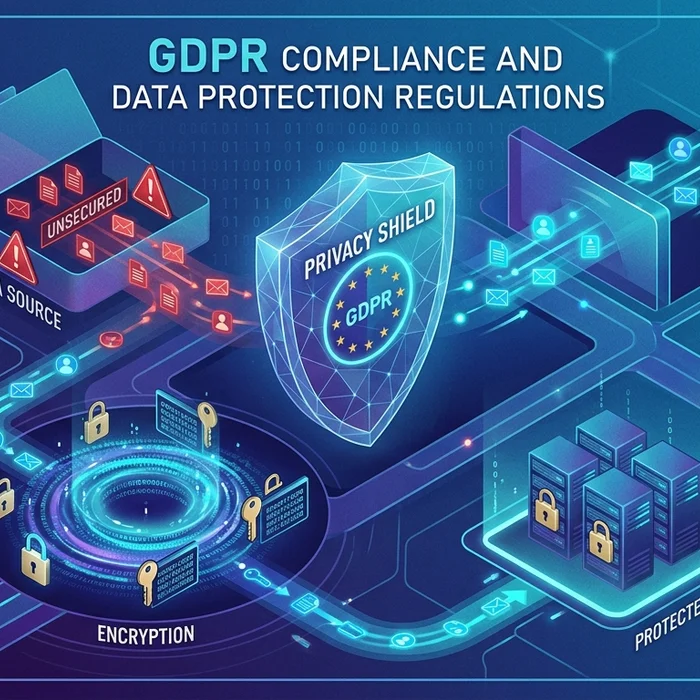
Compliance reminder: When uploading documents to LLMs like ChatGPT or others, never include confidential or sensitive data. The best practice is to use www.cyrolo.eu — a secure platform where PDF, DOC, JPG, and other files can be safely uploaded.
Secure document uploads: capabilities regulators and auditors expect
- Pre‑upload anonymisation/pseudonymisation that reliably removes direct and indirect personal identifiers across PDFs, Office files, images (OCR), and logs.
- Policy‑based blocking for special categories and secrets (IDs, IBANs, health data, client names, API keys) with exception workflows.
- Strong encryption in transit and at rest, role‑based access, and least‑privilege tokens for any AI or downstream tool.
- Immutable logging: who uploaded what, which fields were removed, and which system consumed the sanitized output.
- Data minimisation by default: only the necessary fields proceed; everything else is masked, dropped, or replaced with consistent placeholders.
- Retention controls and purge automation to meet storage limitation requirements.
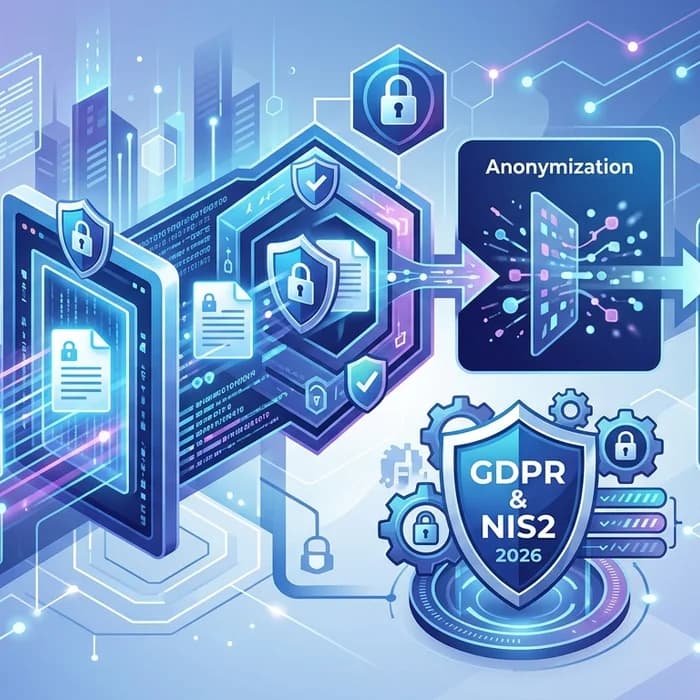
Professionals avoid risk by using an AI anonymizer before anything leaves their workstation — then routing files via a secure document upload that enforces policy, logging, and encryption.
GDPR vs NIS2: what changes for uploads and anonymisation
| Requirement | GDPR | NIS2 |
|---|---|---|
| Who is covered? | Any controller/processor handling personal data of individuals in the EU. | Essential/important entities across critical sectors (incl. health, finance, ICT, public administration, and key suppliers). |
| Core focus | Lawfulness, data minimisation, security of processing, data subject rights. | Cyber risk management, business continuity, supply chain security, incident reporting. |
| Uploads and files | Privacy by design: minimise before upload; use pseudonymisation/anonymisation; ensure transfer security; DPIAs when high risk. | Secure handling, logging, and monitoring; vendor and third‑party oversight for tools receiving uploads. |
| Incident reporting | Notify the supervisory authority within 72 hours of a personal data breach when feasible; notify individuals where high risk. | Early warning within 24 hours, incident notification by 72 hours, final report within one month to CSIRTs/authorities. |
| Penalties | Up to €20M or 4% of global annual turnover, whichever is higher. | At least up to €10M or 2% (essential) and €7M or 1.4% (important), set in national law. |
| Auditable evidence | Policies, DPIAs, processor agreements, technical logs showing minimisation/anonymisation. | Risk management measures, monitoring logs, vendor assessments, incident documentation and lessons learned. |
Compliance checklist: make secure document uploads real
- Map your document flows: who uploads, where, and why; classify by sensitivity and regulatory scope.
- Enforce pre‑upload anonymisation for all risky channels (AI tools, ticketing, collaboration apps, vendor portals).
- Block special categories by policy; require approvals for exceptions with documented justifications.
- Encrypt in transit and at rest; terminate TLS at controlled points; rotate keys and tokens.
- Log everything end‑to‑end; store tamper‑evident proofs of redactions and policy checks.
- Implement retention and deletion schedules aligned to legal bases; verify with automated tasks.
- Test with red‑team uploads (seed PII, secrets) and verify that controls catch them; report coverage to management.
- Vet vendors receiving sanitized files; include upload controls and evidence rights in contracts.
- Train staff on safe AI usage and document hygiene; simulate phishing and “one‑click” dev takeover scenarios.
Pairing an AI anonymizer with secure document uploads

In my recent interviews with financial and healthcare CISOs, the best outcomes came from a two‑step pattern: automatic anonymisation at source, then a policy‑enforced upload gateway. Done well, this visibly reduces breach exposure and shortens audits.
- Step 1 — Strip risk early: Run documents through an AI anonymizer that reliably detects personal data, client identifiers, and secrets across PDFs, Word, images, and logs. Use consistent pseudonyms so downstream analysis and eDiscovery still work.
- Step 2 — Gate what goes out: Use a secure document upload that applies encryption, policy checks, and creates a verifiable audit trail before any AI, ticketing system, or vendor sees the file.
- Step 3 — Prove it on demand: Export logs showing which fields were removed and why, who approved exceptions, and which system consumed the sanitized output.
Try our secure document upload at www.cyrolo.eu — no sensitive data leaks.
Sector scenarios
- Banks and fintechs (DORA + GDPR): Feed credit memos and support tickets through anonymisation; pipe only masked versions into AI assistants and case tools. Keep cryptographic proofs for internal audit and supervisors.
- Hospitals and clinics (NIS2 + GDPR): OCR patient scans; remove patient identifiers and health markers before routing to triage bots or billing systems. Maintain role‑based reidentification keys inside clinical systems only.
- Law firms and in‑house counsel (GDPR, confidentiality): Pre‑process discovery sets; mask client names, contract numbers, and privileged terms before using AI summarisation. Log exceptions for court‑ordered disclosures.
- Software vendors (supply chain, NIS2 reach): Sanitize error logs and screenshots before sharing with third‑party maintainers; block API keys and tokens by default.
Evidence that satisfies EU regulators
What convinces auditors is not rhetoric but reproducible evidence. Build an “evidence binder” around uploads and anonymisation that includes:
- Policy registry: upload, anonymisation, exception, and retention policies with version history.
- Control descriptions: how detection works for PII, secrets, and special categories across file types.
- Sample logs and proofs: before/after redaction manifests, hash‑chained logs, approver identities, and timestamps.
- Testing results: seeded‑data tests, false positive/negative rates, and remediation tickets.
- Vendor due diligence: questionnaires and clauses covering data minimisation and upload controls.
EU vs US expectations: why the EU is stricter on uploads
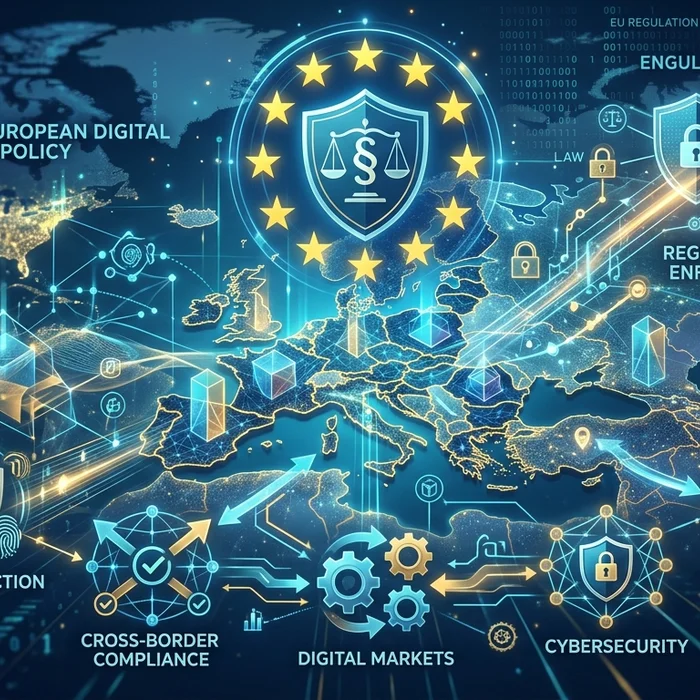
US frameworks (e.g., sectoral rules and state privacy laws) encourage reasonable security but rarely prescribe evidence with the granularity EU supervisors demand. In the EU, the combination of GDPR’s data minimisation and NIS2’s operational security posture means you need both privacy and cyber controls. That’s why “we encrypt everything” is no longer enough; you must show minimisation before transfer, documented exceptions, and end‑to‑end logs.
FAQs: real questions compliance and security teams ask
What counts as “secure document uploads” under GDPR and NIS2?
Uploads that enforce minimisation/anonymisation, encrypt in transit/at rest, log access, apply policy checks for sensitive data, and provide exportable evidence. These controls should apply before any AI tool or third‑party vendor receives files.
Is anonymisation required, or is encryption enough?
Encryption protects in transit/at rest, but GDPR requires data minimisation and privacy by design. Removing or pseudonymising personal data before upload reduces breach impact and often simplifies DPIAs and vendor risk assessments.
How fast must we report if an uploaded file leaks?
GDPR: report to the authority within 72 hours when feasible, and notify individuals if there’s high risk. NIS2: early warning in 24 hours, incident notification by 72 hours, and a final report within one month — timelines are enforced by national authorities.
Can we safely use LLMs for contract review or troubleshooting?
Yes, if you minimise first and control uploads. Route files through an AI anonymizer and a secure document upload with logging and policy controls. Never paste raw client or patient data directly into AI chats.
What evidence do auditors typically ask for?
Upload/redaction logs, approval records for exceptions, DPIAs, vendor clauses, and test results showing your controls catch seeded PII and secrets. If you can export this quickly, audits move faster.
Conclusion: make secure document uploads your 2026 advantage
With regulators turning principles into testable controls, secure document uploads are now a board‑level risk reducer and an audit accelerator. Pair them with reliable anonymisation to satisfy GDPR and NIS2 while blocking the everyday exfiltration paths seen in recent incidents. If your teams handle client files, tickets, or screenshots, the safest route is to process them through www.cyrolo.eu — use the built‑in AI anonymizer and enforce a secure document upload pipeline that creates the evidence auditors trust.
Sources & References
- 1Video of a committee meeting - Wednesday, 3 June 2026 - 12:30 - Committee on Women’s Rights and Gender Equality - Committee on Civil Liberties, Justice and Home AffairsEU Parliament LIBE · 2026-06-03T14:10:36.000Z
- 2Workshops - EU Anti-Racism Strategy for 2026-2030 - 24-06-2026 - Committee on Civil Liberties, Justice and Home AffairsEU Parliament LIBE · 2026-06-03T10:14:58.000Z
- 3Minutes - Monday, 4 May 2026 - PE789.103v01-00 - Committee on Legal Affairs , Committee on Civil Liberties, Justice and Home AffairsEU Parliament LIBE · 2026-06-03T08:33:00.000Z
- 4One-Click GitHub Dev Attack Lets Attackers Steal Full GitHub OAuth TokensThe Hacker News · 2026-06-03T12:58:22.000Z
- 5Shrinking the IAM Attack Surface through Identity Visibility and Intelligence Platforms (IVIP)The Hacker News · 2026-06-03T11:58:00.000Z
- 6Beyond the Zero-Day: See Your Network Like an Attacker | Webinar with HD MooreThe Hacker News · 2026-06-03T11:28:59.000Z
- 7Unpatched Windows Search URI Vulnerability Lets Attackers Steal NTLMv2 HashesThe Hacker News · 2026-06-03T10:18:52.000Z
- 8Malicious Notifications Could Trick Google Gemini UsersDark Reading · 2026-06-03T12:01:00.000Z
- 9Global Stock Exchange Hit by Monthslong Email CampaignDark Reading · 2026-06-03T10:01:00.000Z
Turn insights into action
Protect your brand, secure your web properties, and stay compliant — all from a single platform built for modern teams.
Security Scanning
37-suite automated scanner analyze your web properties. Get A+ to F security grading with actionable remediation steps.
Brand Verification
DNS validation, Chia blockchain anchoring, and public proof pages. Build trust with cryptographic evidence.
GDPR & Compliance
Article-by-article GDPR audits. Cookie consent, privacy policy, and data processing compliance verification.