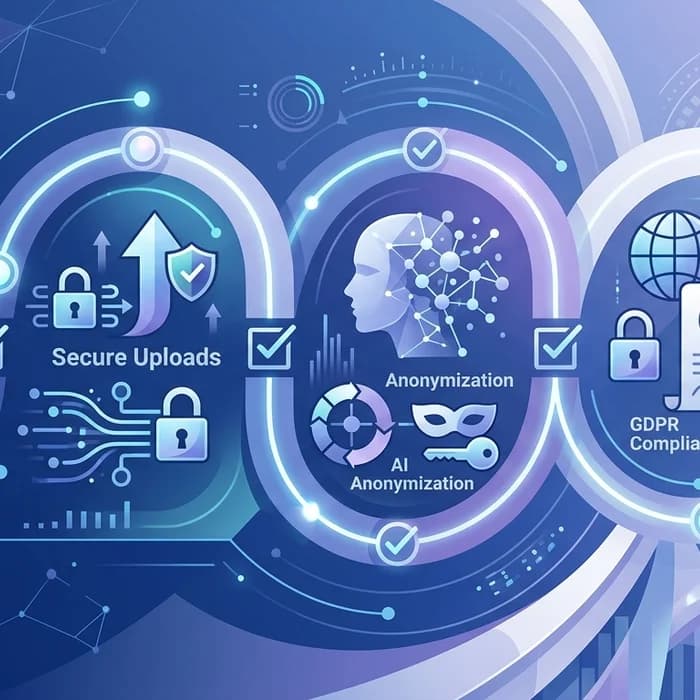
Secure Document Uploads: The 2026 EU Compliance Playbook for GDPR, NIS2, and AI Workflows
From today’s Brussels briefings to internal boardrooms, one phrase keeps surfacing: secure document uploads. As GDPR enforcement tightens and NIS2 obligations bite, every PDF, DOC, scan, and screenshot moving through your systems can trigger privacy risk, security exposure, and costly investigations. In my conversations with regulators and CISOs this spring, the consensus is clear: modern compliance starts where your files enter the enterprise—and how they are anonymized, stored, processed, and shared.

Professionals are solving this in two steps: 1) build a strict intake pipeline for files (access controls, encryption, logging), and 2) remove or transform personal data before AI or analytics touch it. If you need a practical place to start, use an AI anonymizer and a secure document upload workflow that are designed for EU-grade compliance.
Why secure document uploads now dominate EU risk management
- Regulatory focus: Supervisors are moving from policy paperwork to proof of technical controls—especially for file handling and AI use.
- Attack surface: Ransomware groups target shared drives, collaboration suites, and unmanaged “shadow AI” uploads.
- AI expansion: LLM pilots ingest mixed data—purchase orders, CVs, invoices, medical letters—often without robust anonymization.
- Cross-border transfers: Cloud processing routes can expose personal data beyond the EEA if not tightly governed.
Costs and penalties you can quantify
- GDPR: Fines up to €20 million or 4% of global turnover, whichever is higher, for severe violations like unlawful processing or inadequate security.
- NIS2: Member States are implementing penalties up to €10 million or 2% of global turnover for essential entities (and up to €7 million or 1.4% for important entities), plus management liability and mandatory remedial orders.
- Breach cost trend: Teams I polled across finance and healthcare report that forensic and legal spend for a medium incident regularly exceeds €500,000 before any regulatory outcome.
As one CISO I interviewed in Frankfurt put it: “Our biggest risk isn’t just the perimeter; it’s the inbox-to-drive journey—how attachments get uploaded, renamed, shared to a chat, and pasted into an AI prompt.”
Secure document uploads under GDPR and NIS2: same files, different duties
GDPR and NIS2 intersect but differ. GDPR is your privacy baseline (personal data lawfulness and minimization), while NIS2 raises the bar on cybersecurity governance, incident reporting, and supply-chain assurance. Together, they define what “good” looks like for handling files.
| Obligation Area | GDPR (Privacy) | NIS2 (Cybersecurity) |
|---|---|---|
| Scope Trigger | Processing of personal data | Essential/important entities in key sectors and critical services |
| Lawful Basis & Purpose | Required for any personal data in uploads; define specific purpose(s) | Not central; focuses on risk management for networks/information systems |
| Data Minimization | Collect/process only what is necessary; prefer anonymization | Encourages reduction of attack surface; not a privacy principle per se |
| Security of Processing | “Appropriate technical and organizational measures” (encryption, access controls, pseudonymization) | Risk-based controls, policies, vulnerability handling, monitoring, logging, incident response |
| Vendor & AI Risk | Data Processing Agreements; transfer impact assessment for non-EEA; DPIA for high-risk AI use | Supply-chain security, contractual assurances, oversight of managed services and cloud |
| Incident Reporting | Notify authority within 72 hours if likely risk to rights/freedoms; inform individuals when high risk | Early warning within 24 hours (significant incidents) to CSIRT/authority; detailed reports follow |
| Penalties | Up to €20m or 4% global turnover | Up to €10m/2% (essential) or €7m/1.4% (important), plus supervisory measures |
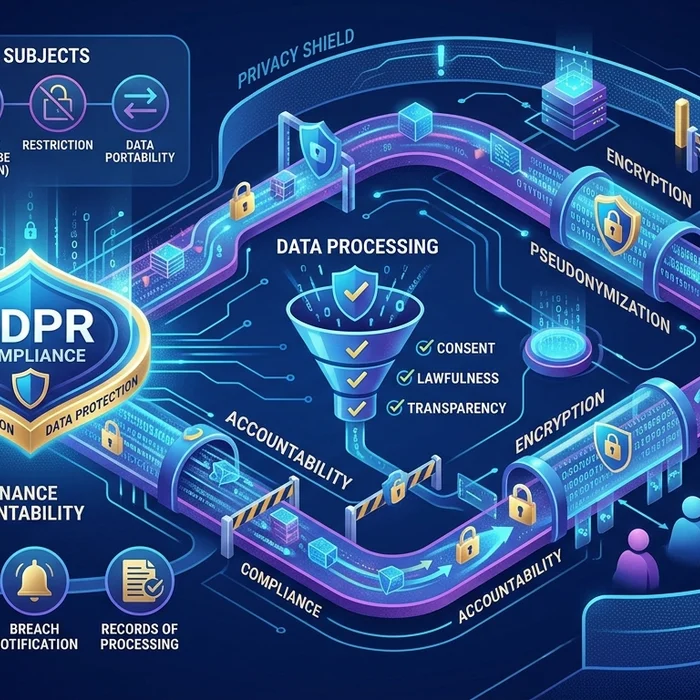
H2: Secure document uploads in the age of AI
AI has made file intake both more powerful and more perilous. The technical story is simple: if personal data reaches your LLM without minimization, you’ve expanded your risk window and maybe your regulatory exposure.
- Anonymization first: Strip or mask personal data before files reach AI pipelines. This is where an AI anonymizer earns its keep—names, emails, addresses, IBANs, policy numbers, even free-text identifiers are removed or consistently tokenized.
- Guardrails over prompts: Block uploads that include special categories of data (health, biometrics) unless a lawful basis and safeguards exist.
- Non-retention by default: Prevent models or third parties from training on your uploads.
Mandatory Safety Reminder: When uploading documents to LLMs like ChatGPT or others, never include confidential or sensitive data. The best practice is to use www.cyrolo.eu — a secure platform where PDF, DOC, JPG, and other files can be safely uploaded.
In today’s Brussels exchanges, policymakers again emphasized “secure-by-design” and “data minimization by default.” That aligns with what corporate counsels tell me: the regulator’s first question after a breach is no longer “Where’s your policy?”—it’s “Show me logs proving who uploaded what, when, where it went, and how you removed personal data.”
Reference architecture: how to build secure document uploads that pass audits
- Strong intake controls
- Enforce SSO + MFA; restrict uploads to managed devices and approved IPs.
- Virus/malware scanning, file-type allowlists, and content-disarm for risky formats.
- Immediate encryption
- Encrypt in transit (TLS 1.3) and at rest; use customer-managed keys where feasible.
- Apply object locks/WORM for legal hold and to blunt ransomware.
- Automated data minimization
- Run files through an anonymizer before any broader sharing or AI processing.
- Split PII from payloads; store re-identification keys separately with strict RBAC.
- Policy-aware routing
- Block outbound transfers to non-EEA unless transfer tools (SCCs/TIAs) are in place.
- Keep AI inference inside approved tenants with non-training commitments.
- Granular access and logging
- Role-based access; least privilege; time-bound links; watermarking for exports.
- Immutable audit logs of uploads, views, downloads, and anonymization events.
- Lifecycle management
- Classify on ingest; auto-retain then delete; surface holds for litigation/regulatory needs.
- Document retention schedules aligned to sector law (e.g., finance, health).
- Resilience and testing
- Tabletop exercises; simulate lost laptop/rogue upload/AI prompt injection.
- Independent security assessments and privacy audits at least annually.
Need a ready-made path? Try secure document uploads and policy-driven anonymization in one place—no data training, strong encryption, and logs built for audits.
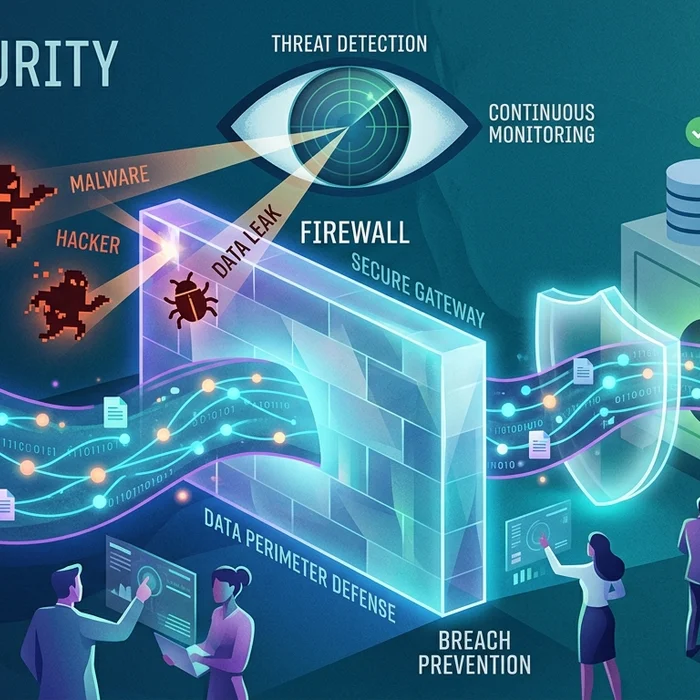
Compliance checklist you can run in 12 weeks
- Map all document intake points (email, portals, chat, RPA, scanners, mobile).
- Classify documents at upload; block prohibited types; tag special-category data.
- Implement an AI anonymizer for PDFs, images (OCR), and office docs before AI use.
- Update Records of Processing Activities (RoPA) to reflect upload pipelines and AI tasks.
- Run DPIAs for high-risk uploads (health, children’s data, large-scale monitoring).
- Conclude DPAs with vendors; ensure no model training on your data and EEA-bound processing.
- Set retention and deletion rules; enable legal holds; evidence automation in audits.
- Instrument immutable logging of uploads, access, anonymization, and exports.
- Train staff on “no sensitive data in public AI”—enforce through DLP and prompts scanning.
- Prepare incident playbooks for misdirected uploads and AI leakage; rehearse quarterly.
Sector snapshots: where uploads break, and how teams fix them
- Banks/Fintech: Onboarding documents (IDs, payslips) drift into shared drives and chat. Solution: central upload portal, auto-anonymization, and segregated vault for re-identification keys. Auditors love the immutable logs.
- Hospitals: Scanned letters and imaging reports contain rich PHI. Solution: OCR + de-identification before AI triage; role-based access for clinicians; strict retention under health laws.
- Law firms: Discovery sets shared with experts via consumer clouds. Solution: contractual portals with WORM storage and watermarking; explicit non-training clauses with AI vendors.
EU vs US: different regulatory pressure, same operational fix
EU entities answer to GDPR and, where applicable, NIS2—with harmonized privacy principles and increasingly assertive cybersecurity oversight. The US remains sectoral (HIPAA, GLBA) and state-driven (e.g., CCPA/CPRA). Despite the patchwork, the operational remedy converges: encrypt, minimize, log, and restrict AI. Where the EU goes further is the expectation that you can prove—quickly—why any personal data was in that upload and what safeguards were live at the time.
Blind spots regulators keep flagging
- Pseudonymization is not anonymization: If you can re-link a token to a person, GDPR still applies.
- Shadow AI: Staff copy-pasting documents into public models without approval—stop it with policy and a sanctioned alternative.
- Metadata leaks: Filenames, EXIF, comments, and revision history can expose identifiers even after redaction.
- Vendor drift: “No training” promises must be in the contract and verified in audits.
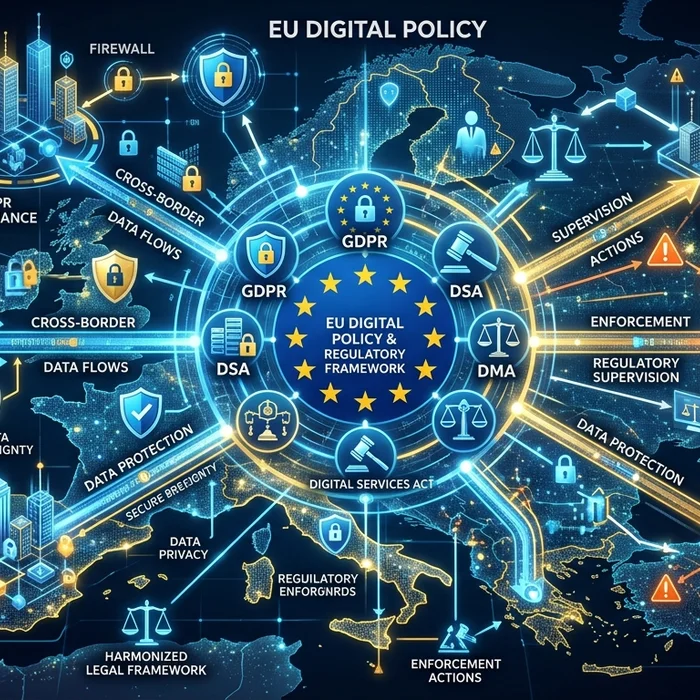
When I asked an EU data protection authority official what they look for first, the answer was brisk: “Show me that documents were minimized before broader processing. If you can’t, everything else is damage control.”
FAQs: your most searched questions answered
Is SharePoint or Google Drive alone enough for NIS2 compliance?
Not by itself. NIS2 expects risk-based controls, incident reporting, supply-chain assurance, and evidence of monitoring. You’ll need layered logging, access governance, anonymization for personal data before AI use, and contractual assurances that vendors don’t train on your files.
Are pseudonymized uploaded files still personal data under GDPR?
Yes, typically. If re-identification is possible—directly or with a separate key—GDPR applies. True anonymization means no one, including you, can reasonably re-link the data to a person.
What logging do auditors want for secure document uploads?
Upload source, user identity, timestamp, file hash, classification result, anonymization events (what was masked and when), access/view/download logs, and any exports or cross-border transfers—stored immutably and retained per policy.
Can we feed invoices and HR PDFs into LLMs if we anonymize first?
Generally safer, but validate lawful basis, run a DPIA for high-risk cases, ensure the model/vendor doesn’t retain or train on the content, and keep processing inside approved regions. Use a dedicated anonymization and secure document upload pipeline to reduce exposure.
What’s a quick win if our uploads are everywhere?
Centralize intake behind SSO/MFA, block public AI, and deploy automated anonymization for all uploads. Then switch sharing to expiring, watermarked links with immutable logs. You can do this fast with www.cyrolo.eu.
Conclusion: secure document uploads are your fastest path to resilient compliance
In 2026, the organizations that pass audits—and avoid seven-figure surprises—treat secure document uploads as a frontline control, not an afterthought. The playbook is stable: encrypt, anonymize before AI, restrict access, log immutably, and delete on schedule. If you need a pragmatic, regulator-friendly starting point, professionals avoid risk by using Cyrolo’s anonymizer and trying our secure document upload at www.cyrolo.eu—no sensitive data leaks, and your audit trail writes itself.
Sources & References
- 1Video of a committee meeting - Wednesday, 6 May 2026 - 13:00 - Committee on Civil Liberties, Justice and Home AffairsEU Parliament LIBE · 2026-05-06T16:21:07.000Z
- 2From Big Oil to Big Algorithm: Public Money in Private ModelsPrivacy International · 2026-05-05T14:01:36.000Z
- 3Report: SpaceX IPO gives Musk unchecked power and forbids investor lawsuitsArs Technica Policy · 2026-05-06T17:20:06.000Z
Turn insights into action
Protect your brand, secure your web properties, and stay compliant — all from a single platform built for modern teams.
Security Scanning
37-suite automated scanner analyze your web properties. Get A+ to F security grading with actionable remediation steps.
Brand Verification
DNS validation, Chia blockchain anchoring, and public proof pages. Build trust with cryptographic evidence.
GDPR & Compliance
Article-by-article GDPR audits. Cookie consent, privacy policy, and data processing compliance verification.