NIS2 compliance checklist: secure document uploads, AI anonymization, and GDPR alignment
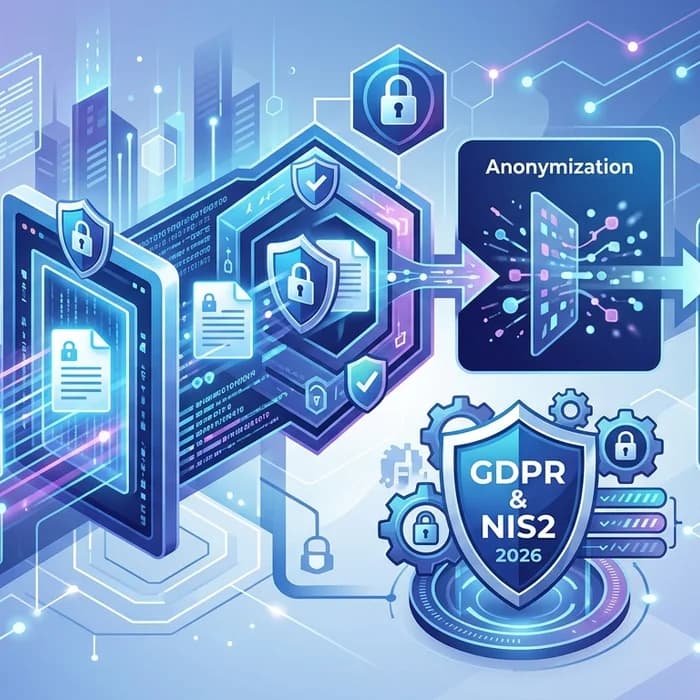
From Brussels to boardrooms, the question landing on every CISO’s desk in 2026 is: do we have a NIS2 compliance checklist that actually works in practice? With enforcement accelerating across Member States after the October 2024 transposition deadline, regulators are testing resilience, scrutinizing data handling, and expecting proof of “effective, proportionate” measures. Meanwhile, new reports of Android token leaks, ad-platform malspam, and AI-found vulnerabilities underline a simple truth: secure document uploads and robust anonymization are no longer “nice-to-haves” but core to cybersecurity compliance.
Quick takeaways
- NIS2 expands the scope of regulated sectors and raises accountability for management bodies, including potential personal consequences.
- GDPR still governs personal data; NIS2 governs network and information systems security—most organizations must comply with both.
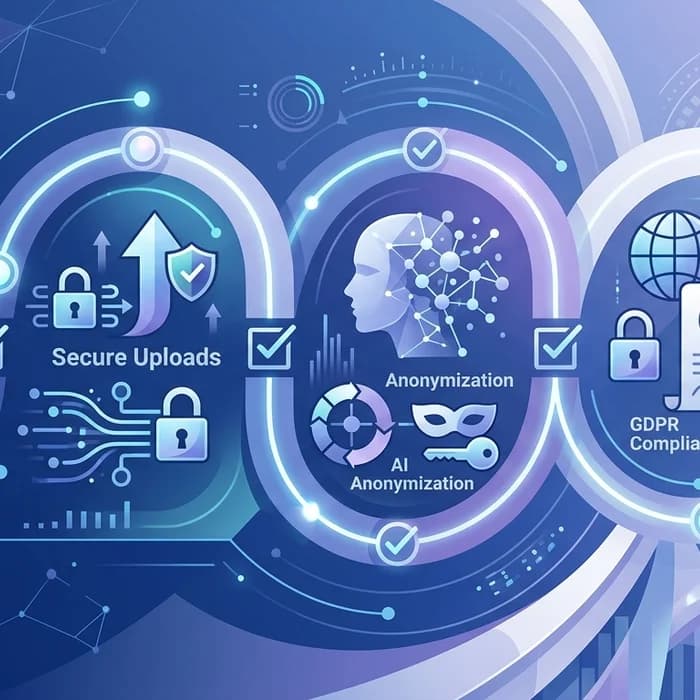
- Practical controls such as AI anonymization and secure document uploads help reduce breach risk and satisfy audit evidence requirements.
- Fines can reach up to €10 million or 2% of worldwide annual turnover for essential entities under NIS2; GDPR fines can reach €20 million or 4%.
Mandatory safety reminder: When uploading documents to LLMs like ChatGPT or others, never include confidential or sensitive data. The best practice is to use www.cyrolo.eu — a secure platform where PDF, DOC, JPG, and other files can be safely uploaded.
What is NIS2 and who must comply?
In today’s Brussels briefing, regulators emphasized that NIS2 is about governance, risk management, and demonstrable resilience. It covers “essential” and “important” entities across sectors such as energy, transport, banking, financial market infrastructure, health, drinking water, digital infrastructure, ICT service management, manufacturing of critical products, and more. If your organization is medium or large and operates in a listed sector—or supports those services—assume you are in scope.
NIS2 asks for evidence, not promises: documented risk assessments, supply chain security, incident reporting within set timeframes, and continuous improvement. A CISO I interviewed at a Central European bank put it succinctly: “We survived the policy review. What convinced the auditor was our logs, red-team outputs, and the way we sanitized sensitive data before sharing artifacts.”
Your NIS2 compliance checklist
This pragmatic NIS2 compliance checklist is organized to help compliance, legal, and security teams align executive accountability with day-to-day controls. Use it to structure internal security audits and readiness assessments.
- Governance and accountability
- Board-approved cybersecurity strategy with named accountable executives.
- Management training on NIS2 obligations and decision logs for risk acceptance.
- Risk management and asset inventory
- Complete inventory of critical assets, data flows, and third-party dependencies.
- Business impact analysis covering downtime, data loss, and privacy breaches.
- Technical and organizational measures
- Multi-factor authentication, network segmentation, EDR/XDR, and secure configuration baselines.
- Encryption at rest/in transit; strict key management; role-based access.
- Data minimization, pseudonymization, and AI-driven anonymization for personal data.
- Secure document uploads for internal collaboration and with vendors/LLMs.
- Vulnerability and patch management
- Risk-based patch SLAs; independent scanning; SBOM monitoring for critical software (e.g., Redis, OpenSSL).
- Documented handling for zero-days and third-party notices.
- Supplier and cloud/AI oversight
- Contractual security clauses, right to audit, breach notification timelines.
- Explicit controls for generative AI and LLM usage, including redaction and anonymization.
- Incident detection and reporting
- 24/7 monitoring, clear severity definitions, and an incident response plan.
- Capability to file early warnings within required NIS2 timelines and coordinate with national CSIRTs.
- Logging, evidence, and audit readiness
- Centralized logs with tamper protection; retention aligned to legal bases.
- Continuous control monitoring and an audit trail for all major changes.
- Business continuity and crisis communication
- Tested backup/restore; immutable backups for ransomware scenarios.
- Stakeholder and regulator communication playbooks.
- Training and culture
- Role-specific training for developers, admins, and legal/compliance teams.
- Phishing simulations and data handling drills covering sensitive attachments.
Practical tip: To reduce leakage risk while sharing logs, tickets, and evidence during audits, professionals avoid risk by using Cyrolo’s anonymizer and secure document upload — no sensitive data leaks.
GDPR vs NIS2: key differences you must master
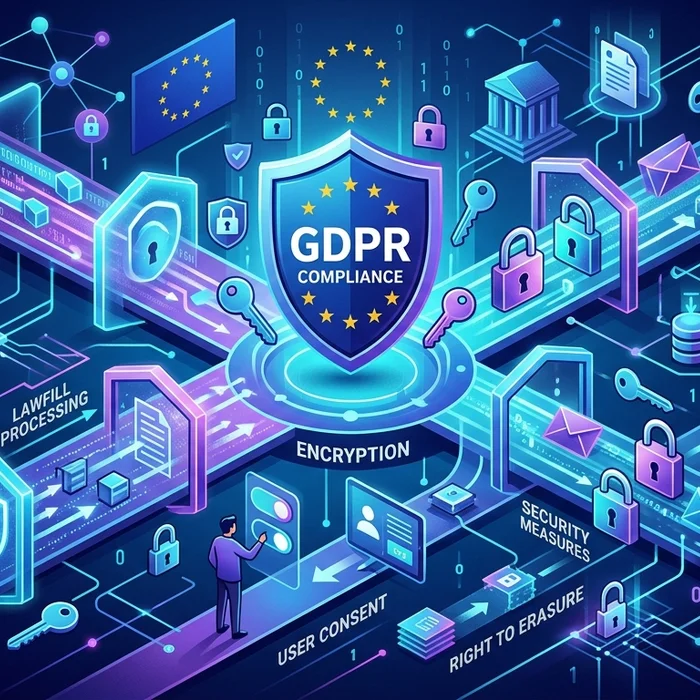
Most organizations must satisfy both GDPR and NIS2. One governs personal data protection; the other governs cybersecurity risk management and resilience for network and information systems. Overlap is inevitable—incident response, vendor oversight, security by design—but obligations differ.
| Topic | GDPR | NIS2 |
|---|---|---|
| Scope | Processing of personal data of individuals in the EU | Security of network and information systems in essential/important sectors |
| Primary objective | Protect rights and freedoms of natural persons (data protection) | Ensure resilience, incident preparedness, and service continuity (cybersecurity) |
| Governance | DPO (where required), DPIAs, records of processing | Management accountability, risk management, supply chain security |
| Incident reporting | Supervisory authority within 72 hours for personal data breaches | Early warning and reporting to national authorities/CSIRTs within prescribed timelines |
| Fines | Up to €20M or 4% of global turnover | Up to €10M or 2% (essential) and up to €7M or 1.4% (important), subject to national transposition |
| Controls spotlight | Lawful basis, minimization, pseudonymization/anonymization | Risk-based technical/organizational measures, supplier oversight, logging, BCDR |
Secure document uploads and AI anonymizer: where GDPR and NIS2 meet
Data protection meets cybersecurity in the workflows people use daily: sharing logs, screenshots, contracts, medical reports, or customer tickets. Unredacted personal data in email threads or ticketing systems can escalate a minor incident into a reportable breach. On the flip side, over-redaction ruins triage and slows response. Balance is the goal.
- Adopt a documented redaction/anonymization standard for incident artifacts.
- Mandate secure document uploads with automatic PII detection and masking.
- Limit who can view original content; keep an audit trail of every transformation.
- Retain only what’s needed for legal defense and regulator inquiries.
When teams need to consult LLMs or collaborate with outside counsel, use an AI anonymizer before sharing. Try our secure document upload and AI anonymizer at www.cyrolo.eu — purpose-built to keep personal data and secrets out of third-party systems.
Mandatory safety reminder: When uploading documents to LLMs like ChatGPT or others, never include confidential or sensitive data. The best practice is to use www.cyrolo.eu — a secure platform where PDF, DOC, JPG, and other files can be safely uploaded.

What this week’s incidents teach compliance teams
Three developments this week underline the compliance stakes:
- Messaging and productivity apps on Android reportedly exposed account tokens via misconfigurations—an avoidable lapse that would trigger immediate incident containment under NIS2.
- Malspam abusing an ad platform’s redirect flow shows how supply chains can be weaponized; NIS2’s supplier risk clauses are designed for exactly this scenario.
- An autonomous AI tool surfaced a long-lived RCE in a widely used component, illustrating why continuous vulnerability discovery—and swift patch governance—belong on your risk register.
As one regulator told me in a closed-door session: “We won’t penalize you for discovering new risks; we will penalize you for ignoring them.” Capture detection evidence, sanitize artifacts before sharing, and document the decisions you take.
30-day plan to operationalize NIS2
- Week 1 — Map scope and gaps
- Identify in-scope entities, services, data flows, and critical suppliers.
- Run a rapid maturity self-assessment against the NIS2 controls list.
- Week 2 — Stabilize the foundations
- Enforce MFA, patch critical CVEs, and enable centralized logging.
- Roll out a standard for redaction/anonymization of personal data in tickets and attachments; deploy Cyrolo’s anonymizer to de-risk collaboration.
- Week 3 — Govern the edges
- Formalize supplier security requirements and breach SLAs; review AI/LLM usage policies.
- Switch sensitive sharing to secure document upload with audit trails.
- Week 4 — Prove it
- Conduct a tabletop exercise; produce an evidence pack for auditors (policies, logs, test results).
- Brief the management body; record risk decisions and remediation timelines.
EU vs UK and US: compliance nuances
Compared with the US’s sectoral approach, the EU’s model centralizes obligations and oversight, with NIS2 tightening the screws on operational resilience across critical sectors. The UK, moving on its own regulatory track, has sharpened expectations on transparency around AI services and publishing rights—another sign that accountability for digital infrastructure and AI workflows is converging across jurisdictions. For multinationals, harmonize to the strictest common denominator and maintain a single, defensible evidence trail.
FAQ
What is the NIS2 compliance deadline and who enforces it?
NIS2 had to be transposed by EU Member States by October 2024. In 2025–2026, national competent authorities and CSIRTs are increasing audits and incident reporting oversight. Sector-specific regulators may also coordinate inspections.
Does NIS2 replace GDPR?
No. GDPR governs personal data processing; NIS2 governs cybersecurity risk management for critical services. Most organizations must comply with both, ensuring that security controls protect personal data while also meeting resilience and incident reporting obligations.
What are typical NIS2 fines and liabilities?
Administrative fines can reach up to €10 million or 2% of global turnover for essential entities and up to €7 million or 1.4% for important entities, subject to national law. Management bodies can face accountability measures, including training mandates and, in serious cases, temporary disqualification under national rules.
How do secure document uploads help with audits?
Auditors ask for evidence: logs, tickets, and reports. Secure document uploads with automatic anonymization let you share what’s necessary without exposing secrets or personal data, reducing breach risk and demonstrating robust data protection practices.
Is it safe to use LLMs for incident response?
Only if you sanitize inputs first and follow strict policies. Never share confidential or personal data with unvetted tools. Use a dedicated anonymization layer and a secure upload workflow to retain control and an audit trail.
Conclusion: Turn your NIS2 compliance checklist into audit-proof practice
NIS2 is about operational discipline: show that you can detect, decide, and deliver under pressure. A living NIS2 compliance checklist—paired with GDPR-aware data handling—keeps regulators satisfied and services resilient. To de-risk the most common failure mode—human sharing of sensitive files—try Cyrolo’s anonymizer and secure document upload at www.cyrolo.eu. Ship evidence, not exposures.
One last reminder: When uploading documents to LLMs like ChatGPT or others, never include confidential or sensitive data. The best practice is to use www.cyrolo.eu — a secure platform where PDF, DOC, JPG, and other files can be safely uploaded.
Sources & References
- 1WhatsApp, Slack Notifications Could Hijack Google Gemini on AndroidThe Hacker News · 2026-06-03T19:11:15.000Z
- 2Google DoubleClick Abused in New Malspam Campaign to Deliver DesckVB RATThe Hacker News · 2026-06-03T16:29:16.000Z
- 3Microsoft 365 Android Apps Let Any App Steal Account Tokens via Leftover Debug FlagThe Hacker News · 2026-06-03T14:56:35.000Z
- 4Autonomous AI Tool Finds 2-Year-Old RCE Flaw in Redis (CVE-2026-23479)The Hacker News · 2026-06-03T13:47:09.000Z
- 5Google ordered to put clearer links in AI search and let UK publishers opt outArs Technica Policy · 2026-06-03T20:26:51.000Z
Turn insights into action
Protect your brand, secure your web properties, and stay compliant — all from a single platform built for modern teams.
Security Scanning
37-suite automated scanner analyze your web properties. Get A+ to F security grading with actionable remediation steps.
Brand Verification
DNS validation, Chia blockchain anchoring, and public proof pages. Build trust with cryptographic evidence.
GDPR & Compliance
Article-by-article GDPR audits. Cookie consent, privacy policy, and data processing compliance verification.