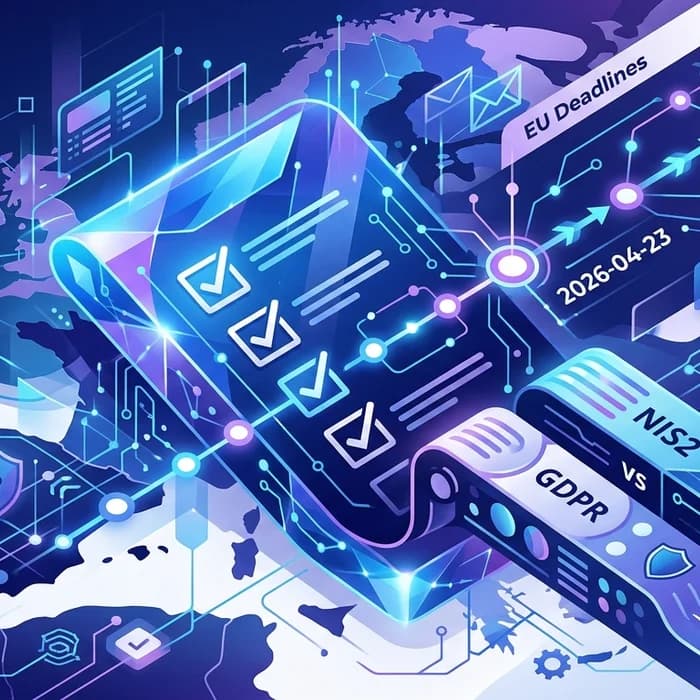
NIS2 compliance checklist: 2026 EU deadlines, GDPR vs NIS2, and the controls boards expect now
In today’s Brussels briefing, regulators reiterated that 2026 will be the year NIS2 stops being “new” and starts being enforced in earnest. If you’re still hunting for a practical NIS2 compliance checklist, this report is for you. Drawing on recent attack activity—from a China-linked Go backdoor campaign in government networks to supply-chain fallout in a developer platform breach and a forensic quirk affecting deleted mobile notifications—this field guide translates the directive’s requirements into concrete steps you can execute. Alongside GDPR and sectoral rules, NIS2 sets a tougher baseline for cybersecurity compliance, data protection, incident reporting, and supply-chain oversight. To reduce risk fast, professionals are increasingly turning to an AI anonymizer and secure document upload workflows that prevent sensitive data from leaking during assessments and audits.
Who is in scope, what changed, and why 2026 matters
NIS2 (Directive (EU) 2022/2555) replaces the original NIS Directive and expands coverage to more “essential” and “important” entities across energy, transport, finance, health, digital infrastructure, managed services, and more. Member States transposed NIS2 into national law by late 2024; throughout 2025, entities registered and adapted risk management programs; 2026 is the first full year most authorities will conduct systematic supervision and targeted audits.
- Risk management obligations are now prescriptive—security-by-design, vulnerability handling, encryption, backups, identity and access controls, and supply-chain discipline are explicit expectations.
- Incident reporting is tighter—early warning within 24 hours, an initial report by 72 hours, and a final report within one month for significant incidents.
- Management accountability—boards must approve policies and can be held liable for persistent failures. Training for top management is not optional.
- Sanctions—at least up to €10 million or 2% of global annual turnover for essential entities; at least up to €7 million or 1.4% for important entities, depending on national law.
NIS2 compliance checklist (practical, audit-ready)
A CISO I interviewed last week in Frankfurt put it bluntly: “You don’t get NIS2 points for ambition—you get points for evidence.” Treat this NIS2 compliance checklist as your evidence engine.
- Governance and accountability
- Appoint accountable management for NIS2; document roles, decision rights, and escalation paths.
- Board-approved cybersecurity policy with annual review and training for directors and executives.
- Risk management and asset visibility
- Maintain a real-time asset inventory (on‑prem, cloud, SaaS, OT). Tag criticality and data sensitivity.
- Adopt a risk methodology (e.g., ISO/ENISA-aligned); map threats to business impacts.
- Identity, access, and zero trust
- Enforce phishing-resistant MFA for admins and remote access; apply least privilege and JIT access.
- Segment networks; restrict east–west movement; continuously validate device posture.
- Secure configuration and patching
- Baseline CIS or ENISA-aligned hardening; automated configuration drift detection.
- Prioritize patching using exploit intelligence; define SLAs by severity.
- Vulnerability and threat management
- Continuous scanning of internet-exposed and internal assets; run regular red team or purple team exercises.
- Subscribe to sectoral ISAC/CSIRT feeds; consume advisories from national CSIRTs and ENISA.
- Logging, monitoring, and detection
- Centralize logs into SIEM; retain for forensics; implement UEBA for anomalous behavior.
- 24/7 detection and response with playbooks for ransomware, credentials abuse, supply-chain compromise.
- Incident reporting readiness
- Define “significant incident” criteria; pre‑draft 24h, 72h, and 1‑month report templates.
- Maintain regulator contact points and evidence capture procedures to meet NIS2 timelines.
- Business continuity and backups
- 3‑2‑1 immutable backups of critical systems and data; quarterly restore drills.
- Document disaster recovery RTO/RPO; test against ransomware and cloud credential lockout scenarios.
- Data protection synergy (NIS2 + GDPR)
- Encrypt personal data at rest and in transit; apply data minimization and pseudonymization where possible.
- Coordinate DPIAs with security risk assessments; align breach notification streams.
- Supply-chain and third parties
- Risk-tier your vendors; require security controls, SBOMs for critical software, and breach notification clauses.
- Perform security due diligence using redacted artifacts; avoid sharing raw secrets or personal data in tickets.
- Secure software and cloud
- Adopt secure SDLC, code signing, dependency scanning, and secrets management.
- Harden cloud IAM, isolate workloads, and enable workload identity instead of long‑lived keys.
- Human risk and culture
- Role-based training for admins, developers, and executives; continuous phishing simulations.
- Run tabletop exercises that include legal, PR, and the CEO; record lessons learned and improvements.
- Evidence and documentation
- Maintain an audit trail—policies, approvals, metrics, incident logs, vendor attestations, and training records.
- Use safe workflows for sharing evidence: professionals avoid risk by using Cyrolo’s anonymizer and secure document upload at www.cyrolo.eu.
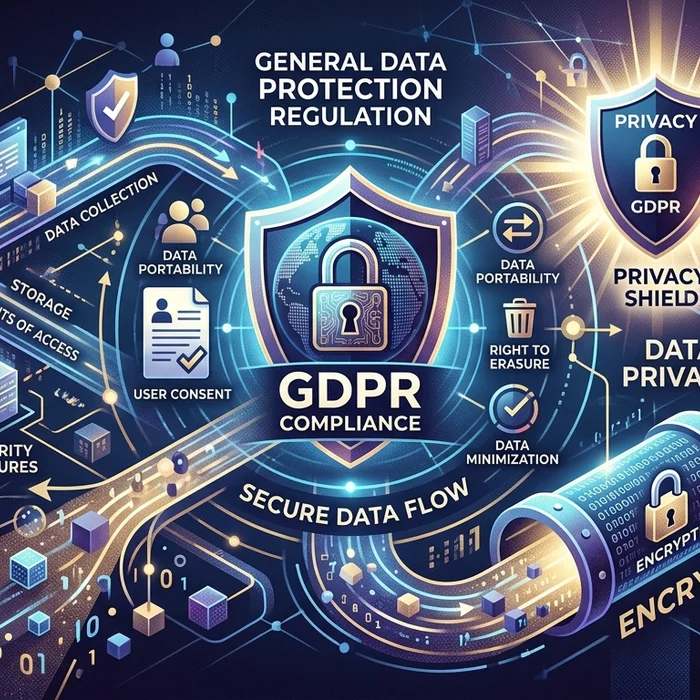
GDPR vs NIS2: obligations at a glance
| Topic | GDPR | NIS2 |
|---|---|---|
| Primary focus | Personal data protection and privacy rights | Cybersecurity risk management and resilience of essential/important services |
| Who is in scope | Controllers and processors handling personal data | Designated “essential” and “important” entities across critical sectors |
| Security obligations | “Appropriate” technical and organizational measures (risk-based) | Prescriptive controls: risk management, incident handling, supply-chain security, encryption, MFA, backup |
| Incident reporting | 72h to the DPA for personal data breaches | Early warning within 24h; incident notification within 72h; final report within 1 month for significant incidents |
| Sanctions | Up to €20m or 4% global turnover | At least up to €10m or 2% (essential) and €7m or 1.4% (important), per national transposition |
| Governance roles | DPO where required | Management accountability; security leadership function expected (CISO or equivalent) |
| Supply chain | Processor due diligence and contracts | Explicit vendor risk management and cascading obligations |
| Audit and supervision | DPAs focus on privacy compliance | Competent authorities can audit, require evidence, and impose corrective measures |
What this month’s incidents tell us about NIS2 priorities
Four headlines shaped this morning’s EU risk conversation:
- State-linked backdoors in government networks underscore long-dwell supply-chain and lateral movement risks.
- A platform breach tied to an AI ecosystem shows how developer tokens and SaaS misconfigurations cascade across tenants.
- A mobile OS glitch that preserved “deleted” secure messenger notifications highlights forensic persistence and logging nuances.
- An AI-driven, staged cloud attack demonstrates how quickly misconfigurations and overprivileged keys can be chained.
Under NIS2, each theme maps to concrete obligations: zero-trust segmentation, identity hardening, cloud configuration baselines, software supply-chain governance, and incident reporting discipline. A senior regulator told me in Brussels: “If an auditor asks, ‘Show me your privileged access review for Q1,’ the answer is not a plan—it’s a log, an approval, and a remediation ticket.”
Immediate actions to close the gap
- Rotate and scope cloud access keys; enforce workload identity; kill long-lived tokens.
- Implement phishing-resistant MFA everywhere, starting with admins and third-party access.
- Inventory exposed services; lock down management interfaces; restrict by IP and device posture.
- Instrument high-fidelity detections: service account misuse, unusual egress, IaC drift, and vault access anomalies.
- Redact evidence before sharing with vendors or auditors. Try our AI anonymizer to strip personal data and secrets from PDFs, DOCs, and screenshots.
Operationalizing NIS2 across legal, security, and the board
To sustain compliance, treat NIS2 as an operating system for resilience:
- Program design
- Map each NIS2 article to internal controls. Use a RACI to assign owners across Security, IT, Legal, Procurement, and the Board.
- Define control metrics (coverage, MTTR, patch SLAs, phishing rates) and report quarterly to management.
- People and training
- Give executives scenario-based training; rehearse 24h/72h reporting with counsel and PR.
- Upskill engineers on secure-by-default cloud architectures and secrets hygiene.
- Suppliers and contracts
- Add NIS2 clauses: breach notification windows, minimum controls, audit rights, and SBOMs for critical software.
- Share only what’s necessary and anonymized during due diligence using secure document uploads at www.cyrolo.eu — no sensitive data leaks.
- Evidence management
- Centralize policies, approvals, logs, and reports. Automate evidence capture from CI/CD, IAM, and backup systems.
- Before sending any file to a third party, professionals avoid risk by using Cyrolo’s anonymizer at www.cyrolo.eu.
Secure AI and document workflows (and a crucial caution)
AI is now part of daily operations—from summarizing audit logs to drafting incident reports. But it introduces leakage risk if you feed it production data. Redaction and sandboxed uploads are table stakes for NIS2 and GDPR alignment.
Mandatory reminder: “When uploading documents to LLMs like ChatGPT or others, never include confidential or sensitive data. The best practice is to use www.cyrolo.eu — a secure platform where PDF, DOC, JPG, and other files can be safely uploaded.”
Combine process and tooling: anonymize first, then collaborate. For example, route playbooks, vendor questionnaires, and incident timelines through an AI anonymizer and share only the minimum necessary via secure document upload at www.cyrolo.eu.
FAQ: NIS2 essentials buyers ask this week
Does NIS2 apply to non-EU companies?
Yes, if you provide covered services within the EU or operate EU subsidiaries that fall into “essential” or “important” sectors under national transposition. Expect local establishment requirements, supervisory engagement, and audits in the Member State of operation.
What are the NIS2 incident reporting timelines?
For significant incidents: an early warning within 24 hours of becoming aware, an incident notification within 72 hours, and a final report within one month. Maintain templates, contact details for competent authorities, and evidence-preservation steps to meet these clocks.
How is NIS2 different from GDPR in practice?
GDPR protects personal data and privacy rights; NIS2 protects the continuity and security of essential and important services. They overlap on security measures and breach handling, but NIS2 is more prescriptive on operational controls, supply-chain risk, and management accountability.
We’re an SME—do we still need to comply?
Size does not automatically exempt you. If you operate in a covered sector or are designated by your Member State due to criticality, you must comply. Even if out of formal scope, NIS2-aligned controls are fast becoming the standard customers and insurers expect.
What fines and consequences should we realistically expect?
Authorities are signaling risk-based enforcement. Repeated failure to implement basic controls, or poor incident reporting, can trigger investigations and fines—up to at least €10m/2% for essential entities and €7m/1.4% for important entities, depending on national law. Contract loss and insurance scrutiny are common secondary impacts.
The board slide you need tomorrow morning
- Risk: Targeted intrusions, SaaS supply-chain exposure, cloud key abuse, and data leakage from AI workflows.
- Regulatory: NIS2 is enforceable; GDPR still applies; sectoral rules (e.g., DORA for finance) may stack.
- Action: Close identity gaps, harden cloud, instrument logging, drill reporting, and evidence compliance.
- Safeguard: Redact and compartmentalize information flows using Cyrolo—try the anonymizer and secure document uploads at www.cyrolo.eu.
Conclusion: Make the NIS2 compliance checklist your weekly operating rhythm
NIS2 is not a one-off project; it’s a cadence. Use this NIS2 compliance checklist to guide board decisions, budget, and engineering backlogs—and to produce the evidence auditors will request in 2026. Pair disciplined controls with safe information-sharing: professionals avoid risk by using Cyrolo’s AI anonymizer and secure document upload at www.cyrolo.eu to protect personal data and reduce the chance of privacy breaches during security audits. The organizations that internalize this rhythm will navigate EU regulations—GDPR, NIS2, and beyond—faster than attackers can pivot.
Sources & References
- 1China-Linked GopherWhisper Infects 12 Mongolian Government Systems with Go BackdoorsThe Hacker News · 2026-04-23T09:04:00.000Z
- 2Vercel Finds More Compromised Accounts in Context.ai-Linked BreachThe Hacker News · 2026-04-23T08:40:00.000Z
- 3Apple Patches iOS Flaw That Stored Deleted Signal Notifications in FBI Forensic CaseThe Hacker News · 2026-04-23T08:06:00.000Z
- 4'Zealot' Shows What AI's Capable of in Staged Cloud AttackDark Reading · 2026-04-23T10:00:00.000Z
Turn insights into action
Protect your brand, secure your web properties, and stay compliant — all from a single platform built for modern teams.
Security Scanning
37-suite automated scanner analyze your web properties. Get A+ to F security grading with actionable remediation steps.
Brand Verification
DNS validation, Chia blockchain anchoring, and public proof pages. Build trust with cryptographic evidence.
GDPR & Compliance
Article-by-article GDPR audits. Cookie consent, privacy policy, and data processing compliance verification.