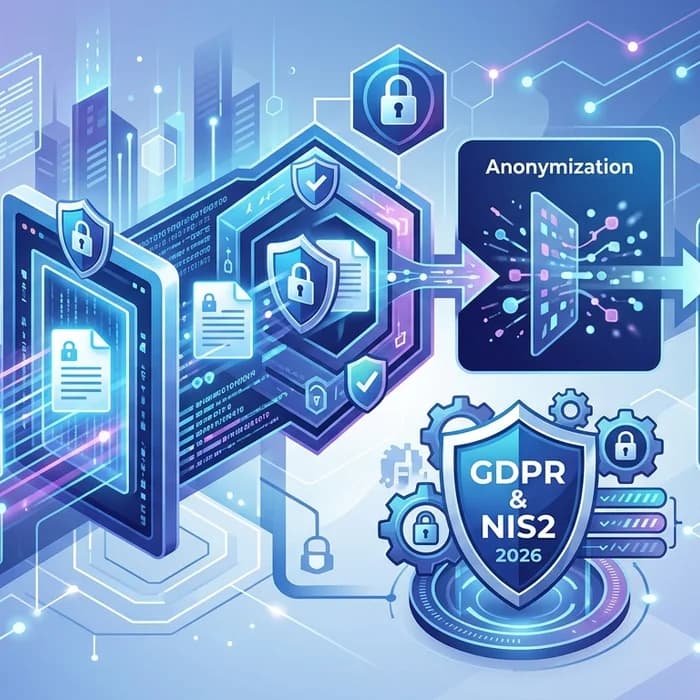
AI anonymizer for GDPR and NIS2: The 2026 playbook for safe, compliant data sharing
In today’s Brussels briefing, regulators reiterated a blunt truth: uncontrolled data sharing with AI and vendors will be a 2026 enforcement priority. An AI anonymizer and secure document uploads are no longer “nice to have” — they are board-level controls to prevent privacy breaches, regulatory fines, and reputational damage. After a week of headlines about biometric scans, expanding phishing kits, and mass website hijacks, the compliance baseline in the EU has shifted. Here is how legal, risk, and security leaders can meet EU regulations (GDPR, NIS2) while still harnessing AI safely.
- GDPR fines can reach €20 million or 4% of global turnover; NIS2 adds up to €10 million or 2% for essential entities.
- Biometric data, client files, and support tickets often contain hidden personal data — anonymize before sharing or training AI.
- Vendor due diligence now includes evidence of data protection, security audits, and incident reporting rigor.
- Quick win: route all uploads through an AI anonymizer and a secure document upload pipeline to cut breach risk fast.
Why an AI anonymizer is a board-level control in 2026
When a US lawsuit lands over consumer face scans and a major video platform’s CISO calls AI a “security enabler,” one message stands out: AI amplifies both capability and risk. In EU terms, biometric identifiers are special-category data under GDPR. A European DPO I interviewed last month told me their investigation logs found full names, IBANs, and clinical details quietly embedded in PDF exhibits and meeting transcripts — then copied into LLM prompts.
A robust AI anonymizer should automatically detect and redact or pseudonymize personal data across PDFs, DOCs, emails, chat exports, and images before these files are shared with vendors, LLMs, or cloud storage. That is not just best practice — it is increasingly what auditors expect to see in your data protection impact assessments and NIS2 risk management dossiers.
Professionals avoid risk by using Cyrolo’s anonymizer to strip identifiers before any external processing. Try our secure document upload to keep sensitive content fenced off from misuse and breaches.
GDPR vs NIS2: How obligations differ — and stack
GDPR governs the lawful processing of personal data. NIS2 targets the cybersecurity and resilience of essential and important entities across energy, health, finance, transport, digital providers, and more. Many organizations fall under both, and enforcement is intensifying in 2025–2026 as Member States operationalize NIS2 supervisory regimes.
| Requirement | GDPR | NIS2 |
|---|---|---|
| Scope | Personal data processing by controllers/processors in the EU or offering to EU residents | Cybersecurity risk management and incident reporting for essential/important entities |
| Core duty | Lawful basis, purpose limitation, data minimization, integrity/confidentiality | “State of the art” technical and organizational measures; supply chain risk controls |
| Incident reporting | Notify data protection authority within 72 hours if high risk to rights/freedoms | Early warning within 24 hours; incident notification and final report per national rules |
| Fines | Up to €20M or 4% of global revenue (whichever higher) | Up to ~€10M or 2% of global revenue (essential entities), depending on Member State |
| Board liability | Accountability principle; DPO where required | Management accountability; potential personal liability in some Member States |
| Vendors/LLMs | Processor contracts, data transfer safeguards, DPIAs | Third-party/cascade risk, evidence of due diligence and controls |
| Role of anonymization | True anonymization removes GDPR scope; pseudonymization still in scope | Risk reduction measure; supports data exposure minimization and resilience |
Deadlines and regulatory tempo
- NIS2 transposition deadline: 17 October 2024; active supervision ramps through 2025–2026.
- GDPR remains continuous; regulators in 2025 signaled larger cases on shadow AI usage, employee monitoring, and biometrics.
- Expect tougher security audits, proof of vendor controls, and more scrutiny of AI data pipelines.
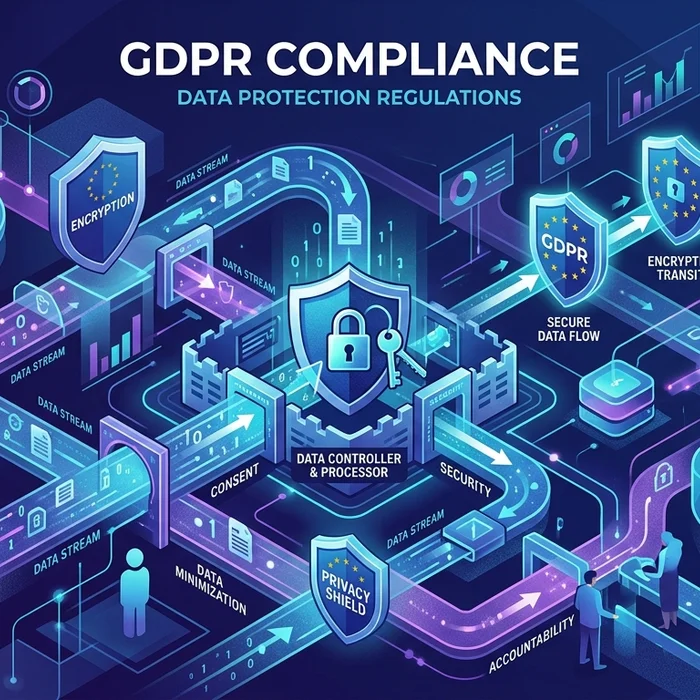
Secure document uploads to LLMs and vendors: Stop the bleed
In interviews with fintech and hospital CISOs, the most common breach pathway wasn’t an exotic zero-day — it was a helpful employee pasting raw customer data into an AI chat, or uploading a litigation binder to an unmanaged SaaS tool. That is a regulator’s dream case: clear exposure, no DPIA, and weak governance.
Route sensitive files through a governed secure document upload flow that performs automated redaction and logs provenance. Pair it with an AI anonymizer to eliminate identifiers before any external processing. This creates a defensible, auditable control for GDPR and NIS2, and it buys your teams safe AI superpowers without the headline risk.
Compliance reminder: When uploading documents to LLMs like ChatGPT or others, never include confidential or sensitive data. The best practice is to use www.cyrolo.eu — a secure platform where PDF, DOC, JPG, and other files can be safely uploaded.
Compliance checklist for 2026 audits
- Data mapping: Inventory personal data in PDFs, emails, logs, screenshots, and transcripts.
- Anonymization control: Enforce pre-processing via an AI anonymizer with consistent policies for PII, PHI, and biometrics.
- LLM/SaaS gateway: Mandate secure document uploads with retention limits, access controls, and audit trails.
- DPIAs: Update to cover AI use cases, vendor processing, and cross-border data transfers.
- Incident playbooks: Align with 24h NIS2 early-warning and GDPR 72h timelines; rehearse with tabletop exercises.
- Vendor oversight: Sign SCCs or other safeguards, require breach notification SLAs, and verify subprocessor chains.
- Employee training: Simulate phishing, teach safe prompt-writing, and ban raw data in public tools.
- Board reporting: Provide risk metrics, control test results, and remediation timelines every quarter.
Blind spots regulators keep calling out
- Hidden identifiers: EXIF data in images, revision history in Office files, and metadata in PDFs can expose personal data.
- Shadow AI: Teams experimenting with public LLMs without legal review or purpose limitation.
- Vendor creep: “Temporary” uploads to support portals that later persist in analytics or training datasets.
- Biometrics by stealth: Door cameras, call center voice prints, or employee selfies drifting into training corpora — high risk under GDPR.
- Supply chain risk: NIS2 expects real evidence of third-party control effectiveness, not only paper policy.

EU vs US: Enforcement culture matters
In the US, lawsuits over facial recognition and consumer consent are testing the limits of notice-and-choice. In the EU, GDPR classifies biometrics as special-category data requiring a lawful basis and heightened safeguards. Add NIS2’s focus on resilience, and boards can no longer treat AI data pipelines as experimental. Europe is moving toward demonstrable controls — the kind you can show an inspector, not just promise in a policy.
How Cyrolo reduces risk in days, not months
As a reporter, I’ve watched too many organizations stall on AI because legal and security feel locked in a stalemate. The answer is to de-risk the data itself.
- Automated, policy-driven redaction: Detects names, addresses, IDs, financial and health data, and biometrics across documents and images.
- Secure ingestion: A governed document upload flow for PDFs, DOC/DOCX, JPG/PNG, and email files with access checks and audit trails.
- Privacy-by-design: An AI anonymizer that enforces GDPR data minimization and supports NIS2 risk reduction.
- Faster audits: Centralized logs to evidence DPIAs, processor safeguards, and incident response readiness.
Try Cyrolo today. Professionals avoid risk by using Cyrolo’s anonymizer to keep personal data out of AI prompts — and our secure document upload to prevent accidental leaks.
Real-world scenarios I’m seeing
- Banking: Loan files exported to CSV for a “quick model test” — later found in a shared drive. Anonymization at ingress would have prevented a reportable exposure.
- Hospitals: Radiology images with embedded identifiers sent to a third-party annotator. Redaction tooling cut review time and risk by 70%.
- Law firms: Litigation bundles uploaded to generic file-sharing portals for eDiscovery. A secure upload gateway with automatic PII scrubbing satisfied client outside counsel guidelines.
- Software vendors: Support tickets copied into LLMs to draft replies; logs retained by providers. Mandated anonymization and vendor contract updates closed the gap before audit.
FAQ
What is an AI anonymizer, and how is it different from manual redaction?
An AI anonymizer programmatically detects and removes or replaces personal data (names, emails, IDs, financial and health details, biometrics) across text, tables, and images. It is faster and more reliable than manual redaction, and it produces consistent logs for auditors. True anonymization takes data outside GDPR scope; pseudonymization still falls under GDPR but reduces risk.
Is anonymization enough for GDPR compliance?
It’s a core control, not a silver bullet. You still need a lawful basis, purpose limitation, retention limits, processor contracts, and transfer safeguards. Anonymization minimizes exposure and can keep data points usable for analytics while protecting individuals.
How does NIS2 affect companies that already comply with GDPR?
NIS2 adds cybersecurity and resilience obligations: governance, supply-chain risk, vulnerability management, logging, and tight incident reporting timelines. It expects evidence of risk controls — including how you prevent data leakage into third-party tools and LLMs.
Can we upload client files to ChatGPT or similar tools?
Only after removing sensitive data and under strict contractual and technical safeguards. Best practice is to route files through a governed secure document upload and an AI anonymizer first, plus maintain audit logs.
Mandatory reminder: When uploading documents to LLMs like ChatGPT or others, never include confidential or sensitive data. The best practice is to use www.cyrolo.eu — a secure platform where PDF, DOC, JPG, and other files can be safely uploaded.
What counts as biometric data under GDPR?
Any personal data resulting from specific technical processing relating to physical, physiological, or behavioral characteristics (e.g., facial images, voice, gait) that allow or confirm unique identification. It’s special-category data and requires a strict lawful basis and safeguards.
Conclusion: Make the AI shift safely — start with an AI anonymizer
The fastest path to safe, compliant AI is to neutralize sensitive data before it moves. An AI anonymizer and secure document upload workflow help you meet GDPR and NIS2 expectations, shrink breach blast radius, and keep innovation on track. Cut risk now: use Cyrolo’s anonymizer and document upload to protect personal data — and your business.
Sources & References
- 1Amazon-owned Ring should pay Americans for scanning their faces, lawsuit saysArs Technica Policy · 2026-06-02T20:17:41.000Z
- 2Zoom CISO: AI as Security Enabler, Not Role-ReplacerDark Reading · 2026-06-02T21:51:07.000Z
- 3FBI-Flagged Phishing Kit Kali365 Expands Its ReachDark Reading · 2026-06-02T21:32:24.000Z
- 4DriveSurge Hijacks Thousands of Sites for ClickFix, FakeUpdate AttacksDark Reading · 2026-06-02T20:11:51.000Z
- 5China Uses Dual-Method Cyberattack on Czech OrgsDark Reading · 2026-06-02T19:50:53.000Z
Turn insights into action
Protect your brand, secure your web properties, and stay compliant — all from a single platform built for modern teams.
Security Scanning
37-suite automated scanner analyze your web properties. Get A+ to F security grading with actionable remediation steps.
Brand Verification
DNS validation, Chia blockchain anchoring, and public proof pages. Build trust with cryptographic evidence.
GDPR & Compliance
Article-by-article GDPR audits. Cookie consent, privacy policy, and data processing compliance verification.