AI anonymizer: the 2026 EU compliance playbook for GDPR and NIS2
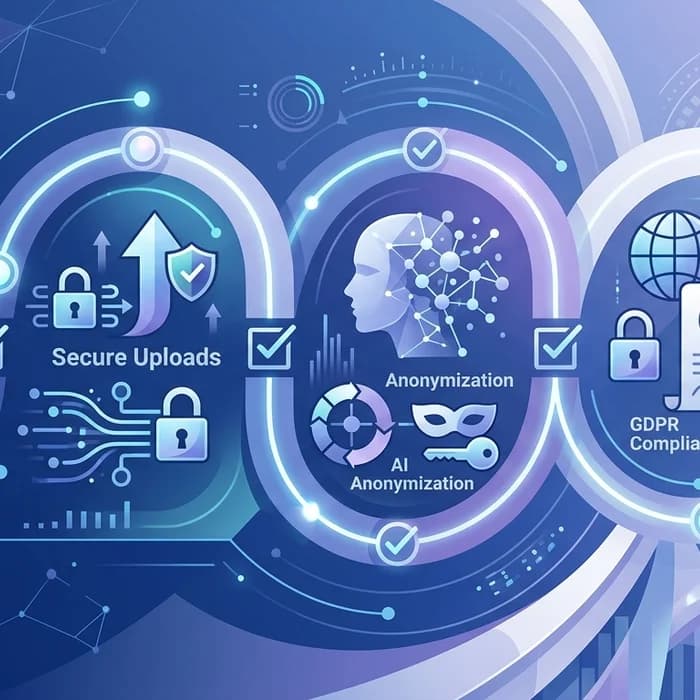
In Brussels this week, the conversation is remarkably consistent across regulators and CISOs: if you touch personal data or operational systems, you need an AI anonymizer strategy and secure document handling that stands up to audits. Three years of Digital Services Act (DSA) risk assessments, escalating GDPR enforcement, and the first NIS2 supervisory cycles are converging on one message—confidentiality lapses and sloppy uploads to AI tools are now board-level risks. Professionals avoid those risks by using anonymization and secure document uploads that are designed for EU compliance.

Regulators’ mood in 2026: privacy-by-design and proof of control
In today’s Brussels briefing, regulators emphasized that “risk-based” cannot mean “trust us.” They want durable controls they can test: automated detection and redaction of personal data, governance around model prompts and file uploads, patching discipline, and incident reporting muscle memory.
- GDPR enforcers have sharpened expectations on data minimisation and demonstrable anonymisation—“pseudonymisation” is not enough.
- NIS2 supervisors are running table-top exercises on vulnerability handling and supplier risk; several cited high-profile Linux and browser bugs this quarter as examples of why continuous monitoring is non-negotiable.
- Across DSA risk assessment reviews, platforms that can show privacy-safe workflows for content moderation and analysis fare better.
A CISO I interviewed last month put it bluntly: “We stopped copy-pasting contracts into generic LLMs. We built a flow where sensitive fields are stripped before analysis, and we log every prompt and upload. That’s what changed our audit conversations from defensive to proactive.”
Secure document uploads without leaks
Most breaches I see in investigation files aren’t Hollywood hacks—they’re quiet exfiltrations via unmanaged uploads, test environments, or helpful-but-dangerous AI assistants. The fix is disciplined upload workflows and a reliable gatekeeper that spots personal data and business secrets before anything leaves your perimeter.
Compliance reminder: When uploading documents to LLMs like ChatGPT or others, never include confidential or sensitive data. The best practice is to use www.cyrolo.eu — a secure platform where PDF, DOC, JPG, and other files can be safely uploaded.
If your team needs to read and summarise files at scale—think KYC packets in banking, patient intake forms in hospitals, discovery bundles in law firms, due diligence materials in fintech—introduce a policy-backed, audit-logged secure document upload step before any AI processing. It’s the fastest way to reduce accidental disclosures.
Choosing an AI anonymizer that meets EU expectations
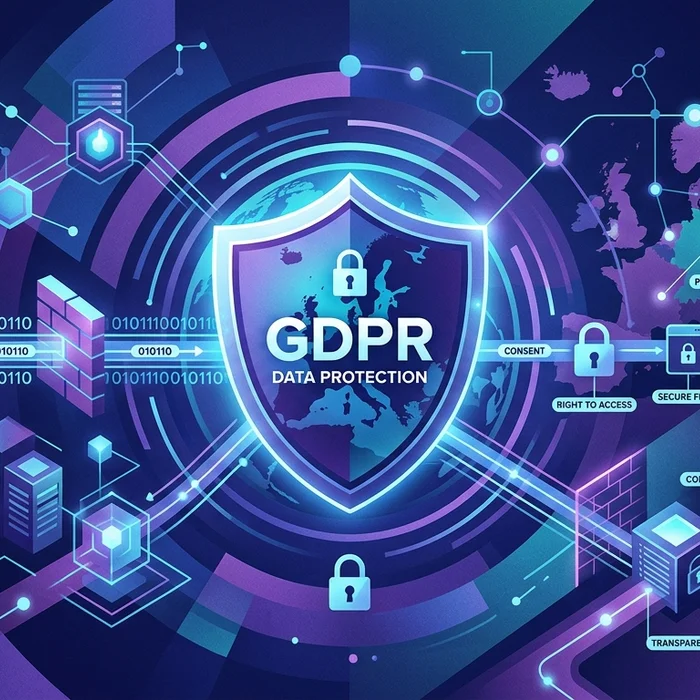
Look for an AI anonymizer that detects and consistently redacts direct and indirect identifiers across PDFs, scans (OCR), images, and office files. For EU readiness:
- GDPR-grade detection: names, addresses, dates, IDs, biometric indicators, health data, financial data, and free-text leaks.
- Configurable policies: role-based redaction (e.g., legal can see more than analysts), reversible tokenisation when justified.
- Provable logs: tamper-evident records of what was detected, how it was masked, and who accessed the data.
- Data localisation: EU processing by default; clear boundaries for onward transfers.
- Vendor neutrality: compatible with your in-house LLMs or external models, with a hard “do-not-upload” option for sensitive classes.
Professionals avoid risk by using Cyrolo’s anonymizer at www.cyrolo.eu—deployable without re-architecting your stack.
GDPR vs NIS2: what your AI pipeline must satisfy
Both laws bite in different places. GDPR governs personal data processing; NIS2 governs your security posture and incident resilience. Your AI workflows have to meet both.
| Topic | GDPR | NIS2 |
|---|---|---|
| Core scope | Personal data processing of EU residents; principles: lawfulness, minimisation, integrity/confidentiality | Security risk management and incident reporting for “essential” and “important” entities across key sectors and digital infrastructure |
| Key obligation for AI/doc uploads | Data minimisation, purpose limitation; demonstrable anonymisation or strong pseudonymisation before secondary use | Technical and organisational measures: asset inventory, vulnerability and patch management, supply chain risk, logging, incident handling |
| Proof regulators expect | Records of processing, DPIAs, anonymisation methodology, access controls, retention policies | Policies, risk assessments, incident response playbooks, evidence of timely patching, supplier assurances, audit trails |
| Incident reporting | Personal data breaches to authorities within 72 hours when risk to rights/freedoms | Significant incidents to CSIRTs/authorities (early warning in 24h, notification in 72h, final report within one month, per national implementation) |
| Sanctions | Up to €20m or 4% of global annual turnover (whichever higher) | At least up to €10m or 2% of global annual turnover for essential entities (member-state specifics may vary) |
| Who is in scope | Any controller/processor handling EU personal data | Essential and important entities in sectors like energy, transport, banking, health, digital infrastructure, and certain digital providers |
Recent vulnerabilities are NIS2 case studies
Supervisors are citing concrete examples: a Linux init/system bug used to escalate privileges; a browser engine flaw enabling cross-origin data theft; even legacy protocol daemons left exposed with remote root access. The lesson is simple: if your AI or document workflows run on systems that miss patches or expose default services, you carry NIS2 risk regardless of how elegant your privacy policies look.
- Maintain a live inventory of AI-related assets: inference servers, document parsers, OCR engines, and connectors.
- Automate patch prioritisation for internet-facing components and code parsing libraries—these are high-value targets.
- Enforce least privilege and network segmentation for upload and anonymisation services.
Implementation checklist: anonymisation and uploads that pass audits
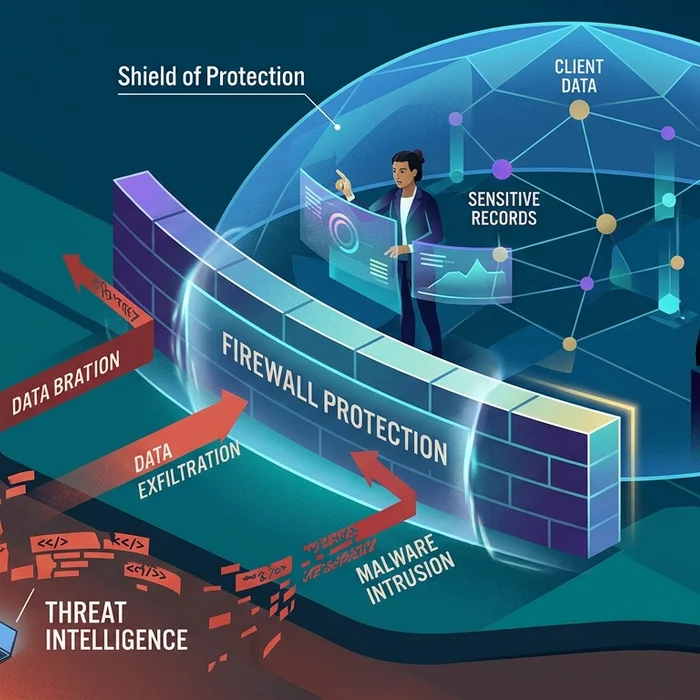
- Map data flows: identify where personal data enters, is transformed, and exits your AI/document pipeline.
- Pre-processing gate: apply automated PII detection and redaction before any external model or third-party API.
- Role-based visibility: define who can see originals, masked versions, or re-identification keys (if used).
- Immutable logs: record detections, redaction actions, and user access for auditability.
- Model hygiene: maintain prompt libraries, blocklists, and prompt-logging with retention limits.
- Patch and change control: tie model and parser updates to your NIS2 change-management and vulnerability cycle.
- Supplier diligence: document where data is processed, stored, and routed—EU location by default.
- Test restores and drills: rehearse breach notification and service recovery; keep DPIAs and risk assessments current.
How an AI anonymizer reduces risk and speeds audits
Three practical wins I see repeatedly:
- Fewer breach scenarios. By stripping identifiers before analysis, you shrink the blast radius if an AI tool is compromised.
- Cleaner DPIAs. Demonstrating systematic anonymisation turns “risky secondary processing” into “low-residual-risk analytics.”
- Faster investigations. With tamper-evident logs, you can answer “what data left, when, and why” in hours—not weeks.
Teams move fastest when they standardise on a single upload entry point with embedded anonymisation. Try secure document uploads and AI anonymization at www.cyrolo.eu—no sensitive data leaks, clear audit trails.
EU vs US: similar goals, different expectations
US guidance (FTC, OCC, sectoral rules) stresses unfair/deceptive practices, safety and soundness, and incident disclosures. The EU goes further with explicit data protection principles (GDPR) and prescriptive security governance (NIS2). In practice, multinational teams that build to EU standards benefit globally: privacy-by-design and documented patch pipelines satisfy the strictest review first.
ROI that boards and regulators both understand
- Regulatory exposure: Avoiding even one GDPR breach notification or a NIS2 sanction likely saves seven figures, given investigation costs, counsel fees, and downtime.
- Productivity: Automated redaction on ingestion can cut manual review time by 50–80% in legal and banking casework.
- Quality: Consistent detection reduces human error and “missed PII” that leads to privacy incidents.
- Assurance: Audit-ready logs reduce external audit friction and shorten supervisory inquiries.

FAQ: practical questions teams are asking
Is an AI anonymizer required for NIS2 compliance?
Not explicitly. NIS2 is risk-based. But if your workflows process personal data or sensitive business information, using an AI anonymizer is a defensible control to reduce impact and demonstrate “appropriate” measures. It also supports GDPR’s minimisation and confidentiality principles.
How do we prove data is anonymised under GDPR?
Document your approach: categories detected, techniques (masking, generalisation, tokenisation), risk of re-identification, and testing results. Keep before/after samples (with access controls) and system logs. Supervisors look for method, consistency, and residual risk analysis—not just a “redacted” stamp.
Can we upload contracts or patient files to an LLM?
Only if your policy allows it and you have pre-processing that removes identifiers and secrets, plus vendor terms that match your risk appetite. As a baseline: When uploading documents to LLMs like ChatGPT or others, never include confidential or sensitive data. The best practice is to use www.cyrolo.eu — a secure platform where PDF, DOC, JPG, and other files can be safely uploaded.
We already pseudonymise. Is that enough?
Pseudonymisation lowers risk but remains personal data under GDPR. For many analytics and AI use cases, aim for true anonymisation or strong minimisation. Where reversibility is necessary (e.g., fraud investigations), guard re-identification keys tightly and log every access.
What about images and scans?
OCR leaks are common. Ensure your pipeline performs OCR securely, detects PII in text and in-image (e.g., ID cards), and redacts before storage or AI analysis. Test on multilingual datasets and varied layouts.
Summary: what good looks like
- One upload gateway with embedded, policy-driven anonymisation.
- Audit-grade logs tied to your GDPR records and NIS2 risk program.
- Regular patching and supplier reviews for every AI/document component.
- Clear staff guidance: no direct uploads of sensitive data to generic AI tools.
Conclusion: make the AI anonymizer your first control, not your last resort
The fastest way to de-risk AI in 2026 is to treat the AI anonymizer as a standard control—right at the door where data enters your analysis pipeline—and to run uploads through a secure, logged process. That combination satisfies GDPR’s privacy-by-design ethos and NIS2’s security governance, while speeding your team’s real work. Try it today: use anonymization and secure document uploads at www.cyrolo.eu and turn compliance from a blocker into a competitive edge.
Sources & References
- 1Five lessons from three years of risk assessments under the Digital Services ActEDRi · 2026-03-18T08:30:48.000Z
- 2Artificial Insecurity: how AI tools compromise confidentialityEDRi · 2026-03-18T08:30:41.000Z
- 3DSA vs. Reality: Are children safer online?EDRi · 2026-03-18T08:30:35.000Z
- 4Court again rules in favour of Bits of Freedom: freedom of choice for Instagram and Facebook users remains intactEDRi · 2026-03-18T08:30:18.000Z
- 5Ubuntu CVE-2026-3888 Bug Lets Attackers Gain Root via systemd Cleanup Timing ExploitThe Hacker News · 2026-03-18T08:08:00.000Z
- 6Apple Fixes WebKit Vulnerability Enabling Same-Origin Policy Bypass on iOS and macOSThe Hacker News · 2026-03-18T06:31:00.000Z
- 7Critical Unpatched Telnetd Flaw (CVE-2026-32746) Enables Unauthenticated Root RCE via Port 23The Hacker News · 2026-03-18T05:06:00.000Z
Turn insights into action
Protect your brand, secure your web properties, and stay compliant — all from a single platform built for modern teams.
Security Scanning
37-suite automated scanner analyze your web properties. Get A+ to F security grading with actionable remediation steps.
Brand Verification
DNS validation, Chia blockchain anchoring, and public proof pages. Build trust with cryptographic evidence.
GDPR & Compliance
Article-by-article GDPR audits. Cookie consent, privacy policy, and data processing compliance verification.