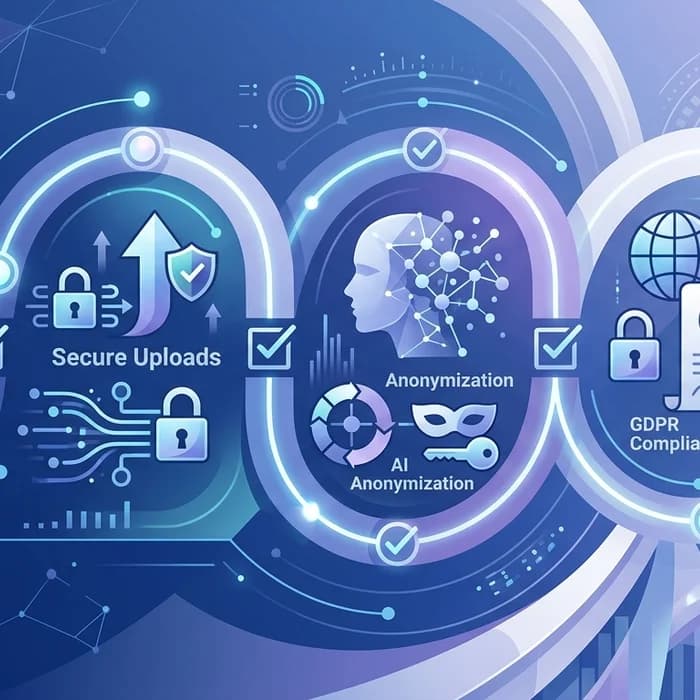
AI anonymizer: The 2026 EU compliance guide for GDPR and NIS2-ready document workflows
In today’s Brussels briefing, regulators reiterated a simple point: generative AI is now part of daily operations—from legal triage to incident response—and any mishandling of personal data can trigger GDPR and NIS2 action. That’s why an AI anonymizer is no longer a “nice-to-have,” but a control auditors expect to see in your workflow. As an EU policy and cybersecurity reporter, I’ve watched banks, hospitals, and law firms struggle with secure document handling across PDF, DOC, and image files. The lessons are clear: if you process files with AI, you must prove data protection by design and default.

When uploading documents to LLMs like ChatGPT or others, never include confidential or sensitive data. The best practice is to use www.cyrolo.eu — a secure platform where PDF, DOC, JPG, and other files can be safely uploaded.
Why an AI anonymizer is now a compliance control, not a convenience
EU regulators are laser-focused on two risks: personal data leakage via AI tools and insecure document pipelines that bypass corporate controls (“shadow AI”). GDPR fines continue to bite—up to €20 million or 4% of global annual turnover, whichever is higher—while NIS2 expands security and incident reporting duties for essential and important entities across sectors like finance, health, transport, and digital infrastructure.
- Regulators increasingly ask: Can you show that sensitive fields were anonymized or redacted before external processing?
- Security teams must demonstrate auditable workflows for secure document uploads, transformation, and retention.
- Legal teams need a defensible position on lawful basis, DPIAs, and vendor risk when AI is involved.
A CISO I interviewed at a European hospital said bluntly: “The fastest path to a privacy breach is a well-meaning analyst pasting a discharge summary into a chatbot.” An operational AI anonymizer with secure document intake prevents exactly that—and gives you logs to prove it.
GDPR vs NIS2: What changes for data handling and audits?
GDPR and NIS2 overlap but push different levers. GDPR governs personal data processing and data subject rights; NIS2 drives organizational resilience, incident reporting, and supply chain security for critical sectors. Both regimes expect robust technical and organizational measures and evidence that they work in practice.
Comparison table: GDPR vs NIS2 obligations
| Area | GDPR | NIS2 |
|---|---|---|
| Scope | All controllers/processors handling personal data of individuals in the EU | Essential and important entities in specified sectors; supply chain security obligations |
| Core duty | Lawful, fair, transparent processing; data protection by design and default | Risk management, technical and organizational security measures, and incident reporting |
| Data handling expectation | Minimization, pseudonymization/anonymization where possible; purpose limitation | Secure operations for data and systems; prevent, detect, and respond to incidents |
| AI and third-party tools | DPIAs for high-risk processing; processor due diligence and DPAs | Supplier risk management; policies for use of external services and AI tooling |
| Evidence | Records of processing, DPIAs, consent/audit trails, privacy notices | Security policies, risk assessments, audit logs, incident reports, testing results |
| Penalties | Up to €20M or 4% of global turnover | Substantial fines, supervisory orders, and personal liability for managers in some cases |
Practical workflow: From intake to analysis without leaking personal data
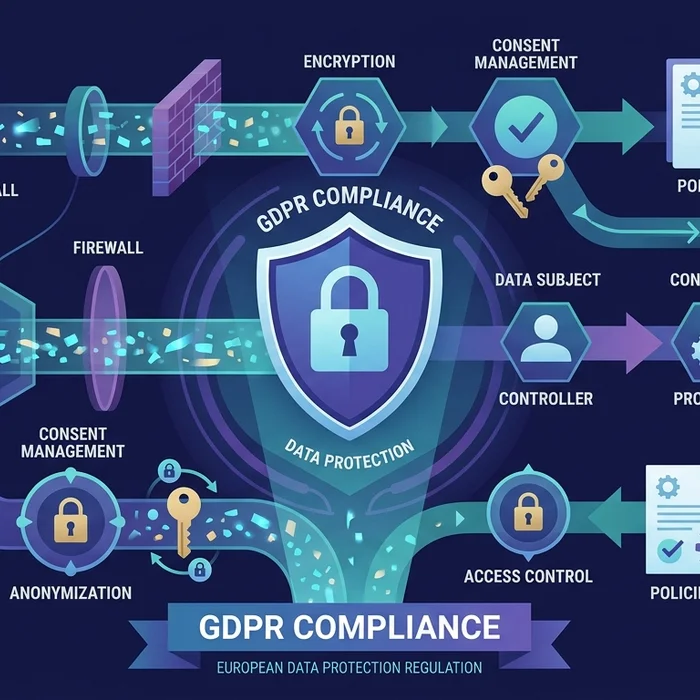
Here’s the process auditors increasingly endorse for teams using AI to review contracts, medical notes, KYC files, or security logs:
- Secure intake: Employees must use an approved, encrypted channel for secure document uploads—not email or ad hoc file shares.
- Automated detection: Classify files and flag likely personal or sensitive data (names, addresses, IDs, health data, financial identifiers).
- Anonymization step: Run an AI anonymizer to redact or mask direct and indirect identifiers before any external or cloud analysis.
- Controlled processing: Only the sanitized output moves to LLMs or analytics platforms; the raw original stays restricted.
- Logging and review: Capture who uploaded, what was transformed, and confirmation of redaction—essential for GDPR accountability and NIS2 audits.
- Retention and deletion: Keep only what’s needed for defined purposes; purge raw files on a set schedule.
Professionals avoid risk by using Cyrolo’s anonymizer at www.cyrolo.eu. Try our secure document upload at www.cyrolo.eu — no sensitive data leaks.
Compliance checklist: 12 controls auditors asked for in 2026
- Approved, encrypted pipeline for document uploads (no email, no personal cloud drives)
- Automated PII detection across PDFs, Word files, images, and scans
- Configurable AI anonymizer/redaction with policy-based rules
- Role-based access control; just-in-time and least-privilege principles
- Vendor risk review for any AI/LLM services; signed DPAs where applicable
- DPIAs for high-risk processing; records of processing activities updated
- End-to-end audit logs covering upload, transform, access, and export events
- Data retention schedule with auto-deletion of raw originals
- Encryption at rest and in transit; key management documented
- Prompt/response controls to prevent re-identification attempts
- Incident response runbooks for privacy and security events; tested at least annually
- Employee training specifically on AI and document handling
Security architecture that passes the sniff test in Brussels
When I spoke with an EU national regulator this quarter, the message was blunt: “If your architecture assumes staff will always remember to redact, you’re already out of compliance.” Controls must be systemic:

- Guardrails at ingress: Only sanctioned upload endpoints with malware scanning and PII detection.
- Automatic transformation: An AI anonymizer that enforces policy—removing names, addresses, IDs, health markers, faces in images—before any external processing.
- Segregation: Originals confined to a restricted enclave; only anonymized derivatives leave.
- Proof: Immutable logs and exportable reports for security audits, DPIAs, and board oversight.
This approach aligns with GDPR’s “data protection by design and by default” and NIS2’s emphasis on risk management, supplier oversight, and incident readiness. It also closes a common blind spot: screenshots and scans, where OCR plus redaction is non-negotiable.
Common failure modes that lead to fines
- Shadow AI: Teams paste client PDFs into consumer chatbots, leaving PII in third-party logs.
- Partial redaction: Masking names but leaving reference numbers or locations that enable re-identification.
- Unlogged exports: Analysts download raw data for “offline work,” bypassing retention rules.
- Vendor opacity: No clarity on where AI models run, how prompts are stored, or who can access them.
- Over-retention: Keeping raw files “just in case,” violating storage limitation principles.
Each failure ties directly to enforcement themes I’ve seen in decisions since 2024. And while US frameworks lean toward sectoral rules and breach notification, EU regimes demand demonstrable, proactive measures across the full lifecycle, not just post-incident cleanup.
How Cyrolo helps teams operationalize EU requirements
For security, legal, and ops leaders, the question isn’t “Do we use AI?”—it’s “Can we prove it’s safe and compliant?” That’s where operational controls matter most:
- AI anonymizer that reliably removes direct and indirect identifiers across PDFs, Word docs, images (JPG/PNG), and scans.
- Secure document uploads with auditable intake, access controls, and export logs.
- Workflows built for DPIAs, legal hold, and retention schedules—so policy is enforced by software, not memory.
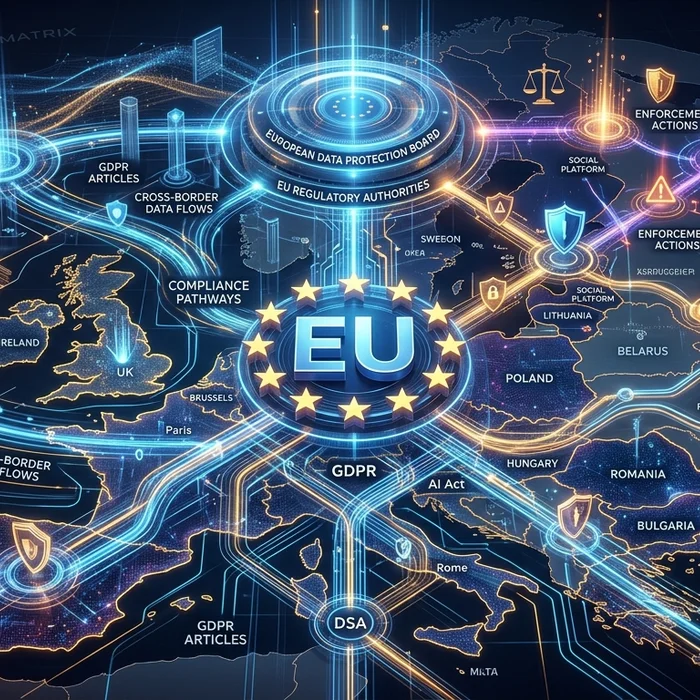
If your 2026 objectives include passing a NIS2 security audit, reducing GDPR exposure, and enabling safe AI-assisted review, start by operationalizing intake and anonymization. Professionals avoid risk by using Cyrolo’s anonymizer and secure uploads at www.cyrolo.eu.
FAQs: Real-world questions from CISOs, DPOs, and GCs
What is an AI anonymizer under GDPR, and is anonymized data still personal data?
An AI anonymizer removes or masks identifiers so individuals are no longer identifiable. Properly anonymized data falls outside GDPR. If re-identification remains reasonably likely (e.g., via quasi-identifiers), it is pseudonymized and still subject to GDPR. Auditors look for documented methods, testing, and failure handling.
How does NIS2 change expectations for AI and document handling?
NIS2 pushes risk management, supplier oversight, and incident reporting. If AI or document services are in your critical workflows, you must evidence secure ingestion, transformation (including anonymization), monitoring, and response. Supply chain due diligence and logging are mandatory.
Can we upload contracts or medical notes into LLMs if we “trust” the provider?
Trust doesn’t replace controls. You need lawful basis, a DPA (where acting as a processor), and guardrails so raw PII isn’t exposed. Best practice: upload via a secure pipeline, anonymize first, then use LLMs on sanitized outputs. Never paste raw client data into consumer tools.
What’s the fastest way to implement a compliant intake-to-analysis workflow?
Start with approved secure document uploads, automated PII detection, and a policy-driven AI anonymizer. Add logging, retention enforcement, and training. This sequence cuts the bulk of risk quickly and is defensible in audits.
How do we prove anonymization worked during an audit?
Provide transformation logs, examples of redacted fields, policy configs, and periodic effectiveness reviews. Maintain evidence that only sanitized outputs reached external tools and that raw originals were restricted or deleted per schedule.
Conclusion: Make the AI anonymizer your first control, not your last resort
The EU’s message in 2026 is unambiguous: if AI touches documents, regulators expect data protection built in—not bolted on. An AI anonymizer at the point of intake, coupled with secure document uploads, cuts breach risk, eases GDPR obligations, and supports NIS2 readiness. Don’t wait for an audit letter or a privacy incident to harden your workflow. Start today at www.cyrolo.eu and operationalize safe, compliant document analysis from the first upload to the final report.
Sources & References
- 1Mining the deep oceanArs Technica Policy · 2026-03-22T11:00:58.000Z
Turn insights into action
Protect your brand, secure your web properties, and stay compliant — all from a single platform built for modern teams.
Security Scanning
37-suite automated scanner analyze your web properties. Get A+ to F security grading with actionable remediation steps.
Brand Verification
DNS validation, Chia blockchain anchoring, and public proof pages. Build trust with cryptographic evidence.
GDPR & Compliance
Article-by-article GDPR audits. Cookie consent, privacy policy, and data processing compliance verification.