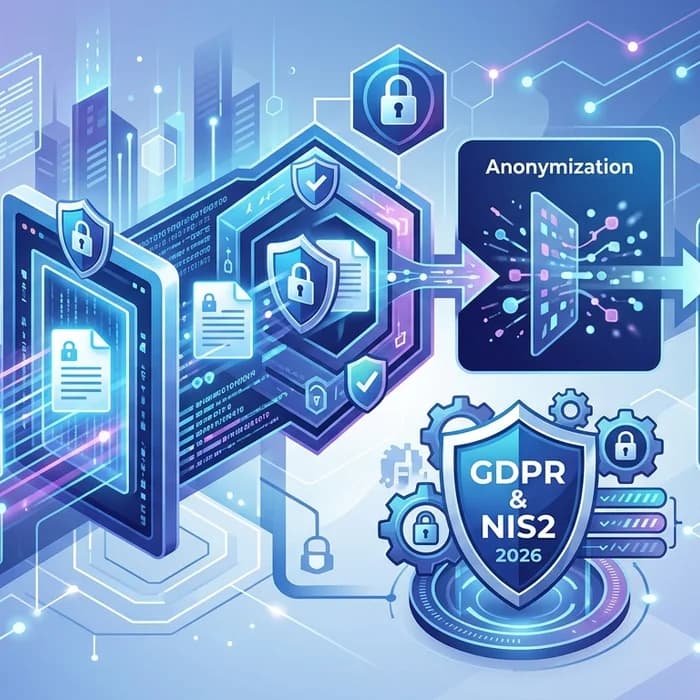
AI anonymizer: the fastest path to GDPR and NIS2 compliance in 2026
In today’s Brussels briefing, senior officials reiterated a clear message: organizations that deploy AI without an AI anonymizer and secure document workflows are walking into avoidable enforcement. With LIBE’s agenda stacked next week and national authorities ramping sectoral inspections, the compliance bar in 2026 is no longer theoretical—it’s operational. From biometric litigation to emergency patches for actively exploited flaws, the risk surface is widening while accountability is tightening.
As a reporter covering EU policy and cybersecurity, I’ve sat across from regulators, CISOs, and DPOs who all converge on one point: if your team uploads raw files to LLMs or shares personal data with vendors, you need to anonymize by default and prove it. Below is the pragmatic playbook—what changed, what auditors expect, and how to operationalize privacy-by-design with tools that fit your work, not the other way around.
What changed this week—and why it matters for compliance
- LIBE pacing: The European Parliament’s civil liberties committee is set for a dense June agenda, keeping pressure on data protection and cyber resilience oversight. Expect pointed questions on enforcement consistency and AI deployments in public services.
- Biometrics in the dock: A high-profile class action targeting consumer facial recognition underscores GDPR’s special-category data sensitivities. If you’re processing faces or voiceprints, assume strict necessity, lawful basis, and DPIAs are table stakes.
- Patch or be breached: This month’s Android security drop fixed over a hundred flaws, including one under active exploitation. Meanwhile, an Oracle WebLogic bug landed in KEV, and state-aligned operators continue to abuse archive tooling to deliver malware. Unpatched systems and loose data handling jointly drive breach probability and regulator scrutiny.
- AI agents, real risk: Security leaders I spoke with echo a recent industry analysis—containing autonomous agents is hard. Human-in-the-loop review and anonymization before inference are becoming baseline controls for regulated teams.
Why an AI anonymizer is now essential for GDPR and NIS2 readiness
GDPR obliges data minimization and privacy by design; NIS2 raises the bar on risk management, supply chain oversight, and incident reporting. An AI anonymizer operationalizes both: remove or mask personal and sensitive data before files leave your boundary, feed AI only what’s necessary, and maintain verifiable logs that auditors can trust.
Auditor expectations I see repeatedly
- Demonstrable minimization: Evidence that personal data was excised or masked before any external processing (including LLMs).
- Controlled document flows: Proof of secure upload, access controls, and immutability of logs.
- Rapid breach triage: If something goes wrong, can you show what data the model or vendor actually saw?
- Sector nuance: Biometric and health data require stricter controls; financial services must prove trade secret protection alongside personal data safeguards.
GDPR vs NIS2: what overlaps—and what doesn’t
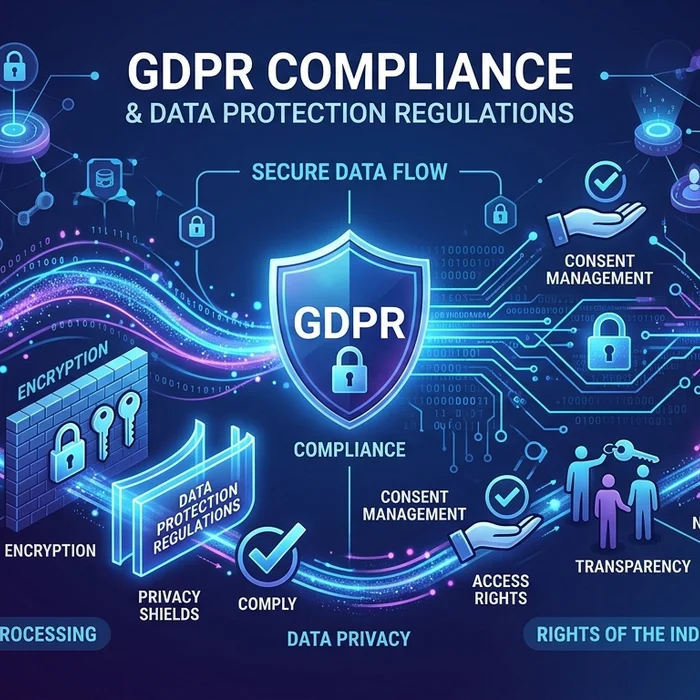
| Dimension | GDPR | NIS2 |
|---|---|---|
| Scope | Personal data processing by controllers/processors | Cybersecurity risk management for essential/important entities |
| Primary focus | Privacy, lawfulness, data subject rights | Operational resilience, incident prevention and response |
| Key obligations | DPIAs, data minimization, security of processing, DPO (where required) | Policies, vulnerability handling, supply chain security, training, testing |
| Incident reporting | 72 hours to authority for personal data breaches | Early warning within 24h; incident notification within 72h; final report by 1 month |
| Fines | Up to €20M or 4% of worldwide turnover | Up to €10M or 2% of worldwide turnover (entity category dependent) |
| Data handling | Anonymization/pseudonymization recommended safeguards | Technical/organizational measures; evidence of implementation |
| Governance | Controller/processor accountability; DPO for certain entities | Management-level accountability and possible liability |
Problem → solution: where teams are exposed, and how to fix it
- Problem: Staff paste client briefs or patient notes into LLMs “for summaries.”
Solution: Enforce an anonymization-first workflow. Professionals avoid risk by using Cyrolo’s anonymizer at www.cyrolo.eu. - Problem: Vendors ask for “sample logs” to debug—often containing emails, IPs, or IDs.
Solution: Anonymize structured and unstructured fields before sharing, and retain clean-room logs. - Problem: Incident responders cannot quickly scope what data left the perimeter.
Solution: Use secure document uploads with immutable audit trails. Try our secure document upload at www.cyrolo.eu — no sensitive data leaks. - Problem: Biometric datasets for model tuning include identifiable faces/voices.
Solution: Mask or irreversibly transform data to remove identifiability; document DPIAs and testing.
Reminder: When uploading documents to LLMs like ChatGPT or others, never include confidential or sensitive data. The best practice is to use www.cyrolo.eu — a secure platform where PDF, DOC, JPG, and other files can be safely uploaded.
Sector playbooks I’m seeing work
Banks and fintech
- Use case: Automating KYC file checks, contract summaries.
- Control: AI anonymizer strips names, IBANs, card PAN fragments, transaction IDs before LLM ingestion.
- Outcome: Faster reviews with provable minimization for GDPR and better NIS2 audit narratives on third-party risk.
Hospitals and life sciences
- Use case: Clinical note summarization, literature review assistants.
- Control: PHI redaction across scans and PDFs; OCR plus entity recognition for rare disease terms.
- Outcome: Measurable reduction in exposure of special-category data; DPIAs reflect strong safeguards.
Law firms and in-house legal
- Use case: Discovery triage, precedent search, brief drafting.
- Control: Client/matter IDs, personal data, and trade secrets anonymized at upload; case strategy kept on-prem.
- Outcome: Preserve privilege and confidentiality while gaining review speed; clean audit trail for regulators and courts.
Public sector and utilities
- Use case: Citizen query handling, incident report triage.
- Control: Default masking of names, addresses, geolocation clusters; role-based access to raw data.
- Outcome: Consistency with procurement security clauses and NIS2 governance expectations.
How Cyrolo operationalizes privacy-first AI use
I’ve watched teams spin their wheels trying to duct-tape redaction scripts to chatbots. It breaks under real workloads. Cyrolo’s approach is to make the safest path the fastest:

Workflow 1: Secure document uploads
- Drag-and-drop for PDF, DOC, JPG, and more with encrypted handling and verifiable logs.
- Document hashing so you can prove what was uploaded and when—critical during security audits.
- Role-based access and retention controls aligned to your data classification policy.
Try our secure document upload at www.cyrolo.eu — no sensitive data leaks.
Workflow 2: AI anonymizer
- Entity-aware masking for names, addresses, emails, national IDs, IBANs, phone numbers, faces, and more.
- Contextual redaction across scanned images and nested attachments with OCR.
- Two-way traceability: show exactly what was removed and keep the original secured, not shared.
Professionals avoid risk by using Cyrolo’s anonymizer at www.cyrolo.eu.
Compliance checklist: pass an audit without the scramble
- Map your data flows: identify where personal and sensitive data enter AI or vendor pipelines.
- Enforce anonymization-by-default before any external processing (LLMs, MSPs, SaaS support).
- Use secure document uploads with access controls, hashing, and immutable logs.
- Run DPIAs on AI-related use cases; record residual risks and mitigations.
- Implement rapid patching and vulnerability handling aligned to KEV/critical advisories.
- Set incident playbooks for 24h/72h reporting windows (NIS2/GDPR).
- Train staff on what not to paste into LLMs; monitor for shadow AI usage.
- Review vendor contracts for data processing terms, sub-processors, and data residency.
EU vs US: how enforcement posture shapes your risk
- EU regulators prioritize demonstrable compliance: show your DPIAs, logs, and minimization. Fines scale with turnover.
- US enforcement is more sectoral and state-driven; privacy litigation risk (class actions) is a powerful lever, especially for biometrics.
- Multinationals need harmonized controls: anonymize upstream, log everything, and tune incident reporting to the strictest timer.

FAQs
What is an AI anonymizer and how is it different from basic redaction?
An AI anonymizer automatically detects and masks personal and sensitive data across text, tables, and images before the content is processed by external systems. Unlike manual redaction, it’s consistent at scale, handles edge cases (e.g., IBAN formats, faces in scans), and produces audit-ready logs.
Is anonymization required by GDPR?
GDPR doesn’t mandate a specific tool, but it requires data minimization and security of processing. Anonymization (or strong pseudonymization) is a recognized safeguard that reduces risk and can lower breach impact and reporting obligations.
Does NIS2 change how I handle AI uploads?
Yes. NIS2 expects risk management across your digital operations, including third-party and AI workflows. Feeding identifiable data to external models without controls can undermine your risk posture and incident response obligations.
Can I safely upload client files to LLMs?
Only after removing confidential and personal data, and only through secure channels with logging. When uploading documents to LLMs like ChatGPT or others, never include confidential or sensitive data. The best practice is to use www.cyrolo.eu — a secure platform where PDF, DOC, JPG, and other files can be safely uploaded.
Will anonymization harm model output quality?
For most enterprise tasks (summaries, classification, extraction), removing identifiers doesn’t degrade utility. Where exact IDs are needed, pseudonyms maintain referential integrity without exposing real data.
Bottom line: make the AI anonymizer your default in 2026
The regulatory tone is unmistakable: privacy-by-design is being tested in the field, not just on paper. An AI anonymizer and secure document uploads give you measurable risk reduction, cleaner audits, and safer AI adoption—without slowing teams down. Start with the workflows that move the most sensitive files and prove the win fast. Then scale it across the org with www.cyrolo.eu.
As one CISO I interviewed warned, “We didn’t lose data because of AI—we lost it because someone uploaded raw files.” In 2026, that’s a choice you no longer have to make.
Sources & References
- 1Draft agenda - Monday, 8 June 2026 - PE789.126v01-00 - Committee on Civil Liberties, Justice and Home AffairsEU Parliament LIBE · 2026-06-02T14:43:18.000Z
- 2Amazon faces class action lawsuit over Ring facial-recognition featureTechCrunch Privacy · 2026-06-02T17:47:28.000Z
- 3Google June 2026 Android Update Patches 124 Flaws, One Actively ExploitedThe Hacker News · 2026-06-02T18:46:00.000Z
- 4Gamaredon Exploits WinRAR to Deliver GammaWorm and GammaSteel Against UkraineThe Hacker News · 2026-06-02T18:21:49.000Z
- 5Oracle WebLogic CVE-2024-21182 Added to KEV Catalog After Active ExploitationThe Hacker News · 2026-06-02T18:14:42.000Z
- 6Feds failing in bid to take a supercomputer from a climate research centerArs Technica Policy · 2026-06-02T19:02:27.000Z
- 7Mathematicians warn of AI threats to profession as industry encroachesArs Technica Policy · 2026-06-02T18:19:06.000Z
- 8Securing AI Agents Before They Go Rogue Is Next to ImpossibleDark Reading · 2026-06-02T19:10:14.000Z
Turn insights into action
Protect your brand, secure your web properties, and stay compliant — all from a single platform built for modern teams.
Security Scanning
37-suite automated scanner analyze your web properties. Get A+ to F security grading with actionable remediation steps.
Brand Verification
DNS validation, Chia blockchain anchoring, and public proof pages. Build trust with cryptographic evidence.
GDPR & Compliance
Article-by-article GDPR audits. Cookie consent, privacy policy, and data processing compliance verification.