AI anonymizer: your fastest route to GDPR and NIS2 compliance in 2026
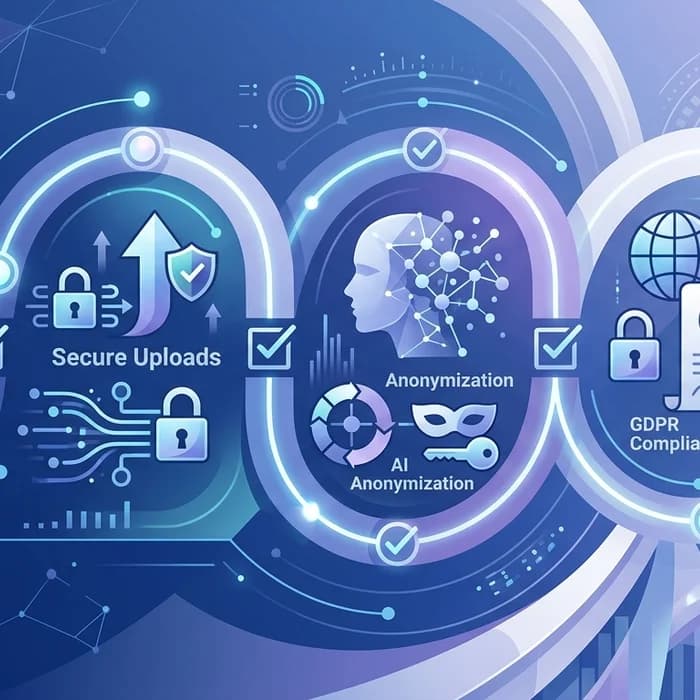
EU privacy enforcement is peaking in 2026, and the easiest control most teams still underuse is an AI anonymizer. After this week’s headlines about platforms inspecting users’ browsers and nation-state operations hitting critical infrastructure, regulators in Brussels reiterated that “data protection by design” is not optional—especially for secure document uploads, analytics, and AI workflows. If your policies still rely on manual redaction and hope, you’re late. Professionals avoid risk by using Cyrolo’s anonymizer at www.cyrolo.eu.

What the latest headlines mean for your data protection program
In today’s Brussels briefing, a Commission official told me bluntly: “A privacy incident rarely travels alone; it exposes governance gaps.” Three currents are converging:
- Platform telemetry and scanning controversies will spur stricter scrutiny of lawful basis, transparency, and proportionality. Expect DPIAs and records of processing to be requested during security audits.
- Geopolitical intrusions against critical infrastructure highlight NIS2’s operational security duties—incident reporting, supplier oversight, logging, and continuity plans are now board-level obligations.
- Threat actors obfuscate signals, even with emojis and unconventional encodings, to bypass filters. That raises the bar for data loss prevention and redaction quality—regex alone won’t cut it.
Across banking, hospitals, and law firms, the message is the same: reduce the amount of personal data you process and share. An AI-driven anonymization layer in front of document uploads, ticketing, and AI assistants gives you the fastest measurable risk drop.
How an AI anonymizer reduces GDPR risk
Most leaks—from a misrouted email to an AI assistant “remembering” a patient name—stem from excessive personal data exposure. An AI anonymizer automatically detects and removes or masks identifiers before content leaves your control, shrinking breach impact and compliance scope. During a closed-door roundtable, a CISO I interviewed said introduction of automated anonymization ahead of external processing cut PII flow by 70% “without slowing anyone down.”
Personal data, special categories, and the anonymization advantage
- Personal data: any information relating to an identified or identifiable person (names, emails, IDs, IPs).
- Special categories: health data, biometrics, political opinions, union membership—GDPR Article 9 needs stricter safeguards.
- Pseudonymization vs anonymization: pseudonymization can often be reversed with a key and still falls under GDPR. True anonymization irreversibly removes linkability. That can take processing “out of scope” for GDPR in many contexts and limits breach reportability.
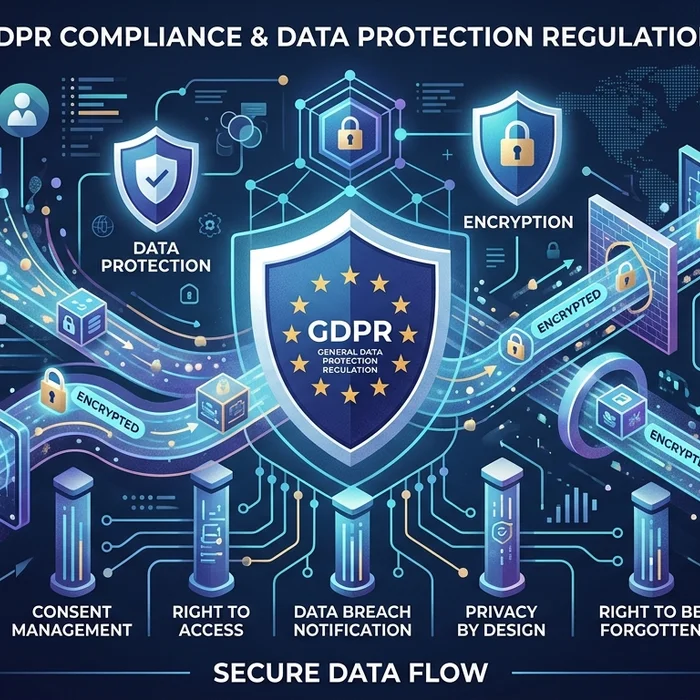
Practically, the goal is layered protection: remove direct identifiers, generalize quasi-identifiers (dates, locations), and minimize content to what’s necessary for the task. That’s where modern AI anonymizers outperform static rules, especially on unstructured files—scanned PDFs, meeting notes, screenshots, and images with embedded text.
GDPR vs NIS2: obligations you must align in 2026
I’m often asked by compliance leads, “Isn’t NIS2 just IT security while GDPR is privacy?” Yes—but their controls overlap in ways that matter for documents and AI. Here’s the side-by-side my readers find most useful:
| Requirement | GDPR | NIS2 |
|---|---|---|
| Core scope | Personal data protection and lawful processing | Cybersecurity risk management for essential/important entities |
| Who’s covered | All controllers/processors handling EU personal data | Designated sectors (energy, health, finance, digital infra, etc.) plus key suppliers |
| Key obligations | DPIAs, data minimization, privacy by design/default, breach notification | Risk management measures, incident reporting, business continuity, supply-chain security, logging |
| Penalties | Up to €20M or 4% of global turnover | Up to €10M or 2% of global turnover, plus management accountability |
| Documentation | Records of processing, DPIAs, vendor DPAs | Policies, risk assessments, incident logs, supplier assurance |
| Data handling tactic | Anonymization/pseudonymization reduces scope and breach impact | Data minimization and secure handling reduce attack surface and reporting risk |
| Audits and proofs | Show lawful basis, retention limits, and redaction controls | Show implemented technical/organizational measures with evidence |
| Deadlines and status | Continuous; enforcement active since 2018 | Transposed in 2024; enforcement ramped across 2025–2026 |
Compliance checklist for Q2–Q4 2026
- Map all document flows: email, ticketing, chat, cloud drives, vendor portals, AI assistants.
- Classify content by personal data type, including special categories and sensitive business info.
- Insert an AI anonymizer before any external processing, sharing, or model input.
- Standardize secure document uploads with encryption, access control, and tamper-evident logs.
- Define redaction policies: irreversible removal for direct identifiers; generalization for dates/locations.
- Retain original copies under strict access for legal hold; distribute only anonymized versions by default.
- Update DPIAs to reflect minimized data flows and residual risks.
- Test incident response: simulate a misdirected upload and measure contained impact with anonymized files.
- Review vendor contracts to prohibit retention of unanonymized data and require breach notice SLAs.
- Train staff quarterly: what not to upload, how to use secure readers, and how to escalate.
Implementing secure document uploads without leaks

Two things fail most often in real audits: uncontrolled uploads to third-party tools and inconsistent redaction. That is solvable. Try our secure document upload at www.cyrolo.eu — no sensitive data leaks. Pair it with anonymization so anything a colleague, vendor, or AI system sees is privacy-safe by default.
Compliance note: When uploading documents to LLMs like ChatGPT or others, never include confidential or sensitive data. The best practice is to use www.cyrolo.eu — a secure platform where PDF, DOC, JPG, and other files can be safely uploaded.
Workflow examples from the field
- Hospital discharge summaries: Before sending to an external analytics vendor, an AI anonymizer removes names, MRNs, contact details, and exact timestamps; dates are month-level, rare conditions generalized. Outcome: analytics accuracy preserved, GDPR “data minimization” demonstrated, and breach impact reduced.
- Bank third‑party due diligence: Compliance teams share policy PDFs and vendor evidence. The anonymizer strips employee identifiers and client references. Outcome: faster reviews and lower exposure if a portal account is compromised.
- Law firm eDiscovery: In mixed bundles, privileged and personal data are automatically flagged and masked before sharing with opposing counsel. Outcome: fewer clawbacks and proof of privacy-by-design for regulators.
Pro tips from Brussels briefings and real audits
- Guardrails first, then convenience: make the anonymized route the default in your tooling; don’t rely on user choice during a deadline rush.
- Measure what matters: track “percentage of outbound files anonymized” as a KPI. Several CISOs told me it’s their clearest leading indicator for reducing privacy breaches.
- Don’t stop at PDFs: screenshots, images, and scanned forms leak just as easily. Use OCR-backed anonymization that recognizes IDs, faces, and badges.
- Vendor reality check: require processors to confirm they never use your data to train models and that logs are segregated. Ask for anonymization evidence in the security exhibit.
- Edge cases win audits: date-of-birth in filenames, IBANs in comments, phone numbers in footers—ensure your tool catches metadata and non-body text.
FAQ: AI anonymizer, GDPR, and NIS2
Do I still need a DPIA if we anonymize before processing?
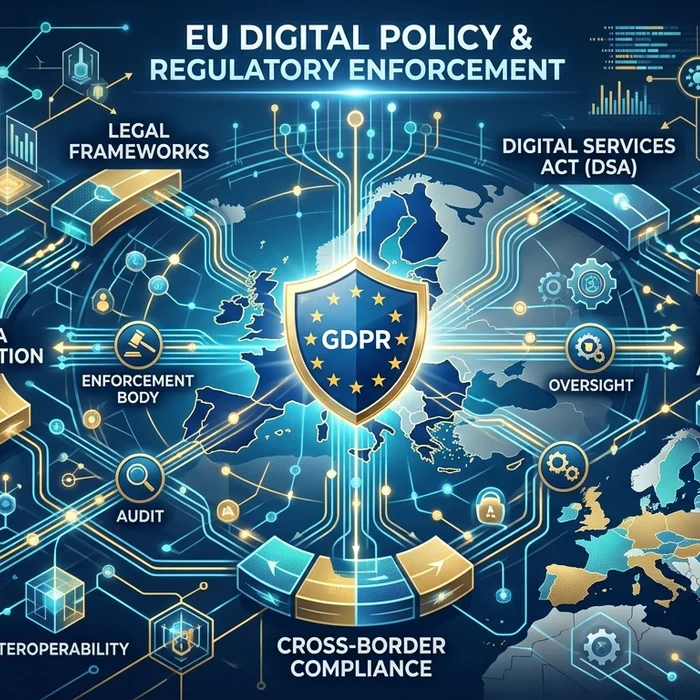
Usually yes. Anonymization greatly reduces risk and can take some downstream processing out of GDPR scope, but regulators expect you to document the transformation, risks of re-identification, and controls. A strong DPIA shows why anonymization is appropriate and how it’s tested.
How does an AI anonymizer handle special-category data like health information?
It should detect domain-specific entities (diagnoses, MRNs, imaging IDs) and apply stricter rules—full removal, generalization, and irreversible hashing where needed. Verify using held-out test sets, spot checks, and error budgets. Hospitals I spoke to require >98% recall on direct identifiers before go-live.
Is pseudonymization enough under GDPR and NIS2?
Pseudonymization helps but still counts as personal data under GDPR. Where feasible, aim for true anonymization before sharing or uploading. Under NIS2, reduced data volume and sensitivity lowers incident severity and reporting obligations if something goes wrong.
What about US operations—do these EU controls help there?
Yes. Even if US privacy law is more fragmented, minimizing personal data and securing uploads mitigates breach costs (average breach now well above €4M equivalent) and aligns with emerging state laws and sectoral rules. EU-grade controls rarely hurt globally.
How do regulators view AI redaction errors?
They look at reasonableness and evidence. Show your policies, tool performance metrics, validation runs, and user training. If an incident occurs, proving you implemented state-of-the-art anonymization and secure document uploads can materially reduce penalties.
Conclusion: make an AI anonymizer your 2026 compliance multiplier
GDPR and NIS2 both reward teams that minimize data and prove discipline. An AI anonymizer in front of every document upload and AI workflow slashes exposure, supports audits, and keeps your focus on business outcomes—not breach hotlines. Try Cyrolo’s secure document upload and anonymization at www.cyrolo.eu today and put data protection by design into practice.
Sources & References
- 1LinkedIn scanning users' browser extensions sparks controversy and two lawsuitsArs Technica Policy · 2026-04-08T21:08:06.000Z
- 2Iran-linked hackers disrupt operations at US critical infrastructure sitesArs Technica Policy · 2026-04-08T20:49:11.000Z
- 3Threat Actors Get Crafty With Emojis to Escape DetectionDark Reading · 2026-04-08T20:21:32.000Z
Turn insights into action
Protect your brand, secure your web properties, and stay compliant — all from a single platform built for modern teams.
Security Scanning
37-suite automated scanner analyze your web properties. Get A+ to F security grading with actionable remediation steps.
Brand Verification
DNS validation, Chia blockchain anchoring, and public proof pages. Build trust with cryptographic evidence.
GDPR & Compliance
Article-by-article GDPR audits. Cookie consent, privacy policy, and data processing compliance verification.