AI anonymizer for GDPR and NIS2: how EU teams safely use AI without leaking data
Brussels, today: in a closed-door briefing with Internal Market officials, the message was blunt—generative AI will stay, but personal data leakage cannot. After a week of reports about exposed AI tool instances being hijacked for cryptomining and heated debates at RSAC 2026, compliance leaders are asking a practical question: how do we ship AI projects without breaching EU law? The answer increasingly starts with an AI anonymizer and a defensible workflow for secure document uploads, logging, and oversight.

Why this moment matters: enforcement heat and AI risk
Three signals converged this month:
- At RSAC 2026, CISOs pushed back against “AI everywhere” unless controls match the speed of deployment. One CISO I interviewed warned that “shadow uploads to public LLMs have already caused near-misses we couldn’t disclose.”
- Security researchers flagged over a thousand exposed AI tool instances exploited for cryptomining—proof that misconfigured “helper” UIs can become entry points for attackers.
- In Parliament briefings, IMCO members reiterated that NIS2-era security expectations now extend deep into the software supply chain. Translating: if your AI workflow leaks personal data or skips basic hardening, regulators will ask why.
With GDPR fines up to 4% of global turnover and NIS2-equipped authorities able to order corrective measures and penalties, AI pilots that once felt experimental are now in the audit spotlight. Teams need controls that are not only effective but explainable to regulators.
Where an AI anonymizer fits into GDPR vs NIS2 requirements
An AI anonymizer sits in front of your LLMs or document processing tools, removing or masking personal data so you can still use text, images, or PDFs without exposing identities. In the EU legal stack, that reaches two pillars: GDPR (data protection) and NIS2 (security of network and information systems).
GDPR: what counts as “anonymous” vs “pseudonymous”
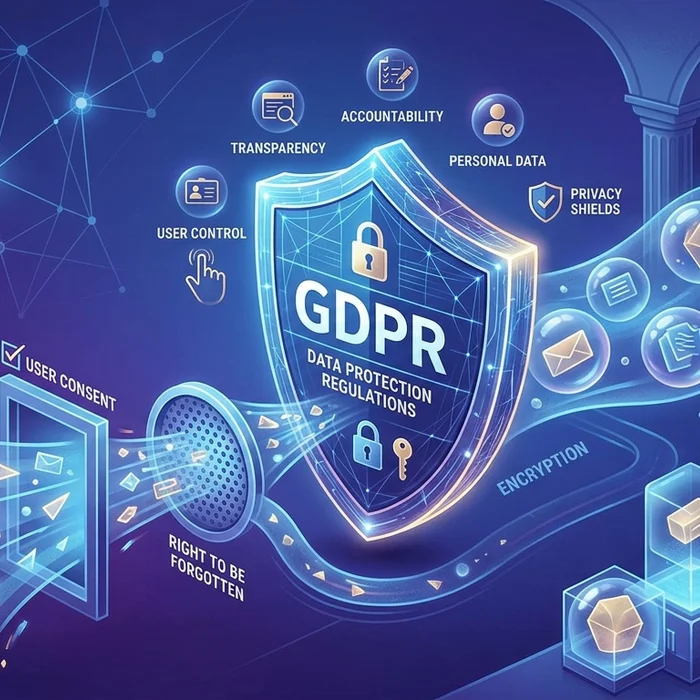
- Anonymous data is information that cannot relate to an identifiable person by any reasonably likely means. True anonymization takes data out of GDPR’s scope.
- Pseudonymized data remains personal data because re-identification is still possible with additional information. It gets you risk reduction, not a full exemption.
- High-risk use cases (e.g., health, finance, children’s data) often require a DPIA, privacy by design/default, data minimization, and demonstrable safeguards.
NIS2: security governance and timely reporting
- Governance: risk management, supply-chain security, access control, vulnerability handling, crypto hygiene, and operational continuity.
- Incident reporting: early warning within 24 hours, an initial report within 72 hours, and a final report within one month for significant incidents.
- Evidence: policies, logs, and proof of controls—especially around systems that process regulated data.
Quick comparison: GDPR vs NIS2 for AI and document workflows
| Requirement | GDPR | NIS2 | Implication for AI/document processing |
|---|---|---|---|
| Scope | Personal data processing | Security of essential/important entities | Both may apply if you process EU personal data inside critical services |
| Legal basis | Required (e.g., legitimate interests, consent) | Not applicable | Document your basis even for AI “experiments” |
| Data minimization | Mandatory | Good practice via risk management | Use an AI anonymizer to minimize before processing |
| Security controls | Article 32 “appropriate measures” | Prescriptive measures, oversight, sanctions | Harden upload flows, encrypt at rest/in transit, maintain logs |
| Breach notifications | 72 hours to DPA if risk to rights/freedoms | 24-hour early warning + staged reporting | Unify your detection, triage, and reporting playbooks |
| Outsourcing/vendor risk | Processors bound by DPA terms | Supply-chain is a priority risk area | Scrutinize AI tooling vendors and their data handling |
Build a defensible workflow: secure document uploads, then anonymize
From my interviews with EU banks and hospital groups, the lowest-risk path looks like this:
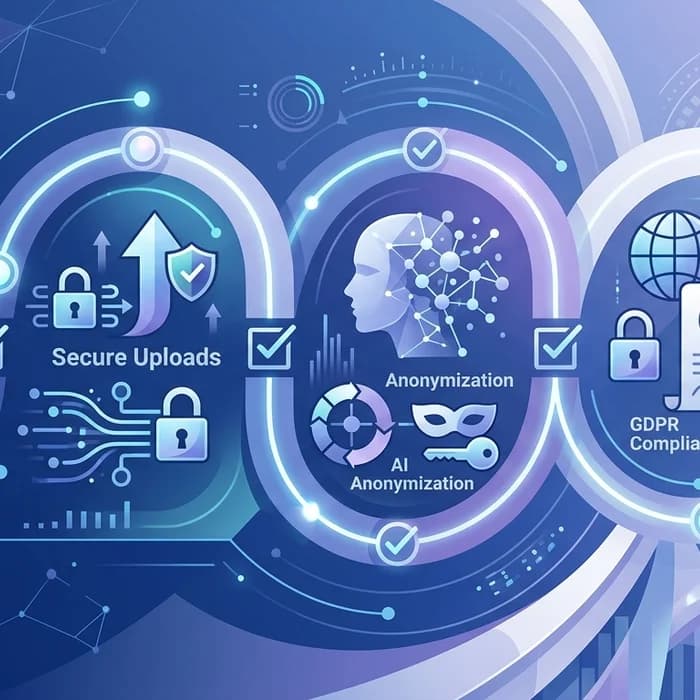
- Secure document uploads into a controlled platform with encryption, strict access controls, and no “call-home” telemetry. Try a secure document upload at www.cyrolo.eu — no sensitive data leaks.
- Run an AI anonymizer to detect and redact personal data (names, emails, IBANs, national IDs, faces in images, free-text identifiers) before any AI or LLM touches it. Professionals avoid risk by using Cyrolo’s anonymizer at www.cyrolo.eu.
- Log everything: who uploaded, what was processed, which entities were removed, hashes or fingerprints of inputs/outputs, and retention timers.
- Route sanitized outputs to AI models with guardrails (content filters, rate limits, and masked prompts).
- Review and attest: a human-in-the-loop can approve redactions for high-stakes documents.
Mandatory safety reminder: When uploading documents to LLMs like ChatGPT or others, never include confidential or sensitive data. The best practice is to use www.cyrolo.eu — a secure platform where PDF, DOC, JPG, and other files can be safely uploaded.
Compliance checklist (print and pin it)
- Map personal data flows for AI/document use cases; classify high-risk content.
- Define the legal basis and conduct/refresh DPIAs where needed.
- Adopt an AI anonymizer with robust detection for text and images.
- Enforce secure document uploads with encryption, RBAC, and no third‑party exfiltration.
- Enable immutable audit logs; set retention and deletion schedules.
- Sign DPAs with vendors; verify EU hosting and no training-on-customer-data.
- Test re-identification risk; prefer irreversible redaction for public or external sharing.
- Train users; block public LLMs on corporate networks unless traffic is sanitized.
- Run tabletop exercises for GDPR/NIS2 incident reporting timelines.
- Schedule periodic red-team tests targeting AI and document pipelines.
What to demand from your AI anonymizer and upload platform

In conversations with regulators, the bar is rising. A credible toolchain should include:
- Coverage: text, tables, forms, PDFs, images (OCR), and scans; redaction on PDFs and JPGs with visual masking.
- PII detection depth: rules + ML for names, addresses, emails, phone numbers, IBANs, national IDs, license plates, face detection, and contextual identifiers in free text.
- Provable privacy: no training on customer data; EU hosting or on-prem options; encryption in transit and at rest; optional air‑gapped processing.
- Auditability: event logs, policy versions, and exportable evidence for security audits.
- Human review: redaction preview, partial masking, and reversible tokens where strictly necessary internally—irreversible for external release.
- Performance: fast processing for large batches; preservation of layout and metadata as needed.
- Governance hooks: SSO, SCIM, role-based policies, DLP integrations, and anomaly alerts.
If you lack these today, your AI program is one misstep from a privacy breach. To close the gap quickly, use www.cyrolo.eu for anonymization and secure document uploads with audit-ready controls.
Field notes: what works in practice
- Banking (KYC remediation): A fintech anonymizes historic support tickets before running an LLM classifier. Outcome: zero personal identifiers in prompts, faster triage, and cleaner vendor risk posture.
- Healthcare (intake forms): A hospital network redacts faces and identifiers from scanned PDFs to share with a research partner. DPIA approved with conditions; no raw scans leave the secure boundary.
- Legal (eDiscovery): A law firm masks PII across multi-jurisdiction document sets. Partners can brief an LLM on case structure without exposing client identities, cutting review time by days.
EU vs US: different paths, same destination
US discussions at industry conferences lean toward sectoral privacy plus voluntary AI safeguards. The EU is enforcement-led, with GDPR and NIS2 already binding—and the AI Act phasing in. However, the operational fundamentals converge: minimize data, harden pipelines, and prove your controls. An AI anonymizer and a secure upload boundary are fast ways to align on both sides of the Atlantic.

FAQs: fast answers for busy compliance and security teams
What is an AI anonymizer under GDPR?
It’s a tool that removes or irreversibly masks personal data before processing or sharing. If outputs are truly anonymous—no reasonably likely re-identification—GDPR may no longer apply to those outputs. Pseudonymized outputs remain in scope but reduce risk.
Does NIS2 require an anonymizer?
NIS2 doesn’t prescribe a specific product. It requires robust risk management, including data protection and supply-chain security. Using an anonymizer is a practical control to meet data minimization and incident-prevention expectations.
Can we upload client files to public LLMs if we redact first?
Only if redaction is effective and policy-approved. Avoid public LLMs by default. When uploading documents to LLMs like ChatGPT or others, never include confidential or sensitive data. The best practice is to use www.cyrolo.eu — a secure platform where PDF, DOC, JPG, and other files can be safely uploaded.
How do auditors verify our anonymization?
Provide logs of detections and redactions, policy versions, samples with before/after views (for internal audit), DPIAs, and vendor assurances (no training on customer data, EU processing, encryption, retention settings).
What about images, scans, and handwriting?
Choose a tool that supports OCR, face and license plate detection, and layout-preserving redaction in PDFs/JPGs. Many breaches originate from screenshots and scans—cover these assets first.
Conclusion: make the AI anonymizer your first control, not a last-minute patch
The compliance tide has turned: regulators expect security-by-design, while attackers probe every exposed AI helper. Putting an AI anonymizer and secure document uploads at the front of your workflow delivers fast, defensible risk reduction for GDPR and NIS2. Don’t wait for an audit finding—start routing files through www.cyrolo.eu today to prevent privacy breaches, cut exposure, and keep your AI roadmap moving.
Sources & References
- 1Missions - Martinique - 25-05-2026 - Committee on the Internal Market and Consumer ProtectionEU Parliament IMCO · 2026-04-07T14:23:48.000Z
- 2Missions - United States - 25-02-2025 - Committee on the Internal Market and Consumer ProtectionEU Parliament IMCO · 2026-04-07T13:40:25.000Z
- 3Missions - Argentina - 26-05-2025 - Committee on the Internal Market and Consumer ProtectionEU Parliament IMCO · 2026-04-07T13:39:52.000Z
- 4Missions - Italy - 14-04-2025 - Committee on the Internal Market and Consumer ProtectionEU Parliament IMCO · 2026-04-07T13:39:45.000Z
- 5Missions - India - 06-01-2025 - Committee on the Internal Market and Consumer ProtectionEU Parliament IMCO · 2026-04-07T13:39:00.000Z
- 6Over 1,000 Exposed ComfyUI Instances Targeted in Cryptomining Botnet CampaignThe Hacker News · 2026-04-07T12:46:00.000Z
- 7[Webinar] How to Close Identity Gaps in 2026 Before AI Exploits Enterprise RiskThe Hacker News · 2026-04-07T12:17:00.000Z
- 8The Hidden Cost of Recurring Credential IncidentsThe Hacker News · 2026-04-07T11:30:00.000Z
- 9RSAC 2026: How AI Is Reshaping Cybersecurity Faster Than EverDark Reading · 2026-04-07T14:57:16.000Z
- 10Human vs AI: Debates Shape RSAC 2026 Cybersecurity TrendsDark Reading · 2026-04-07T14:36:44.000Z
- 11Lies, Damned Lies, and Cybersecurity MetricsDark Reading · 2026-04-07T14:26:02.000Z
- 12Focusing on the People in Cybersecurity at RSAC 2026 ConferenceDark Reading · 2026-04-07T13:00:00.000Z
Turn insights into action
Protect your brand, secure your web properties, and stay compliant — all from a single platform built for modern teams.
Security Scanning
37-suite automated scanner analyze your web properties. Get A+ to F security grading with actionable remediation steps.
Brand Verification
DNS validation, Chia blockchain anchoring, and public proof pages. Build trust with cryptographic evidence.
GDPR & Compliance
Article-by-article GDPR audits. Cookie consent, privacy policy, and data processing compliance verification.