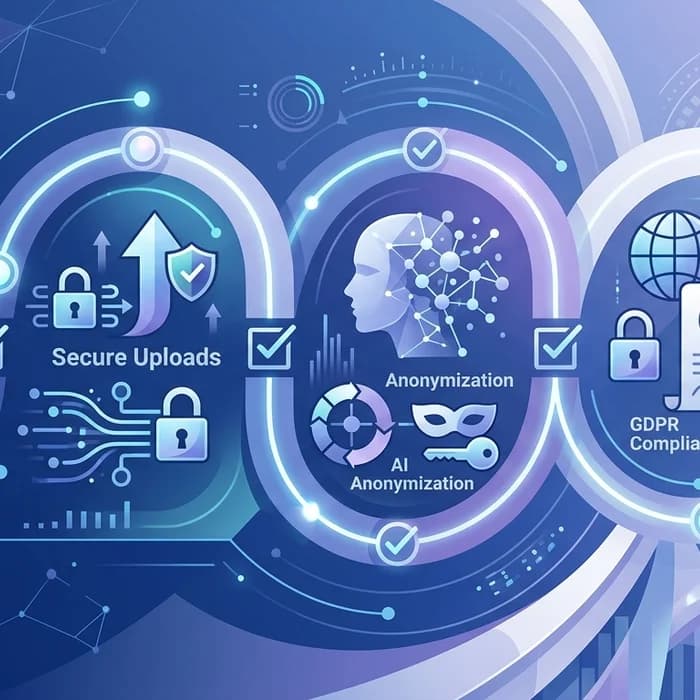
AI anonymizer for GDPR and NIS2: the fastest way to stop privacy breaches and pass audits


In today’s Brussels briefing, regulators emphasized a blunt reality: 2026 is the year AI workflows either harden your privacy posture—or blow it up. An AI anonymizer and secure document controls are becoming table stakes under EU regulations, particularly GDPR and NIS2. After a string of privacy and security headlines—from healthcare data quietly funneled into ad pipelines to AI-assisted phishing waves and critical software exploits—compliance teams are moving fast to neutralize personal data risk without stalling productivity.
I’ve spent the past week speaking with CISOs, DPOs, and counsel across banks, hospitals, and law firms. Their message is consistent: stop privacy breaches at the source with automated anonymization, and lock down document uploads before sensitive files touch any AI system.
What just happened: privacy and AI risk collided—and regulators noticed
Three overlapping trends define the current risk picture:
- Personal data leakage is creeping in through unexpected channels—ad tech tags on critical services and shadow tools inside teams. The result: citizenship, race, and health-related data exposed to third parties without users’ informed consent.
- AI-assisted attacks have lowered the barrier to precision phishing, malware staging, and exploit development. A CISO I interviewed warned that “attackers are using AI to tailor lures and triage stolen data at scale; our margin for error on data minimization just shrank.”
- Critical infrastructure dependencies remain tempting targets—everything from web hosting panels to managed service providers. A single unpatched admin interface can cascade across governments and mid-market enterprises alike.
In this climate, EU regulators are pressing two levers at once: GDPR enforcement for personal data misuse, and NIS2 obligations for risk management, incident reporting, and supply chain security. The upshot for compliance leaders is clear—minimize what personal data you process, and prove you can control it end-to-end.
AI anonymizer 101: what it is, why it matters for GDPR and NIS2
An AI anonymizer detects and transforms identifiable information (names, IDs, addresses, health details, financial data, and more) before content reaches downstream systems like LLMs, analytics, or third-party vendors. Done right, it enforces data minimization and purpose limitation in real time.
Why this matters now:
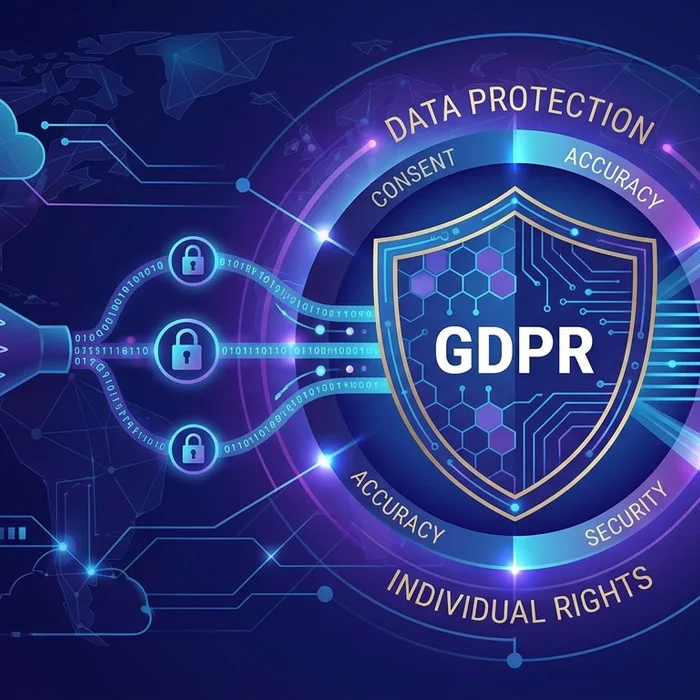
- GDPR requires a lawful basis and strict minimization for processing personal data, with fines up to the higher of €20M or 4% of global annual turnover for serious violations.
- NIS2 obliges essential and important entities to implement risk-based technical and organizational measures and report incidents promptly; penalties can reach up to €10M or 2% of global turnover for essential entities (Member State transposition may vary).
- Modern teams rely on AI copilots and document readers. Without guardrails, a single copy-paste of client files into a public LLM can be a reportable incident and a reputational crisis.
Solution pattern: run content through a trusted anonymization gateway and secure document uploads before any employee or automated agent shares or analyzes it. Professionals avoid risk by using Cyrolo’s anonymizer at www.cyrolo.eu.
GDPR vs NIS2: who requires what?
| Topic | GDPR | NIS2 |
|---|---|---|
| Scope | Processing of personal data of individuals in the EU, by controllers/processors inside or outside the EU | Cybersecurity risk management and incident reporting for essential and important entities across defined sectors |
| Core obligation | Lawful basis, transparency, data minimization, purpose limitation, integrity/confidentiality, and accountability | Implement “appropriate and proportionate” technical and organizational measures, supply chain security, business continuity |
| Data breach response | Notify supervisory authority within 72 hours if risk to individuals; notify data subjects when high risk | Early-warning/notification timelines to CSIRTs/competent authorities; sector-specific reporting mechanics |
| Fines | Up to €20M or 4% of global annual turnover (higher applies) | Up to €10M or 2% of global annual turnover for essential entities (Member State variations); lower tier for important entities |
| AI/automation angle | Strict on profiling, automated decision-making, and transfers; anonymization can fall outside GDPR if truly irreversible | Focus on resilience and secure-by-design operations; AI pipelines fall under risk management and supply chain controls |
Shadow AI is a compliance risk—secure document uploads are the fix
Teams move fast: they drag contracts, medical scans, or client memos into AI tools to save time. That productivity is real—but so is the exposure. Without a controlled intake, you risk unlawful processing, cross-border transfers, or leakage to third parties.
Use a secure front door. Route all document uploads through a governed platform that enforces automated anonymization, access control, and retention limits before any AI model sees the content. Try our secure document upload at www.cyrolo.eu — no sensitive data leaks.
Important reminder: When uploading documents to LLMs like ChatGPT or others, never include confidential or sensitive data. The best practice is to use www.cyrolo.eu — a secure platform where PDF, DOC, JPG, and other files can be safely uploaded.
Compliance checklist: deploy an AI anonymizer and pass audits

- Map your data: identify sources that contain personal data and special categories (health, ethnicity, biometrics).
- Define approved AI use cases: drafting, summarization, coding assistance; block everything else until controls exist.
- Implement an AI anonymizer gateway to detect and redact/perturb identifiers across PDFs, DOCs, images (OCR), and text.
- Enforce secure document uploads with policy-based routing (retain locally, encrypt at rest, region pinning).
- Set role-based access controls and logging; integrate with SIEM for security audits.
- Document DPIAs/TRA: show data minimization, lawful basis, and transfer impact assessments where applicable.
- Run tabletop exercises: simulate a privacy breach and practice 72-hour and NIS2 early-warning reporting.
- Vendor governance: require processors to meet GDPR Article 28 and NIS2-aligned controls; test with sample anonymized datasets.
- Train staff on red flags (AI phishing, tax-themed lures, fake MFA prompts) and the approved upload path.
- Measure and iterate: track anonymization accuracy, false negatives, and incident near-misses.
What to look for in an AI anonymizer (buyer’s guide)
- Coverage: structured and unstructured data; text, tables, images with OCR; multi-language PII detection.
- Quality controls: deterministic patterns for IDs; ML/NLP for context; configurable risk thresholds.
- Reversibility options: irreversible anonymization for analytics vs. controlled pseudonymization for casework.
- Policy engine: per-use-case rules (e.g., remove special-category data; mask client names; keep job titles).
- Security: encryption at rest/in transit, key management, region selection, SSO, SCIM, audit trails, API-only egress.
- Compliance artifacts: DPIA templates, data flow diagrams, retention schedules, and logs suitable for regulators.
- No-train/no-share guarantees for AI models: data stays out of vendor training pipelines.
Cyrolo provides an AI anonymizer and governed document uploads that align with GDPR data minimization and NIS2 risk management—without slowing down your teams.
Case snapshots: what EU professionals changed in 30 days
- Banking (Fintech): Routed all PDF statements and customer chats through an anonymization gateway. Outcome: reduced identifiable data by 80% before LLM analysis; passed a regulator review with zero major findings.
- Healthcare provider: OCR on scanned referrals; stripped health identifiers before triage summarization. Outcome: eliminated shadow uploads; narrowed breach blast radius; improved DPIA posture.
- Law firm: Used controlled pseudonymization for litigation support so teams could collaborate with AI tools while keeping re-identification keys in a separate vault. Outcome: faster brief drafting and clean audit trails.
Across these deployments, leaders reported fewer privacy incidents, faster internal approvals for innovation, and stronger negotiating power with clients demanding proof of data protection.
EU vs US privacy posture: why EU firms need to stay vigilant
The EU’s rights-based framework tightly regulates the use of personal data and imposes clear accountability. In contrast, the US remains largely sectoral and state-driven, with uneven consent and data-sharing norms. When prominent marketplaces in healthcare or finance allow advertising technologies to touch sensitive attributes, it triggers exactly the kind of cross-context tracking GDPR was built to prevent.
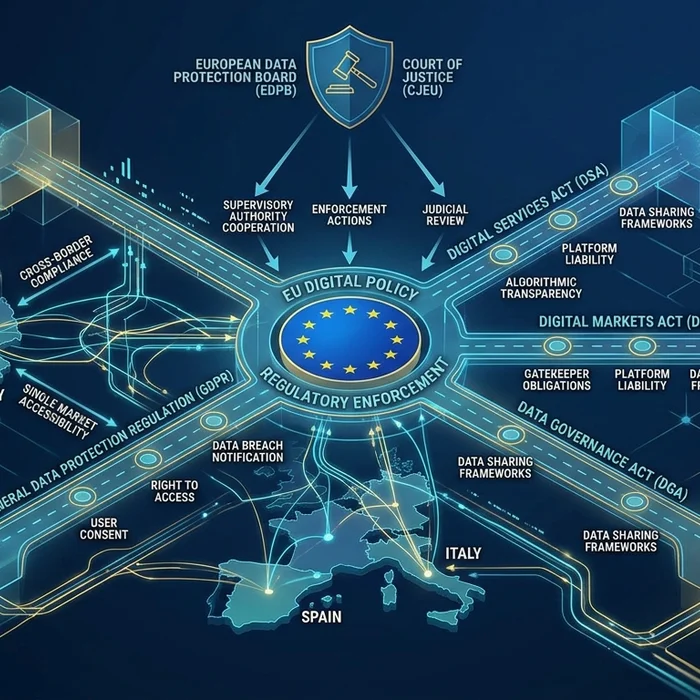
EU firms cannot rely on foreign vendor defaults. You must demonstrate that your processors and sub-processors only receive the minimum data necessary—and, where possible, receive no personal data at all because you used an AI anonymizer upstream. That is a defensible story to tell regulators and clients alike.
Audit-readiness: the artifacts regulators expect to see
- Policy documents describing data minimization and AI usage boundaries.
- Technical architecture showing anonymization and secure upload flows, including where keys and logs reside.
- DPIAs and transfer assessments for any model/vendor outside the EU/EEA.
- Incident playbooks mapping GDPR 72-hour and NIS2 notification triggers to concrete comms timelines.
- Evidence of staff training, vendor contracts, and periodic security audits.
If you’re missing any of the above, prioritize a controlled intake and anonymization layer now. Try Cyrolo’s secure approach at www.cyrolo.eu.
FAQ: your real-world questions, answered
Is anonymized data still subject to GDPR?
If data is truly anonymized—meaning individuals are no longer identifiable by anyone using reasonable means—it falls outside GDPR. However, pseudonymized data is still personal data. An AI anonymizer should support both modes and document which is used for each workflow.
How does NIS2 change my AI security obligations?
NIS2 doesn’t regulate AI directly; it mandates risk-based controls, incident reporting, and supply chain security for essential/important entities. Your AI pipelines (including secure document uploads and anonymization gateways) become part of that risk-managed environment.
Can I safely use LLMs with client documents?
Yes—if you enforce a governed intake. Route files through a secure platform that strips personal data and logs access before hitting an LLM. When uploading documents to LLMs like ChatGPT or others, never include confidential or sensitive data. The best practice is to use www.cyrolo.eu — a secure platform where PDF, DOC, JPG, and other files can be safely uploaded.
What’s the fastest way to reduce breach exposure this quarter?
Block shadow uploads, deploy an AI anonymizer at the perimeter of your AI workflows, and prove it with audit logs. Professionals avoid risk by using Cyrolo’s anonymizer at www.cyrolo.eu.
Conclusion: an AI anonymizer is your 2026 win for GDPR and NIS2
Between AI-assisted attacks and mounting enforcement, EU organizations need controls that work at the speed of business. An AI anonymizer plus secure document uploads enforces data minimization, neutralizes privacy breaches before they start, and strengthens your position under GDPR and NIS2. If you’re ready to protect your teams and accelerate compliant AI, start now at www.cyrolo.eu.
Sources & References
- 1US healthcare marketplaces shared citizenship and race data with ad tech giantsTechCrunch Privacy · 2026-05-04T14:30:23.000Z
- 22026: The Year of AI-Assisted AttacksThe Hacker News · 2026-05-04T11:58:00.000Z
- 3Silver Fox Deploys ABCDoor Malware via Tax-Themed Phishing in India and RussiaThe Hacker News · 2026-05-04T11:57:00.000Z
- 4Critical cPanel Vulnerability Weaponized to Target Government and MSP NetworksThe Hacker News · 2026-05-04T09:27:00.000Z
- 5Silver Fox Springs Tax-Themed Attacks on Orgs in India, RussiaDark Reading · 2026-05-04T11:35:44.000Z
- 6How Dark Reading Lifted Off the Launchpad in 2006Dark Reading · 2026-05-04T11:15:08.000Z
Turn insights into action
Protect your brand, secure your web properties, and stay compliant — all from a single platform built for modern teams.
Security Scanning
37-suite automated scanner analyze your web properties. Get A+ to F security grading with actionable remediation steps.
Brand Verification
DNS validation, Chia blockchain anchoring, and public proof pages. Build trust with cryptographic evidence.
GDPR & Compliance
Article-by-article GDPR audits. Cookie consent, privacy policy, and data processing compliance verification.