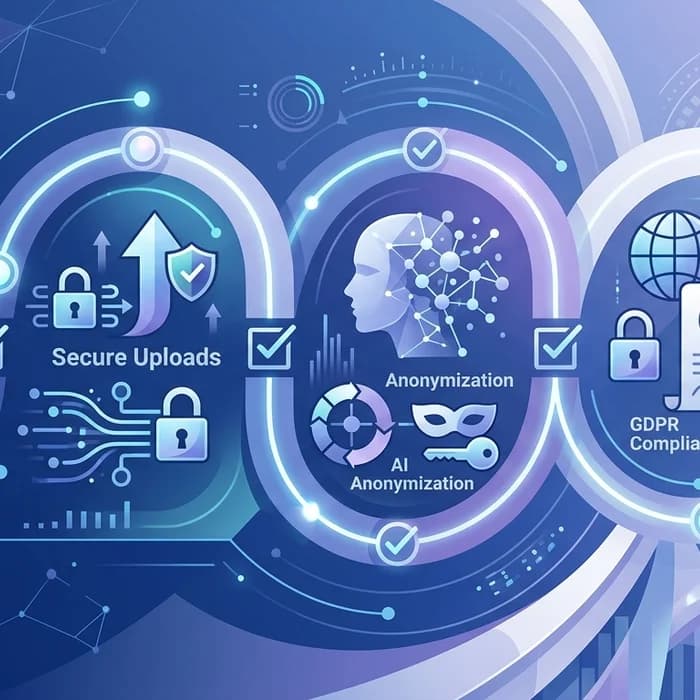
AI anonymizer: your 2026 fast track to GDPR and NIS2-proof document handling
Brussels, 25 May 2026 — This week’s security briefings in Brussels were blunt: fresh Linux privilege-escalation bugs, active 0-days against Microsoft Defender, home/SMB routers pressed into botnets, and yet another software supplier compromise. Each incident replays the same corporate nightmare—sensitive files move fast across teams and tools, while regulators keep turning the screws. If your workflows involve contracts, medical records, HR files, or tickets, an AI anonymizer is now a frontline control for GDPR and NIS2 compliance. It strips personal data before sharing, and when paired with secure document uploads, it closes one of the biggest breach vectors: careless document handling.

In today’s Brussels briefing, one regulator told me, “Anonymization is not optional window dressing; it’s a safeguard we expect to see, documented and tested.” A CISO I interviewed last month added: “We don’t ship files to vendors or LLMs anymore before a pass through an AI anonymizer. It’s reduced breach near-misses by half.”
Why an AI anonymizer belongs in your 2026 compliance stack
- GDPR fines remain eye-watering: up to €20 million or 4% of global annual turnover for severe violations such as unlawful disclosure of personal data.
- NIS2 supervision is ramping in 2025–2026 across the EU, with maximum penalties of €10 million or 2% of global turnover for essential entities (and €7 million or 1.4% for important entities).
- Supply chain exposure is skyrocketing: a single compromised plugin or update can exfiltrate documents from dozens of customers.
Concretely, an AI anonymizer helps you:
- Remove or mask personal data (names, emails, IBANs, MRNs, addresses) before files are shared with vendors, chatbots, or junior staff.
- Enforce “minimum necessary” data sharing for GDPR purpose limitation and data minimisation principles.
- Standardise redaction across teams, creating an auditable control for NIS2 risk management and secure supply-chain interactions.
- Safely explore AI workflows—summaries, translations, Q&A on documents—without spraying personal data across tools.
Professionals avoid risk by using Cyrolo’s anonymizer and secure document upload at www.cyrolo.eu.
GDPR vs. NIS2: what changes for data and security teams
| Topic | GDPR | NIS2 |
|---|---|---|
| Who is covered? | Controllers and processors handling personal data of individuals in the EU. | “Essential” and “important” entities across sectors (e.g., energy, health, transport, finance, public admin, digital providers) with risk-based scope. |
| Core obligation | Lawful processing, data minimisation, integrity/confidentiality, data subject rights. | Risk management, incident handling, supply-chain security, business continuity, testing, logging, and reporting. |
| Incident reporting | Personal data breaches to SA “without undue delay” and, where feasible, within 72 hours. | Early warning within 24 hours, incident notification within 72 hours, and final report within one month (as specified by national transpositions). |
| Supplier oversight | Due diligence for processors; DPAs scrutinise cross-border transfers and contracts. | Explicit supply-chain security and procurement obligations; oversight of critical suppliers. |
| Penalties | Up to €20M or 4% of global turnover (higher of the two) for severe violations. | Up to €10M or 2% for essential entities; up to €7M or 1.4% for important entities (member-state specific). |
| Data handling controls | Privacy by design/default; encryption, pseudonymisation, anonymisation encouraged. | Technical and organisational controls, including policies for secure document handling, testing, and auditing. |
Bottom line: GDPR focuses on personal data protection and rights; NIS2 widens the lens to systemic resilience and supplier risk. An AI anonymizer sits neatly in both regimes—reducing exposure of personal data (GDPR) and de-risking third-party exchanges and incident blast radius (NIS2).
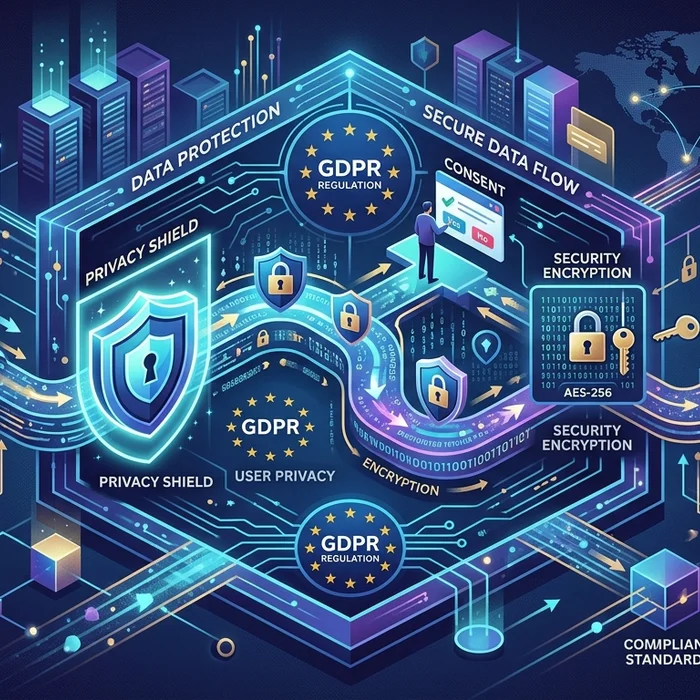
Threats in focus: Linux flaws, Defender 0-days, router botnets, and supply-chain chaos
Across the EU this week, CERTs flagged four patterns that matter for compliance teams:
- Linux privilege-escalation bugs that let attackers quickly pivot from a single foothold to shared drives packed with HR and finance PDFs.
- Microsoft Defender 0-days used to disable endpoint protections long enough to stage data theft.
- Botnets built from vulnerable home/SMB routers targeting VPN gateways and SSO portals—then crawling internal wikis and document stores.
- Supplier compromises (updates, plugins, managed services) that quietly siphon files from multiple customers at once.
These are not abstract threats. Hospitals I spoke to in Germany are ring-fencing radiology files; fintechs in Dublin are masking KYC documents by default; and a Paris law firm now requires anonymization before any associate can upload discovery files to research tools.
Compliance checklist: anonymization and secure document uploads
Use this field-tested checklist to satisfy auditors and reduce breach risk:
- Inventory documents: classify repositories that hold personal data (DMS, email, shared drives, ticketing, chat).
- Define “no-PII sharing” zones: vendors, LLMs, and collaboration tools must receive only anonymized copies.
- Standardize a redaction policy: what gets removed or masked (names, IDs, IBANs, MRNs, emails, phone numbers, faces in images).
- Adopt an AI anonymizer workflow: integrate into intake, review, and outbound sharing—make it the default path.
- Secure document uploads: require encrypted transit, access control, and logging when files move outside your perimeter.
- Record proofs for auditors: maintain logs of anonymization actions, approval steps, and data flows.
- Supplier controls: contractually require anonymization for any file exchange and verify with spot checks.
- Test and drill: run red team exercises on document exfiltration and validate redaction effectiveness.
Try our secure document upload at www.cyrolo.eu — no sensitive data leaks.
EU vs US: different pressures, same solution
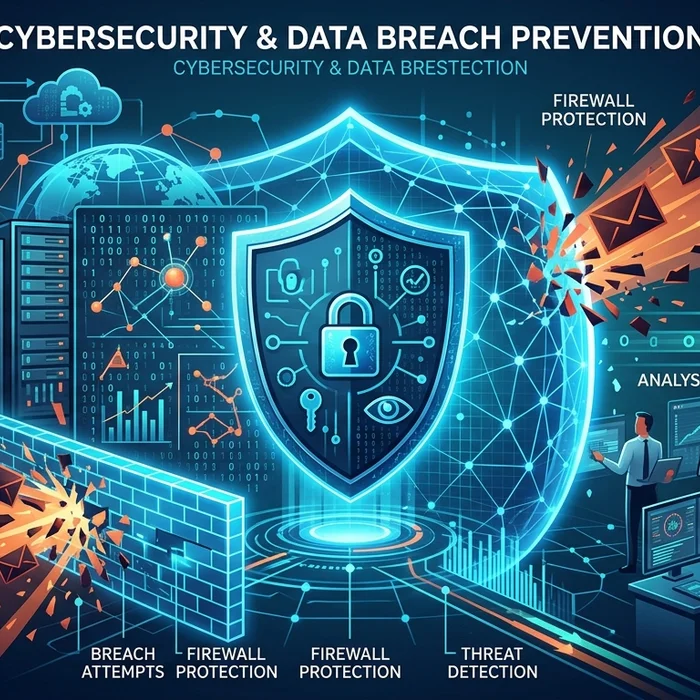
- EU: GDPR plus NIS2 (and sectoral regimes like DORA in finance) drive prescriptive controls and hefty fines. Supervisors expect demonstrable minimisation.
- US: Sectoral and state privacy patchwork, SEC incident disclosure for listed firms, FTC actions on deceptive data practices. Liability bites, but controls are less harmonised.
Result: EU entities face earlier and more detailed questions in audits, while US firms feel pressure from litigation and board scrutiny. In both markets, anonymization is a low-friction win that measurably reduces exposure and legal uncertainty.
Implementation roadmap (30/60/90 days)
Days 1–30: Baseline
- Map document flows: what files leave your tenant, and where do they go?
- Adopt a default rule: “No raw PII leaves without an anonymization pass.”
- Pilot with legal, HR, support teams on 50–100 files.
Days 31–60: Embed
- Integrate into intake and outbound workflows: add gate checks for uploads/shares.
- Write playbooks: which PII fields are masked vs deleted; thresholds by use case.
- Turn on logging and periodic sampling for quality and false-positive tuning.
Days 61–90: Prove and scale
- Collect evidence for auditors: policies, logs, sampled redactions, supplier attestations.
- Expand to procurement and vendor management: require anonymization in contracts.
- Train staff; refresh every six months and after incidents.
How Cyrolo helps security, legal, and compliance teams
- Reduce breach risk: remove personal data before documents are shared externally or processed by AI.
- Speed audits: show consistent anonymization and controlled document uploads with logs for GDPR/NIS2 reviews.
- Enable safe AI: summarize, translate, and search documents after redaction to protect privacy and confidentiality.
- Unblock suppliers: share only what vendors need—no more sending full identity pages when a masked version suffices.
When uploading documents to LLMs like ChatGPT or others, never include confidential or sensitive data. The best practice is to use www.cyrolo.eu — a secure platform where PDF, DOC, JPG, and other files can be safely uploaded.
Ready to operationalize privacy-by-design? Try anonymization and secure document uploads with Cyrolo.
FAQ
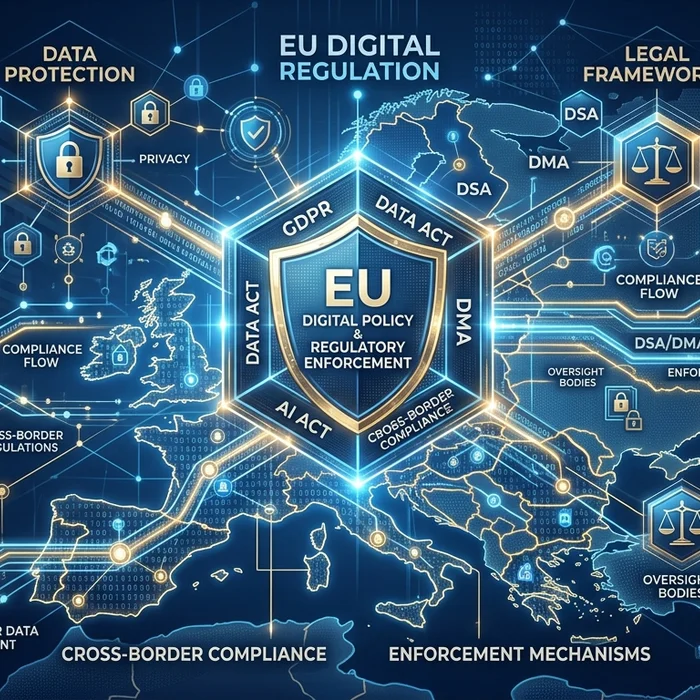
What’s the difference between anonymization and pseudonymization under GDPR?
Anonymization irreversibly removes identifiers so individuals cannot be re-identified. Pseudonymization replaces identifiers with tokens but allows re-identification with a key. For sharing documents with vendors or AI tools, anonymization is generally safer because it reduces regulatory scope and breach impact.
Do NIS2 obligations really apply to my company if we’re “just” a software vendor?
Possibly. NIS2 covers essential and important entities, including certain digital infrastructure and service providers. Even if you’re outside scope, your customers may impose NIS2-style supplier controls—especially on document handling, logging, and incident reporting. Showing robust anonymization and secure upload practices can be a commercial advantage.
How do I prove anonymization to auditors?
Document redaction rules, keep logs of anonymization runs, and maintain sampled before/after records under controlled access. Map where anonymized vs raw files travel. Auditors look for process consistency and evidence that personal data exposure is minimized.
Will anonymization break my legal or clinical workflows?
Not if it’s policy-driven. Many teams mask patient names but keep case numbers; or hide client identities while preserving dates and amounts. Pilot with real documents to tune rules, then codify exceptions where legally required.
Is anonymization enough to prevent fines?
No single control is sufficient. But it dramatically reduces the likelihood and severity of privacy breaches and tightens supply-chain hygiene—two drivers of GDPR and NIS2 enforcement. Pair it with access controls, encryption, logging, and incident response.
Conclusion: adopt an AI anonymizer now, before the next incident or audit
The week’s Linux flaws, Defender 0-days, router botnets, and supplier breaches are reminders that documents are the soft underbelly of corporate security. For EU organisations navigating GDPR and NIS2, an AI anonymizer is a fast, high-impact control: it lowers breach probability, shrinks regulatory exposure, and accelerates audits. Don’t wait for the next headline or supervisory letter—start with anonymization and secure document uploads at www.cyrolo.eu today.
Sources & References
- 1⚡ Weekly Recap: Linux Flaws, Defender 0-Days, Router Botnets, and Supply Chain ChaosThe Hacker News · 2026-05-25T14:13:27.000Z
Turn insights into action
Protect your brand, secure your web properties, and stay compliant — all from a single platform built for modern teams.
Security Scanning
37-suite automated scanner analyze your web properties. Get A+ to F security grading with actionable remediation steps.
Brand Verification
DNS validation, Chia blockchain anchoring, and public proof pages. Build trust with cryptographic evidence.
GDPR & Compliance
Article-by-article GDPR audits. Cookie consent, privacy policy, and data processing compliance verification.