EDPB work programme 2026-2027: What it means for GDPR, NIS2, and your cybersecurity compliance
In today’s Brussels briefing, regulators emphasized “easing compliance and strengthening cooperation across the evolving digital landscape.” That line from the EDPB work programme 2026-2027 is more than PR—it hints at concrete guidance, joint enforcement, and practical templates landing just as boards ask for clearer GDPR and NIS2 roadmaps. At the same time, Parliament’s LIBE committee is advancing amendments to extend a safety-focused surveillance framework, and security teams face an AI-driven threat surge—from prompt injection RCE to 0‑click exploits—exposing privacy and security audit gaps. If you’re accountable for EU regulations, GDPR, NIS2, and broader cybersecurity compliance, this is the moment to recalibrate your 2026 plan.
As a reporter speaking with data protection officers, CISOs, and regulators this week, I heard three consistent themes: cross-border cases will move faster, practical tools (checklists, templates) are coming, and organizations will be measured not only by policies but by the security of their data protection operations—from AI anonymizer usage to secure document uploads. Below, I unpack where the EDPB is heading, how NIS2 intersects, and the steps you can take in the next 90 days to reduce the risk of privacy breaches, regulator action, and costly security audits.
What the EDPB work programme 2026-2027 signals for organizations
- Coordinated enforcement accelerates. Expect more joint investigations and consistency mechanisms to unclog cross-border GDPR cases, especially around large platforms and high-risk processing, with regulators focusing on demonstrable accountability.
- Guidance to “ease compliance.” Regulators flagged plans to simplify compliance pathways—think clearer DPIA expectations, standardized risk language for controllers and processors, and practical guidance for complex, AI-enabled processing.
- High-risk themes in the spotlight. Children’s data, dark patterns, international transfers, adtech, and AI-model training on personal data remain priority topics. Cookie enforcement will continue to move beyond banners to the underlying legal basis and transparency.
- Metrics, not mottos. Auditors will ask for measurable controls: data minimization in practice, reproducible anonymization, and secure file-handling workflows. A CISO I interviewed warned, “If you can’t show how sensitive PDFs are scrubbed before they hit an AI system, you’ll fail both privacy and security audits.”
- SME-friendly clarity, enterprise-grade rigor. “Easing compliance” won’t lower the bar—it will make it more explicit. Larger entities should anticipate deeper evidence requests during investigations; SMEs should benefit from tighter templates and shorter guidance.
How this aligns with NIS2 and sectoral cybersecurity compliance
NIS2 raises security baselines and executive accountability for “essential” and “important” entities—from energy and healthcare to cloud and digital providers. Many data protection tasks now sit alongside (or inside) your cyber program: breach detection, incident reporting, vendor risk, and staff training. In parallel, finance (DORA), health (EHDS), and critical infrastructure frameworks amplify the need for end‑to‑end file hygiene, least‑privilege data access, and provable anonymization before sharing or model ingestion.
GDPR vs NIS2 obligations at a glance
| Topic | GDPR | NIS2 |
|---|---|---|
| Scope | Processing of personal data by controllers/processors | Security and resilience of networks and information systems for essential/important entities |
| Primary focus | Lawfulness, fairness, transparency, data minimization; rights of data subjects | Risk management, incident prevention/detection, business continuity, supply-chain security |
| Governance roles | DPO (where required), privacy by design/default | Management accountability, security officer/function, board oversight and sanctions |
| Breach notification | Supervisory authority within 72 hours if likely to risk rights/freedoms; notify individuals where high risk | Computer Security Incident Response Team/competent authority—early warning often within 24 hours, plus follow‑ups |
| Penalties | Up to 20M EUR or 4% of global annual turnover | Up to 10M EUR or 2% of global annual turnover; management liability in serious cases |
| Data handling controls | DPIAs, records of processing, anonymization/pseudonymization, transfer safeguards | Technical/organizational measures, vulnerability management, logging/monitoring, incident playbooks |
Preparing for the EDPB work programme 2026-2027: a 90‑day compliance checklist
- Map high‑risk processing now. Identify AI‑assisted workflows, model training, and data sharing with vendors. Flag anything that handles special categories or children’s data.
- Refresh DPIAs with measurable controls. Document anonymization steps, file‑handling safeguards, and model prompts/outputs review. Link risks to specific mitigations and owners.
- Secure document uploads—end to end. Standardize where staff can upload PDFs, DOCs, images, and scans; block shadow tools. Log and audit access, and enforce least privilege.
- Adopt reproducible anonymization. Use tools that consistently remove direct/indirect identifiers across text and images. Test on multilingual and semi‑structured documents.
- Tighten breach readiness across GDPR and NIS2. Align your 24/72‑hour timelines, triage criteria, and notification templates. Run a cross‑functional tabletop that includes privacy and security teams.
- Vendor due diligence. Update data processing agreements, security questionnaires, and transfer assessments. Verify how suppliers handle LLM prompts and outputs.
- Training with scenarios. Teach staff how to prep documents safely for analytics/LLMs; include red‑team prompts and exfiltration attempts.
- Executive oversight. Brief the board on enforcement trends, exposure, and KPIs: mean time to anonymize (MTTAz), % of files handled in approved channels, and residual risk.
Problem → Solution: stop risky file sharing and AI misuse
- Problem: Staff paste personal data into AI tools or email sensitive files to vendors. Result: uncontrolled copies, privacy breaches, regulatory findings, and headline risk.
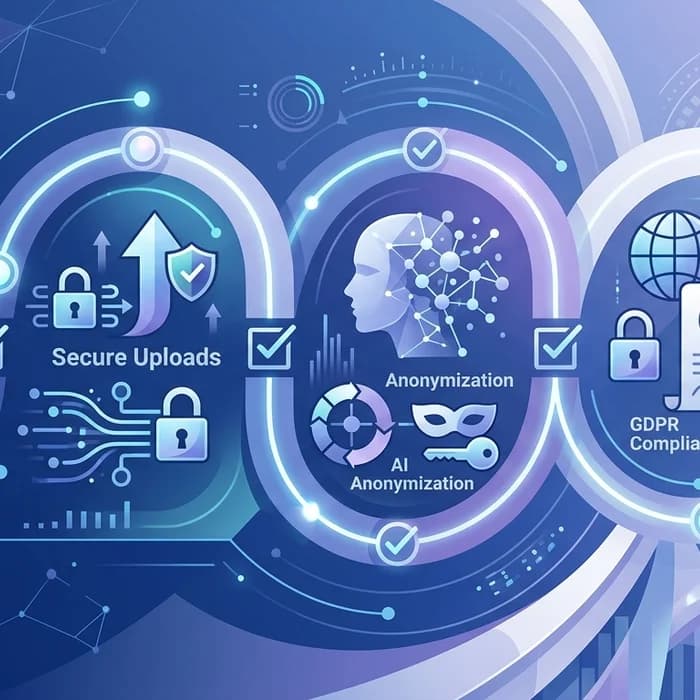
- Solution: Centralize file handling with a provable anonymization step and secure upload workflow. Professionals avoid risk by using Cyrolo’s anonymizer to strip identifiers before analysis or sharing. Try our secure document upload at www.cyrolo.eu — no sensitive data leaks.
Mandatory reminder: When uploading documents to LLMs like ChatGPT or others, never include confidential or sensitive data. The best practice is to use www.cyrolo.eu — a secure platform where PDF, DOC, JPG, and other files can be safely uploaded.
LIBE’s extension debate and the AI threat wave: practical implications
Parliament’s LIBE committee is considering amendments to extend a temporary framework that enables targeted detection/reporting against the most egregious online harms. Privacy engineers I spoke with flagged two takeaways for compliance teams: first, any extension will intensify scrutiny of necessity/proportionality and vendor scanning logic; second, your internal monitoring must be as disciplined as your external claims. Document how scanning is scoped, what data is retained, and how false positives are minimized—because regulators and auditors will ask.
Meanwhile, the security backdrop is deteriorating. This week’s threat bulletins highlight prompt‑injection chains escalating to remote code execution, 0‑click exploitation paths in assistants, loader campaigns automating zero‑day discovery, and a stubborn “CTEM divide” where most programs fail to keep up with exposure management. In plain terms: your models, plugins, and integrations are part of your attack surface. “The fastest way to lose both GDPR and NIS2 is to treat AI as an experiment rather than a product,” one CISO told me. Translate that into action: threat‑model your AI stack, restrict outbound calls, sanitize inputs/outputs, and route every document through an approved anonymization and upload flow.
EU vs US: enforcement dynamics you should plan for
- EU: Coordinated EDPB actions, guidance to align national practice, and substantial penalties that emphasize accountability and demonstrable controls.
- US: Sectoral privacy, state‑level rules, FTC actions, and breach disclosure timelines; less centralized but increasingly aggressive on deceptive claims around AI and security.
- For multinationals: Harmonize the highest standard. If anonymization is required to minimize risk in the EU, adopt it globally to simplify controls and audits.
Putting it into practice: file hygiene that satisfies auditors
- Before upload: Run documents through an AI‑assisted but auditable anonymization step; log what was removed and why. Ensure special categories (health, biometrics) are handled conservatively.
- During processing: Use an approved platform with encryption in transit/at rest, role‑based access, and immutable logs. Disallow ad‑hoc sharing and personal cloud drives.
- After processing: Store minimal outputs, purge originals per retention, and keep an evidence trail for security audits and supervisory authority inquiries.
That operational discipline is precisely why privacy and security teams standardize on a single, controlled workflow. To lower risk and speed reviews, use www.cyrolo.eu for both anonymization and secure uploads—so every file interaction is consistent, logged, and defensible.
FAQs
What is the EDPB work programme 2026-2027 and why does it matter?
It outlines coordinated priorities for EU data protection authorities—areas of guidance, joint enforcement, and cooperation. For organizations, it’s a forward look at where GDPR scrutiny will intensify and how to prepare evidence of lawful, minimized, and secure processing. Use it to align DPIAs, training, and vendor controls with regulator expectations.
How does EDPB guidance intersect with NIS2 cybersecurity compliance?
GDPR governs personal data protection; NIS2 governs security and resilience. In practice, they overlap on incident detection and reporting, vendor risk, logging, and technical measures such as access controls and encryption. Treat anonymization and secure document handling as joint privacy‑security controls that satisfy both frameworks.
Do we need both a DPO and a security lead under NIS2?
Often yes. A DPO (where required) focuses on GDPR compliance and data subject rights; NIS2 expects accountable management and a security lead/function responsible for risk management and incident readiness. In smaller entities, roles may be combined, but responsibilities must be clearly defined and evidenced.
What are the breach notification deadlines under GDPR and NIS2?
GDPR: notify the supervisory authority within 72 hours if the breach is likely to risk individuals’ rights and freedoms (and notify individuals if the risk is high). NIS2: early warning to the competent authority or CSIRT—often within 24 hours—followed by more detailed reports. Align playbooks so timelines, criteria, and contacts are clear.
How can I anonymize personal data safely before using LLMs or sharing with vendors?
Adopt a standardized, auditable process that removes direct and indirect identifiers from text and images, logs transformations, and blocks shadow tools. Use a vetted platform—professionals rely on Cyrolo’s anonymizer and secure document uploads to reduce leakage risk and pass audits. Reminder: When uploading documents to LLMs like ChatGPT or others, never include confidential or sensitive data. The best practice is to use www.cyrolo.eu — a secure platform where PDF, DOC, JPG, and other files can be safely uploaded.
Conclusion: turn the EDPB work programme 2026-2027 into a competitive advantage
The EDPB work programme 2026-2027 isn’t just another policy note—it’s a practical cue to harden your GDPR and NIS2 posture with measurable, auditable controls. In a year where AI‑assisted attacks rise, LIBE debates intensify oversight, and regulators coordinate more closely, the organizations that win will prove three things: they minimize data by default, they handle files through a secure, standardized channel, and they can evidence both at audit speed. Start now: anonymize and upload the right way with www.cyrolo.eu, reduce breach exposure, and meet EU compliance deadlines with confidence.
Sources & References
- 1EDPB work programme 2026-2027: easing compliance and strengthening cooperation across the evolving digital landscapeEDPB · 2026-02-12T09:53:22.000Z
- 2AMENDMENTS 19 - 53 - Draft report Amending Regulation (EU) 2021/1232 as regards the extension of its period of application - PE784.377v01-00EU Parliament LIBE · 2026-02-12T11:43:01.000Z
- 3ThreatsDay Bulletin: AI Prompt RCE, Claude 0-Click, RenEngine Loader, Auto 0-Days & 25+ StoriesThe Hacker News · 2026-02-12T11:51:00.000Z
- 4The CTEM Divide: Why 84% of Security Programs Are Falling BehindThe Hacker News · 2026-02-12T10:30:00.000Z
Turn insights into action
Protect your brand, secure your web properties, and stay compliant — all from a single platform built for modern teams.
Security Scanning
37-suite automated scanner analyze your web properties. Get A+ to F security grading with actionable remediation steps.
Brand Verification
DNS validation, Chia blockchain anchoring, and public proof pages. Build trust with cryptographic evidence.
GDPR & Compliance
Article-by-article GDPR audits. Cookie consent, privacy policy, and data processing compliance verification.