AI Act compliance: What EU regulators expect in 2025 and how to get audit‑ready
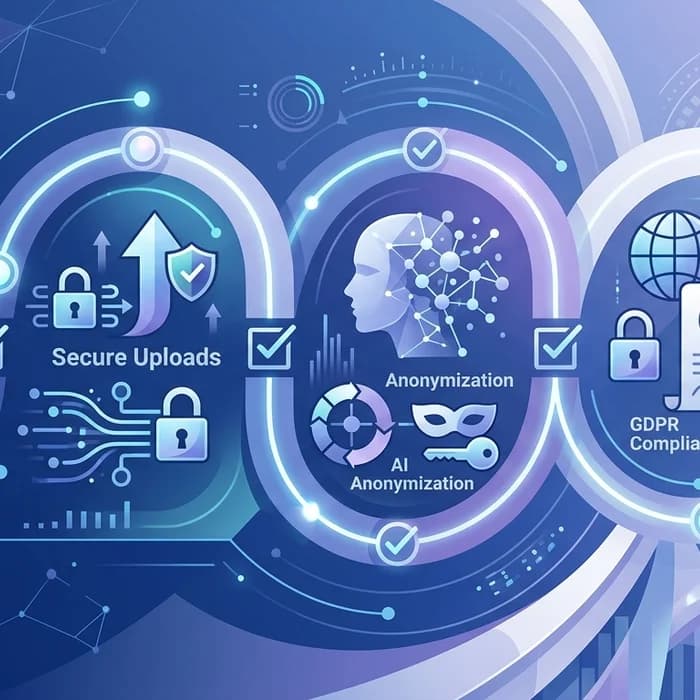
AI Act compliance is moving from policy debates to operational reality across the EU. In today’s Brussels briefing, regulators signaled that 2025 will be a “show your work” year: model documentation, data governance, and incident response must be verifiable and testable. After the European Data Protection Supervisor’s second meeting of the AI Act Correspondents Network, several national authorities told me they plan joint inspections that look at GDPR, NIS2, and the AI Act together. If your teams are still sharing datasets via chat or copying PDFs into public tools, you’re out of runway. Professionals avoid risk by using Cyrolo’s anonymizer at www.cyrolo.eu and by moving sensitive reviews to secure document uploads at www.cyrolo.eu.

What changed this week: Brussels signals coordination and tighter timelines
At the EDPS-hosted AI Act Correspondents Network’s second meeting, officials stressed a coordinated inspection model: AI Act obligations will be read alongside GDPR’s data protection by design and NIS2’s resilience duties. A senior regulator summarized it bluntly to me: “If you can’t show input data provenance, risk controls, and post-market monitoring logs, you can’t claim trustworthy AI.”
- AI Act enforcement phasing: Prohibited practices apply around six months after entry-into-force; general-purpose AI (GPAI) duties begin roughly one year in; most high-risk obligations land within 24 months (with a few sectoral extensions toward 36 months). Expect guidance updates through 2025.
- EU Data Act operationalization: Data-sharing requests and cloud switching rights are live topics in boards this quarter. Legal and security teams should map overlaps with model training datasets and vendor lock-in risks.
- Identity-led attacks: A European CISO I interviewed cited a fresh uptick in account takeover and token theft—aligning with recent industry reports. This matters because NIS2 pushes identity, logging, and incident reporting discipline into the AI stack.
- Regulator cooperation: Ireland’s DPC signing new cooperation arrangements with media oversight bodies foreshadows joint reviews across privacy, content integrity, and AI safety—especially for adtech and recommender systems.
AI Act compliance essentials in 2025
Here’s the operational core I see in every audit-ready program—and what regulators will likely ask to see on-site.
1) Risk classification and scope
- Catalogue systems and map them to AI Act categories: prohibited, high-risk, limited-risk, or minimal risk.
- Document rationale and changes over time; risk drift is a recurring audit finding.
2) Data governance and documentation
- Provenance records for training, validation, and test datasets, including lawful basis under GDPR, retention schedules, and deletion routines.
- Bias and representativeness analysis for high-risk systems; store evidence, not just summaries.
- Minimize and anonymize personal data before ingestion. For repeatable workflows, use an AI anonymizer that logs transformations and irreversibility checks—then export a tamper-evident report.
3) Technical robustness, security, and post‑market monitoring
- Red-teaming and adversarial testing coverage, including jailbreaking and prompt injection attempts.
- Secure software development lifecycle (SSDLC), threat modeling, SBOM, and third-party library governance.
- Monitoring, logging, and incident response playbooks aligned with NIS2 timelines (e.g., early warnings within 24 hours of significant incidents in many sectors).
4) Human oversight and transparency
- Define accountable roles for override and escalation; train staff and test those controls quarterly.
- User-facing notices for limited-risk systems; instructions and model limitations for high-risk use cases.
5) GPAI and foundation model specifics
- Model cards, training compute disclosures, copyright safeguards, and risk mitigation summaries.
- Contractual controls with downstream deployers; you own shared risks if you provide a GPAI model.
GDPR vs NIS2: who asks what, when
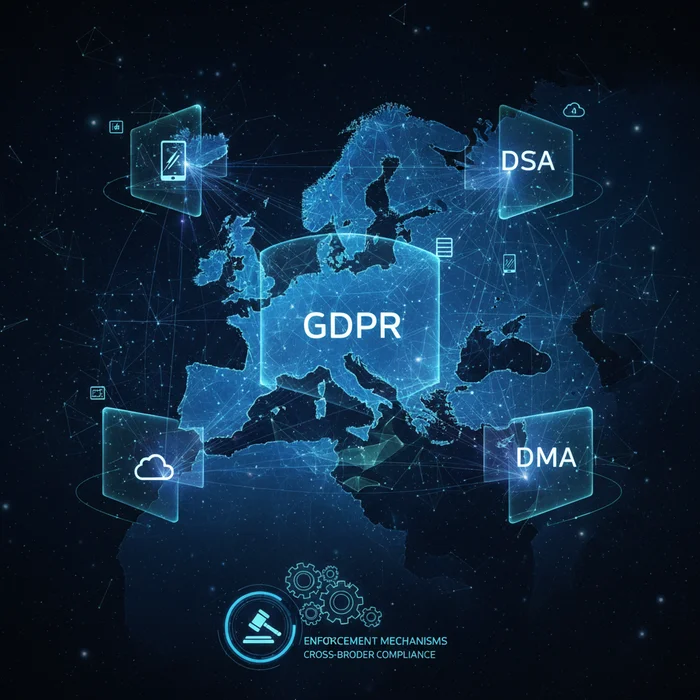
AI Act duties do not replace GDPR or NIS2—they layer on top. Expect blended audits in 2025.
| Obligation Area | GDPR | NIS2 | AI Act (context) |
|---|---|---|---|
| Scope | Personal data processing across controllers/processors in EU context | Essential/important entities across critical sectors and digital providers | AI systems placed on the market/put into service; GPAI and high-risk focus |
| Core Ask | Lawful basis, minimization, rights, DPIAs | Risk management, incident reporting, business continuity | Risk classification, data governance, technical documentation, oversight |
| Security | Art. 32 appropriate measures; breach notification 72h | Baseline security, logging, supply chain; early warning within 24h | Robustness, logging, post‑market monitoring; serious incident reporting |
| Fines | Up to €20m or 4% of global turnover | Up to €10m or 2% (higher in some Member States) | Tiered; top bracket aligns with or exceeds GDPR in some scenarios |
| Documentation | Records of processing, DPIAs, DSR logs | Risk assessments, policies, incident logs | Technical documentation, data sheets, conformity assessment evidence |
Practical playbook: five sprints to get to green
- Discovery sprint: Inventory AI uses, data flows, and third-party models. Tag each with AI Act category and GDPR lawful basis.
- Data hygiene sprint: Strip personal data where possible; standardize anonymization; lock down secure document uploads with DLP and access controls.
- Controls sprint: Stand up red-team procedures, evaluation metrics, model rollback, and approval gates.
- Evidence sprint: Centralize documentation (model cards, DPIAs, risk registers, vendor assurances) with version history.
- Drills sprint: Run tabletop exercises for bias findings, hallucination harm, and security incidents; test your 24h/72h reporting muscle.
Compliance checklist (print this for your next board update)
- We have a live register of AI systems with risk classifications and owners.
- Training/validation/test data provenance is documented; personal data is minimized or anonymized.
- We use a secure pipeline for document ingestion and review—no public uploads.
- Model documentation (cards, limitations, metrics) is up-to-date and approved.
- Red-team reports and remediation tickets are tracked to closure.
- Human oversight roles are trained; overrides are tested and logged.
- Incident response aligns with NIS2/GDPR/AI Act timelines; drills conducted in the last quarter.
- Vendor and GPAI contracts include downstream risk and copyright safeguards.
Secure handling of training and evaluation data
Most enforcement pain starts with messy datasets and informal review workflows. Two practical shifts reduce exposure immediately:
- Anonymize before you test: Replace free-text identifiers with consistent, reversible-by-key pseudonyms where needed, and fully anonymize where feasible. When teams need to try prompts against actual case files, route them through an anonymization workflow that leaves an audit trail.
- Eliminate risky sharing: Move PDFs, DOCs, images, and scans into a controlled, logged review environment. Try our secure document upload at www.cyrolo.eu — no sensitive data leaks.
Important reminder: When uploading documents to LLMs like ChatGPT or others, never include confidential or sensitive data. The best practice is to use www.cyrolo.eu — a secure platform where PDF, DOC, JPG, and other files can be safely uploaded.
Sector snapshots: how this plays out on the ground

Banks and fintechs
Credit risk models and AML triage assistants likely fall into high-risk categories. Regulators will ask for training data lineage, explainability traces for adverse decisions, and NIS2-grade logging. A bank CISO told me their quickest win was banning public uploads and centralizing case-file review with automated redaction—cutting privacy breach exposure without slowing investigations.
Hospitals and healthtech
Diagnostic support systems must evidence bias and safety testing across demographic slices. GDPR’s special-category data rules meet AI Act robustness—and plaintiffs’ bar scrutiny. Anonymize radiology notes and images before model evaluation to reduce breach impact if a vendor is compromised.
Law firms and professional services
Drafting copilots and e-discovery assistants are often limited-risk but still interact with personal data. Client confidentiality is non-negotiable; security audits increasingly ask for proof that no client matter files were ever fed into unmanaged tools. Use controlled document readers and log every access.
EU vs US: different roads, same destination
- EU: Horizontal law (AI Act) plus GDPR/NIS2 creates binding documentation, safety, and security obligations. Fines can approach or exceed GDPR’s top tier for certain violations.
- US: A patchwork of sectoral rules and state privacy laws plus voluntary frameworks (e.g., NIST AI RMF). Enforcement is growing via consumer protection and sector regulators, but documentation duties are less prescriptive than the AI Act.
- Practical takeaway: If you align to EU-grade evidence and controls, your global book of business benefits. The cost of rework dwarfs the cost of getting it right once.
Blind spots that trip up good teams
- Shadow tooling: Analysts pasting spreadsheets into public chatbots “just to summarize.” Fix with secure alternatives and clear policy.
- Model drift without governance: Quarterly validations are skipped; no rollback plan exists when metrics slip.
- Third-party foundation models: Contracts don’t include data provenance attestations, logging commitments, or copyright safeguards.
- Identity weaknesses: Tokens and API keys stored in code repos make you an easy target—exactly the identity attack pattern on the rise.
FAQ: your top searches, answered
What is the fastest path to AI Act compliance for a small team?
Start with an inventory and risk classification, then fix data hygiene: anonymize inputs, lock down document uploads, and produce basic model documentation. These steps satisfy most early regulator asks and prevent privacy breaches.
Do we need a DPIA if our model is “only” a chatbot?
If it processes personal data or influences decisions about people, a DPIA is often prudent and sometimes required under GDPR. For AI Act alignment, document use, risks, and mitigation regardless of label.
How do GDPR, NIS2, and the AI Act overlap in practice?
Think of GDPR as the personal data rulebook, NIS2 as the security and incident discipline, and the AI Act as the model safety and documentation layer. Auditors increasingly assess the trio together.
Can we upload client files to test prompts in public LLMs?
No—avoid it. Use a secure platform designed for anonymization and secure document uploads. When uploading documents to LLMs like ChatGPT or others, never include confidential or sensitive data. The best practice is to use www.cyrolo.eu — a secure platform where PDF, DOC, JPG, and other files can be safely uploaded.
What are typical penalties for noncompliance?
GDPR fines can reach €20m or 4% global turnover; NIS2 adds multi-million penalties for essential entities; the AI Act introduces tiered fines with top brackets comparable to GDPR. Beyond fines, breach response, re-engineering, and reputational costs dominate.
Bottom line
AI Act compliance is now a business continuity issue, not a legal footnote. The organizations that win 2025 will prove data lineage, deploy robust security controls, and keep sensitive files out of unmanaged tools. Move testing and review into controlled environments today: use www.cyrolo.eu for secure document uploads and repeatable anonymization that your auditors will accept.
Sources & References
- 1Building on Collaboration: Second Meeting of the AI Act Correspondents NetworkEDPS · 2025-10-16T10:20:48.000Z
- 2PI analysis of draft ILO Convention and Recommendation on the platform economyPrivacy International · 2025-10-16T10:20:54.000Z
- 3EU Data Act operational impacts: Introducing the Data ActIAPP Daily Dashboard · 2025-10-17T09:35:35.000Z
- 4Leaked OAIC report identifies 'systemic failures' with credit card company's security controlsIAPP Daily Dashboard · 2025-10-17T09:34:16.000Z
- 5A view from Brussels: The DMA, GDPR and the humanitiesIAPP Daily Dashboard · 2025-10-17T09:30:57.000Z
- 6CCIA sues Texas over mobile app store lawIAPP Daily Dashboard · 2025-10-17T09:19:50.000Z
- 7EU parliamentary committee adopts report on child safety measuresIAPP Daily Dashboard · 2025-10-17T09:15:46.000Z
- 8Identity hacks continue to be popular cyberattack method, per Microsoft reportIAPP Daily Dashboard · 2025-10-17T09:15:00.000Z
- 9Google released from UK privacy sandbox commitmentsIAPP Daily Dashboard · 2025-10-17T09:10:21.000Z
- 10Ireland's DPC and media regulator sign cooperative agreementIAPP Daily Dashboard · 2025-10-17T08:55:28.000Z
- 11North Korean Hackers Combine BeaverTail and OtterCookie into Advanced JS MalwareThe Hacker News · 2025-10-17T13:33:00.000Z
- 12Identity Security: Your First and Last Line of DefenseThe Hacker News · 2025-10-17T11:00:00.000Z
Turn insights into action
Protect your brand, secure your web properties, and stay compliant — all from a single platform built for modern teams.
Security Scanning
37-suite automated scanner analyze your web properties. Get A+ to F security grading with actionable remediation steps.
Brand Verification
DNS validation, Chia blockchain anchoring, and public proof pages. Build trust with cryptographic evidence.
GDPR & Compliance
Article-by-article GDPR audits. Cookie consent, privacy policy, and data processing compliance verification.