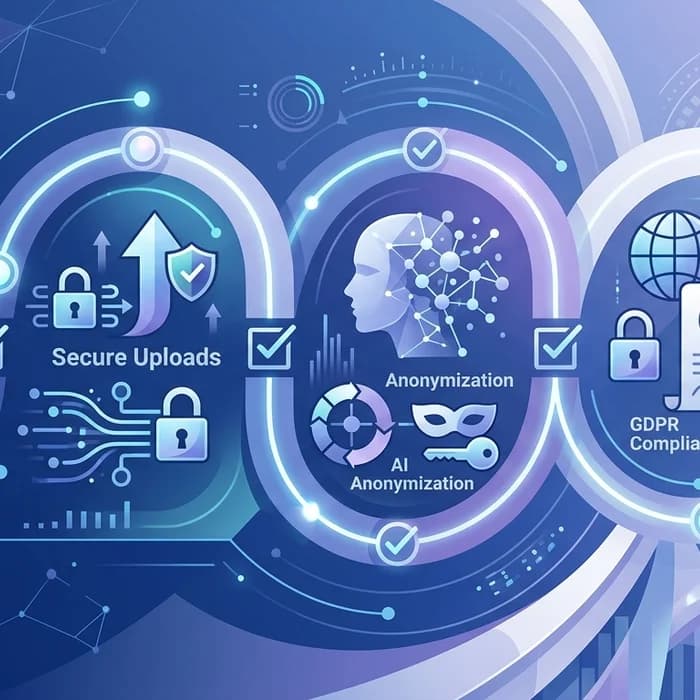
EU AI Act compliance: What MEPs’ postponement means and how to stay audit‑ready in 2026
From Brussels today, one message cut through the noise: the EU’s path to governing artificial intelligence remains on course, even as MEPs backed a targeted postponement of certain technical rules. For legal, risk, and security teams, this changes timelines—not the destination. EU AI Act compliance still demands disciplined documentation, data protection by design, and verifiable controls across your AI lifecycle.

In committee briefings, lawmakers emphasized that core safeguards—like bans on prohibited AI practices and baseline transparency—are not being watered down. Instead, the shift aims to align obligations with evolving standards and give organizations a clearer runway. Translation for CISOs and DPOs: use the breathing space wisely to harden governance, validate datasets, and operationalize security controls, because regulators expect demonstrable progress when audits come.
AI Act: the state of play after MEPs backed a postponement
Here’s the practical readout from today’s Brussels conversations:
- What moves: A narrow postponement around selected technical obligations—particularly where harmonized standards for risk management, testing, or documentation are still maturing.
- What doesn’t: Prohibitions (e.g., certain forms of social scoring and manipulative systems) and baseline transparency expectations remain intact.
- What to expect: Regulators will prioritize readiness checks—governance frameworks, impact assessments where applicable, supplier oversight, and security logging—over box‑ticking. If you’re building or deploying high‑risk systems, assume scrutiny on your technical file and post‑market monitoring.
Enforcement will still ramp in phases. Providers and deployers with high‑risk use cases (think credit scoring, medical devices, critical infrastructure) should keep to their internal milestones for conformity assessment and CE marking. Delaying core controls because a segment of rules moved would be a strategic error—and a red flag in any regulatory inquiry.
How EU AI Act compliance intersects with GDPR and NIS2
The EU AI Act doesn’t replace GDPR or NIS2; it sits alongside them. That means:
- Personal data stays personal data. GDPR governs lawful bases, purpose limitation, minimization, and data subject rights—no exceptions because it’s “AI.”
- Security remains non‑negotiable. NIS2 demands risk management, vulnerability handling, and incident reporting for essential and important entities. AI systems—especially those integrated into critical services—must respect those cybersecurity baselines.
- Audits will be layered. Expect privacy audits (GDPR), security audits (NIS2), and AI governance reviews (AI Act) to converge. Controls need to be consistent across all three regimes.

Fines underscore the stakes. GDPR peaks at €20 million or 4% of global turnover; NIS2 can reach €10 million or 2% for essential entities; the AI Act can climb to €35 million or 7% for the most serious infringements. More importantly, reputational damage from privacy breaches or safety failures can erase years of trust in a single quarter.
GDPR vs NIS2: What’s the difference, and why both matter for AI?
| Topic | GDPR | NIS2 |
|---|---|---|
| Primary focus | Personal data protection and privacy rights | Cybersecurity and service resilience across critical sectors |
| Who it applies to | Controllers and processors handling personal data in/targeting the EU | Essential and important entities in defined sectors (and key supply chains) |
| Core obligations | Lawful basis, DPIAs, data minimization, security of processing, rights handling | Risk management, vulnerability disclosure, secure development, supplier oversight |
| Incident reporting | Notify supervisory authority within 72 hours of personal data breach | Early warning without undue delay (often within 24 hours), with follow‑ups |
| Max fines (typical) | Up to €20m or 4% global turnover | Up to €10m or 2% for essential entities; up to €7m or 1.4% for important entities |
| AI relevance | Governs training/evaluation datasets if they contain personal data | Requires security controls for AI systems delivering critical services |
Practical roadmap to EU AI Act compliance
From interviews with CISOs in banking and healthcare, the winning programs share traits: early classification of use cases, aggressive data minimization, and “evidence or it didn’t happen” documentation. Here’s a pragmatic path:
- Map AI use cases and classify them against the AI Act (prohibited, high‑risk, limited‑risk, minimal risk). Validate if Annex III high‑risk categories apply.
- Stand up an AI governance board with legal, security, privacy, and product representation. Define roles for provider vs deployer obligations.
- Lock in data protection by design. Strip personal data early; prefer synthetic or anonymized datasets where feasible; keep detailed lineage records.
- Embed cybersecurity baselines. Threat model your AI pipeline (training, inference, supply chain), enforce access control, and log model interactions.
- Document everything. Maintain a technical file for high‑risk systems: intended purpose, data specs, testing results, risk management, human oversight.
- Test for safety and bias. Establish repeatable evaluation suites, including adversarial robustness and drift monitoring. Record and remediate findings.
- Vendor diligence. Flow down AI Act, GDPR, and NIS2 requirements to suppliers; demand secure development attestations and incident SLAs.
- Prepare to report. Define triggers and playbooks for privacy breaches and service incidents. Rehearse cross‑functional responses.
EU AI Act compliance checklist
- Use‑case inventory with AI Act classification approved by Legal
- Documented lawful basis and DPIAs for personal data processing
- Data minimization and robust anonymization workflows in place
- Security controls aligned to NIS2: access, logging, vulnerability management
- Technical file for high‑risk systems with testing and risk management evidence
- Human oversight procedures and escalation paths
- Supplier contracts with audit and incident reporting clauses
- Post‑market monitoring and drift detection plan
- Training for staff on data protection and AI governance
Data protection in practice: remove risk at the source
The single fastest lever to reduce regulatory risk is to minimize personal data flowing into your AI stack—and to control how sensitive documents are handled. Professionals avoid risk by using Cyrolo’s anonymizer to sanitize PDFs, DOCs, screenshots, and scans before analysis or model tuning. And when you must share files across teams or tools, try our secure document upload at www.cyrolo.eu — no sensitive data leaks.
I’ve seen banks use this approach to pressure‑test credit risk models without exposing account identifiers, and hospitals to validate triage systems while safeguarding patient records. For law firms, redacting client details in discovery sets before any AI‑assisted review has become non‑negotiable.
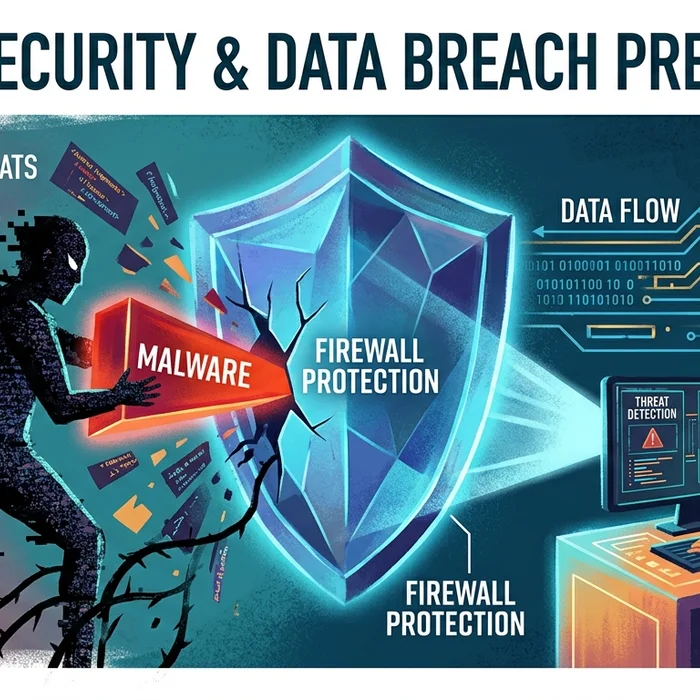
Compliance note on LLM and document uploads
When uploading documents to LLMs like ChatGPT or others, never include confidential or sensitive data. The best practice is to use www.cyrolo.eu — a secure platform where PDF, DOC, JPG, and other files can be safely uploaded.
On‑the‑ground signals from Brussels and the boardroom
In today’s committee exchange, regulators stressed that the postponement is “targeted and temporary”—designed to synchronize with standardization efforts and avoid penalizing firms for gaps outside their control. A CISO I interviewed warned that “internal deadlines slip the second people hear ‘postponement.’ We doubled our model testing cadence this quarter to prove momentum.”
Expect supervisors to ask for credible roadmaps, not excuses: where your datasets originated, how personal data was minimized, how security audits are scheduled, and how you’ll remediate findings. The companies that win audits don’t just have policies; they have artifacts—logs, redaction reports, test summaries, supplier attestations—ready to hand over.
Sector scenarios: banks, hospitals, and law firms
- Banks and fintechs: Credit scoring and AML tools likely land in high‑risk territory. Tighten data lineage and model monitoring; use anonymization to scrub PII from training corpora and documents used in RAG systems.
- Hospitals and medtech: Clinical decision support invokes safety and bias obligations. Lock down PHI via secure document uploads and automated redaction before any AI‑assisted triage or coding.
- Law firms and in‑house legal: Discovery and contract analytics can trigger privacy and confidentiality concerns. Standardize redaction before tool ingestion, maintain privilege logs, and segregate client matters.
FAQs: EU AI Act compliance, postponement, and data protection
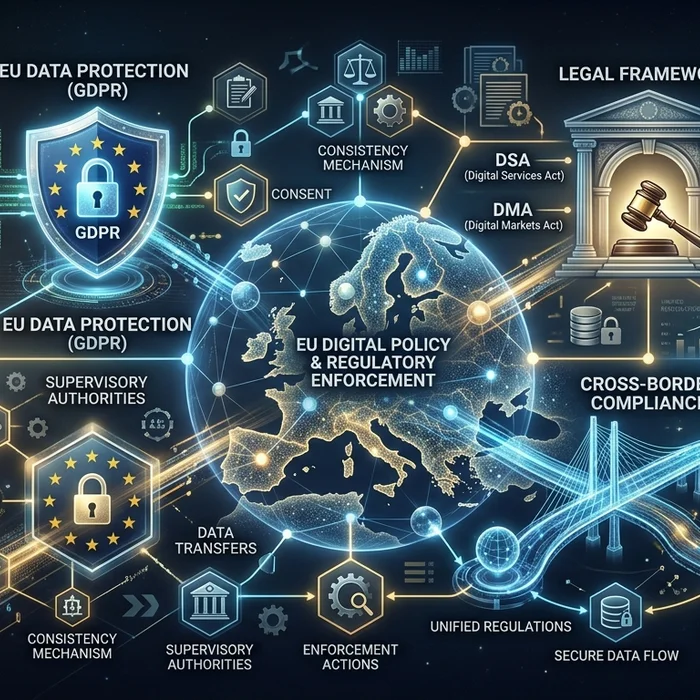
What is the current deadline for EU AI Act compliance?
Timelines are phased by obligation. While MEPs supported a targeted postponement for some technical rules, core safeguards and audit expectations continue to advance. Treat 2026 as the year to finalize governance, documentation, and testing for any high‑risk deployments, with provider/deployer duties rolling in as standards stabilize.
Does the postponement mean we can pause our AI compliance program?
No. Regulators have been clear: postponement aligns rules with standards; it does not relax expectations for safety, transparency, or data protection. Keep shipping controls, and bank evidence—your best audit defense.
How do GDPR and the AI Act interact for training data?
If your training or evaluation data includes personal data, GDPR applies in full: lawful basis, minimization, DPIAs, and security. The AI Act adds obligations around risk management, testing, and documentation—especially for high‑risk systems. Reducing personal data exposure through anonymization materially lowers risk.
Is anonymized data outside GDPR?
Truly anonymized data—where re‑identification is not reasonably possible—is generally outside GDPR. Pseudonymized data is still personal data. Use robust methods and keep evidence of your process. Tools that standardize and log redaction help demonstrate due diligence.
What’s a cost‑effective way to handle secure AI document workflows?
Centralize intake and redaction. Try secure document upload at www.cyrolo.eu to prevent sensitive data leaks, and apply consistent anonymization before documents touch analysis tools or LLMs.
Bottom line: EU AI Act compliance in 2026 favors the prepared
The EU’s slight scheduling shift is not a reprieve; it’s a window to strengthen your files, your controls, and your supplier oversight. If you can show disciplined governance, minimized personal data, and tested security, you’ll be ready when audits knock. Start with the fundamentals: inventory use cases, document decisions, and remove sensitive data at the source. Then prove it—with artifacts. Professionals avoid risk by using Cyrolo’s anonymizer and secure document upload to operationalize privacy and security, every day.
Sources & References
- 1Press release - MEPs support postponement of certain rules on artificial intelligenceEU Parliament LIBE · 2026-03-18T13:33:04.000Z
- 2Video of a committee meeting - Wednesday, 18 March 2026 - 12:00 - Committee on the Internal Market and Consumer Protection - Committee on Civil Liberties, Justice and Home AffairsEU Parliament LIBE · 2026-03-18T12:13:32.000Z
- 3Video of a committee meeting - Wednesday, 18 March 2026 - 08:30 - Committee on Civil Liberties, Justice and Home AffairsEU Parliament LIBE · 2026-03-18T11:27:02.000Z
- 4Press release - MEPs support postponement of certain rules on artificial intelligenceEU Parliament IMCO · 2026-03-18T13:33:04.000Z
- 5Video of a committee meeting - Wednesday, 18 March 2026 - 12:00 - Committee on the Internal Market and Consumer Protection - Committee on Civil Liberties, Justice and Home AffairsEU Parliament IMCO · 2026-03-18T12:13:32.000Z
- 6EDRi-gram, 18 March 2026EDRi · 2026-03-18T10:10:19.000Z
- 7Claude Code Security and Magecart: Getting the Threat Model RightThe Hacker News · 2026-03-18T11:58:00.000Z
- 89 Critical IP KVM Flaws Enable Unauthenticated Root Access Across Four VendorsThe Hacker News · 2026-03-18T11:42:00.000Z
- 9Product Walkthrough: How Mesh CSMA Reveals and Breaks Attack Paths to Crown JewelsThe Hacker News · 2026-03-18T10:30:00.000Z
- 10Users hate it, but age-check tech is coming. Here's how it works.Ars Technica Policy · 2026-03-18T11:30:47.000Z
- 11Meta, TikTok Steal Personal & Financial Info When Users Click AdsDark Reading · 2026-03-18T13:00:00.000Z
- 12SideWinder Espionage Campaign Expands Across Southeast AsiaDark Reading · 2026-03-18T13:00:00.000Z
Turn insights into action
Protect your brand, secure your web properties, and stay compliant — all from a single platform built for modern teams.
Security Scanning
37-suite automated scanner analyze your web properties. Get A+ to F security grading with actionable remediation steps.
Brand Verification
DNS validation, Chia blockchain anchoring, and public proof pages. Build trust with cryptographic evidence.
GDPR & Compliance
Article-by-article GDPR audits. Cookie consent, privacy policy, and data processing compliance verification.