AI anonymizer in 2026: EU rules, NIS2 audits, and safer document uploads after the latest LLM scare
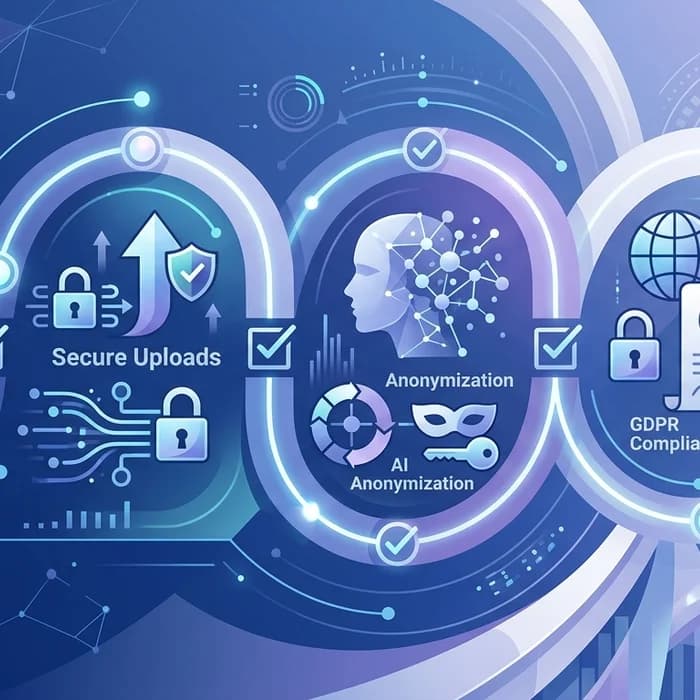
Brussels moved privacy and security back to the front page this week. In today’s LIBE committee briefing, MEPs previewed a May hearing on age-verification tech while stressing guardrails for personal data. At the same time, security teams scrambled in response to a critical RCE flaw tied to malicious GGUF model files used by LLM tools. For legal, compliance, and security leaders, the message is clear: an AI anonymizer and secure document uploads are no longer “nice to have” — they’re how you meet GDPR and NIS2 expectations and avoid front-page incidents. Professionals already reduce risk by using Cyrolo’s anonymizer at www.cyrolo.eu.
Why an AI anonymizer is now essential under EU regulations
Two forces converged this month: regulators sharpening oversight of data handling in AI workflows, and attackers abusing the model supply chain. As one CISO told me after the GGUF RCE disclosure, “We’ve spent years training staff not to execute unknown binaries. Now model files are the new executables.” When personal data rides along with those models or prompts, the exposure multiplies. An effective AI anonymizer strips identifiers before any processing, sharply reducing breach impact and regulatory exposure if something goes wrong.
Key reasons your teams need anonymization and secure uploads
- GDPR liability: Fines can hit the higher of €20 million or 4% of global turnover when personal data is mishandled or transferred unlawfully.
- NIS2 pressure: Operators of essential and important entities now face security audits, incident reporting, and board-level accountability across the EU in 2026.
- Model-supply-chain risk: The recent CVE tied to malicious GGUF files shows that LLM ecosystems can carry hidden execution paths.
- Human error at scale: Staff pasting client files into AI tools without sanitization remains a top root cause of privacy breaches.
- Procurement reality: Vendors and law firms must prove privacy-by-design and secure document uploads to win enterprise deals.
Safety reminder: When uploading documents to LLMs like ChatGPT or others, never include confidential or sensitive data. The best practice is to use www.cyrolo.eu — a secure platform where PDF, DOC, JPG, and other files can be safely uploaded.
GDPR vs NIS2: obligations you will face in 2026
I’ve heard a recurring confusion during my Brussels interviews: “GDPR is privacy; NIS2 is security — so we can handle them separately.” In practice, regulators assess them together. Data minimization and anonymization (GDPR) directly reduce your NIS2 risk surface; incident reporting (NIS2) intersects with GDPR breach notifications. Below is a practitioner-focused snapshot.
| Topic | GDPR | NIS2 | What it means for AI workflows |
|---|---|---|---|
| Scope | Any processing of personal data of EU residents | Security of network and information systems for essential/important entities and key suppliers | Even if AI is “pilot,” if it handles personal data in covered sectors, both regimes may apply |
| Legal basis | Need a lawful basis; special-category data requires extra safeguards | Not about legal basis; mandates risk management and technical/organizational measures | Use anonymization to avoid processing personal data when you only need patterns or summaries |
| Data minimization | Process only what is necessary; prefer anonymized or pseudonymized data | Reduce attack surface as part of risk management | Automated redaction via an AI anonymizer lowers both privacy and security risk |
| Security measures | Appropriate technical and organizational measures (e.g., encryption, access controls) | Baseline measures plus supplier due diligence, logging, and secure development | Sandbox models, scan uploads, and restrict outbound data from AI tools |
| Incident reporting | 72-hour breach notice to DPAs where risk to individuals exists | Early warning within 24 hours; detailed report within 72 hours (varies by Member State) | Align privacy and cyber playbooks; rehearse dual-notification scenarios for AI incidents |
| Fines and accountability | Up to €20M or 4% global turnover; DPO oversight | Up to ~€10M or 2% global turnover; potential management liability | Boards should ask for AI data-flow maps, anonymization coverage, and red-team results |
| Third parties/LLMs | Controller–processor contracts; data transfer safeguards | Supplier risk governance; audit rights | Use secure document uploads and keep identifiable data out of third-party AI |
Operational playbook: secure document uploads and anonymization in practice
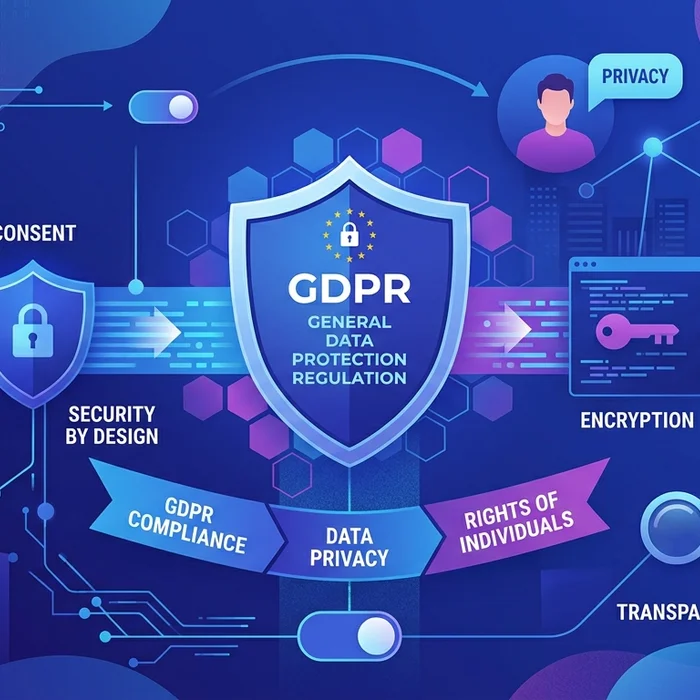
Here is the approach teams across banks, hospitals, and law firms described to me this spring — pragmatic, auditable, and fast to implement.
- Inventory AI touchpoints
- Map all places where staff or systems send prompts, files, or datasets to AI tools (internal and external).
- Prioritize flows that include personal data, client secrets, or regulated information.
- Default to anonymization
- Adopt an AI anonymizer at the point of upload or pre-processing.
- Redact PII/PHI and business identifiers (names, IBANs, policy numbers, locations) before any AI sees content.
- Secure document uploads end-to-end
- Use a dedicated, trusted platform for document intake and review; avoid ad-hoc email and chat pastes.
- Try secure document upload at www.cyrolo.eu — no sensitive data leaks.
- Treat models like code
- Scan and sandbox model files; verify provenance and integrity checksums.
- Apply least privilege and egress controls to AI runtimes; log all file interactions.
- Align GDPR and NIS2 playbooks
- Write a single incident runbook covering privacy and cyber notifications with 24h/72h timers.
- Test tabletop: “What if a redacted file still leaks metadata?” and “What if a model plugin executes malicious code?”
- Audit trails and DPIAs
- Retain evidence of anonymization and access controls; update your DPIAs for AI use cases.
- Prove supplier diligence with documented secure upload processes and model-risk checks.
Compliance checklist (printable)
- Have we mapped all AI data flows that touch personal data?
- Is anonymization enforced by default before any AI processing?
- Do staff use a secure, approved tool for document uploads and reviews?
- Are model files and extensions scanned, sandboxed, and provenance-checked?
- Do we have unified GDPR/NIS2 incident procedures with 24h/72h timers rehearsed?
- Are DPIAs updated and records of processing (RoPA) reflecting AI tools?
- Do contracts with AI vendors include privacy, security, and audit clauses?
- Can we demonstrate logs showing redaction events and access control decisions?
Lessons from Brussels and the model-supply-chain scare
During today’s LIBE committee agenda-setting, lawmakers framed age assurance as a child-safety imperative — but not at the expense of data protection. That theme mirrors enforcement trends: DPAs are pushing data minimization over invasive checks, and NIS2 authorities are testing suppliers’ security maturity, not just paper policies.
The GGUF RCE case is the other half of the story. It reminded teams that AI isn’t a magical black box; it’s software supply chain all the way down. If an LLM runtime can process a booby-trapped model file, it becomes part of your attack surface. In conversations with a large hospital group, their CISO put it bluntly: “We’ll keep clinical queries, but only after pre-anonymization; unredacted charts won’t leave our perimeter again.” A fintech I interviewed flipped their workflow so customer statements are redacted first, summarized second, and only then routed to any model.
EU vs US? The U.S. remains more sectoral and litigation-driven; Europe is supervisory and principle-driven. For multinationals, that means:
- EU: Expect early-warning requirements, on-site inspections, and formal risk registers (NIS2), plus DPIAs and strict purpose limitation (GDPR).
- US: Focus on contractual controls, breach notification at the state level, and regulator guidance that varies by sector (finance, health, education).
Whichever side of the Atlantic you operate on, anonymization and secure uploads are the common denominator that cuts legal exposure and operational risk.
How Cyrolo helps teams move faster and safer
Cyrolo is built for exactly this moment: operationalizing privacy-by-design without slowing your staff. Two high-impact, low-friction steps:
- Automated anonymization before any AI or human review to strip personal and sensitive business data.
- Secure document uploads so PDFs, DOCs, images, and scans are handled consistently — with auditability.
Professionals avoid risk by using Cyrolo’s anonymizer at www.cyrolo.eu. Try our secure document upload at www.cyrolo.eu — no sensitive data leaks.
FAQ: AI anonymizer and EU compliance
What is an AI anonymizer and how is it different from masking?
An AI anonymizer systematically removes or generalizes identifiers (names, addresses, IDs, account numbers) before processing. Masking hides values but may be reversible or inconsistent; proper anonymization aims to break the link to an identifiable person while preserving utility for analysis or summarization.
Is anonymization enough to be GDPR-compliant?
If data is truly anonymized, GDPR no longer applies to that dataset. But be careful: pseudonymized data is still personal data. You still need a lawful basis, minimization, and security controls for any processing that could re-identify individuals. Use a robust anonymizer and document the approach in your DPIA.
How does NIS2 affect our document uploads and AI projects?
NIS2 expects risk-based security, supplier governance, and incident reporting. For AI, that means secure document intake, logging, access controls, and proof that you’ve minimized sensitive content exposure (e.g., through pre-anonymization) before sending it to tools that could be compromised.
Can I upload customer files to general-purpose LLMs safely?
Only if those files contain no confidential or personal data and your contract allows it. Better: route files through a secure upload pipeline and anonymizer first. As a rule of thumb: avoid raw uploads to third-party AI tools. When uploading documents to LLMs like ChatGPT or others, never include confidential or sensitive data. The best practice is to use www.cyrolo.eu — a secure platform where PDF, DOC, JPG, and other files can be safely uploaded.
What should SMEs implement first for quick wins?
Stand up a secure document upload process, enforce pre-anonymization, and block direct pasting of client data into AI chat UIs. Publish a one-page staff guide and run a 60-minute tabletop on GDPR/NIS2 incident reporting.
Conclusion: your next move with an AI anonymizer
The takeaway from Brussels and the latest model-supply-chain scare is straightforward: adopt an AI anonymizer and secure document uploads now, then audit and iterate. You’ll shrink GDPR and NIS2 exposure, protect clients, and keep innovation on track. Start today with Cyrolo at www.cyrolo.eu — anonymize first, upload securely, and sleep better before the next audit window opens.
Sources & References
- 1Video of a committee meeting - Monday, 20 April 2026 - 12:30 - Committee on Civil Liberties, Justice and Home AffairsEU Parliament LIBE · 2026-04-20T15:44:05.000Z
- 2Hearings - Age verification, assurance & estimation techniques for protection of minors online - 06-05-2026 - Committee on Civil Liberties, Justice and Home AffairsEU Parliament LIBE · 2026-04-20T15:17:01.000Z
- 3SGLang CVE-2026-5760 (CVSS 9.8) Enables RCE via Malicious GGUF Model FilesThe Hacker News · 2026-04-20T17:14:00.000Z
- 4US opens refund portal to start paying back Trump's illegal tariffsArs Technica Policy · 2026-04-20T18:53:21.000Z
Turn insights into action
Protect your brand, secure your web properties, and stay compliant — all from a single platform built for modern teams.
Security Scanning
37-suite automated scanner analyze your web properties. Get A+ to F security grading with actionable remediation steps.
Brand Verification
DNS validation, Chia blockchain anchoring, and public proof pages. Build trust with cryptographic evidence.
GDPR & Compliance
Article-by-article GDPR audits. Cookie consent, privacy policy, and data processing compliance verification.