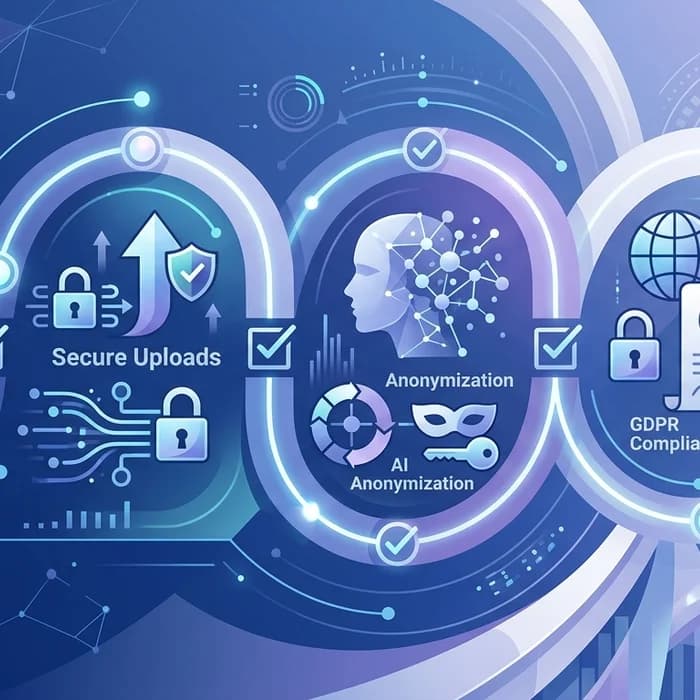
Healthcare data anonymization: the EU playbook to stop AI-driven privacy breaches under GDPR and NIS2
By Siena Novak, EU Policy & Cybersecurity Reporter

Two stories dominated my briefing calls this week: a US lawsuit over an AI tool that recorded doctor–patient conversations, and a telehealth breach that exposed intimate prescription histories. EU leaders are watching closely. For hospitals, clinics, and digital health startups across Europe, the lesson is blunt—healthcare data anonymization is no longer optional. Under GDPR and NIS2, the combination of special-category health data, ambient AI recording, and third-party processors creates a perfect compliance and security storm.
- GDPR fines can reach €20 million or 4% of global annual turnover—whichever is higher.
- NIS2 adds security-by-design duties, board accountability, and penalties up to €10 million or 2% for essential entities.
- Average healthcare breach costs exceed other sectors, and regulators increasingly tie weak de-identification to unlawful processing.
Why healthcare data anonymization is now non-negotiable
In today’s Brussels briefing, regulators emphasized three expectations: document the lawful basis for any audio capture in clinical settings, minimize data at source, and prove that de-identification steps make re-identification “reasonably impossible.” A CISO I interviewed at a university hospital put it more starkly: “Every new AI scribe or call-transcription pilot is a potential microphone in the ward. If you can’t guarantee anonymization or robust pseudonymization, don’t ingest it.”
Healthcare data is “special category” under GDPR (Article 9). That elevates risk in four ways:
- Lawfulness and necessity: recording a consultation, even to assist clinicians, triggers strict need-to-have tests and explicit consent or another narrow exemption.
- Purpose limitation: repurposing voice or transcript data to “train the AI” is rarely compatible with initial care purposes without fresh consent and safeguards.
- Data minimization: default-to-record-all is hard to justify; on-device redaction and selective capture reduce exposure.
- Security and accountability: NIS2 requires risk management, supplier controls, logging, and rapid incident reporting; GDPR demands privacy by design and DPIAs before high-risk processing.
US disputes over clinical recording tools are a reminder: even helpful AI can breach confidentiality if deployments outpace governance. Europe’s legal baseline is stricter—and audits are tightening in 2026.
GDPR vs NIS2: obligations your board must understand
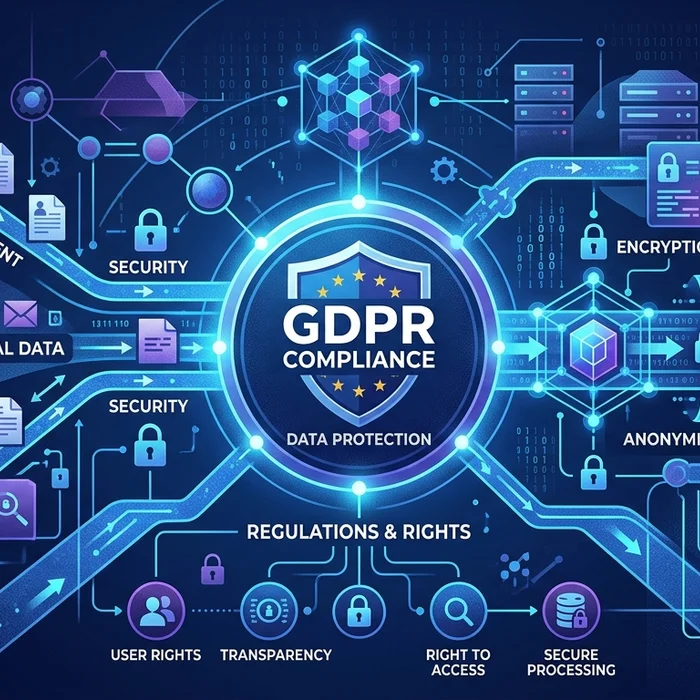
| Topic | GDPR | NIS2 |
|---|---|---|
| Scope | All controllers/processors of personal data; health data is special category | Essential and important entities in sectors incl. healthcare, digital infrastructure, pharma supply chains |
| Focus | Lawful processing, data protection principles, data subject rights | Cybersecurity risk management, incident handling, supply-chain security, business continuity |
| Security measures | Privacy by design/default; appropriate technical and organizational measures | “State of the art” controls, policies, vulnerability handling, encryption, MFA, logging, training |
| Breach notification | Supervisory authority within 72 hours; notify individuals if high risk | Computer security incident reporting to national CSIRTs/authorities with rapid timelines |
| Fines | Up to €20M or 4% global turnover | Up to €10M or 2% (essential) / €7M or 1.4% (important) |
| Accountability | DPO (where required), DPIAs for high-risk processing, records of processing | Board-level oversight and possible personal liability under national transpositions |
| Vendors | Processor agreements, cross-border transfer rules | Supply-chain risk management and verification of security practices |
How healthcare data anonymization reduces breach impact and fines
True anonymization can remove data from GDPR’s scope. But regulators scrutinize claims: dropping names while leaving rare disease codes, date-of-birth, and postcode can still enable re-identification—especially when transcripts, images, and lab values are combined.
Four practical layers I advise clients to implement now:
- Collection controls: disable “always-on” recording; use opt-in capture with visible indicators and role-based triggers.
- Pseudonymization at ingress: replace identifiers with stable tokens before data leaves the device or clinic network.
- AI-powered redaction with human-in-the-loop: remove names, IDs, locations, phone numbers, MRNs, and free-text hints; sample for quality and maintain an audit trail.
- Aggregation and k-anonymity where feasible: generalize dates, ages, and small geography to reduce uniqueness.
Professionals avoid risk by using Cyrolo’s anonymizer to strip identifiers from notes, scans, and images before sharing with vendors, researchers, or AI copilots. And when you must exchange files across teams, try our secure document upload at www.cyrolo.eu — no sensitive data leaks.
Safe AI use with clinical notes and legal files
When uploading documents to LLMs like ChatGPT or others, never include confidential or sensitive data. The best practice is to use www.cyrolo.eu — a secure platform where PDF, DOC, JPG, and other files can be safely uploaded.
Expect the EU AI Act to phase in across 2025–2026. Clinical decision support and documentation tools will face heightened transparency and risk management duties. My advice from interviews with hospital CISOs: don’t wait for formal AI Act audits—fold AI governance into your GDPR/NIS2 program now.
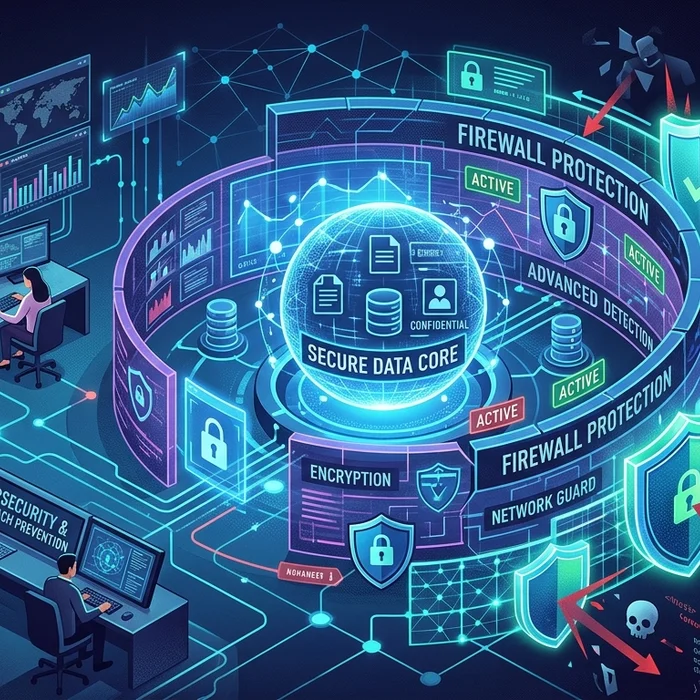
Common failure modes I see in EU hospitals and digital health startups
- Shadow pilots: ward-level trials of transcription apps without DPIAs or DPO sign-off.
- Overcollection: recording entire appointments when a brief symptom summary would suffice.
- Leaky meta-data: files scrubbed of names but filenames, EXIF data, or header tags reveal identities.
- Vendor drift: processors quietly switch subcontractors or data residency, breaking transfer assurances.
- Unlogged sharing: clinicians forwarding transcripts in unsecured messaging apps.
One CISO told me, “Our risk wasn’t the AI model—it was the human shortcuts around it.” That’s fixable with process guardrails and tools that make the right thing the easy thing.
Compliance checklist: your 30–60–90 day plan
Days 1–30: Stabilize
- Inventory every data capture channel: voice, chat, email, portals, imaging, wearables.
- Freeze new pilots that touch special-category data until a DPIA is completed.
- Enable encryption at rest and in transit; enforce MFA for all clinical systems.
- Route external sharing through a secure document upload workflow.
Days 31–60: De-risk and document
- Deploy an AI anonymizer capable of text, image, and document redaction; log every action for audits.
- Update processor contracts with NIS2-grade security clauses and breach notification SLAs.
- Run red-team re-identification tests on “anonymized” datasets to validate robustness.
- Train staff on lawful bases, clinical recording etiquette, and incident reporting.
Days 61–90: Prove and improve
- Execute a tabletop exercise: AI transcription leak scenario with 72-hour GDPR clock.
- Present board with GDPR/NIS2 gap remediation status and metrics.
- Automate data retention and deletion for voice and transcripts—no indefinite storage.
- Standardize anonymization profiles by use case (care, research, billing, quality improvement).
Case signals from abroad—and what they mean in Europe
Recent US disputes over AI recording in clinics and a telehealth breach exposing sensitive prescription data echo EU risks. Europe adds stricter consent rules, stronger special-category protections, and broader supervisory scrutiny. For EU entities, the takeaway is clear: if it records, transcribes, or infers health status, treat it as high risk under GDPR and a critical service under NIS2 if applicable.
Buyer’s guide: questions to ask any AI scribe or transcription vendor
- Can recording be strictly opt-in with visible signals and immediate deletion on request?
- Is on-device redaction available before cloud transfer? If not, why?
- How is data residency enforced? Can you prove no offshore mirrors or training reuse?
- What is your documented anonymization accuracy for names, locations, and IDs in multiple languages?
- Do you support signed logs for every redaction, enabling regulator-ready evidence?
- How fast can you deliver breach notifications and forensic artifacts if something goes wrong?
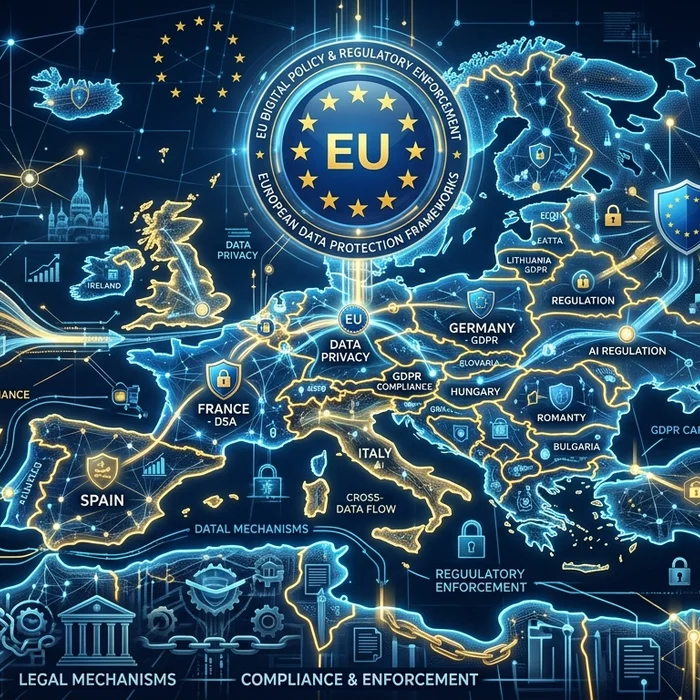
FAQ: EU healthcare privacy, AI, and compliance
Is anonymized data still personal data under GDPR?
Truly anonymized data—where re-identification is not reasonably possible—is outside GDPR. Most “de-identified” health data is better described as pseudonymized and remains in scope. Regulators examine context, available auxiliary data, and uniqueness.
Does NIS2 apply to private clinics and digital health startups?
Yes, if they fall within the national lists of essential or important entities for healthcare or supporting digital services. Even when outside formal scope, NIS2 practices (logging, supply-chain security, incident drills) are becoming the de facto standard.
Can we upload PHI to ChatGPT, Copilot, or other LLMs?
Not directly. Avoid sharing any identifiable or confidential data with public LLMs. Use a controlled, audited workflow and anonymize first. When uploading documents to LLMs like ChatGPT or others, never include confidential or sensitive data. The best practice is to use www.cyrolo.eu — a secure platform where PDF, DOC, JPG, and other files can be safely uploaded.
What counts as a personal data breach in a hospital?
Any security incident leading to accidental or unlawful destruction, loss, alteration, unauthorized disclosure, or access to personal data. Misaddressed emails with discharge notes, exposed prescription histories, or leaked audio transcripts all qualify and may trigger 72-hour notification.
Do we need patient consent to record consultations?
Often yes, especially when relying on consent as the lawful basis. Even where another lawful basis applies, you must respect data minimization, provide clear notices, and allow opt-out without compromising care.
Conclusion: make healthcare data anonymization your default
The fastest way to lower breach risk, satisfy auditors, and protect patients is to make healthcare data anonymization the default—before data leaves the clinic, your device, or your trusted perimeter. EU regulators are clear: privacy by design is measurable, not aspirational. Put robust redaction, auditable sharing, and disciplined vendor controls in place now.
Start with tools built for compliance teams and clinicians: run sensitive files through Cyrolo’s anonymizer, and move external exchanges to our secure document upload at www.cyrolo.eu. Reduce noise, pass audits, and keep your patients’ trust.
Sources & References
- 1Californians sue over AI tool that records doctor visitsArs Technica Policy · 2026-04-10T21:43:33.000Z
- 2Hims Breach Exposes the Most Sensitive Kinds of PHIDark Reading · 2026-04-10T20:02:30.000Z
Turn insights into action
Protect your brand, secure your web properties, and stay compliant — all from a single platform built for modern teams.
Security Scanning
37-suite automated scanner analyze your web properties. Get A+ to F security grading with actionable remediation steps.
Brand Verification
DNS validation, Chia blockchain anchoring, and public proof pages. Build trust with cryptographic evidence.
GDPR & Compliance
Article-by-article GDPR audits. Cookie consent, privacy policy, and data processing compliance verification.