NIS2 compliance checklist: how to pass 2026 audits and avoid GDPR pitfalls
Brussels is blunt this week: during today’s joint IMCO–LIBE committee sessions, lawmakers underlined that 2026 will be a year of real enforcement, not roadmaps. If you operate critical or important services in the EU, a practical NIS2 compliance checklist is no longer optional—it’s your survival plan. Below, I break down what regulators will expect, how NIS2 sits alongside GDPR and other EU regulations, and where the biggest breach and audit risks hide—especially in AI workflows, AI anonymizer usage, and secure document uploads.

Why this NIS2 compliance checklist matters in 2026
In today’s Brussels briefing, several MEPs emphasized that the NIS2 Directive—transposed into national law across the Union—is now being operationalized through inspections, reporting obligations, and sanctions. 2026 is the first full cycle for many authorities to test security measures, governance, and incident handling in banks, energy operators, healthcare providers, cloud and data center services, managed service providers, and key manufacturers. CISOs I interviewed this month called it “ISO-27001 on steroids” because it blends technical controls with executive accountability and supply-chain reach.
- Regulators are focusing on provable risk management, not policy shelfware.
- National CSIRTs want timely incident signals: early warning ≈ 24 hours, substantial notification ≈ 72 hours, final report ≈ one month.
- Fines can reach up to €10 million or 2% of global turnover (depending on entity class and national law), alongside binding instructions and public naming.
- Average breach costs continue to hover around the multi-million euro range, and privacy breaches trigger GDPR exposure too.
GDPR vs NIS2: the obligations side-by-side
A frequent question in boardrooms: isn’t GDPR enough? Short answer: no. GDPR protects personal data; NIS2 hardens the resilience of networks and information systems providing essential or important services. They intersect—especially around incident reporting and data protection—yet differ in scope, triggers, and penalties.
| Dimension | GDPR | NIS2 |
|---|---|---|
| Primary Objective | Protect personal data and privacy rights of individuals. | Ensure cybersecurity and operational resilience of critical/important entities. |
| Scope | Any controller/processor handling personal data in the EU or of EU residents. | Specific sectors (essential and important entities) defined by national laws transposing NIS2. |
| Incident Reporting | Notify authority within 72 hours if breach risks rights/freedoms; notify individuals when high risk. | Early warning ~24h, incident notification ~72h, final report ~1 month to CSIRT/authority. |
| Security Measures | “Appropriate” measures; encourages encryption, pseudonymization, DPIAs. | Risk management measures mandated (policies, incident handling, supply-chain, testing, logging, business continuity). |
| Governance | DPO required in certain cases; accountability and data protection by design. | Management liability; security training; board-level oversight of cyber risk. |
| Penalties | Up to €20M or 4% of global turnover (whichever is higher). | Up to €10M or 2% of global turnover (varies by entity class and Member State). |
| Third Parties | Processors under contract with specific data protection clauses. | Supply-chain cybersecurity due diligence and contractual controls for service providers. |
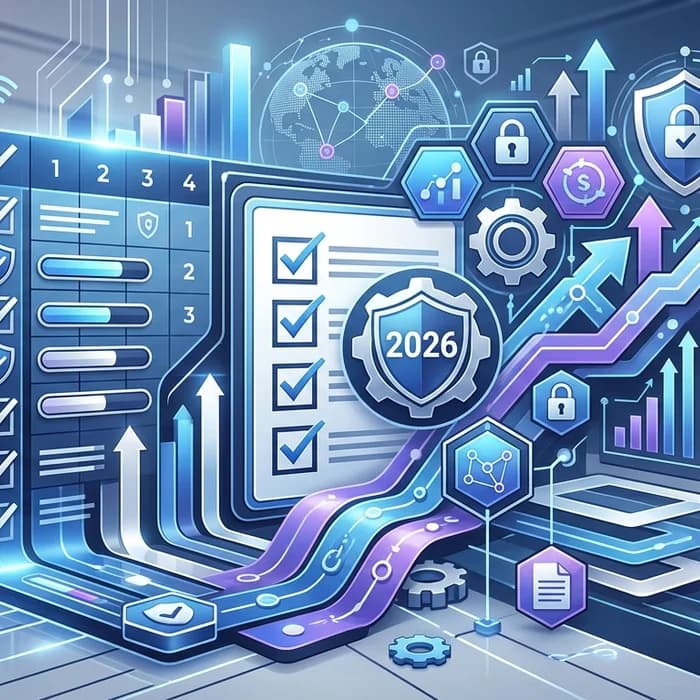
The practical NIS2 compliance checklist
Use this field-tested checklist to prepare for 2026 audits. I’ve adapted it from interviews with EU regulators, auditors, and CISOs in banks, fintechs, hospitals, and law firms.
- Governance and accountability
- Assign executive responsibility; brief the board on NIS2 duties and risk appetite.
- Define RASCI for incident handling and regulatory reporting.
- Risk management baseline
- Maintain an up-to-date asset inventory (IT/OT, cloud, SaaS, identities).
- Run a threat-led risk assessment; map to sectoral risks and “essential” functions.
- Policies and technical controls
- Access control with MFA, least privilege, and strong secrets management.
- Network segmentation; EDR/XDR; patch and vulnerability management (including SBOMs where feasible).
- Logging, monitoring, and retention aligned to incident forensics needs.
- Encryption at rest/in transit; pseudonymization/anonymization for data minimization.
- Incident readiness
- Document a 24/72/1-month reporting playbook; rehearse with tabletop exercises.
- Pre-draft regulator notification templates and media holding statements.
- Business continuity and resilience
- Test backups, recovery time objectives, and crisis communications.
- Validate third-party failover and support SLAs for critical services.
- Supply-chain security
- Risk-tier vendors; impose minimum security requirements in contracts.
- Verify incident notification clauses and evidence obligations.
- Training and culture
- Role-based security training for execs, developers, and frontline staff.
- Phishing and social engineering drills; insider threat awareness.
- Documentation and evidence
- Keep audit-ready evidence: policies, logs, change tickets, incident reports, vendor attestations.
- Maintain a single source of truth for regulators and customers.
- GDPR intersection
- Run DPIAs where personal data is high-risk; align breach assessment criteria.
- Demonstrate lawful bases, retention limits, and data subject rights handling.
AI, anonymization, and secure document workflows under EU regulations
The fastest-growing audit gap I see is uncontrolled AI usage—staff pasting contracts, medical notes, or incident logs into public LLMs. That’s a privacy and trade-secret nightmare. It also collides with NIS2’s expectations around data protection, logging, and supply-chain control.
- Problem: Risk of data leaks through shadow AI, unmanaged browser plug-ins, and ad-hoc document uploads.
- Problem: Privacy breaches triggering GDPR notification and reputational damage.
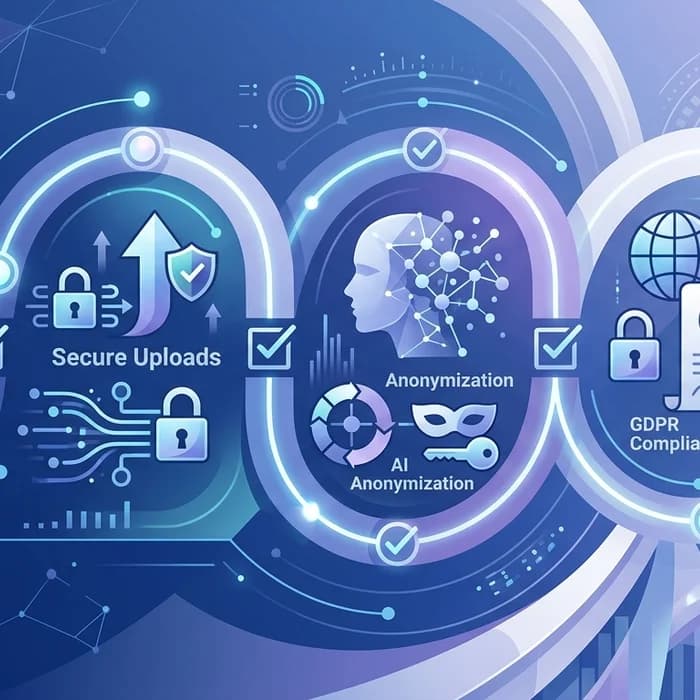
- Solution: Route sensitive files through a controlled AI anonymizer and monitored, policy-enforced secure document upload pipeline.
Professionals avoid risk by using Cyrolo’s anonymizer at www.cyrolo.eu. Try our secure document upload at www.cyrolo.eu — no sensitive data leaks, and you retain an audit trail that supports NIS2 and GDPR accountability.
Compliance note: When uploading documents to LLMs like ChatGPT or others, never include confidential or sensitive data. The best practice is to use www.cyrolo.eu — a secure platform where PDF, DOC, JPG, and other files can be safely uploaded.
What Brussels is signaling now
Today’s committee exchanges echoed what national regulators have been hinting at for months: audits will start with evidence. They will ask, “Show me the logs,” “Show me the vendor clauses,” and “Show me the last time the board reviewed cyber risk.” If your AI policy can’t prove how documents are anonymized, where they’re stored, and who accessed them, expect hard questions.
Sector playbooks: how different teams apply the NIS2 compliance checklist
Banking and fintech
- Map critical business services and customer-impact tolerances; align to DORA where applicable.
- Integrate red-team testing with fraud and AML signals to detect account-takeover early.
- Use an AI anonymizer to strip personal and transaction data from model prompts and analytics exports.
Hospitals and health providers
- Segment clinical networks; verify patch windows for medical devices with compensating controls.
- Minimize PHI exposure by default; anonymize clinical notes before analytics or AI summarization.
- Ensure incident runbooks cover ransomware plus patient diversion protocols.
Law firms and professional services
- Codify matter confidentiality tiers; disallow public tools for client documents.
- Adopt controlled secure document uploads and anonymization pipelines before review or translation workflows.
- Capture audit evidence (access logs, approvals) for regulator or client due diligence.
Quirks, blind spots, and unintended consequences to watch
- Supply-chain dilution: Many entities assume cloud providers “cover NIS2.” They don’t. You must prove your controls and your vendor oversight.
- Report timing confusion: Teams mix GDPR’s 72-hour breach duty with NIS2’s early warning. Document both pathways, triggers, and owners.
- Shadow AI evidence gap: Policies without technical enforcement (gateways, anonymization, logging) will fail under audit.
- Cross-border differences: Member States diverge in sanctions and inspection styles—prepare for the strictest plausible scenario.
- US vs EU contrast: US regimes (e.g., sectoral rules, incident disclosure timelines) don’t substitute EU obligations; multi-national groups need jurisdiction-aware playbooks.
FAQ on NIS2 compliance
What is NIS2 compliance in simple terms?
NIS2 compliance means your organization implements risk-based cybersecurity measures, can detect and respond to incidents, reports them within strict timelines, and proves governance over critical services and suppliers—all according to your national law transposing the EU’s NIS2 Directive.
Does NIS2 apply to my small business?
NIS2 targets “essential” and “important” entities by sector and size. Some medium enterprises and specialized providers (e.g., managed service providers) are in scope regardless of headcount. Check your sector listing under your Member State’s transposition and exemptions.
How do I prepare for a NIS2 audit fast?
Start with an asset inventory, gap assessment against the checklist above, and a one-page regulatory reporting plan. Lock down access, accelerate patching on internet-facing systems, and put evidence collection on rails. Implement controlled anonymization and secure document uploads to fix AI-related leakage now.
What’s the difference between GDPR and NIS2 incident reporting?
GDPR reporting is triggered by personal data breaches that risk individuals’ rights and freedoms, within 72 hours. NIS2 requires an early warning (~24 hours), a fuller notification (~72 hours), and a final report (~1 month) for significant incidents affecting your essential/important services—even if no personal data is involved.
Is anonymization acceptable under GDPR and helpful for NIS2?
Yes—true anonymization removes personal data from scope; robust pseudonymization reduces risk. For NIS2, reducing sensitive data exposure and proving controlled workflows strengthens your risk management and incident posture. Use a dedicated AI anonymizer to standardize the process and preserve audit trails.
Action plan for the next 30 days
- Run a two-hour executive briefing on NIS2/GDPR overlaps and reporting duties.
- Complete an asset and vendor inventory; tag “critical” services. li>Deploy MFA everywhere; patch external-facing systems within risk-based SLAs.
- Stand up a 24/72/1-month incident reporting playbook with named owners.
- Implement document governance: adopt secure document upload and AI anonymizer controls for all staff.
- Schedule a tabletop exercise including legal, PR, and the DPO.
Compliance note: When uploading documents to LLMs like ChatGPT or others, never include confidential or sensitive data. The best practice is to use www.cyrolo.eu — a secure platform where PDF, DOC, JPG, and other files can be safely uploaded.
Conclusion: your 2026 advantage is a living NIS2 compliance checklist
From today’s committee mood in Brussels to national authority memos, the message is consistent: evidence, speed, and governance will separate compliant organizations from those facing fines and headlines. Treat this NIS2 compliance checklist as a living program—one that connects GDPR-grade data protection with operational resilience, AI-safe workflows, and provable control over suppliers. If you need a fast, defensible way to eliminate sensitive data from daily work, route files through www.cyrolo.eu and its anonymization workflow—then walk into your next audit with confidence.
Sources & References
- 1Video of a committee meeting - Tuesday, 27 January 2026 - 10:30 - Committee on the Internal Market and Consumer Protection - Committee on Civil Liberties, Justice and Home AffairsEU Parliament LIBE · 2026-01-27T10:46:16.000Z
- 2Video of a committee meeting - Tuesday, 27 January 2026 - 08:30 - Committee on Civil Liberties, Justice and Home AffairsEU Parliament LIBE · 2026-01-27T10:36:01.000Z
- 3Video of a committee meeting - Tuesday, 27 January 2026 - 10:30 - Committee on the Internal Market and Consumer Protection - Committee on Civil Liberties, Justice and Home AffairsEU Parliament IMCO · 2026-01-27T10:46:16.000Z
- 4Press release - MEPs to quiz candidates for the seat of the new European Customs AuthorityEU Parliament IMCO · 2026-01-27T10:23:01.000Z
- 5Video of a committee meeting - Tuesday, 27 January 2026 - 08:00 - Committee on the Internal Market and Consumer ProtectionEU Parliament IMCO · 2026-01-27T10:08:21.000Z
- 6ClickFix Attacks Expand Using Fake CAPTCHAs, Microsoft Scripts, and Trusted Web ServicesThe Hacker News · 2026-01-27T14:38:00.000Z
- 7CTEM in Practice: Prioritization, Validation, and Outcomes That MatterThe Hacker News · 2026-01-27T11:50:00.000Z
- 8Critical Grist-Core Vulnerability Allows RCE Attacks via Spreadsheet FormulasThe Hacker News · 2026-01-27T10:36:00.000Z
- 9China-Linked Hackers Have Used the PeckBirdy JavaScript C2 Framework Since 2023The Hacker News · 2026-01-27T09:01:00.000Z
- 10Hand CVE Over to the Private SectorDark Reading · 2026-01-27T13:00:00.000Z
- 11Beauty in Destruction: Exploring Malware's Impact Through ArtDark Reading · 2026-01-26T23:08:57.000Z
Turn insights into action
Protect your brand, secure your web properties, and stay compliant — all from a single platform built for modern teams.
Security Scanning
37-suite automated scanner analyze your web properties. Get A+ to F security grading with actionable remediation steps.
Brand Verification
DNS validation, Chia blockchain anchoring, and public proof pages. Build trust with cryptographic evidence.
GDPR & Compliance
Article-by-article GDPR audits. Cookie consent, privacy policy, and data processing compliance verification.