NIS2 compliance in 2026: A practical EU playbook to stop email add-ins, AI-powered phishing, and supply‑chain failures
In today’s Brussels briefing, regulators repeated what many CISOs already feel: NIS2 compliance is now a board‑level priority, not a checkbox. After the first malicious Outlook add‑in was found stealing thousands of Microsoft credentials and North Korea’s UNC1069 ramped up AI-driven social engineering on crypto firms, EU authorities want provable risk management, incident reporting discipline, and supply‑chain security—backed by fines up to €10 million or 2% of global turnover.

What NIS2 compliance really requires in 2026
Member States have transposed NIS2 into national law, and supervisory authorities are moving from guidance to inspections. In conversations I’ve had with hospital groups, fintechs, and regional utilities, three pressure points recur: leadership accountability, early warning discipline, and vendor visibility.
- Governance and accountability: Management must approve security risk management measures and can be held liable for persistent failures. Expect board training audits and named accountability.
- Incident reporting timeline:
- Early warning within 24 hours of becoming aware of a significant incident
- Incident notification/update within 72 hours
- Final report within one month, covering root cause and mitigation
- Core technical and organisational measures: Risk analysis, business continuity and disaster recovery, supply‑chain security, secure development, vulnerability handling, cryptography, MFA, logging/monitoring, and security audits.
- Supply chain and service providers: You must evidence due diligence, not just sign DPAs. Regulators are asking to see vendor risk tiers, contract clauses, and proof of controls (e.g., MFA, patch SLAs, data minimisation).
Why this week’s attacks change your priorities
The malicious Outlook add‑in campaign shows how “trusted” productivity ecosystems can be abused to harvest credentials at scale—bypassing classic email filters. In parallel, the UNC1069 operations illustrate how AI supercharges pretexting and payload adaptation. A CISO I interviewed at a pan‑EU bank put it bluntly: “Add‑ins are the new macros. If you can’t inventory, vet, and revoke them quickly, you’ll miss your 24‑hour NIS2 early warning window.”
Practical implications:
- Inventory and control email/client add‑ins across Microsoft 365 and other suites; create a revoke runbook.
- Strengthen phishing-resistant authentication (FIDO2/WebAuthn) and conditional access to reduce blast radius of stolen credentials.
- Instrument detections that map to NIS2 reporting thresholds; rehearse who triggers the 24‑hour early warning.
NIS2 compliance vs GDPR: Who must do what
GDPR and NIS2 are complementary: GDPR protects personal data; NIS2 protects the resilience and security of essential and important services. Many organisations must comply with both.
| Topic | GDPR | NIS2 |
|---|---|---|
| Primary focus | Personal data protection and privacy rights | Cybersecurity risk management and service continuity |
| Who is in scope | Any controller/processor handling EU residents’ personal data | “Essential” and “important” entities across sectors (energy, health, finance, digital infrastructure, managed services, etc.) |
| Key obligations | Lawful basis, DPIAs, data subject rights, breach notification | Risk management measures, incident reporting (24h/72h/1 month), supply‑chain security, audits, leadership accountability |
| Reporting clock | 72 hours to notify authority if personal data breach likely to risk rights/freedoms | Early warning in 24 hours for significant incidents; update in 72 hours; final report in 1 month |
| Penalties | Up to €20M or 4% global annual turnover | Up to €10M or 2% global annual turnover; binding orders and inspections |
| Evidence typically requested | Records of processing, DPIAs, consent logs, breach logs | Risk register, incident runbooks, vendor tiers and controls, audit results, asset and vulnerability inventories |
NIS2 compliance checklist you can action this quarter
- Map scope: Identify if you are “essential” or “important” and list in‑scope services and entities.
- Assign named accountable execs; schedule board training on NIS2 duties.
- Complete a risk assessment aligned to NIS2 measures; document compensating controls.
- Harden identity: enforce phishing‑resistant MFA, conditional access, and just‑in‑time admin.
- Control email/client add‑ins and third‑party integrations; restrict to approved catalogs.
- Establish a 24h/72h/1‑month incident reporting playbook; test with a tabletop.
- Tier vendors and require minimum controls (MFA, patch SLAs, encryption, logging); collect attestations.
- Implement vulnerability handling: SLAs, disclosure channels, and emergency patch procedures.
- Centralise logs; ensure retention supports security audits and regulator requests.
- Minimise personal data exposure in tickets, logs, and evidence by default.
Secure data handling for audits, AI tools, and vendor exchanges
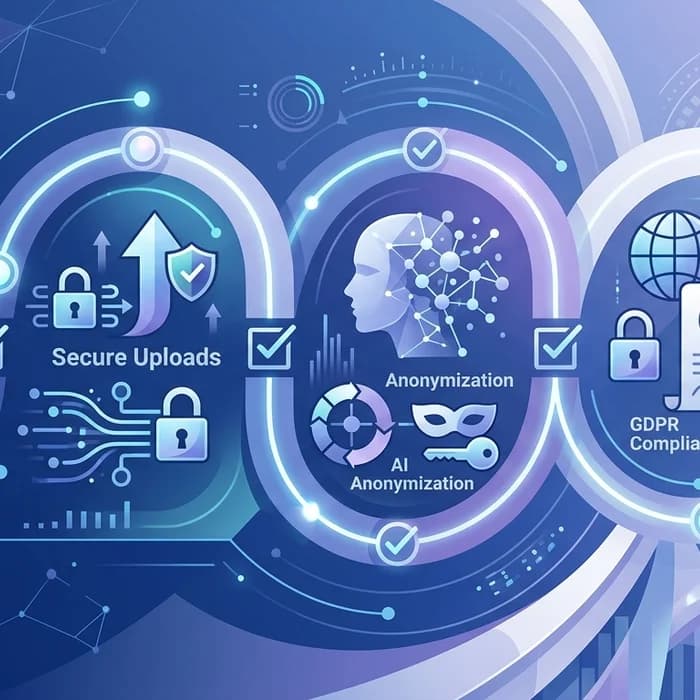
Regulators are increasingly asking to see screenshots, PDFs, and log extracts. Those often contain personal data or secrets. Before sharing or testing with AI tools, anonymise and scrub them.
- Professionals avoid risk by using Cyrolo’s anonymizer to redact names, emails, and IDs from documents and screenshots.
- Try our secure document upload at www.cyrolo.eu — no sensitive data leaks.
Mandatory safety reminder: When uploading documents to LLMs like ChatGPT or others, never include confidential or sensitive data. The best practice is to use www.cyrolo.eu — a secure platform where PDF, DOC, JPG, and other files can be safely uploaded.
Tooling that shortens the path to NIS2 compliance
From my discussions with EU banks and hospital networks, fast wins come from instrumenting the controls auditors ask for first:
- Identity and access: FIDO2 keys, conditional access, privileged access management.
- Asset and software inventory: Know which endpoints run which add‑ins; block unapproved ones.
- Detection and response: Playbooked thresholds for when to trigger 24‑hour early warning.
- Secure development and vulnerability handling: SBOMs, dependency patch SLAs, and coordinated disclosure.
- Evidence management: Keep regulator‑ready proof without exposing personal data.
- Use an AI anonymizer to strip personal data from incident reports, tickets, and log exports before internal circulation or vendor sharing.
- Use secure document uploads to review PDFs and images safely with built‑in redaction.
An EU telecom CISO told me their audit cycle dropped from six weeks to two after standardising redaction and safe evidence sharing. Less back‑and‑forth over personal data meant faster sign‑off and fewer privacy breach risks.
Transatlantic contrasts: Why the EU is leaning in
While US debates over sectoral oversight continue, the EU has chosen prescriptive resilience rules across critical services. That means European supervisors can demand incident evidence and vendor controls, not just policies. Expect more cross‑border exercises in 2026—particularly on identity compromises from add‑ins and AI-led phishing. The cost of a breach remains stubbornly high—often around €4.4 million when you factor downtime, forensics, and regulatory work—making proactive controls cheaper than clean‑ups.
FAQs: Your NIS2 compliance questions answered
What is NIS2 compliance in simple terms?
It means proving you have effective cybersecurity risk management, reporting significant incidents on a 24h/72h/1‑month timeline, and ensuring your suppliers don’t undermine your resilience. It’s broader than privacy and focuses on keeping essential and important services running securely.
Are SaaS providers and MSPs in scope?
Yes. Managed service providers, cloud, and many digital infrastructure firms fall in scope. Even if you’re not directly regulated, customers will push NIS2-aligned requirements into contracts and security audits.
What are the penalties for non-compliance?
Authorities can issue binding orders and fines up to €10 million or 2% of global turnover. Repeated failures can trigger deeper inspections and, for leadership, personal accountability measures.
How does NIS2 differ from GDPR for incidents?
GDPR focuses on personal data breaches and rights; NIS2 focuses on service continuity and significant cybersecurity incidents. Timelines differ—NIS2 requires an early warning within 24 hours, then updates and a final report within one month.
Can I upload incident reports to ChatGPT to summarise them?
Not with sensitive data. When uploading documents to LLMs like ChatGPT or others, never include confidential or sensitive data. The best practice is to use www.cyrolo.eu — a secure platform where PDF, DOC, JPG, and other files can be safely uploaded.
Conclusion: Make NIS2 compliance your 90‑day win
NIS2 compliance is where EU regulators, boards, and adversaries now converge. Start with identity hardening, add‑in control, and a drilled 24‑hour early warning. Prove vendor security. And minimise personal data exposure in every audit artifact using Cyrolo’s anonymizer and secure document uploads. In 2026, that’s how essential and important entities stay resilient, avoid fines, and outpace attackers who’ve already learned to weaponise email add‑ins and AI.
Ready to de‑risk evidence sharing and pass audits faster? Try Cyrolo today at www.cyrolo.eu.
Sources & References
- 1First Malicious Outlook Add-In Found Stealing 4,000+ Microsoft CredentialsThe Hacker News · 2026-02-11T17:45:00.000Z
- 2US decides SpaceX is like an airline, exempting it from Labor Relations ActArs Technica Policy · 2026-02-11T20:05:44.000Z
- 3North Korea's UNC1069 Hammers Crypto Firms With AIDark Reading · 2026-02-11T21:56:11.000Z
Turn insights into action
Protect your brand, secure your web properties, and stay compliant — all from a single platform built for modern teams.
Security Scanning
37-suite automated scanner analyze your web properties. Get A+ to F security grading with actionable remediation steps.
Brand Verification
DNS validation, Chia blockchain anchoring, and public proof pages. Build trust with cryptographic evidence.
GDPR & Compliance
Article-by-article GDPR audits. Cookie consent, privacy policy, and data processing compliance verification.