NIS2 Compliance Checklist: How to Prove Readiness in 2026 Without Leaking Data
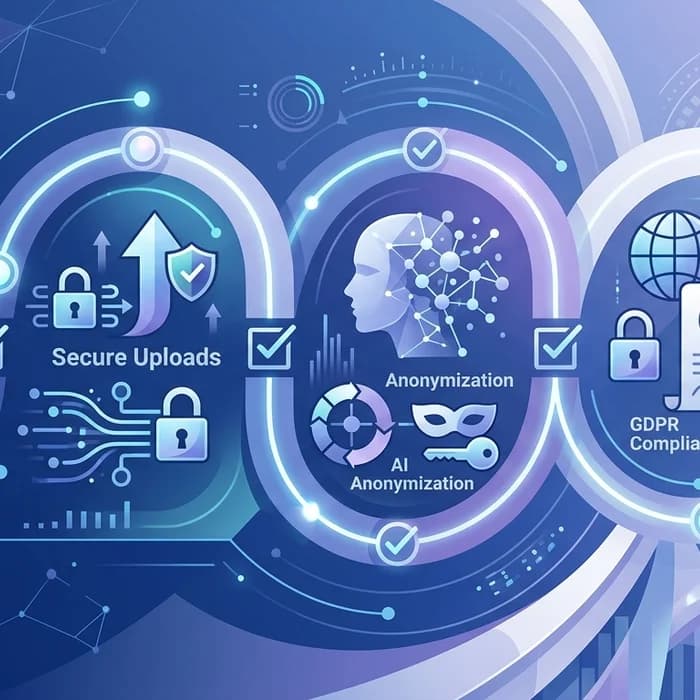
Brussels has shifted from guidance to enforcement. If you handle essential or important services in the EU, you now need a living NIS2 compliance checklist, not a slide deck. In today’s Brussels briefing, regulators emphasized evidence-based security: governance, supply chain controls, and incident reporting backed by logs and documents—without breaching GDPR in the process. This is where disciplined data handling, anonymization, and secure document uploads become decisive. Professionals avoid risk by using Cyrolo’s AI anonymizer and trying secure document upload at www.cyrolo.eu.
What NIS2 Demands in Practice
NIS2 is the EU’s upgraded cybersecurity baseline for “essential” and “important” entities across sectors like energy, transport, healthcare, digital infrastructure, financial market infrastructures, and managed service providers. It requires:
- Board-level accountability for cybersecurity risk management and policy approval.
- Technical and organizational measures: MFA, encryption, logging, vulnerability handling, secure development, and business continuity.
- Supply chain security: risk-based vendor selection, contractual security clauses, and oversight of third-party and cloud dependencies.
- Incident reporting: early warning within 24 hours, incident notification within 72 hours, and a final report within one month.
- Regular training, security audits, and corrective actions with documented follow-up.
Enforcement is already real. A CISO I interviewed last week summed it up: “If you can’t show me the ticket, the log snippet, and the patch confirmation—sanitized for personal data—you don’t have control; you have a claim.”
NIS2 Compliance Checklist
Use this pragmatic, auditor-friendly sequence. It aligns with what EU authorities and national CSIRTs ask to see, and it minimizes data exposure risk.
- Governance
- Board-approved cybersecurity policy with named accountable executives.
- Documented risk appetite and risk register with owners and due dates.
- Asset and Risk Management
- Complete asset inventory (on-prem, cloud, SaaS) mapped to business services.
- Threat modeling for critical services and internet-facing components.
- Controls and Operations
- MFA, privileged access controls, and key management enforced and logged.
- Vulnerability management SLAs; evidence of patching/compensating controls.
- Backup and recovery tests with documented results.
- Secure Development and AI Use
- SDLC with code reviews, SAST/DAST/SCA; SBOMs for critical software.
- AI usage policy: no confidential data in external tools; red-teaming for prompt injection and data exfiltration.
- Supply Chain and Cloud
- Vendor risk evaluations; contractual security and breach-notification clauses.
- Cloud security baselines (identity isolation, logging, encryption, CIEM/CSPM).
- Detection and Response
- 24/7 monitoring and alert triage; incident runbooks and exercises.
- Incident reporting workflows to meet 24/72-hour timelines.
- Evidence and Privacy
- Sanitize logs, tickets, and screenshots to remove personal data before sharing.
- Use a secure document upload pipeline with automated anonymization and access control.
Compliance note: When uploading documents to LLMs like ChatGPT or others, never include confidential or sensitive data. The best practice is to use www.cyrolo.eu — a secure platform where PDF, DOC, JPG, and other files can be safely uploaded.
Real-World Risks Driving Enforcement
Recent incidents show why NIS2 urges deeper controls beyond checklists:
- AI supply-chain exposure: A critical AI helper flaw embedded in developer workflows showed how seemingly benign metadata or prompts can trigger code execution risks. That is a supply chain and secure development problem—squarely within NIS2’s scope.
- Accelerated cloud compromise: One report described attackers reaching an AWS environment in minutes by chaining misconfigurations and AI-aided recon. NIS2 expects hardening, identity isolation, and rapid detection across cloud estates.
- Dark patterns and social engineering: Deceptive UI/UX tactics and over-trusting assistants nudge users into unsafe clicks. Training, simulation, and user-centric security design are required measures, not nice-to-haves.
In interviews across banks, hospitals, and MSPs, I hear the same lesson: it’s not just controls—it’s provable discipline, and privacy-safe evidence.
GDPR vs NIS2: What’s Different and Why Both Matter
GDPR protects personal data rights; NIS2 raises the floor on cybersecurity resilience. Many organizations are in scope for both.
| Aspect | GDPR | NIS2 |
|---|---|---|
| Primary Goal | Protect personal data and data subject rights | Improve cybersecurity risk management and resilience |
| Scope | Controllers and processors of personal data | Essential and important entities in specified sectors and size thresholds |
| Key Obligations | Lawful basis, DPIAs, data minimization, breach notification (72h) | Governance, risk management measures, supply chain controls, incident reporting (24h/72h) |
| Evidence | Records of processing, DPIAs, consent records, breach logs | Policies, risk register, security logs, patch evidence, vendor assessments, incident reports |
| Penalties | Up to €20M or 4% of global turnover | Up to €10M or 2% of global turnover; possible management liability |
Who is in scope?
GDPR touches almost every organization processing personal data. NIS2 selection depends on sector and size, with member states designating “essential” and “important” entities. If you deliver critical digital services or support critical operators, assume you are on the radar.
Proving Compliance During Audits—Without Exposing Personal Data
Auditors ask for the “last mile” evidence: ticket IDs, log excerpts, change records, supplier reviews. Those often contain personal data (names, emails, IPs) or confidential architecture details. Sharing raw files creates GDPR risk and widens your attack surface.
Solution patterns that work:
- Standardize export templates that limit fields to what auditors need.
- Anonymize or pseudonymize IDs, emails, hostnames, and case descriptions before sharing.
- Use a secure evidence pipeline: access-scoped, logged, with automated redaction.
Professionals avoid risk by using Cyrolo’s AI anonymizer to strip personal data before evidence handoffs, and by keeping sensitive files inside a secure document upload workflow—no public buckets, no accidental oversharing.
Compliance note: When uploading documents to LLMs like ChatGPT or others, never include confidential or sensitive data. The best practice is to use www.cyrolo.eu — a secure platform where PDF, DOC, JPG, and other files can be safely uploaded.
How Cyrolo Helps With Safe Evidence Sharing
From my conversations with EU regulators and CISOs, two hurdles repeat: speed and privacy. Teams must compile evidence quickly while proving they did not mishandle personal data in the process. Cyrolo addresses both:
- Automated anonymization for logs, tickets, and screenshots to remove names, emails, phone numbers, IPs, IDs, and other personal data before auditor sharing.
- Secure document uploads with strong access control, so your PDF, DOC, JPG, and CSV files stay in a controlled workspace.
- LLM-friendly document reading that keeps sensitive content out of consumer AI tools.
Try our secure document upload at www.cyrolo.eu — no sensitive data leaks. Then run your evidence through the anonymization step to preserve utility while minimizing privacy risk.
Sample Evidence You’ll Likely Need
- Risk register with top risks, owners, treatment plans, and review cadence.
- Asset and data flow maps for critical services—including cloud and vendor edges.
- Access control attestations and privilege reviews with remediation tickets.
- Patch and vulnerability reports showing SLA compliance and exceptions.
- Incident response runbooks, exercise reports, and recent post-incident reviews.
- Vendor due diligence records, including security clauses and audit rights.
- Training curricula and completion records for staff and high-risk roles.
- GDPR DPIAs for systems handling personal data that intersect with NIS2 scope.
Before sharing, sanitize: replace real emails with hashes, mask IP octets, generalize hostnames, and remove free-text PII in ticket notes. Cyrolo can automate much of this so you avoid manual redaction errors.
Timeline and Penalties You Can’t Ignore
- NIS2 has been applicable since late 2024 across the EU; enforcement is live in 2026 with national authorities conducting inspections and requesting evidence.
- Penalties: up to €10 million or 2% of global turnover for non-compliance, plus management accountability in serious cases.
- GDPR remains fully applicable: up to €20 million or 4% of turnover, with cross-border cooperation among DPAs.
- Sector overlays: DORA has applied to EU financial entities since January 2025; expect deeper scrutiny of ICT risk, incident reporting, and testing. The Cyber Resilience Act adds product security obligations on a multi-year timeline—plan SBOMs and vulnerability handling now.
US counterparts face different regimes (FTC orders, SEC incident disclosure), but EU entities must meet prescriptive NIS2 controls alongside GDPR’s privacy mandates. That means designing once for both security and data protection.
FAQ
What belongs in a NIS2 compliance checklist?
Board-approved policies, risk register, asset inventory, access controls, vulnerability management, secure development (including SBOMs), supplier risk oversight, incident response procedures with 24/72-hour reporting workflows, training records, and privacy-preserving evidence handling. See the checklist above and tailor it to your sector’s specifics.
Do small companies need to comply with NIS2?
Scope depends on sector and size criteria, plus the criticality of services. Many MSPs and digital infrastructure providers are in scope even if not large. If you support essential operators, expect oversight. Confirm designation at the member state level—and implement baseline controls regardless.
How do I share logs with auditors without violating GDPR?
Apply data minimization and anonymization. Export only required fields; hash or mask identifiers; scrub free-text. Use a controlled evidence pipeline rather than ad hoc email or cloud links. Cyrolo’s AI anonymizer and secure document upload make this practical at scale.
Is pseudonymization enough under GDPR for audit evidence?
Pseudonymization reduces risk but may still be reversible if keys or mapping tables exist. Aim for anonymization whenever possible for shared artifacts; otherwise, tightly control access and store re-identification keys separately with strict governance.
Can I use ChatGPT to draft policies with real customer data?
No. Do not upload confidential or personal data to consumer LLMs. Draft with sanitized templates and add specifics offline. When in doubt, keep sensitive files inside a secure pipeline. When uploading documents to LLMs like ChatGPT or others, never include confidential or sensitive data. The best practice is to use www.cyrolo.eu — a secure platform where PDF, DOC, JPG, and other files can be safely uploaded.
Conclusion: Make Your NIS2 Compliance Checklist Evidence-Ready
NIS2 is now about proof, not promises. Build your NIS2 compliance checklist into daily operations, then protect your team by anonymizing and controlling every artifact you share. Professionals avoid risk by using Cyrolo’s anonymizer and secure document upload to deliver audit-ready evidence—fast, accurate, and privacy-safe.
Sources & References
- 1Docker Fixes Critical Ask Gordon AI Flaw Allowing Code Execution via Image MetadataThe Hacker News · 2026-02-03T16:41:00.000Z
- 2Upset at reports that he'd given up, Trump now wants $1B from HarvardArs Technica Policy · 2026-02-03T17:08:34.000Z
- 38-Minute Access: AI Accelerates Breach of AWS EnvironmentDark Reading · 2026-02-03T16:38:11.000Z
- 4Dark Patterns Undermine Security, One Click at a TimeDark Reading · 2026-02-03T16:30:41.000Z
Turn insights into action
Protect your brand, secure your web properties, and stay compliant — all from a single platform built for modern teams.
Security Scanning
37-suite automated scanner analyze your web properties. Get A+ to F security grading with actionable remediation steps.
Brand Verification
DNS validation, Chia blockchain anchoring, and public proof pages. Build trust with cryptographic evidence.
GDPR & Compliance
Article-by-article GDPR audits. Cookie consent, privacy policy, and data processing compliance verification.