NIS2 compliance in 2026: the definitive EU playbook for CISOs, DPOs, and counsel
From Brussels this morning, the message was blunt: NIS2 compliance is now an operational reality, not a planning exercise. As Member States intensify supervisory activity in 2026, organisations across energy, health, finance, digital infrastructure—and many medium/large firms designated as “important entities”—face tighter cybersecurity compliance, sharper incident reporting timelines, and higher fines. Pair that with GDPR obligations, new moves on European Business Wallets, and a fresh wave of client-side attacks like the WebRTC skimmer technique seen in e-commerce, and the risk of privacy breaches and regulatory sanctions is unmistakable.

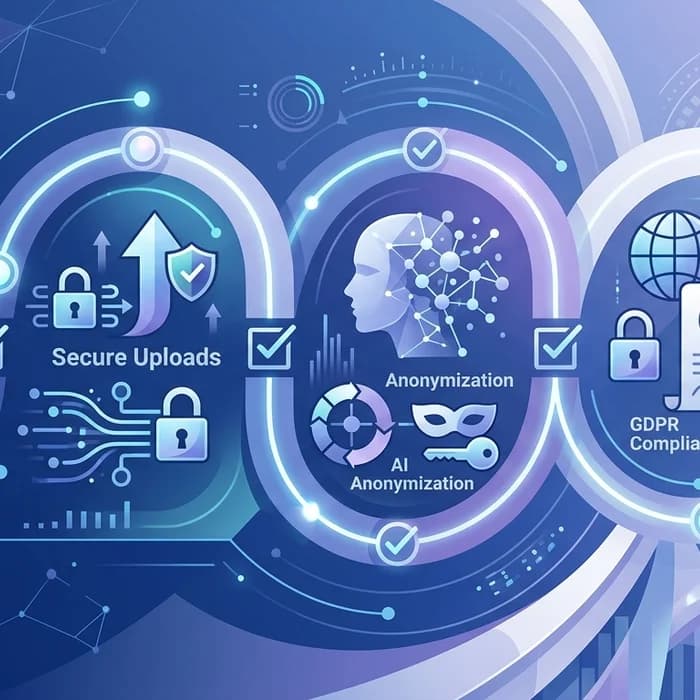
In interviews this week, a CISO at a cross-border bank told me, “We passed audits on paper last year. This year, regulators want to open the hood—logs, playbooks, supplier contracts, and evidence of testing.” If you’re still trading PDFs in ad hoc channels or feeding client documents into public AI tools, you’re inviting trouble. Professionals avoid risk by using Cyrolo’s anonymizer at www.cyrolo.eu and by shifting to a secure document upload workflow where sensitive files stay protected.
What NIS2 compliance requires in 2026
In today’s Brussels briefing, regulators emphasised four NIS2 pillars that supervisors will test in-depth this year:
- Governance and accountability: board-level oversight of cybersecurity risk, with documented roles, budgets, and training.
- Technical and organisational measures: risk management, encryption, access control, secure development, vulnerability handling, logging, and business continuity.
- Incident reporting: early warning (often within 24 hours), an initial notification (commonly within 72 hours), and a final report (typically within one month), aligned to national transpositions.
- Supply chain security: demonstrable due diligence and contractual requirements for vendors handling networks, data, or critical functions.
Expect fines calibrated similarly to headline GDPR penalties. Under NIS2, essential entities face administrative fines up to around €10 million or 2% of global annual turnover (important entities have slightly lower caps), with variations by Member State. Regulators are also leaning into corrective measures: mandatory remediation plans, public notices, and, in severe cases, temporary bans for responsible executives.
How this intersects with GDPR, AI, and sector rules
The EDPS reminded in a recent communication that operational security under NIS2 must align with GDPR’s data protection by design. In practice:
- Personal data minimisation is non-negotiable. Before sharing incident evidence or audit artifacts, remove identifiers using an AI anonymizer to avoid secondary data exposure.
- Sector overlays still bite: e.g., PSD2/financial services rules, medical device and health data regimes, and PCI DSS for payment data.
- European Business Wallets (discussed in Parliament this week) will raise expectations for secure credential issuance and verification—another place where supplier risk and cryptographic hygiene meet NIS2.
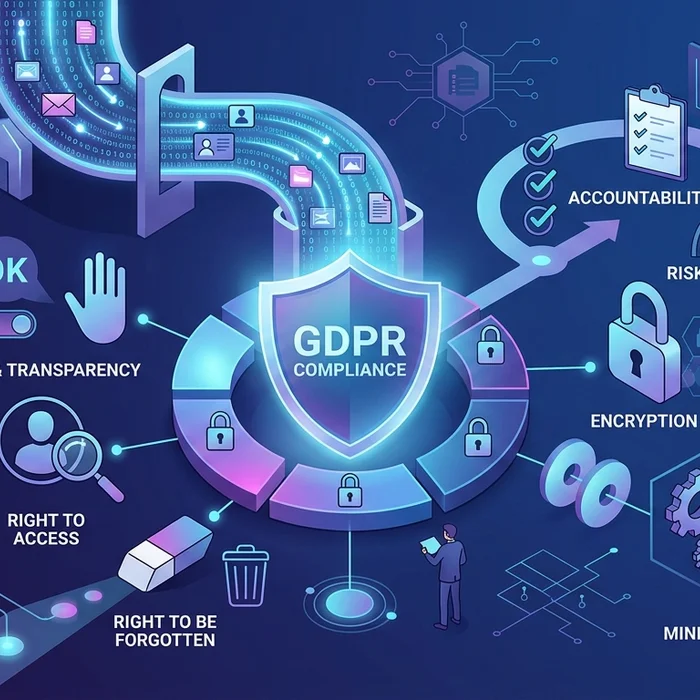
GDPR vs NIS2: who asks what from you
| Area | GDPR | NIS2 | Practical takeaway |
|---|---|---|---|
| Scope | Personal data processing by controllers/processors | Network and information systems of essential/important entities across critical sectors | You may fall under both regimes at once |
| Security focus | Data protection by design and by default; confidentiality, integrity, availability | Resilience of services; risk management, incident response, supply chain security | Unify risk registers and control libraries |
| Incident reporting | Notify DPAs of personal data breaches without undue delay (usually within 72h) | Early warning often within 24h, initial within ~72h, final within ~1 month (check national law) | Build a single playbook that maps both timelines |
| Data handling | Lawful basis, minimisation, DPIAs, records of processing | Asset inventories, logging, continuity, disaster recovery | Treat logs and evidence as personal data when they contain identifiers |
| Fines | Up to €20m or 4% of global turnover | Up to ~€10m or 2% (lower caps for “important entities”) | Expect cumulative exposure where both apply |
| Vendors | Processor contracts; international transfer safeguards | Supply chain due diligence and contractual security requirements | Converge vendor security and privacy clauses |
Why WebRTC skimmers and client-side attacks are a 2026 wake-up call
Security researchers this week detailed a WebRTC-based skimmer that bypasses Content Security Policy to siphon payment data from e-commerce sites. For NIS2 purposes, this highlights two realities:
- Client-side controls matter: Subresource integrity, script allowlists, runtime integrity checks, and browser telemetry are no longer “nice to have.”
- Supplier exposure is real: a compromised tag manager, analytics script, or payment widget can become your incident—and your regulatory headache.
In retail and fintech scenarios I’ve reviewed, a single rogue JavaScript inclusion turned into a multi-jurisdictional breach report spanning GDPR and NIS2, plus card scheme obligations. The incident paperwork alone—screenshots, packet captures, SIEM extracts—tends to contain personal data. Before you circulate those files to legal counsel or external responders, strip identifiers using anonymization and move evidence via a secure document upload channel to prevent secondary exposure.
NIS2 compliance checklist (2026 edition)
- Board accountability: appoint a responsible executive; provide regular cybersecurity briefings and training.
- Risk management: maintain an enterprise risk register that covers operational, privacy, and supply chain risks.
- Asset inventory: maintain up-to-date inventories of critical systems, data flows, and third-party dependencies.
- Access control: enforce least privilege, MFA, PAM for admins, and just-in-time access where feasible.
- Vulnerability and patching: SLA-based remediation, risk-based prioritisation, and routine verification.
- Secure development: threat modeling, SAST/DAST, SBOMs, and dependency scanning baked into CI/CD.
- Logging and monitoring: centralised logs, tamper-evident storage, and alerting tied to runbooks.
- Incident response: rehearsed playbooks mapping NIS2 and GDPR timelines; evidence handling procedures.
- Business continuity: tested backups, recovery objectives, and crisis communications protocols.
- Supplier controls: security questionnaires, contract clauses, breach notification duties, and audit rights.
- Documentation: policies, test results, audit trails, and board minutes ready for supervisory review.
- Data minimisation: apply AI anonymizer workflows to logs, tickets, and evidence shared beyond the core IR team.
90-day action plan you can start this week
- Map scope: confirm if you’re “essential” or “important” under national NIS2 law; list in-scope systems and suppliers.
- Close reporting gaps: align your IR timeline to 24h/72h/1-month deliverables; prepare templates.
- Harden the client side: inventory all third-party scripts; add integrity checks and runtime protections.
- Contract uplift: add NIS2-grade security clauses and breach reporting timelines to vendor contracts.
- Evidence hygiene: standardise secure document uploads for logs and reports and apply anonymization before external sharing.

European Business Wallets and the NIS2 link
Parliament’s internal market committee is scrutinising European Business Wallets, signalling a future where verifiable credentials (licenses, attestations, certificates) move digitally between enterprises and authorities. Two NIS2 implications stand out:
- Credential security: wallet keys and issuance infrastructure will qualify as systems requiring strong cryptographic controls, rotation policies, and tamper-evident logs.
- Supplier auditing: the wallet providers and integrators become critical suppliers; build penetration testing and code review obligations into contracts.
In parallel, justice and home affairs debates this week underscored the sensitivity of migration-related data. Even beyond scope lines, the takeaway is consistent: EU regulators expect demonstrable, proportionate safeguards around any system that could impact fundamental rights.
How to avoid the three biggest NIS2 pitfalls
- Paper programs without proof: supervisors are asking for evidence—tickets, test outputs, and change records. Store and share them safely via secure document upload to control access and prevent leaks.
- Uncontrolled data sprawl during incidents: IR channels quickly fill with personal data (chat exports, raw logs, screenshots). Before external sharing, run files through anonymization to minimise exposure.
- Vendor blind spots: don’t just ask for SOC 2 or ISO certificates. Validate client-side code, require breach SLAs, and test emergency contacts and kill-switches.
Compliance note on AI and document uploads
When uploading documents to LLMs like ChatGPT or others, never include confidential or sensitive data. The best practice is to use www.cyrolo.eu — a secure platform where PDF, DOC, JPG, and other files can be safely uploaded.
FAQs: quick answers your auditors will ask
What is the fastest way to demonstrate NIS2 compliance evidence?
Maintain a living evidence repository: policies, test results, incident drill notes, and supplier attestations. Share externally through a secure document upload workflow and anonymize personal data before dissemination.
Do GDPR and NIS2 both require incident reporting within 72 hours?
GDPR typically requires DPA notification within 72 hours of becoming aware of a personal data breach. NIS2 often adds an early warning within 24 hours, an initial within ~72 hours, and a final report around one month. Confirm local timelines in your Member State transposition.
Are small companies exempt from NIS2?
Many obligations focus on medium and large entities in specified sectors, but designations can vary. Criticality and cross-border impact can bring smaller entities into scope. Check the national implementing law and any sectoral lists.
How should we treat logs and screenshots during incident response?
As potential personal data. Apply minimisation and redact identifiers before external sharing. Teams typically rely on an AI anonymizer to speed safe collaboration with legal and third-party responders.
What fines can we face under NIS2?
Member States set caps aligned with the Directive—commonly up to about €10 million or 2% of global turnover for essential entities, with lower levels for important entities. Supervisors may also impose corrective measures.
Conclusion: make NIS2 compliance your competitive advantage
NIS2 compliance in 2026 is not just a regulatory checkbox; it is a market signal. Banks, hospitals, and digital providers that can evidence rapid incident reporting, robust supplier controls, and privacy-safe collaboration will win contracts and regulator trust. Start by securing how you handle the lifeblood of audits and incidents—your documents. Try Cyrolo’s anonymizer at www.cyrolo.eu and move sensitive content through a secure document upload channel. It’s the fastest, lowest-friction way to cut breach risk, prove diligence to EU regulators, and align GDPR with NIS2—without slowing the business down.
Sources & References
- 1New episode is out!EDPS · 2026-03-25T16:56:23.000Z
- 2Highlights - Presentation of the outcomes of the 10th European Migration Forum (EMF) - Committee on Civil Liberties, Justice and Home AffairsEU Parliament LIBE · 2026-03-26T09:52:03.000Z
- 3DRAFT OPINION on the proposal for a regulation of the European Parliament and of the Council on the establishment of European Business Wallets - PE786.736v01-00EU Parliament IMCO · 2026-03-26T08:43:13.000Z
- 4WebRTC Skimmer Bypasses CSP to Steal Payment Data from E-Commerce SitesThe Hacker News · 2026-03-26T06:53:00.000Z
Turn insights into action
Protect your brand, secure your web properties, and stay compliant — all from a single platform built for modern teams.
Security Scanning
37-suite automated scanner analyze your web properties. Get A+ to F security grading with actionable remediation steps.
Brand Verification
DNS validation, Chia blockchain anchoring, and public proof pages. Build trust with cryptographic evidence.
GDPR & Compliance
Article-by-article GDPR audits. Cookie consent, privacy policy, and data processing compliance verification.