Private AI Compute: What It Means for EU GDPR, NIS2, and Safe LLM Workflows
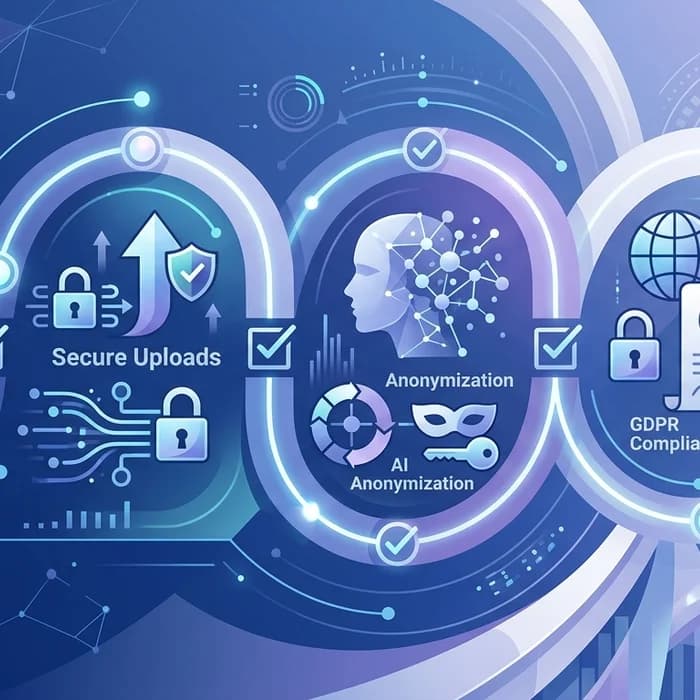
In today’s Brussels briefing, privacy engineers and telecom regulators were abuzz about Private AI Compute. As the concept moves from slideware to mainstream deployments, EU organizations need to understand what Private AI Compute actually changes—and what it doesn’t—under GDPR and NIS2. The promise is attractive: AI processing with on-device-level privacy, less data in transit, and fewer exposures. But for compliance leaders, the real test is whether your AI workflows still leak personal data or trigger reporting obligations. That’s why teams are pairing Private AI Compute with AI anonymization and secure document uploads to meet regulatory expectations without slowing down delivery.
What is Private AI Compute—and why it matters in Europe
Private AI Compute refers to running AI inference and selected training steps within a trusted execution environment (TEE) or directly on-device, minimizing data movement to cloud services. Vendors pitch three gains:
- Data locality: sensitive inputs never leave the device or a controlled enclave.
- Reduced telemetry: fewer logs and less metadata flowing to providers.
- Lower exposure: less chance of interception or broad cloud access abuse.
In EU terms, this aligns with GDPR principles of data minimization and integrity/confidentiality, and it can help risk scoring under NIS2 by shrinking the attack surface. A regulator I spoke with today called it “a welcome step toward privacy by design—if organizations also fix their inputs and governance.” That “if” is crucial.
GDPR, NIS2, and the new baseline for secure AI processing
Even with on-device AI, you still process personal data. GDPR and NIS2 keep the bar high:
- Lawful basis and purpose limitation remain mandatory for any AI-driven processing of personal data, including inference.
- Data Protection Impact Assessments (DPIAs) are expected where AI poses high risk (e.g., profiling, broad monitoring, special categories).
- Security measures must be “state of the art.” Private AI Compute can be part of that—but evidence and controls are required.
- Incident response and reporting timelines apply. Under NIS2, many essential and important entities must report significant incidents (early warning within 24 hours, followed by a full report).
- Vendor and supply-chain diligence now includes model providers, device firmware, TEEs, and update channels.
Penalties focus minds. GDPR fines can reach the higher of €20 million or 4% of global annual turnover. NIS2 adds fines up to €10 million or 2% of global turnover, plus management liability and audits. In short: Private AI Compute reduces risk, but it does not replace governance.
Operational risks that Private AI Compute does not solve
- Prompt and document leakage: If staff paste unredacted contracts, HR files, or patient notes, the model may retain or expose sensitive patterns—even on-device. Prevent leakage at the source via pre-ingestion anonymization.
- Hidden logs and caches: Applications may write temp files or crash reports containing PII. Configuration hardening and redaction are still required.
- Shadow AI tools: Employees use unsanctioned apps that tunnel data to the cloud. Private AI Compute doesn’t fix shadow IT; policy and safe alternatives do.
- Supply-chain exploits: TEEs and model runtimes can be vulnerable. NIS2 requires documented supplier risk management and timely patching.
- Model misuse: Even local models can be jailbroken or induced to reconstruct sensitive inputs. Anonymization reduces this blast radius.
A CISO I interviewed last week was blunt: “Our breach likelihood dropped when we moved inference on-device. Our breach impact dropped when we stripped personal data before it ever touched the model.” Both moves matter.
Field notes from European sectors
- Banking and fintech: Teams run portfolio analyses on laptops with local LLMs. They still anonymize client names, IBANs, and trade identifiers to avoid mingling personal data with model caches.
- Hospitals: Radiology assistants run on secured workstations. Reports are pseudonymized before AI summarization; re-identification keys are kept in a separate clinical system.
- Law firms: Associates rely on AI drafting aids. Partners insist that matter numbers, client names, and counterparties are redacted to protect privilege and meet professional secrecy rules.
How to build compliant AI workflows today
Here’s the architecture I see succeeding in audits:
- Classify data: Mark files as personal, special category, or confidential business information.
- Pre-process: Apply policy-driven redaction and tokenization before any AI ingestion—local or cloud.
- Process locally when feasible: Use Private AI Compute or TEEs to keep data on-device.
- Control outputs: Scan results for re-emergence of personal data; suppress or mask as needed.
- Log minimally: Keep necessary security telemetry without storing raw personal data.
- Evidence everything: DPIAs, access controls, supplier due diligence, and testing reports.
Professionals avoid risk by using Cyrolo’s anonymizer to strip PII from PDFs, emails, and docs before any model sees them. For day-to-day workflows, try our secure document uploads—no sensitive data leaks.

Compliance reminder. When uploading documents to LLMs like ChatGPT or others, never include confidential or sensitive data. The best practice is to use www.cyrolo.eu — a secure platform where PDF, DOC, JPG, and other files can be safely uploaded.
GDPR vs NIS2: Overlap and gaps for AI processing
| Requirement | GDPR | NIS2 |
|---|---|---|
| Scope | Personal data processing by controllers/processors in the EU or targeting EU residents | Cybersecurity risk management and incident reporting for essential/important entities |
| Legal basis | Required (consent, contract, legitimate interests, etc.) | Not applicable to legal basis; focuses on security posture |
| Data minimization | Mandatory; privacy by design/default | Implicit via risk controls and architecture hardening |
| DPIA / Risk assessment | DPIA for high-risk processing (e.g., AI profiling) | Comprehensive cybersecurity risk management, policies, and testing |
| Supplier management | Processor due diligence and DPAs | Supply-chain security controls and contractual measures |
| Incident reporting | Notify DPA within 72 hours if breach risks rights/freedoms | Early warning within 24h; significant incident reporting and follow-ups |
| Fines | Up to €20m or 4% global turnover | Up to €10m or 2% global turnover; management liability |
| Relevance to Private AI Compute | Supports data minimization but does not remove obligations | Reduces attack surface; must be proven with controls and evidence |
Quick compliance checklist
- Map AI data flows: identify where personal data enters prompts, documents, and outputs.
- Enable pre-ingestion redaction via AI anonymization to remove names, emails, IDs, addresses.
- Use secure document uploads with access controls and minimal logging.
- Choose Private AI Compute or TEEs where performance allows; document configurations.
- Run a DPIA for high-risk use cases; record lawful basis and purposes.
- Harden endpoints: encrypt at rest, restrict debug logs, and lock down update channels.
- Prepare incident playbooks: GDPR 72-hour and NIS2 24-hour timelines.
- Train staff to avoid shadow AI; offer approved, privacy-preserving tools.
Smishing, model security, and the EU lens
Beyond data processing, the threat landscape is shifting. Smishing waves—those fake toll or postal texts—are surging, and AI is now used on both sides: attackers refine lures; defenders filter patterns. European telecoms told me today they’re piloting on-device classifiers to block malicious messages before they sync to the cloud, a Private AI Compute pattern that limits data exposure. For compliance, two reminders:
- Under NIS2, telecom-adjacent and digital infra providers face stricter incident handling and supplier oversight for filtering systems.
- Under GDPR, even security analytics can involve personal data; apply minimization and transparency where feasible.

The takeaway: moving detection closer to the device helps privacy and resilience, but you still need explainability, logging discipline, and redaction where user content is analyzed.
FAQ: EU teams on Private AI Compute and compliance
Does Private AI Compute make GDPR consent or DPIAs unnecessary?
No. It reduces exposure but does not change legal obligations. You still need a lawful basis, purpose limitation, and DPIAs for high-risk processing.
Is on-device AI enough to satisfy NIS2?
Not by itself. NIS2 expects documented risk management, supplier controls, patching, monitoring, and incident reporting. On-device AI supports a defense-in-depth story.
How do we prevent staff from leaking personal data into prompts?
Adopt a pre-ingestion layer that automatically redacts PII from files and prompts. Many teams use Cyrolo’s anonymizer and secure document uploads to enforce this consistently.
Can we keep AI outputs that include personal data?
Only if you have a lawful basis and retention policy. Better practice: mask or tokenize outputs by default, and reveal identifiers via a controlled re-identification step when necessary.
What about US vs EU expectations?
US guidance is converging on security-by-design, but the EU’s GDPR and NIS2 remain stricter on lawful basis, minimization, and incident timelines. Plan for the EU standard when operating in Europe.
Bottom line: Private AI Compute is progress, not a permission slip
Private AI Compute can materially reduce data exposure, cut telemetry, and strengthen your audit story—but it won’t anonymize your inputs, write your DPIA, or file your incident report. The fastest, safest path I see in audits is simple: pair on-device AI with automated redaction up front and disciplined governance throughout. Start today with AI anonymization and secure document uploads to make Private AI Compute live up to its promise under GDPR and NIS2—without slowing your teams down.
Sources & References
- 1Google Launches 'Private AI Compute' — Secure AI Processing with On-Device-Level PrivacyThe Hacker News · 2025-11-12T08:35:00.000Z
- 2Google vows to stop scam E-Z Pass and USPS texts plaguing AmericansArs Technica Policy · 2025-11-12T10:00:37.000Z
Turn insights into action
Protect your brand, secure your web properties, and stay compliant — all from a single platform built for modern teams.
Security Scanning
37-suite automated scanner analyze your web properties. Get A+ to F security grading with actionable remediation steps.
Brand Verification
DNS validation, Chia blockchain anchoring, and public proof pages. Build trust with cryptographic evidence.
GDPR & Compliance
Article-by-article GDPR audits. Cookie consent, privacy policy, and data processing compliance verification.