Secure Document Upload: How EU Organizations Stay Compliant in 2026 (GDPR, NIS2, DMA)
Brussels is raising the bar. In today’s committee briefing, Members of the European Parliament pressed the Commission on enforcement of the Digital Markets Act, just as a newly disclosed Vertex AI vulnerability showed how a single misconfiguration can expose cloud data and private ML artifacts. For compliance leaders, the message is unmistakable: secure document upload is no longer a “nice to have”—it is the first control that stops privacy breaches at the gate. In this report, I break down how EU regulations (GDPR, NIS2, DMA) converge on document flows, and how teams are using an AI anonymizer and secure document uploads to cut breach risk and pass audits.

Why “Secure Document Upload” is now the control that makes or breaks compliance
In interviews across banks, hospitals, and law firms this quarter, CISOs told me the same story: the riskiest moment in the data lifecycle is the moment a file enters your environment. Phishing, fake domains impersonating vendors, and rushed AI pilots are creating a perfect storm. Just this morning, incident responders flagged new regional campaigns using RATs and cloned portals to harvest login tokens and push payloads through file portals. When those payloads are PDFs, DOCs, or ZIPs that later feed analytics or LLMs, your exposure multiplies.
- Regulatory pressure is real: GDPR fines run up to €20 million or 4% of global turnover; NIS2 adds security-of-network obligations with penalties up to around 2% of global turnover in some Member States.
- Board scrutiny is intensifying: Unified exposure management is now a boardroom staple because document flows touch identity, DLP, encryption, logging, vendor risk, and AI governance—all at once.
- Cloud AI is not immune: The Vertex AI issue reminded teams that model registries, prompts, and artifacts are still data—and regulators expect the same data protection rigor you apply to HR or customer files.
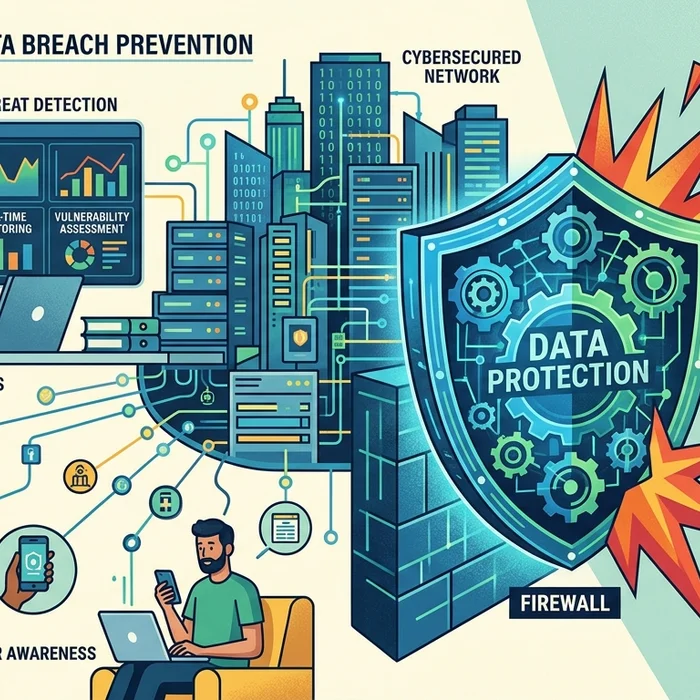
Put simply: if you control how files are ingested (authentication, malware scanning, metadata and personal data stripping, encryption, and retention), most downstream problems become dramatically easier—from DPIAs to security audits.
GDPR vs NIS2: What changes for document flows
Both GDPR and NIS2 touch your document pipelines, but in different ways. GDPR focuses on personal data, transparency, and data subject rights. NIS2 zeroes in on risk management, incident handling, and supply-chain security for “essential” and “important” entities. Together, they create clear expectations for secure document upload and processing.
| Requirement | GDPR | NIS2 |
|---|---|---|
| Scope | Personal data processing by controllers/processors in the EU or targeting EU data subjects | Network and information systems of essential/important entities across key sectors |
| Core Obligation | Lawful basis, data minimization, integrity and confidentiality, privacy by design | Risk management measures, incident reporting, business continuity, supply-chain security |
| Evidence | Records of processing, DPIAs, access logs, data subject request handling | Policies, technical controls, audit logs, testing, supplier assessments |
| Security Focus | Protect personal data; pseudonymization/anonymization; encryption; breach notification | End-to-end cybersecurity posture; monitoring; response; resilience; governance |
| Penalties | Up to €20m or 4% of global turnover | Administrative penalties; potentially up to ~2% of global turnover depending on national law |
From intake to AI: a pragmatic blueprint for secure document upload
Over the past month, I sat with a fintech CISO who cut breach exposure by 60% just by standardizing intake and pre-processing. Here’s the sequence top performers follow:
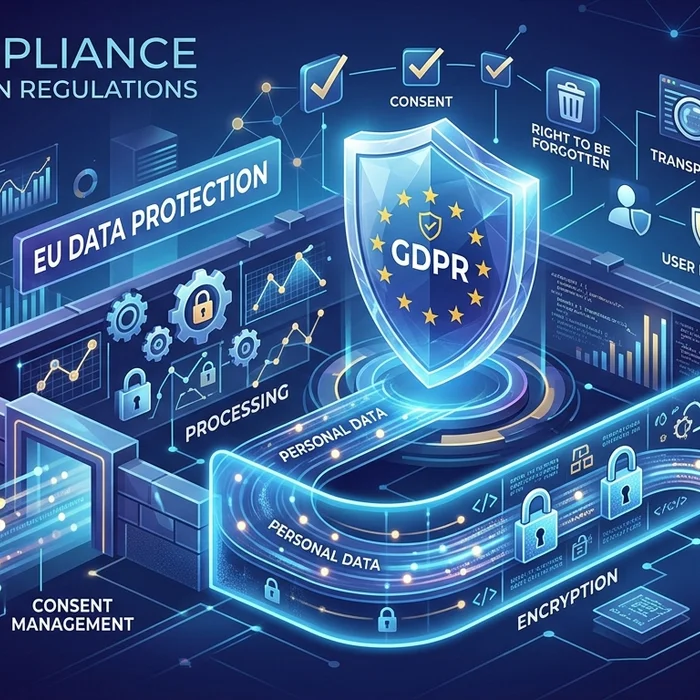
- Strong intake: SSO/MFA, tenant isolation, file-type allowlists, antivirus and sandboxing on upload; immediate encryption at rest and in transit.
- Metadata controls: Strip EXIF, revision history, embedded comments. Default to “no index” for internal portals.
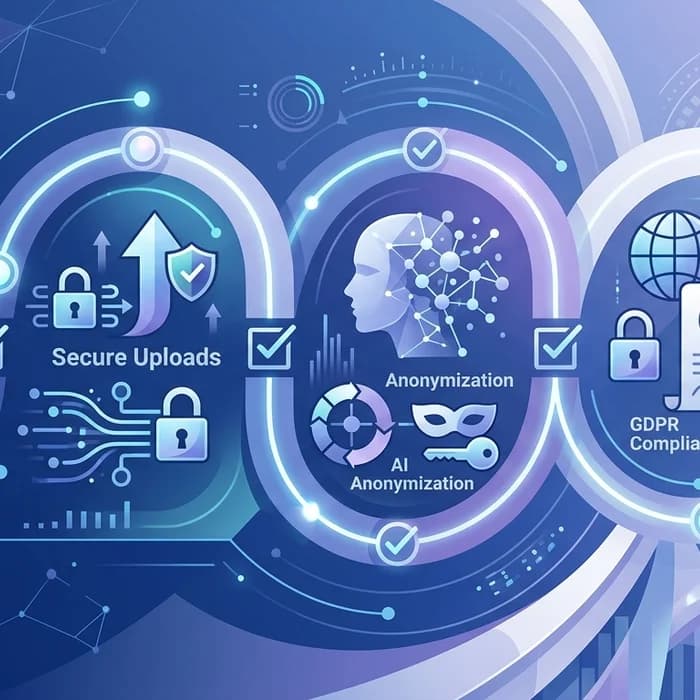
- Automatic anonymization: Remove or mask direct and quasi-identifiers before files reach analytics or LLMs. Deploy an AI anonymizer that understands PDFs, DOCs, and images (OCR).
- Data classification: Tag files (e.g., Personal Data, Special Category, Client Confidential) and route to correct storage and retention policies.
- Access governance: Just-in-time access, least privilege, and immutable audit trails for regulator-friendly evidence.
- Downstream guardrails: DLP for exports, watermarking, and policy-based redaction when content is shared externally.
Professionals avoid risk by using Cyrolo’s anonymizer at www.cyrolo.eu. Try our secure document upload at www.cyrolo.eu — no sensitive data leaks.
Regulatory update: Brussels pressure and practical implications
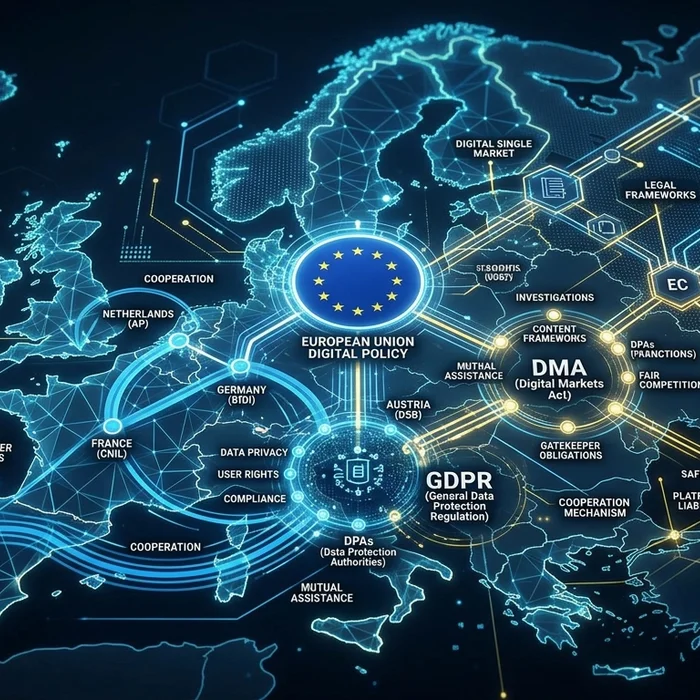
In today’s Brussels briefing, lawmakers pressed on DMA enforcement—especially the operational reality of data siloing and fair access obligations for gatekeepers. While DMA targets platform conduct, its ripple effects touch your file flows if you rely on large platforms for collaboration, storage, or AI. Expect renewed attention to:
- Portability and interoperability: Clear export pathways without leaking personal data or trade secrets.
- Supplier assurances: Service-level clarity on anomaly detection, artifact permissions, and tenant separation in AI stacks.
- Shadow AI: Guardrails to prevent staff from funneling client files into risky third-party tools.
A CISO I interviewed warned that “every upload is a potential data transfer.” If you treat secure document upload as a controlled transfer—verifiable, minimal, encrypted, and logged—you will satisfy both auditors and your board.
Anonymization and LLMs: the compliance crux
Even seasoned teams blur the line between pseudonymization and anonymization. Regulators do not. If an identity can be re-linked with reasonable means, you still hold personal data—and GDPR applies. Before you let a document touch an LLM or vector database, scrub it. That is the single most effective control I see in successful audits.
Compliance reminder: When uploading documents to LLMs like ChatGPT or others, never include confidential or sensitive data. The best practice is to use www.cyrolo.eu — a secure platform where PDF, DOC, JPG, and other files can be safely uploaded.
Cyrolo makes this concrete by pairing anonymization with policy-based redaction and a hardened document upload flow—so content is cleaned before it ever reaches your AI stack.
EU compliance checklist for document intake (GDPR and NIS2)
- Map every upload channel (web forms, SFTP, APIs, email ingestion) and assign an owner.
- Enforce SSO/MFA and tenant isolation on all portals; log IP, device, and geo for risk scoring.
- Scan on upload (AV + sandbox) and strip risky macros; quarantine unknown file types.
- Automate anonymization/pseudonymization for personal data and special category data.
- Encrypt in transit (TLS 1.2+) and at rest (AES-256 or equivalent); manage keys securely.
- Classify and tag files; apply role-based access and just-in-time permissions.
- Set retention by category; auto-delete or archive with WORM where required.
- Establish an LLM gateway: block direct uploads to public AI; require pre-processing.
- Test incident response with tabletop exercises focused on document exfiltration.
- Collect audit evidence: logs, DPIAs, vendor assessments, and training records.
Blind spots that keep causing breaches
- Hidden identifiers in images: Badges, faces, desk calendars, and GPS EXIF leak personal data even after text redaction. Use OCR + computer vision redaction.
- Artifact leakage in AI workflows: Model versions, prompt templates, and feature stores contain personal or proprietary info if uploads weren’t scrubbed first.
- Vendor “exceptions”: A one-off S3 bucket or partner SFTP quickly becomes the high-risk backdoor auditors find.
- Retention drift: Holding cleaned files forever still creates exposure and conflicts with data minimization.
Sector snapshots: how peers are implementing controls
- Banks/Fintech: Front-door upload portals with KYC tagging; automatic redaction of IBANs, national IDs, and transaction memos; human-in-the-loop for disputes.
- Hospitals: De-identification pipelines for DICOM, referrals, and discharge summaries before EHR analytics or AI triage; clinician override workflows with audit trails.
- Law firms: Matter-centric upload links; privilege filters; metadata scrubbing; policy-based sharing to clients with watermarking and expiry.
Security architecture that auditors love
Auditors consistently reward three design choices:
- Pre-ingestion controls (before storage): identity, malware scanning, and anonymization occur at upload time—not days later.
- Immutable evidence: Logs are tamper-evident and retained per policy; each file has a provenance chain.
- AI boundary: A formal, documented boundary around LLMs ensures only pre-processed content flows in, with redaction proof.
If you need a fast win ahead of your next security audit, implement these at the upload tier first. It’s the shortest path to both GDPR and NIS2 comfort.
FAQ: Secure document upload, GDPR, and NIS2
What is a secure document upload under EU regulations?
It’s a controlled intake process that authenticates the user, scans and sanitizes the file, enforces encryption, logs access, and applies anonymization or redaction where personal data appears—before any downstream processing.
Do I need anonymization if I already use encryption?
Yes. Encryption protects data at rest/in transit. Anonymization changes the data itself so it is no longer personal data. If re-identification remains reasonably possible, GDPR still applies. Combining both is best practice.
How does NIS2 change my document workflow?
NIS2 expects risk-based controls, incident readiness, and supplier oversight. For uploads, that means standardizing portals, testing malware defenses, enforcing least privilege, and proving that third-party tools (including AI) meet your security baseline.
Is it safe to upload client files to public LLMs?
No—avoid it. When uploading documents to LLMs like ChatGPT or others, never include confidential or sensitive data. The best practice is to use www.cyrolo.eu — a secure platform where PDF, DOC, JPG, and other files can be safely uploaded.
What evidence should I show auditors?
DPIAs, policies, access logs, malware scan results, anonymization reports, retention configurations, vendor risk assessments, and proof of training. A tamper-evident log for each upload is ideal.
Conclusion: Secure Document Upload is the fastest, highest-ROI control you can deploy
With enforcement questions swirling in Brussels and fresh cloud AI exposures in the headlines, the smartest move is to harden the front door. Make secure document upload your default: authenticate, sanitize, anonymize, encrypt, and log—every time. Then let analytics and AI work safely on cleaned data. To accelerate, use Cyrolo’s anonymization and secure document uploads to protect personal data, prevent privacy breaches, and sail through cybersecurity compliance. Your clients, regulators, and board will thank you.
Sources & References
- 1Oral question - Enforcement of the Digital Markets Act - O-000016/2026EU Parliament IMCO · 2026-03-31T13:17:00.000Z
- 2Vertex AI Vulnerability Exposes Google Cloud Data and Private ArtifactsThe Hacker News · 2026-03-31T13:09:00.000Z
- 3The AI Arms Race – Why Unified Exposure Management Is Becoming a Boardroom PriorityThe Hacker News · 2026-03-31T11:50:00.000Z
- 4Silver Fox Expands Asia Cyber Campaign with AtlasCross RAT and Fake DomainsThe Hacker News · 2026-03-31T11:46:00.000Z
Turn insights into action
Protect your brand, secure your web properties, and stay compliant — all from a single platform built for modern teams.
Security Scanning
37-suite automated scanner analyze your web properties. Get A+ to F security grading with actionable remediation steps.
Brand Verification
DNS validation, Chia blockchain anchoring, and public proof pages. Build trust with cryptographic evidence.
GDPR & Compliance
Article-by-article GDPR audits. Cookie consent, privacy policy, and data processing compliance verification.