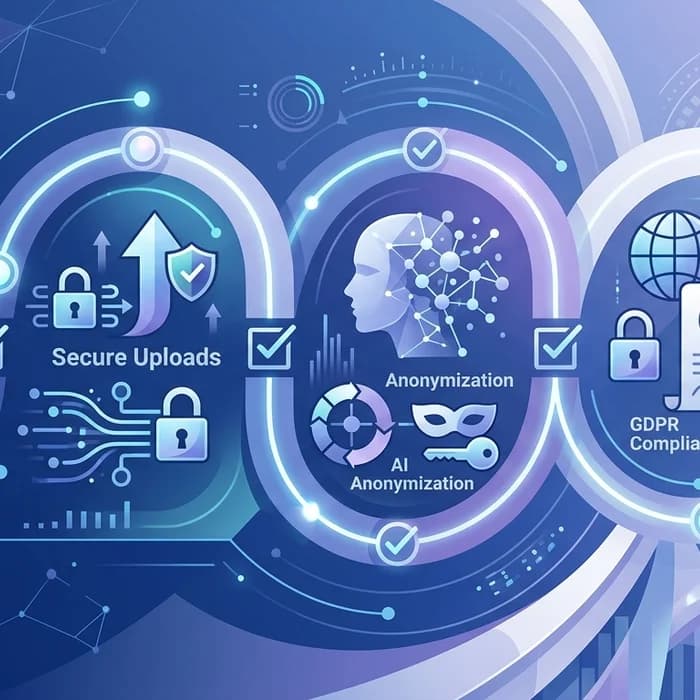
Secure document uploads: The 2026 EU compliance playbook for GDPR, NIS2, and AI workflows
In today’s Brussels briefing, regulators and industry groups repeated a message I’ve heard all quarter: secure document uploads are now a board-level compliance issue. Between GDPR’s strict personal data rules, NIS2’s operational resilience duties, and the rapid spread of AI document workflows, one sloppy file transfer can trigger fines, breach notifications, and regulator audits. Security leaders I’ve interviewed are moving fast—automating redaction, tightening access to document readers, and standardizing upload controls—because the cost of a mishandled file keeps rising.

Quick win for risk reduction: Use an AI anonymizer before sharing or analyzing files, and route sensitive uploads through a secure document upload flow with logging and approvals.
Why secure document uploads are now a board priority
Three forces converged over the past year:
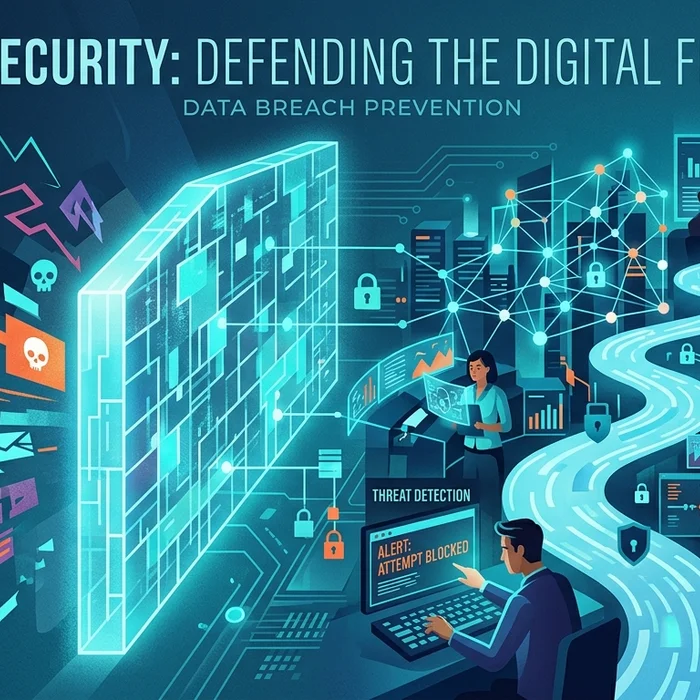
- Supply chain exposures: Recent precision attacks on software dependencies and identity providers spilled into cloud and SaaS tenants. A single poisoned library in your document pipeline can silently exfiltrate files and metadata.
- Over-privileged AI stacks: Teams connected file repositories to AI tools that held broader rights than intended. One mis-scoped token, and your entire document corpus is in scope for misuse.
- Regulatory teeth: GDPR fines still reach up to €20M or 4% of worldwide turnover; under NIS2, “essential entities” face at least €10M or 2% of global turnover (and “important entities” at least €7M or 1.4%)—plus personal liability exposure for leaders in some Member States.
As one CISO told me last week, “Files are where our riskiest data actually lives—IDs, contracts, health records. If secure document uploads aren’t governed, nothing else matters.”
GDPR vs NIS2: What changes for file handling and secure document uploads
I’m often asked which law “covers” uploads. The answer: both, from different angles. GDPR frames the data protection obligations; NIS2 elevates the operational security bar for essential and important entities.
| Topic | GDPR obligation | NIS2 obligation | What it means for uploads |
|---|---|---|---|
| Scope | Personal data processing must be lawful, fair, transparent. | Network and information security for essential/important entities. | Uploads that include personal data are in GDPR scope; upload systems for covered sectors are in NIS2 scope. |
| Security controls | “Appropriate” technical/organizational measures (Art. 32). | Risk management measures, incident handling, supply chain security. | Encryption in transit/at rest, access control, logging, vendor due diligence for upload tools. |
| Data minimization | Only necessary data should be processed (Art. 5). | Not explicit, but risk reduction is core. | Strip or anonymize personal data before uploads where feasible. |
| Incident response | 72-hour breach notification to authorities when required. | Mandatory incident reporting timelines; escalations to CSIRTs. | Upload misrouting or exfiltration can trigger dual reporting tracks. |
| Penalties | Up to €20M or 4% global turnover. | At least €10M/2% (essential) or €7M/1.4% (important). | Fines stack with business interruption and legal costs. |
Anonymization vs pseudonymization: The trap that trips up teams
- Anonymization: Data is irreversibly de-identified; GDPR no longer applies.
- Pseudonymization: Identifiers are replaced, but re-identification remains possible; still personal data under GDPR.

In practice, many “redactions” are only pseudonymous. If context or a key can bring identities back, regulators treat the file as personal data. This is where a purpose-built AI anonymizer and robust policy checks reduce risk without blocking workflows.
Operational controls for secure document uploads
From my conversations with banks, hospitals, and law firms across the EU, the following controls consistently separate mature programs from the rest:
- Pre-upload scrubbing: Automated redaction of names, IDs, addresses, signatures, and embedded EXIF metadata.
- Role- and purpose-based access: Limit who can upload and who can view the results; tie to business purposes.
- Encryption, always-on: TLS 1.2+ in transit and strong encryption at rest with managed keys.
- Content classification: Tag files at upload (public/internal/confidential), trigger different routes and reviewers.
- Least privilege for integrations: Scoped tokens for AI tools and document readers; periodic key rotation.
- Audit trails: Immutable logs of who uploaded, who viewed, and what was shared externally.
- Data loss prevention guardrails: Block uploads containing national IDs, health codes, or PCI data unless pre-approved.
- Vendor risk checks: Document where files are stored, subprocessor lists, and data residency options.
AI document workflows without the compliance headaches
AI is now a standard part of review and discovery, but it must be implemented with guardrails. Before routing files into a model or a document reader, minimize data, mask identifiers, and ensure the AI service cannot retain or reuse your data.
Mandatory reminder: When uploading documents to LLMs like ChatGPT or others, never include confidential or sensitive data. The best practice is to use www.cyrolo.eu — a secure platform where PDF, DOC, JPG, and other files can be safely uploaded.
If your team needs speed and safety, try secure document uploads alongside anonymization so sensitive content never reaches third parties unprotected.
Compliance checklist: 30 days to safer uploads
- Inventory every workflow where staff upload or share files (email, portals, AI tools, ticketing, SaaS).
- Classify the top 20 file types by sensitivity and business use.
- Mandate pre-upload anonymization for PII, health, or finance documents.
- Enforce SSO and MFA for any system that accepts or serves uploads.
- Require client-side encryption or server-side encryption with customer-managed keys where possible.
- Scope and rotate API tokens for AI and document readers; remove unused connections.
- Turn on immutable audit logs; test log integrity and retention.
- Run a tabletop on “misdirected upload” and “supply chain upload compromise.”
- Update privacy notices to reflect AI-assisted processing and anonymization steps.
- Brief staff: what not to upload, how to use the secure pathway, and who approves exceptions.
Sector snapshots: How leaders are tightening file flows
- Banks and fintechs: Payment screenshots and KYC documents are automatically scrubbed for IBANs and IDs before case handling. DORA pressures are pushing unified upload gateways with continuous monitoring.
- Hospitals: Radiology images have tags and overlays masked before AI triage; discharge PDFs route through a secure reader with limited retention.
- Law firms: Matter rooms restrict uploads to approved domains; any third-party AI use requires prior anonymization, with logs exported for client audits.
- Manufacturers (NIS2 in scope): Supplier portals enforce content scanning to prevent CAD/IP leakage and personal data sprawl, with incident drills tied to CSIRTs.
Blind spots that regulators keep flagging
- Metadata leaks: EXIF, revision histories, and hidden sheets often contain PII or secrets.
- Shadow AI: Teams paste documents into consumer chatbots; these are still “disclosures” of personal data.
- Over-privileged service accounts: AI platforms and document readers granted tenant-wide read rights.
- Pseudonymization overreach: Thinking masked data is out of GDPR scope when re-identification is feasible.
- Vendor chain opacity: Not knowing where the file actually rests—or for how long.
How Cyrolo helps you comply without slowing down
Security teams ask for practical tools, not more policy PDFs. That’s why professionals avoid risk by using Cyrolo’s anonymizer at www.cyrolo.eu. With privacy-by-design, Cyrolo supports fast redaction for PDFs, Word docs, images, and more—so sensitive elements are minimized before analysis or sharing.
- AI anonymizer: Remove names, IDs, emails, addresses, and other identifiers before files move downstream.
- Secure document reader: Keep uploads controlled with encryption and access auditing, so review teams work quickly without sprawl.
- Frictionless adoption: No complex rollout—teams can start today. Try our secure document upload at www.cyrolo.eu — no sensitive data leaks.

When a regulator asks “Show me how you minimized personal data and controlled access,” Cyrolo gives you a clear answer.
FAQs: Secure document uploads, GDPR, and NIS2
What counts as “secure document uploads” under EU law?
There’s no single legal definition. Practically, regulators expect encryption, access control, data minimization (e.g., anonymization), logging, and vetted vendors. If personal data is involved, GDPR applies; if you’re an essential/important entity, NIS2 adds operational security and reporting duties.
Are anonymized files outside GDPR?
Yes—but only if anonymization is irreversible. If re-identification is reasonably possible, the file remains personal data. Use a reliable anonymization workflow and document your method.
Can we upload client files to AI tools?
Only after you’ve minimized data, verified the AI vendor’s processing terms, and ensured no retention or training on your inputs. Better: keep a controlled gateway for AI use and secure document uploads with audit trails. Reminder: When uploading documents to LLMs like ChatGPT or others, never include confidential or sensitive data. The best practice is to use www.cyrolo.eu — a secure platform where PDF, DOC, JPG, and other files can be safely uploaded.
How do GDPR and NIS2 differ for incident reporting?
GDPR requires notifying authorities within 72 hours when a breach risks individuals’ rights and freedoms. NIS2 sets sectoral cybersecurity reporting timelines (early warning and follow-ups) via national CSIRTs/competent authorities. An upload leak can trigger both regimes.
We’re an SME—do we really need all this?
If you process personal data, GDPR applies regardless of size. NIS2 scope depends on your sector and classification. Even outside NIS2, these controls cut breach risk, reduce legal exposure, and speed audits.
Conclusion: Make secure document uploads your fastest compliance win
With fines rising and AI adoption accelerating, secure document uploads are the simplest lever to lower risk fast. Start by minimizing data, enforcing least privilege, and proving control with audits—then keep momentum with tools that teams actually like. When in doubt, anonymize before you share. You can get there today with Cyrolo’s anonymizer and secure document reader at www.cyrolo.eu.
Sources & References
- 1Starlink satellite breaks apart into "tens of objects"; SpaceX confirms "anomaly"Ars Technica Policy · 2026-03-31T21:28:15.000Z
- 2Sweaty, glassy-eyed Tiger Woods blames cell phone use for his car crashArs Technica Policy · 2026-03-31T20:00:20.000Z
- 3Axios NPM Package Compromised in Precision AttackDark Reading · 2026-03-31T20:55:13.000Z
- 4Google's Vertex AI Has an Over-Privileged ProblemDark Reading · 2026-03-31T20:26:33.000Z
- 5TeamPCP Breaches Cloud, SaaS Instances With Stolen CredentialsDark Reading · 2026-03-31T20:02:28.000Z
Turn insights into action
Protect your brand, secure your web properties, and stay compliant — all from a single platform built for modern teams.
Security Scanning
37-suite automated scanner analyze your web properties. Get A+ to F security grading with actionable remediation steps.
Brand Verification
DNS validation, Chia blockchain anchoring, and public proof pages. Build trust with cryptographic evidence.
GDPR & Compliance
Article-by-article GDPR audits. Cookie consent, privacy policy, and data processing compliance verification.