Secure Document Uploads: The 2026 EU Compliance Playbook for CISOs and Legal Teams
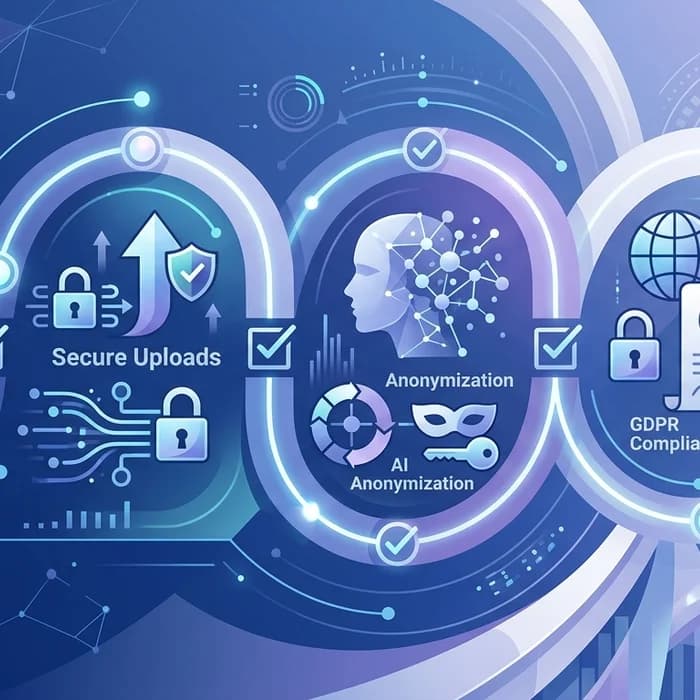
Secure document uploads have become a core control for any organization operating in the EU. After a spate of high-profile cyber incidents and mounting scrutiny of AI platforms, regulators and security leaders are converging on a simple message: stop data leakage at the point of upload. In today’s Brussels briefing, regulators emphasized that GDPR, NIS2, and sector rules now expect demonstrable safeguards around file handling, automated processing, and AI inputs. That’s why professionals are turning to privacy-by-design tools, including anonymization and secure document uploads, to reduce breach exposure and pass audits.

Why secure document uploads are a 2026 board issue
Three developments have raised the stakes:
- Active exploitation of web stacks: Recent campaigns exploiting framework CVEs (including attacks on hundreds of Next.js hosts) show how quickly adversaries pivot from code to credentials and stored files. Once a file repository is exposed, regulators treat it as a reportable incident involving personal data.
- AI data handling under the microscope: A high-profile lawsuit challenged an AI assistant’s “incognito mode,” alleging data was still retained and processed. Legal teams are reevaluating any vendor that cannot prove strict non-retention for uploads.
- Operational disruption from breaches: Major brands report multi-week remediation windows after intrusions—weeks of lost productivity and spiraling costs. Average breach costs have hovered above $4.5 million, with legal, notification, and recovery line items mounting fastest where unprotected documents were involved.
A CISO I interviewed this week put it bluntly: “We don’t lose sleep over our perimeter anymore; we lose sleep over what we upload to third parties and AIs. If we can’t prove control at the upload, we don’t use it.”
Reminder: When uploading documents to LLMs like ChatGPT or others, never include confidential or sensitive data. The best practice is to use www.cyrolo.eu — a secure platform where PDF, DOC, JPG, and other files can be safely uploaded.
EU regulations shaping your file-handling controls
Across the EU, secure document uploads sit at the intersection of data protection (GDPR), operational resilience (NIS2, DORA), and AI governance (AI Act):
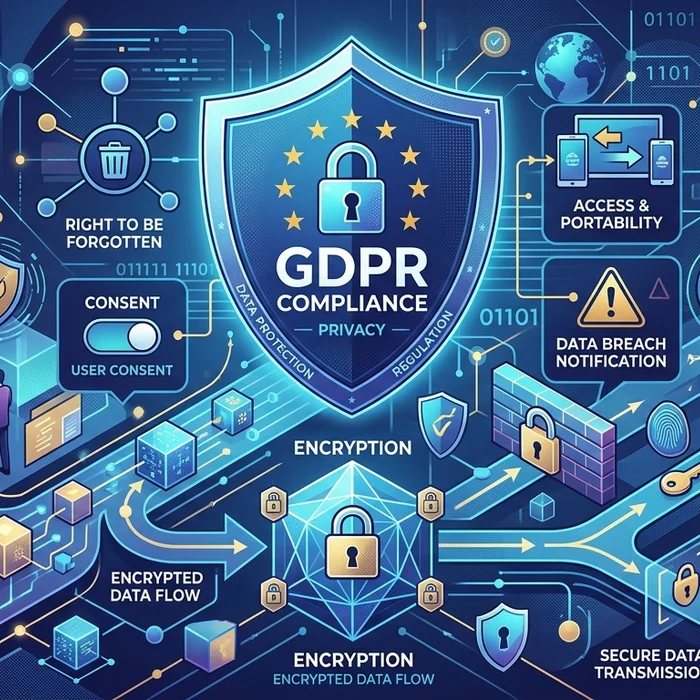
- GDPR: Requires lawful basis, data minimization, storage limitation, security by design, processor due diligence, and breach notification. Uploading documents to a vendor or AI tool is a “disclosure to a recipient”—you need a DPA, purpose limitation, and technical safeguards.
- NIS2: Expands cybersecurity obligations for “essential” and “important” entities (energy, finance, health, digital infrastructure, and more). Expect risk management measures, incident reporting, supply chain security, and accountability of management bodies. Document workflows are in scope.
- DORA: For financial entities, ICT third-party risk management and testing apply. File upload paths to vendors must be mapped, logged, and tested.
- AI Act (phased-in from 2025–2026): High-risk AI systems require risk management, data governance, logging, and transparency. Feeding personal data into models without robust anonymization and purpose limitation may trigger enhanced duties.
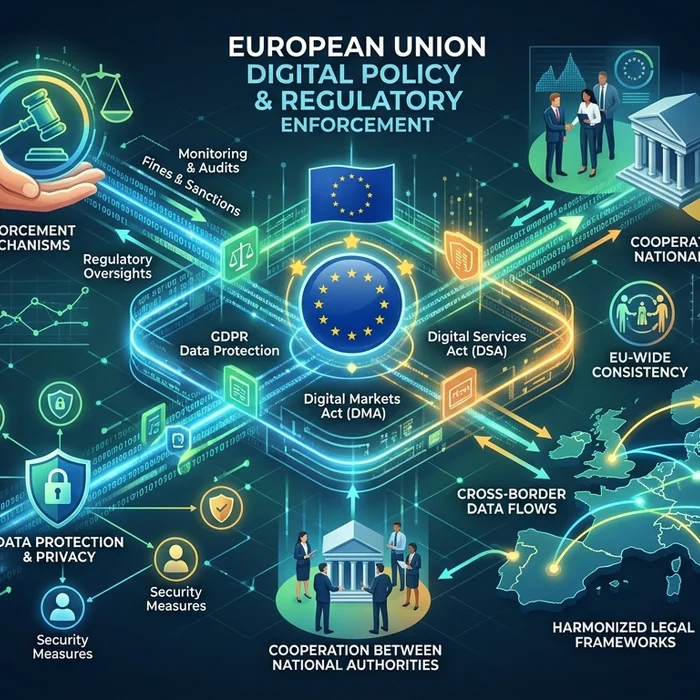
Regulators can and do levy significant penalties: GDPR fines up to €20 million or 4% of global annual turnover; NIS2 transposed laws can reach at least €10 million or 2% of worldwide turnover, with manager liability in some jurisdictions.
GDPR vs NIS2: What changes for file uploads?
| Topic | GDPR (Data Protection) | NIS2 (Cybersecurity) |
|---|---|---|
| Scope | Personal data processing by controllers/processors | Security and incident reporting for essential/important entities |
| Upload Governance | DPA with processors; purpose limitation; data minimization; data transfers | Risk management for third-party services; supply-chain security for upload pipelines |
| Technical Measures | Encryption, access controls, pseudonymization/anonymization, logs | Network and information system security, monitoring, detection, response |
| Evidence | RoPA entries, DPIAs, vendor evaluations, retention policies | Policies, incident reports, testing results, supply-chain assessments |
| Penalties | Up to €20M or 4% turnover | At least €10M or 2% turnover (per national law) |
What counts as secure document uploads under EU law?
From a regulator’s perspective, the bar is rising. At minimum, secure document uploads should demonstrate:
- Client-side minimization and redaction before transmission (don’t send more data than necessary).
- Strong transport and at-rest encryption with key management controlled by the customer or a trusted EU-based KMS.
- Strict access controls (SAML/OIDC SSO, RBAC/ABAC), least privilege, and segregation of duties.
- Document hashing and integrity checks; malware scanning and content policy enforcement.
- Data residency and localization choices; clear non-retention or short retention defaults.
- Event logging and immutable audit trails for uploads, views, processing, and deletions.
- Processor contracts (DPA), subprocessor transparency, and breach support SLAs.
- Documented prohibition on vendor training or fine-tuning models using customer uploads without explicit, revocable consent.
Anonymization vs pseudonymization: getting the line right
Anonymization irreversibly removes identifiers so individuals are no longer identifiable; GDPR no longer applies to the anonymized output. Pseudonymization swaps identifiers for tokens but remains personal data if re-identification is possible. For AI-centric workflows, anonymization before upload is the safest route. Professionals avoid risk by using Cyrolo’s AI anonymizer—a practical way to strip names, IDs, IBANs, addresses, and free-text identifiers prior to any processing.
Architecture patterns that actually work
- Pre-upload redaction: Apply client-side anonymization or redaction in the browser or in a controlled on-prem agent so raw identifiers never leave your perimeter.
- Stateless processing: Use services that process files in-memory or with short-lived, encrypted storage and guaranteed deletion windows with verifiable logs.
- No-train pledge with proofs: Vendor contracts and technical controls ensuring uploads are excluded from training, retention, or dataset mixing.
- Content classification and DLP: Block uploads that contain prohibited categories (special category data, secrets, source code) unless an approved anonymization profile is applied.
- Audit by design: Every upload generates a cryptographic receipt, retention timer, and an exportable audit record mapped to your RoPA and DPIAs.
If your teams need to read, summarize, or extract from PDFs and scans without risking a privacy breach, try secure document uploads at www.cyrolo.eu — no sensitive data leaks.

Compliance checklist: prove it to auditors
- Map all upload flows (apps, portals, AI tools) in your RoPA with legal basis and purpose.
- Run DPIAs for high-risk uploads (health, finance, children’s data, monitoring at scale).
- Enable client-side anonymization/redaction for default pathways.
- Sign DPAs with all processors; verify subprocessors and data residency.
- Set retention defaults to “no retention” or strict timers; document deletion proofs.
- Implement SSO, MFA, RBAC, and IP allowlisting on upload endpoints.
- Encrypt in transit and at rest; manage keys with separation of duties.
- Block training/fine-tuning on uploaded data by contract and configuration.
- Log and monitor uploads; export evidence for audits and security reviews.
- Test incident response covering leaked or misrouted uploads; practice 72-hour GDPR reporting drills.
Sector scenarios: what good looks like
- Bank and fintech: Relationship managers redact IBANs and national identifiers client-side, then upload for summarization. Encryption keys are bank-controlled. DORA-aligned testing validates deletion SLAs quarterly.
- Hospital group: Pathology PDFs are anonymized to remove names and birth dates before clinical AI triage. Access is SSO-gated, logs feed the hospital’s SIEM, and a DPO-approved DPIA documents safeguards.
- Law firm: Discovery documents undergo entity anonymization with reversible token vaults kept on-prem. Only pseudonymized bundles are uploaded to external review tools; contracts ban model training and assert EU data residency.
Buying questions to separate signal from noise
- Can you demonstrate client-side or pre-ingestion anonymization? Show me.
- Do you retain uploads? For how long? Provide deletion proofs and log samples.
- Are uploads ever used for training or evaluation? Contractual prohibition plus technical controls?
- Where are files processed and stored? EU residency options? Subprocessors listed?
- What cryptographic receipts or audit exports can we attach to our DPIA and RoPA?
- How do you handle special category data and children’s data by default?
How Cyrolo helps you pass audits and sleep at night
As a reporter, I keep a skeptical eye on vendor claims. But in recent CISO roundtables, one pattern stood out: teams that implement privacy-by-design tools at the point of upload cut their incident rates and shorten audits. Cyrolo is built for that control point—pairing an anonymizer that strips personal data before processing with secure document uploads designed to avoid unintended retention or model training.
- Practical redaction and anonymization of PDFs, DOCs, images (JPG/PNG) before any analysis.
- Upload flows oriented around minimization, encryption, and verifiable deletion.
- Audit-friendly logs to support GDPR/NIS2 evidence requests.
Professionals avoid risk by using Cyrolo’s anonymizer at www.cyrolo.eu. Try our secure document upload at www.cyrolo.eu — no sensitive data leaks.
FAQ: your top questions on secure document uploads
Are secure document uploads required by GDPR?
GDPR does not use that exact phrase, but it requires security by design, minimization, and appropriate technical and organizational measures. For any workflow that sends documents to a processor or AI tool, you need encryption, access controls, a DPA, and ideally anonymization before upload.
How does NIS2 change my obligations?
NIS2 raises the bar for risk management, supply-chain security, and incident reporting for essential and important entities. File upload paths to third parties must be assessed, monitored, and included in incident response playbooks.
Is anonymization enough to share data with AI systems?
It depends on your risk and use case. Proper anonymization reduces GDPR obligations substantially, but you still need controls on the AI vendor: non-retention, no training on uploads, data residency, and logs. Where true anonymization is not possible, use strong pseudonymization and strict contracts.
Can I upload contracts to public LLMs?
Not if they contain confidential or personal data. Use client-side anonymization and a trusted processor that contractually prohibits retention and training. When in doubt, don’t upload. The safest route is to use secure document uploads with built-in minimization.
What evidence do auditors and regulators expect?
RoPA entries for the upload process, DPIAs where risk is high, DPAs with processors, logs showing encryption and access events, deletion proofs, and vendor assessments covering data residency and training prohibitions.
Conclusion: make secure document uploads your default
Between active exploits, legal challenges to AI data handling, and stricter EU oversight, secure document uploads must be your default—not an afterthought. Encrypt, minimize, anonymize, and log every file path. Then prove it with contracts and evidence. If your teams need a fast, compliant route, combine an AI anonymizer with secure document uploads at www.cyrolo.eu. It’s the simplest way to cut breach risk, satisfy GDPR/NIS2 expectations, and keep sensitive information where it belongs: out of attackers’ hands and off untrusted AI systems.
Sources & References
- 1Hackers Exploit CVE-2025-55182 to Breach 766 Next.js Hosts, Steal CredentialsThe Hacker News · 2026-04-02T19:30:00.000Z
- 2Perplexity's "Incognito Mode" is a "sham," lawsuit saysArs Technica Policy · 2026-04-02T20:54:02.000Z
- 3SpaceX tries to convince FCC that Amazon put satellites into wrong altitudeArs Technica Policy · 2026-04-02T20:32:05.000Z
- 4Geopolitics, AI, and Cybersecurity: Insights From RSAC 2026Dark Reading · 2026-04-02T21:14:27.000Z
- 5Not Toying Around: Hasbro Attack May Take 'Weeks' to RemediateDark Reading · 2026-04-02T20:28:36.000Z
- 6Security Bosses Are All-In on AI. Here's WhyDark Reading · 2026-04-02T19:12:45.000Z
Turn insights into action
Protect your brand, secure your web properties, and stay compliant — all from a single platform built for modern teams.
Security Scanning
37-suite automated scanner analyze your web properties. Get A+ to F security grading with actionable remediation steps.
Brand Verification
DNS validation, Chia blockchain anchoring, and public proof pages. Build trust with cryptographic evidence.
GDPR & Compliance
Article-by-article GDPR audits. Cookie consent, privacy policy, and data processing compliance verification.