FCC router ban: what it means for EU companies under NIS2 and GDPR
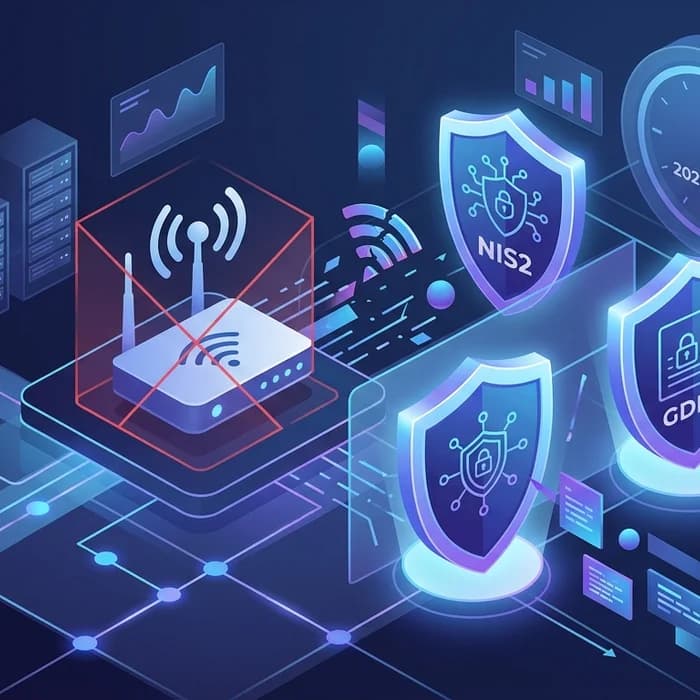
Washington’s surprise FCC router ban on new foreign-made routers has ignited a global supply-chain rethink. In Brussels this morning, digital policy officials quietly acknowledged the ripple effects: EU operators covered by NIS2, GDPR, and sectoral rules like DORA will need to verify device provenance, tighten supplier controls, and prove due diligence. If you manage networks, compliance, or procurement, this is the moment to update your risk register—and your evidence trail.
What is the FCC router ban—and why EU firms should care
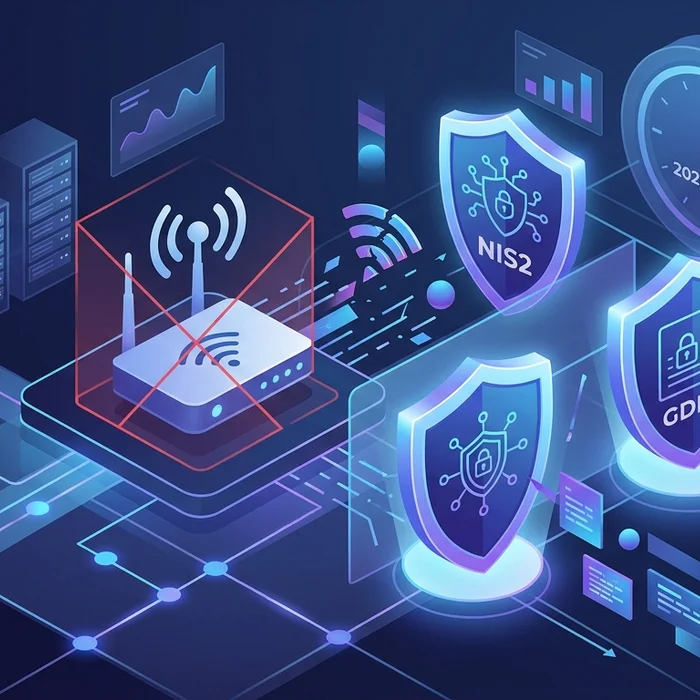
The U.S. Federal Communications Commission has halted authorizations for certain foreign-manufactured routers over supply-chain and cybersecurity risk concerns. The measure is U.S.-only, but it lands in a Europe already tightening expectations on supply-chain security, vulnerability management, and incident reporting.
- NIS2 now applies across most Member States, expanding obligations to “essential” and “important” entities far beyond telecoms.
- GDPR still governs any personal data traversing those routers—breaches can combine security and privacy exposure.
- The Cyber Resilience Act (CRA) phases in secure-by-design and coordinated vulnerability disclosure duties for connected products (with vulnerability-handling provisions expected earlier than full application).
- DORA is live for financial entities, heightening ICT third-party risk management and testing rigor.
As one CISO I interviewed at a pan-EU logistics company put it: “Even if the FCC doesn’t bind us, our auditors will ask what changed in our risk posture—and what we did about it.”
Signal from Washington, ripple in Brussels
EU regulators won’t copy-paste a U.S. ban overnight. But procurement guidance, market surveillance, and supervisory expectations are already moving toward “show, don’t tell” evidence of device integrity, firmware provenance, and supplier governance. Expect tougher questions in security audits, board risk committees, and regulator reviews, especially for sectors named in NIS2 (energy, health, transport, banking, digital infrastructure, and more).
How the FCC router ban maps to EU rules
NIS2: supply-chain security as a hard requirement
NIS2 obliges in-scope entities to implement risk management measures that explicitly include supply-chain security, secure development, and vulnerability handling. Supervisory authorities can demand proof: asset inventories, firmware update policies, SBOMs, supplier assessments, and incident playbooks that cover device compromise.
GDPR: personal data rides your routers
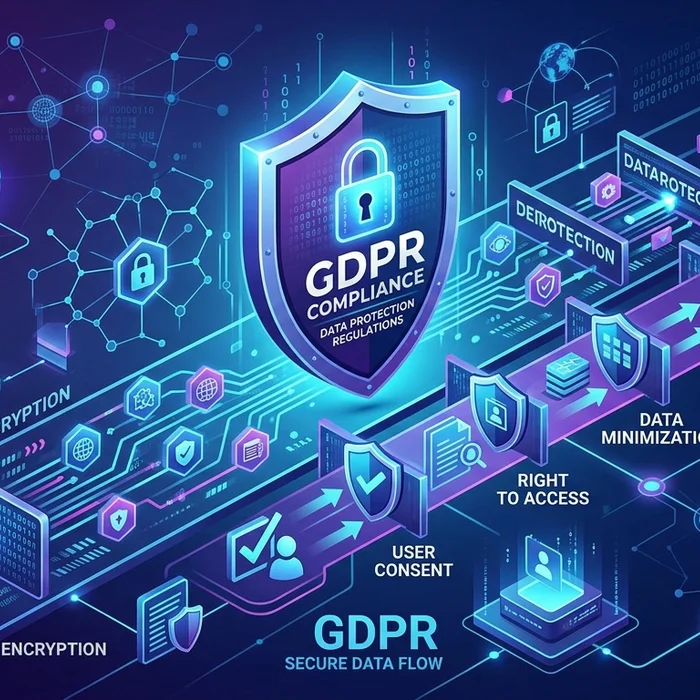
Where routers process or transport personal data, GDPR applies. That means data protection by design and default, confidentiality and integrity safeguards (Article 32), and breach notification within 72 hours if personal data is impacted. A compromised router can cascade into privacy breaches—exposing you to fines up to 4% of global annual turnover and mandatory notifications that damage trust.
Cyber Resilience Act (CRA): secure products, secure lifecycle
The CRA introduces product security obligations across the lifecycle, including vulnerability management and reporting to ENISA within tight timelines. While full application comes later, vulnerability-handling duties arrive earlier—meaning vendors will be expected to prove coordinated disclosure processes and timely fixes. Buyers should start demanding this now.
DORA: financial sector scrutiny
Under DORA, banks, insurers, and other financial entities must manage ICT third-party risk with deep documentation: asset criticality, failure scenarios, resilience testing, and concentration risk. Network devices are squarely in scope for operational resilience. Auditors will expect verifiable evidence of supplier assessments and update governance.
GDPR vs NIS2: who asks what from you?
| Topic | GDPR | NIS2 |
|---|---|---|
| Primary objective | Protect personal data and privacy rights | Ensure cybersecurity and service continuity |
| Who is in scope | Any controller/processor handling EU personal data | “Essential” and “important” entities across key sectors |
| Security measures | Appropriate technical and organisational measures (Art. 32) | Risk management incl. supply chain, vulnerability mgmt., MFA, crypto |
| Incident reporting | 72-hour notification to DPA if personal data breach | Early warning (24h), significant incident reporting to CSIRTs/authorities |
| Fines | Up to 20M EUR or 4% global turnover | Up to 10M EUR or 2% global turnover; management liability |
| Supply-chain focus | Processor due diligence and DPAs; data transfer safeguards | Explicit supplier risk controls, contractual and technical assurances |
Immediate actions: a 10-step compliance checklist
- Inventory network devices and firmware versions; classify by criticality.
- Map suppliers and resellers; verify country-of-origin and authorization histories.
- Request SBOMs and vulnerability disclosure policies from router vendors.
- Harden configurations: disable insecure services, enforce strong crypto, segment networks.
- Establish a fast-track firmware update process with rollback plans.
- Embed supply-chain clauses: transparency, timely patching, incident cooperation, right to audit.
- Run scenario exercises: router compromise, lateral movement, data exfiltration; document outcomes.
- Evidence everything: decisions, risk acceptance, compensating controls—auditors will ask.
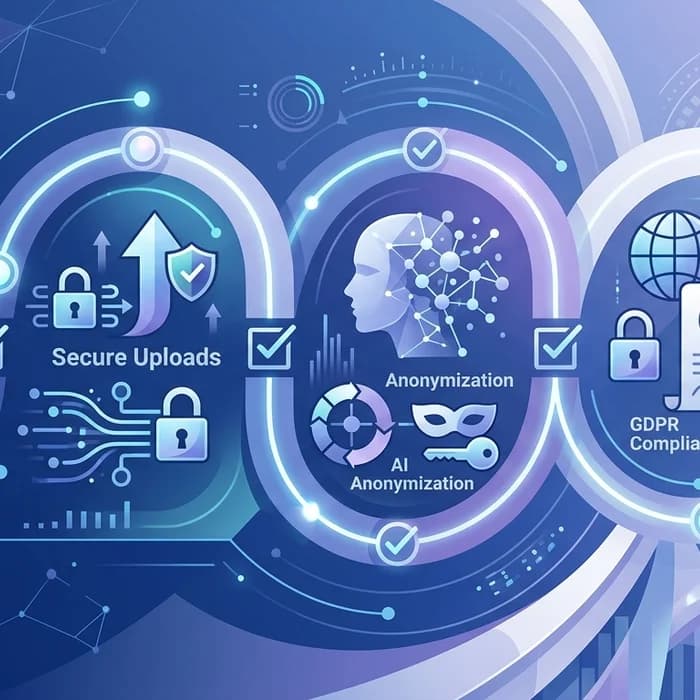
- Minimise personal data in logs and configs; apply AI anonymizer before sharing device outputs with third parties or LLMs.
- Use a secure document upload workflow for audits and vendor exchanges, preventing sensitive data leaks.
How to evaluate routers and network gear now
- Support lifecycle: vendor commitment to updates for 5–7 years minimum on critical gear.
- Cryptographic posture: modern TLS, SSH, signed firmware, secure boot.
- Transparency: SBOM availability, CVE disclosure cadence, PSIRT maturity.
- Provenance: traceability of key components and build environment integrity.
- Compatibility with zero trust architectures: policy enforcement, identity-aware segmentation.
- Independent testing/certifications: EUCC schemes as they mature, where available.
Field notes from Brussels and the boardroom
In today’s Brussels briefing, a senior regulator stressed that “NIS2 was designed for shocks like this. Supervisors will focus on whether entities can demonstrate systematic supplier risk management—on paper and in practice.”
Meanwhile, a bank CISO I interviewed warned about “audit sprawl”: “Every incident elsewhere becomes our questionnaire. The only way through is disciplined documentation and repeatable workflows—especially around device configs and logs that might contain personal data.”
Using AI safely during assessments and audits
Teams increasingly lean on AI to summarise configurations, contracts, and incident runbooks. That’s efficient—but risky if you paste raw logs, credentials, personal data, or client documents into generic tools.
Professionals avoid risk by using Cyrolo’s anonymizer at www.cyrolo.eu to scrub sensitive fields before analysis, and by keeping reviews inside a compliant secure document upload environment.
Compliance reminder: When uploading documents to LLMs like ChatGPT or others, never include confidential or sensitive data. The best practice is to use www.cyrolo.eu — a secure platform where PDF, DOC, JPG, and other files can be safely uploaded.
Real-world scenarios
- Hospitals: Router telemetry mixes device identifiers with patient-adjacent metadata. Solution: Data minimisation plus pre-share anonymisation using www.cyrolo.eu.
- Fintechs under DORA: Replace end-of-life branch routers; keep a signed trail of risk assessments, supplier attestations, and patch SLAs.
- Law firms: Client names slip into VPN configs and logs. Before sending to vendors or auditors, run an AI anonymizer pass and store evidence of redaction.
- Manufacturing: OT/IT convergence exposes PLC networks through misconfigured gateways. Prioritise segmentation, MFA for admins, and firmware integrity checks.
FAQs: FCC router ban and EU compliance
Does the FCC router ban apply in the EU?
No. It’s a U.S. measure. But EU supervisors can still ask how you assessed the risk, given global supply-chain implications. Under NIS2, you must evidence supplier risk management.
Should we rip and replace existing routers?
Not automatically. Start with a risk assessment: criticality, exposure, patch status, vendor transparency. Document decisions and compensating controls. Replace where risk is unacceptable or lifecycle support is inadequate.
How does this intersect with GDPR?
If router logs or traffic touch personal data, a compromise may trigger GDPR obligations, including 72-hour breach notification. Minimise data in logs and anonymise exports before sharing.
What proof will regulators expect under NIS2?
Asset inventories, supplier due diligence records, SBOMs, patch SLAs, incident exercises, and governance minutes showing informed decisions. Keep artefacts organised and retrievable.
Is it safe to use AI tools for config and policy reviews?
Only if you protect sensitive content. Use an AI anonymizer and a secure document upload process to prevent leakage. Never paste secrets into generic LLMs.
Bottom line: turn the FCC router ban into a European advantage
The FCC router ban won’t be enforced in Europe—but it’s a clear prompt to tighten supplier governance under NIS2, safeguard personal data under GDPR, and prepare for CRA-era transparency. Organisations that move now will breeze through audits, reduce breach exposure, and convert uncertainty into operational resilience. If you need a fast, safe way to process configs, logs, and contracts without risking leaks, try Cyrolo’s anonymiser and secure document handling at www.cyrolo.eu.
Sources & References
- 1FCC Bans New Foreign-Made Routers Over Supply Chain and Cyber Risk ConcernsThe Hacker News · 2026-03-25T07:11:00.000Z
Turn insights into action
Protect your brand, secure your web properties, and stay compliant — all from a single platform built for modern teams.
Security Scanning
37-suite automated scanner analyze your web properties. Get A+ to F security grading with actionable remediation steps.
Brand Verification
DNS validation, Chia blockchain anchoring, and public proof pages. Build trust with cryptographic evidence.
GDPR & Compliance
Article-by-article GDPR audits. Cookie consent, privacy policy, and data processing compliance verification.