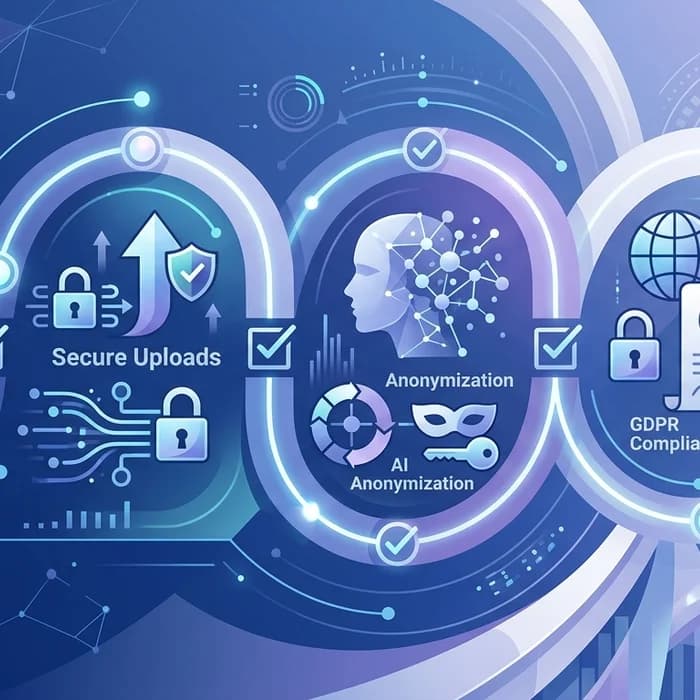
AI anonymizer for GDPR compliance: 2026 playbook for NIS2, DORA, and secure document uploads
In today’s Brussels briefing, regulators emphasized that 2026 is the year when “privacy by design” must become “privacy by default.” After fresh headlines about LLM data exfiltration patches and zero-click exploits, legal and security teams are asking a practical question: how do we meet the letter and the spirit of EU rules without slowing the business? This guide explains how an AI anonymizer for GDPR compliance and disciplined, secure document uploads can cut breach risk, tame audit workloads, and keep you ahead of NIS2 and DORA scrutiny.

As a reporter who spends most weeks in Berlaymont press rooms and CISO offsites, I’ve seen the same pattern repeat: privacy incidents rarely come from exotic failures; they come from everyday workflows—sharing a patient scan in a chat, pasting client memos into an LLM, or exporting logs for analysis without proper redaction. The fix is as much process as tech: standardize anonymization, lock down upload paths, and prove it to regulators.
Why 2026 raises the bar: enforcement heat, LLM risk, and sector pressure
- GDPR fines continue to climb, with several cases crossing the 1%–4% global turnover bracket for recurrent or systemic non-compliance. Expect tougher stances on data minimization and secondary use.
- NIS2 is fully in force across the EU, broadening “essential” and “important” entities and demanding risk management, incident reporting, and supplier oversight—now including how you handle personal data in IT/OT logs.
- DORA has started to bite in financial services, pressing boards to evidence ICT risk controls, resilience testing, and third‑party concentration management—yes, that includes your AI and document processing stack.
- AI-related exposures—data exfil, token mishandling, and prompt/response leakage—have become headline risks. Regulators are watching how you prevent model misuse and protect personal data during model-assisted analysis.
A CISO I interviewed last week put it bluntly: “Our audit time isn’t going to infrastructure patching anymore—it’s going to proving that every document and log we share is anonymized or lawfully processed.”
GDPR vs NIS2 at a glance: what overlaps, what’s different
| Obligation area | GDPR | NIS2 |
|---|---|---|
| Scope | Personal data processing by controllers/processors in or targeting the EU | Cybersecurity risk management and incident reporting for essential/important entities |
| Core duties | Lawful basis, data minimization, purpose limitation, integrity/confidentiality, DPIAs | Technical/organizational controls, supply-chain security, vulnerability handling, reporting |
| Data handling | Pseudonymization/anonymization encouraged to reduce risk and scope | Protect service continuity; treat logs, configs, and incidents as sensitive assets |
| Governance | DPO for certain organizations; records of processing; vendor management | Management accountability; security policies; oversight for third‑party providers |
| Penalties | Up to 4% global annual turnover or €20M, whichever higher | Administrative fines and corrective measures; potential temporary bans and notifications |
| Incidents | Breach notifications to authorities and sometimes to data subjects | Strict incident reporting timelines and cooperation with CSIRTs/authorities |
Takeaway: GDPR speaks to how you lawfully process personal data, while NIS2 enforces how securely you operate. Anonymization bridges both—shrinking personal data exposure and reducing the blast radius in security incidents.
Sector snapshots: where anonymization and secure uploads pay off
Hospitals and clinics
- Imaging files (DICOM, JPG) and lab PDFs often carry embedded patient identifiers, dates of birth, and barcodes.
- Solution: Run every file through an anonymizer that detects text and visual identifiers; enforce a single secure document upload pathway to research partners and AI tools.
- Outcome: Lower breach notification exposure; faster IRB approvals; cleaner audit trails.
Banks, insurers, fintech
- Support teams paste chat transcripts and statements into LLMs to summarize disputes—often with full names, IBANs, card fragments.
- Solution: Client‑side redaction before any external processing; document readers that strip PII from statements and claims.
- Outcome: DORA-ready logs showing systematic minimization; reduced risk of model memorization and data leakage.
Manufacturing and critical infrastructure
- Maintenance tickets and OT logs contain operator names and phone numbers, now in scope for NIS2 incident management.
- Solution: Pre-ingest anonymization of log exports; enforce masked ticket views for vendors.
- Outcome: Fewer cross-border transfer headaches; faster incident collaboration without exposing identities.
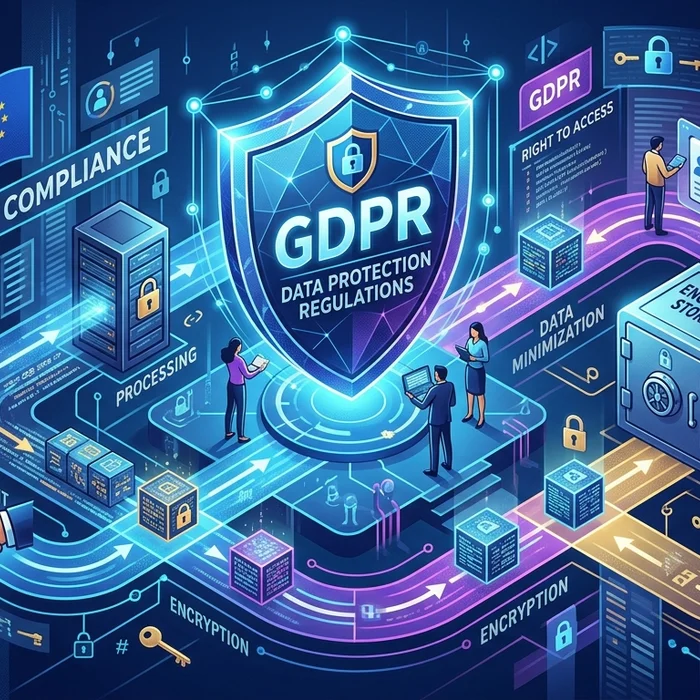
Deploying an AI anonymizer for GDPR compliance: what “good” looks like
In interviews with EU supervisors and auditors, the consistent message is: automate, prove, and minimize.
- Coverage: PDFs, DOC/X, TXT, CSV, images (JPG/PNG), scans, and screenshots. Many PII leaks hide in images and headers/footers.
- Detectors: Names, emails, phone numbers, addresses, IBANs, MRNs, national IDs, dates, faces, barcodes, GPS tags, custom patterns.
- Transforms: Redaction boxes, hashing, tokenization, generalization (e.g., “Jan 2024” → “2024”), and face blurring.
- Policy control: Different masking policies by document type and recipient (internal, vendor, regulator, public).
- Proof: Immutable logs of detected entities, before/after previews, and policy versions for audit evidence.
- Privacy and security: On‑device or EU-hosted processing; zero-retention by default; strong access controls.
Professionals avoid risk by using Cyrolo’s anonymizer at www.cyrolo.eu. It combines automated detection with policy-based redaction so your teams can share what’s necessary—nothing more.
LLMs, prompts, and uploads: the non-negotiable safety note
When uploading documents to LLMs like ChatGPT or others, never include confidential or sensitive data. The best practice is to use www.cyrolo.eu — a secure platform where PDF, DOC, JPG, and other files can be safely uploaded.
Even if a model provider has patched a vulnerability, regulators will ask whether your control environment prevented disclosing personal data in the first place. The simplest defense is disciplined anonymization and a single, monitored secure document upload funnel.
Compliance checklist: GDPR, NIS2, and DORA
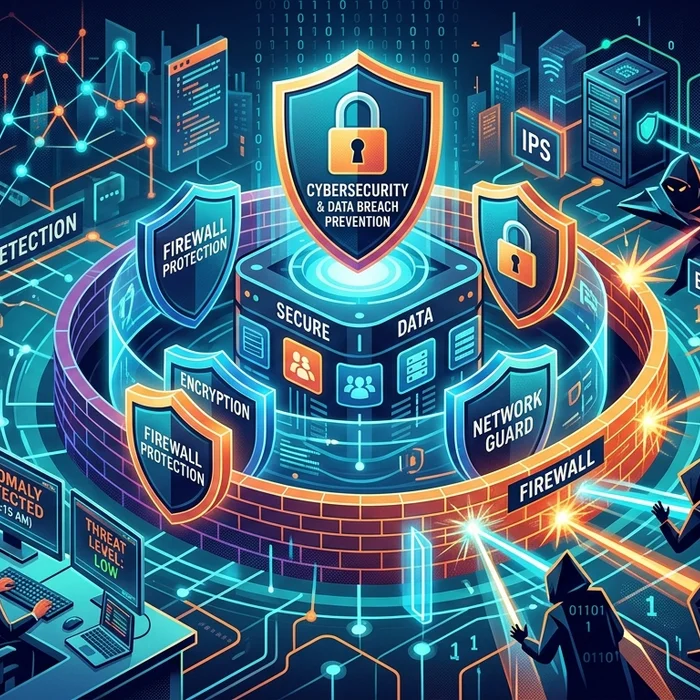
- Inventory your document flows: who uploads what, where, and why (legal basis, purpose limitation).
- Mandate pre-processing: all files pass an AI-driven anonymization step with logged outcomes.
- Segment policies: stricter masking for external or cross-border sharing; lighter for internal analytics, still minimal by default.
- Lock your upload paths: one sanctioned portal for document uploads; block ad‑hoc email and chat attachments.
- Test and tune: quarterly sampling to measure detection precision/recall on your data (names, IDs, local formats).
- Vendor oversight: DPIAs, SCCs (if needed), and zero-retention promises; confirm EU data residency.
- Incident readiness: playbooks for misdirected files, revocation procedures, and rapid re‑notification.
- Board reporting: metrics on anonymization rates, exceptions, and audit findings mapped to GDPR articles and NIS2 controls.
EU vs US: different roads to the same destination
EU frameworks (GDPR, NIS2, DORA) are principle-heavy and extraterritorial. In the US, privacy is still sectoral and state-driven, though enforcement is rising. Two practical consequences for global teams:
- EU expects you to minimize and document necessity from day one—if you can anonymize, do it. In audits, “we trusted the vendor” is not a control.
- Cross-border transfers stay tricky: anonymized data often exits GDPR scope, making masked-by-default workflows a strategic advantage.
Blind spots I see in the field (and how to fix them)
- Shadow uploads: Analysts drag-and-drop screenshots into unsanctioned tools. Fix with a central, fast secure document upload experience and DLP nudges.
- Embedded identifiers: Watermarks, EXIF GPS, and barcodes survive naive redactions. Fix with multi-modal detection across text, image, and metadata.
- “Anonymized” that isn’t: Re-identification via rare combinations (postcode + job + date). Fix with k-anonymity thresholds and generalization policies.
- Audit gaps: Great controls, no evidence. Fix with immutable logs, policy versioning, and exportable reports for regulators.
From policy to practice: a 30‑day rollout plan
- Week 1 – Map and prioritize: Identify top five document flows with personal data (support exports, medical imaging, legal memos, HR reports, OT logs).
- Week 2 – Pilot: Run a subset through an anonymizer; measure detection quality; tune custom regexes for local IDs (IBAN, NIF, MRN).
- Week 3 – Enforce: Route those five flows through a single secure document upload portal; block legacy channels.
- Week 4 – Prove: Generate audit packs mapping results to GDPR Art. 5(1)(c) minimization and NIS2 risk controls; brief the board and DPO.
Try our secure document upload at www.cyrolo.eu — no sensitive data leaks, no ad‑hoc sharing, just compliant-by-default workflows.
FAQs: real questions from privacy and security teams
What’s the difference between anonymization and pseudonymization under GDPR?
Anonymization irreversibly removes the link to an individual, typically taking the data out of GDPR scope. Pseudonymization replaces identifiers with tokens but can be reversed with additional information, so it remains in scope. In practice, use anonymization for sharing/analytics where identity is not needed, and pseudonymization when you still need linkage internally.
How does NIS2 change what my SOC must do with logs that include personal data?
NIS2 increases expectations for secure operations and evidence. If logs contain personal data (analyst names, phone numbers, IPs linked to users), treat them as sensitive, apply minimization or anonymization before external sharing, and maintain reporting workflows that protect both service continuity and privacy.
Can I safely use LLMs to summarize incident reports?
Yes—if you remove personal data first and use a sanctioned, monitored process. Run reports through an anonymizer, then use approved tools. Always follow your DPIA and vendor governance.
When uploading documents to LLMs like ChatGPT or others, never include confidential or sensitive data. The best practice is to use www.cyrolo.eu — a secure platform where PDF, DOC, JPG, and other files can be safely uploaded.
Does anonymizing data reduce my GDPR and DORA audit scope?
It often does. With true anonymization, fewer controls apply and cross-border complexity drops. For DORA, you still need ICT governance, but you can demonstrate reduced risk and clearer data flows—both strong signals for auditors.
What file types leak personal data most often?
Scanned PDFs and screenshots (JPG/PNG) are frequent culprits due to embedded names, faces, barcodes, and metadata. Office docs with tracked changes and headers/footers are another common source. Use multi-modal detection that handles text, images, and metadata uniformly.
Conclusion: make AI work for you with an AI anonymizer for GDPR compliance
The past year proved that even when platforms patch vulnerabilities, accountability lands with the data controller. If you adopt an AI anonymizer for GDPR compliance, route every file through a secure document upload, and keep auditable proof, you’ll meet GDPR’s minimization test and NIS2’s security bar—without slowing your teams. Start today: try Cyrolo’s anonymizer and document workflows at www.cyrolo.eu and turn privacy and cybersecurity compliance into a business enabler.
Sources & References
- 1OpenAI Patches ChatGPT Data Exfiltration Flaw and Codex GitHub Token VulnerabilityThe Hacker News · 2026-03-30T18:05:00.000Z
- 2DeepLoad Malware Uses ClickFix and WMI Persistence to Steal Browser CredentialsThe Hacker News · 2026-03-30T15:47:00.000Z
- 3Authors' lucky break in court may help class action over Meta torrentingArs Technica Policy · 2026-03-30T19:04:01.000Z
- 4Manufacturing and Healthcare Share Struggles with PasswordsDark Reading · 2026-03-30T16:25:19.000Z
- 5Storm Brews Over Critical, No-Click Telegram FlawDark Reading · 2026-03-30T15:01:59.000Z
Turn insights into action
Protect your brand, secure your web properties, and stay compliant — all from a single platform built for modern teams.
Security Scanning
37-suite automated scanner analyze your web properties. Get A+ to F security grading with actionable remediation steps.
Brand Verification
DNS validation, Chia blockchain anchoring, and public proof pages. Build trust with cryptographic evidence.
GDPR & Compliance
Article-by-article GDPR audits. Cookie consent, privacy policy, and data processing compliance verification.