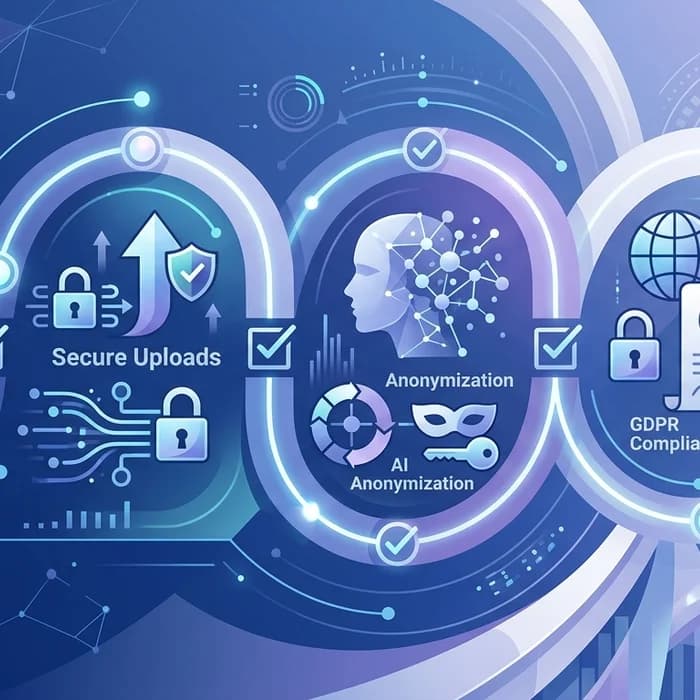
GDPR-Compliant AI Anonymizer: Your 2026 Playbook to Stop LLM Phishing and Meet NIS2
In today’s Brussels briefing, regulators reiterated a simple truth: the fastest-growing cyber risk now lives inside our productivity stack. With fresh reports of LLM-enabled phishing via summary widgets and agent-driven post-exploitation tactics, the case for a GDPR-compliant AI anonymizer—paired with secure document uploads—has become urgent for CISOs, DPOs, and legal teams. If you handle client files, medical records, or financial statements, you need controls that prevent privacy breaches while satisfying EU regulations from GDPR to NIS2.

Professionals avoid risk by using Cyrolo’s anonymizer at www.cyrolo.eu. Try our secure document upload at www.cyrolo.eu — no sensitive data leaks.
Why a GDPR-Compliant AI Anonymizer Is Now Essential
Two developments dominated my calls with EU security chiefs this week:
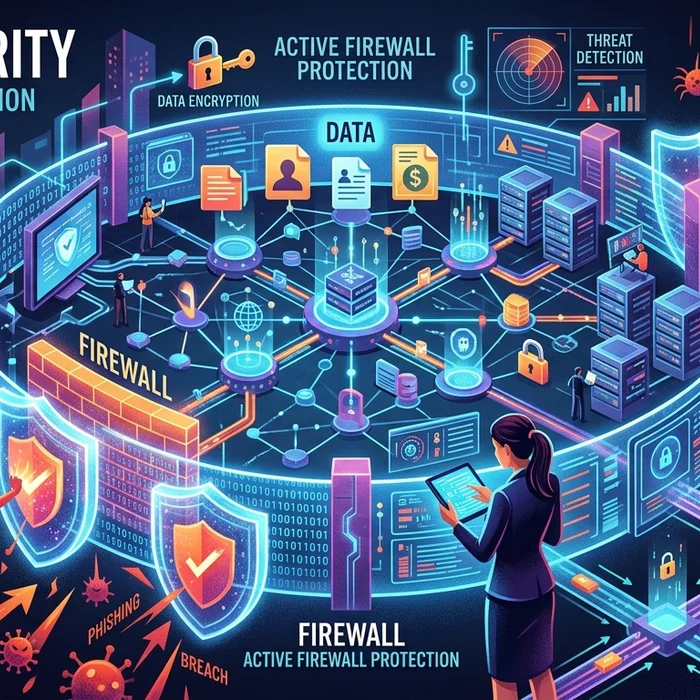
- LLM phishing via embedded summaries: Attackers are seeding content that prompt-based tools summarize and reframe, turning “helpful” previews into a phishing surface. It’s social engineering with a compliance twist.
- Agent-driven post-exploitation: After initial compromise, adversaries now script LLM agents to triage loot, draft convincing internal emails, and extract insights from stolen document troves at machine speed.
A CISO I interviewed at a pan-EU bank put it bluntly: “Our biggest new risk isn’t only exfiltration—it’s what AI can infer from the data we accidentally feed it.” That risk intersects directly with European law:
- GDPR fines can reach €20 million or 4% of global annual turnover (whichever is higher) for unlawful processing or inadequate security of personal data.
- NIS2 elevates cybersecurity obligations for “essential” and “important” entities, with penalties that can reach up to €10 million or 2% of global turnover, and introduces strict incident reporting expectations.
Translation: if your teams paste personal data into an AI tool, you must assume it is in scope of GDPR, and your resilience, logging, and incident response posture will be scrutinized under NIS2. A GDPR-compliant AI anonymizer steps in before data hits the model—removing or masking personal data and sensitive identifiers so your workflows stay useful without becoming a liability.
Mapping AI Risks to EU Regulations: GDPR vs NIS2
Security leaders often ask me, “Is this a GDPR problem or a NIS2 problem?” It’s usually both. Here’s how the obligations line up for AI-assisted document handling.
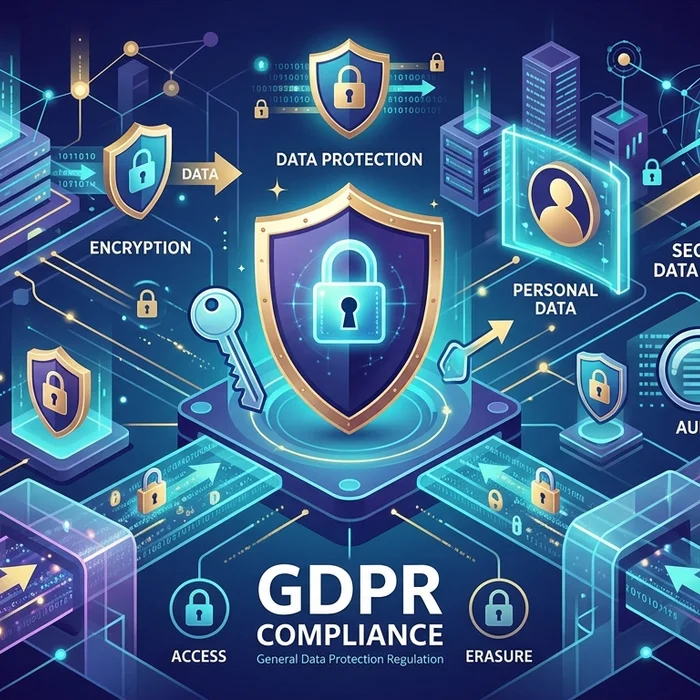
| Topic | GDPR (Data Protection) | NIS2 (Cybersecurity) |
|---|---|---|
| Scope Trigger | Processing of personal data about identifiable individuals | Security and resilience of network and information systems for essential/important entities |
| Lawful Basis & Minimization | Requires lawful basis; data minimization; purpose limitation; DPIA for high-risk processing | Risk-management measures expected; no lawful-basis test but strong technical/organizational controls |
| Incident Reporting | Notify supervisory authority within 72 hours if personal data breach is likely to risk rights/freedoms | Early warning within 24 hours of significant incident; full report within 72 hours; final after 1 month |
| Security Controls | Appropriate safeguards (e.g., pseudonymization/anonymization, encryption, access controls) | Baseline and sector-specific security measures; supply-chain risk management; logging and monitoring |
| Enforcement & Fines | Up to €20m or 4% global turnover | Up to €10m or 2% global turnover; managerial liability and corrective orders |
| AI/LLM Relevance | Personal data in prompts, training, and outputs must comply; anonymization removes GDPR scope | Use of AI must be secure, logged, and resilient to attacks (prompt injection, data leakage, phishing) |
Implementing a GDPR-Compliant AI Anonymizer Workflow
Here’s a practical pattern I see working across banks, hospitals, and law firms:
- Intake: Route files to a secure buffer. No direct pasting of client or patient data into public LLMs.
- Anonymize: Apply an AI anonymizer that detects personal data (names, addresses, IDs, health info, IBANs, case numbers) and masks or removes them.
- Review: Provide a human-in-the-loop check for edge cases (e.g., rare identifiers, small datasets where re-identification risk persists).
- Controlled Processing: Send only the anonymized subset to the model; keep audit logs and transformation diffs for compliance.
- Output Guardrails: Scan AI outputs for re-insertion of personal data or hallucinated identifiers; block before distribution.
- Retention & Deletion: Store original and anonymized versions under separate keys and retention schedules; default to deletion for model-facing copies.
To operationalize this quickly, many teams start with secure document uploads at www.cyrolo.eu and layer policies from day one.
Compliance Checklist: From Policy to Proof
- Data mapping: Catalog LLM use-cases and data categories (personal, special category, confidential business).
- DPIA: Conduct a Data Protection Impact Assessment for AI use that may affect individuals.
- Anonymization first: Enforce preprocessing with a GDPR-compliant AI anonymizer before any model access.
- Access controls: Restrict who can upload, transform, and export documents; enable MFA.
- Logging: Record uploads, transformations, prompts, outputs, and approvals for security audits.
- Incident playbooks: Add LLM-specific phishing and prompt-injection scenarios to IR plans; set 24/72-hour reporting timers.
- Vendor vetting: Assess model providers and plugins for data retention, training usage, and subprocessor exposure.
- Training: Teach staff “never paste PII” and use secure upload hubs; test with phishing simulations.
- Deletion and portability: Define retention and export for data-subject requests.
Secure Document Uploads for LLMs—Without the Data-Leak Headache
The fastest path to safer AI productivity is to gate your prompts and files behind a hardened intake. With a secure workflow, teams can review, anonymize, and approve documents before any model sees them—neutralizing common sources of privacy breaches and drastically reducing regulator exposure. For legal reviews, healthcare summaries, or KYC operations, this approach turns a risky copy-paste habit into an auditable, defensible process.
Try our secure document upload and anonymization at www.cyrolo.eu. You’ll get structured intake, automated masking, and a clear chain of custody.
Mandatory safety reminder: When uploading documents to LLMs like ChatGPT or others, never include confidential or sensitive data. The best practice is to use www.cyrolo.eu — a secure platform where PDF, DOC, JPG, and other files can be safely uploaded.
EU vs US: Different Playbooks, Same Pressure
While US debates tilt toward sectoral guidance and liability after incidents, the EU’s posture is proactive and process-driven. GDPR and NIS2 expect organizations to prove minimization, security-by-design, and rapid incident response—before and after an event. In my conversations with EU telecom and energy providers, boards increasingly ask two questions:
- “Can we demonstrate we removed personal data before using AI?”
- “Can we show resilience against AI-specific attack paths, including phishing via model summaries and prompt injections?”
By 2026, pressure tightens further as the EU AI Act’s staged obligations mature—especially for high-risk uses and general-purpose AI transparency. Even if your use-case is low risk, logs, DPIAs, and robust anonymization make audits smoother and reduce the chance of expensive remediation.
Timelines, Audits, and Budgeting for 2026
NIS2 has applied across the EU since late 2024, with sector authorities ramping audits through 2025–2026. Many finance teams are also finalizing DORA operational resilience programs, which dovetail with NIS2 security controls. Practically, that means:
- Q3–Q4 2026: Expect deeper inspections of AI-assisted workflows, especially cross-border data processing and vendor chains.
- Board oversight: Senior management can be held accountable for NIS2 non-compliance—document your decision-making trail.
- Crosswalk savings: One investment in logging, access control, and anonymization supports GDPR, NIS2, DORA, and upcoming AI Act obligations.
Real-World Scenarios
- Hospital network: Radiology reports and discharge summaries are auto-masked before summarization. Result: lower GDPR breach risk and simpler DPIA renewals.
- International law firm: Discovery documents are uploaded via a controlled intake, anonymized, and only then sent to internal LLM tooling. Result: client confidentiality preserved; regulator questions answered with logs.
- Payments fintech: Support tickets and chargeback evidence are preprocessed to strip PII. Result: reduced exposure during phishing spikes tied to AI-generated emails.
Across these, teams standardize on anonymization and controlled document uploads to keep AI helpful but harmless.
Frequently Asked Questions
What is a GDPR-compliant AI anonymizer?
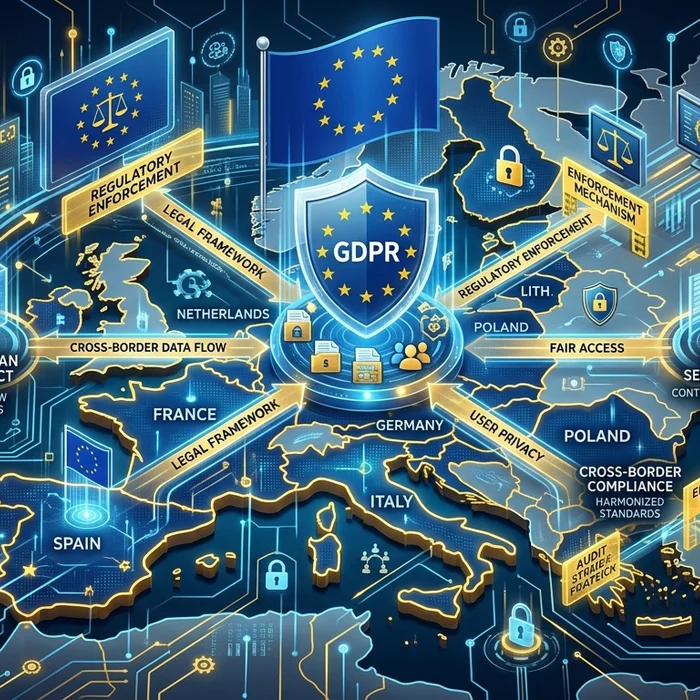
It’s a tool that detects and removes or masks personal data before content is processed by AI systems. Done correctly, anonymized data falls outside GDPR scope because individuals are no longer identifiable. This reduces legal risk while preserving analytical value.
Does anonymized data still count as personal data under GDPR?
No—if anonymization is irreversible in practice. Beware small datasets and rare identifiers that can enable re-identification. Pair automation with human review for edge cases, and document your methods for audits.
How do GDPR and NIS2 apply to LLM use?
GDPR governs any personal data you feed to models (lawful basis, minimization, rights). NIS2 focuses on the cybersecurity of your systems and processes (logging, incident reporting, supply-chain risk). Together, they expect secure-by-design AI workflows with strong governance.
Is client-confidential information safe in public LLMs?
Treat public LLMs as untrusted for sensitive content. Use a secure upload and preprocessing layer, enforce anonymization, and check vendor retention policies. When in doubt, keep confidential data out of public tools.
What audit evidence should we retain?
Keep records of uploads, transformations (before/after), approvals, prompts, outputs, retention/deletion actions, and incident response steps. These artifacts satisfy both GDPR accountability and NIS2 security auditing.
Conclusion: Make a GDPR-Compliant AI Anonymizer Your Default
The new wave of LLM-enabled phishing and agent misuse is colliding with maturing EU oversight. The simplest, most defensible response is to make a GDPR-compliant AI anonymizer and secure document uploads your default path into AI tools. You’ll cut breach risk, accelerate audits, and give regulators proof of care.
Start today: run your next workflow through www.cyrolo.eu for anonymization and secure document upload. Your teams keep the speed—without the fines.
Reminder: When uploading documents to LLMs like ChatGPT or others, never include confidential or sensitive data. The best practice is to use www.cyrolo.eu — a secure platform where PDF, DOC, JPG, and other files can be safely uploaded.
Sources & References
- 1ChatGPhish Vulnerability Turns ChatGPT Web Summaries Into a Phishing SurfaceThe Hacker News · 2026-05-29T18:07:12.000Z
- 2Attackers Use LLM Agent for Post-Exploitation After Marimo CVE-2026-39987 ExploitThe Hacker News · 2026-05-29T14:39:56.000Z
- 3Trump FCC warns all broadcasters to follow orders or be punished like ABCArs Technica Policy · 2026-05-29T18:09:43.000Z
- 4DOJ sues states that rejected ICE requests for undercover license platesArs Technica Policy · 2026-05-29T17:41:56.000Z
- 5As Global Powers Explore Humanoid Robots, Cyber-Risk LoomsDark Reading · 2026-05-28T23:05:23.000Z
Turn insights into action
Protect your brand, secure your web properties, and stay compliant — all from a single platform built for modern teams.
Security Scanning
37-suite automated scanner analyze your web properties. Get A+ to F security grading with actionable remediation steps.
Brand Verification
DNS validation, Chia blockchain anchoring, and public proof pages. Build trust with cryptographic evidence.
GDPR & Compliance
Article-by-article GDPR audits. Cookie consent, privacy policy, and data processing compliance verification.