GDPR and NIS2 compliance in 2026: What the Microsoft school‑tracking ruling and Office zero‑day mean for your risk strategy
In today’s Brussels briefing, regulators made clear that GDPR and NIS2 compliance will define how organizations handle data and software risk in 2026. Within hours, two headlines underscored the point: a European decision following a NOYB complaint ordering Microsoft to stop tracking schoolchildren in education products, and an emergency patch for an actively exploited Microsoft Office zero‑day (CVE‑2026‑21509). Together they spell a simple message—your privacy and security posture must be provable, defensible, and fast.
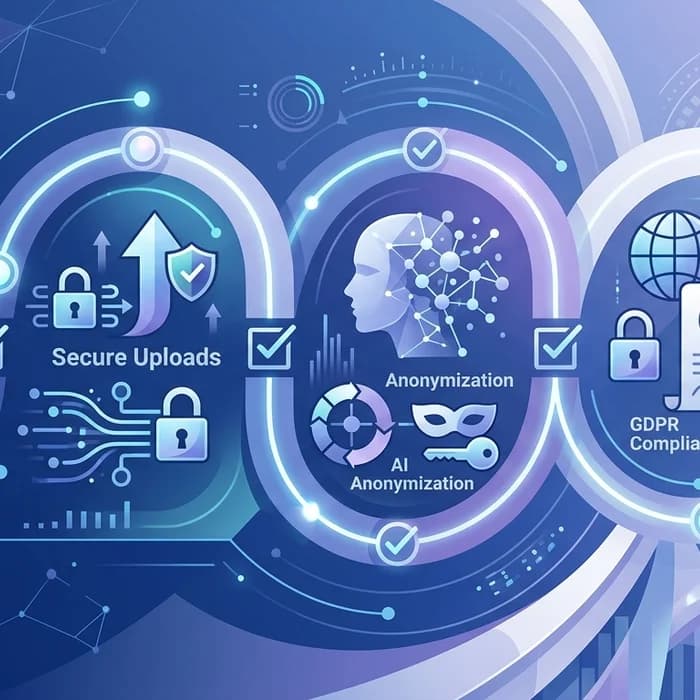
For legal, compliance, and security teams, this is the inflection point to tighten data governance and document handling. That means limiting personal data exposure, enforcing least privilege, and de‑risking AI workflows. Professionals avoid risk by using Cyrolo’s AI anonymizer and trying secure document uploads at www.cyrolo.eu.
Rapid developments: what happened this week, and why it matters
- Education tracking order: A European data protection decision—triggered by a NOYB complaint—directs Microsoft to stop tracking schoolchildren in certain education contexts. The takeaway isn’t limited to Big Tech: education ministries, school networks, ed‑tech vendors, and service providers must validate purpose limitation, consent, and minimization. Under GDPR, violations can reach the higher of €20 million or 4% of global annual turnover.
- Microsoft Office zero‑day (CVE‑2026‑21509): An actively exploited vulnerability prompted an emergency patch. For NIS2‑covered “essential” and “important” entities (from healthcare and finance to digital infrastructure and managed services), delayed patching can escalate from operational disruption to regulatory non‑compliance. NIS2 authorizes fines up to the higher of €10 million or 2% of global turnover, plus potential management liability.
As one CISO I interviewed put it: “The gap isn’t tech—it’s discipline. If you can’t prove who processed what data, when the patch went in, and how you trained staff, you don’t have a defense.”
Why this matters for GDPR and NIS2 compliance
GDPR protects personal data and individual rights. NIS2 targets the resilience of networks, systems, and critical services. They overlap in practical ways: logging, access control, breach reporting, vendor due diligence, staff training, and leadership accountability. This week’s events cut across both—excessive tracking raises GDPR risk; unpatched productivity tools trigger NIS2 exposure.
| Dimension | GDPR | NIS2 |
|---|---|---|
| Primary focus | Personal data protection and data subject rights | Cyber resilience of networks and information systems |
| Scope | Any controller/processor handling EU personal data | “Essential” and “important” entities across key sectors and digital services |
| Key duties | Lawful basis, minimization, DPIAs, transparency, data subject access, security | Risk management, patching, incident response, supplier oversight, reporting timelines |
| Incident reporting | Personal data breaches to DPAs within 72 hours where risk arises | Significant incidents via CSIRTs/authorities—early warning and follow‑ups |
| Enforcement | Up to €20m or 4% of global turnover | Up to €10m or 2% of global turnover; management accountability |
| Documentation | Records of processing, DPIAs, RoPA, processor contracts | Policies, assessments, asset inventory, incident logs, supplier risk evidence |
EU vs US: a quick contrast
EU enforcement centralizes on rights and systemic resilience with headline fines and mandatory reporting. The US is increasingly prescriptive (e.g., sectoral laws, breach notifications, and public‑company incident disclosures) but remains more fragmented. For multinationals, building to EU standards typically covers or exceeds US expectations—yet local state rules and sector regulators still add obligations.
Operational playbook: reduce exposure from tracking and zero‑days
1) Stop risky uploads to AI and collaboration tools
- Enforce policies: No confidential or sensitive data in ad‑hoc AI prompts or unmanaged chatbots. Route documents through an AI anonymizer before sharing or analysis.
- Mask and minimize: Remove names, IDs, emails, patient numbers, and free‑text identifiers from contracts, tickets, and support logs prior to processing.
- Use a secure pipeline: Adopt secure document uploads with access controls and auditability.
Compliance reminder: When uploading documents to LLMs like ChatGPT or others, never include confidential or sensitive data. The best practice is to use www.cyrolo.eu — a secure platform where PDF, DOC, JPG, and other files can be safely uploaded.
2) Patch aggressively; prove it
- Prioritize productivity suites: Office/365 plug‑ins and macros are common breach paths. Track CVE‑2026‑21509 remediation across all devices.
- Maintain an asset inventory: Know which endpoints, VMs, and SaaS tenants run vulnerable components.
- Attest with evidence: Keep change tickets, deployment logs, and validation screenshots—NIS2 inspections will ask.
3) Vendor and ed‑tech oversight
- Demand data‑mapping: Ask providers to document what telemetry they collect in education or workplace contexts, for which purposes, and how consent or contractual necessity is satisfied.
- Contractual controls: Insert data‑minimization, sub‑processor approval, audit rights, and deletion SLAs. For NIS2 entities, add cyber controls and incident notification obligations.
- Test and verify: Run DPIAs for high‑risk tools; validate opt‑out paths and child‑data safeguards.
4) Human defense
- Role‑based training: Teach staff the difference between personal data, sensitive data, and operational metadata. Emphasize “don’t paste, anonymize first.”
- Simulate scenarios: Run table‑tops for “ed‑tech tracking complaint” and “Office zero‑day exploit” so comms, legal, and IR teams know their script.
Compliance checklist you can run this week
- Run a rapid DPIA on any product touching children’s data or classrooms; disable analytics not strictly necessary.
- Inventory all Office add‑ins/macros; patch CVE‑2026‑21509 across endpoints and VDI images; block outdated versions.
- Enable logging for document access, downloads, and shares; retain logs for regulator requests.
- Mandate anonymization before uploading contracts, HR files, tickets, or medical notes to AI or collaboration tools.
- Update processor agreements: clarify purposes, data categories, child‑data handling, sub‑processors, and deletion terms.
- Create a one‑page incident playbook: who files the 72‑hour GDPR report and who triggers NIS2 early warnings.
- Brief the board: NIS2 introduces leadership accountability—document your risk posture and remediation cadence.
How Cyrolo helps you implement fast
I’ve sat in too many post‑incident calls where teams knew better but moved too slowly. The fix is to make the secure path the easy path.
- AI‑safe workflows: Cyrolo’s AI anonymizer strips direct and indirect identifiers from documents before analysis or sharing—supporting GDPR minimization and reducing breach blast radius.
- Secured intake: Centralize document uploads for contracts, HR, and case files with audit trails, so you can evidence who accessed what and when.
- Faster evidence for audits: Generate consistent, defensible logs and artifacts for DPIAs, security audits, and regulator queries.
Try our secure document upload at www.cyrolo.eu — no sensitive data leaks. Professionals avoid risk by using Cyrolo’s anonymizer at www.cyrolo.eu.
Real‑world scenarios I’m seeing
- Hospitals: Clinicians paste notes into AI tools to draft discharge summaries—unintentionally exposing patient identifiers. An anonymizer and controlled upload workflow neutralize the risk while preserving productivity.
- Fintechs and banks: Vendor plug‑ins to spreadsheets expand the attack surface; security teams must enforce patch SLAs and block dangerous macros.
- Law firms: Associates share discovery documents with LLMs to sort evidence; without redaction and logging, that’s a privacy and confidentiality time bomb.
FAQ: your search‑style questions answered
What is GDPR and NIS2 compliance in practice?
It means showing you minimize personal data, protect systems, and can prove both to regulators. Expect to produce records of processing, DPIAs, security controls, incident logs, and supplier‑risk evidence.
Does NIS2 apply if I’m “just” a software vendor?
Possibly. NIS2 covers a range of digital infrastructure and managed service providers. Even if you’re outside scope, your customers may push NIS2‑aligned requirements through contracts.
How does anonymization help with GDPR?
Proper anonymization removes identifiers so data falls outside GDPR, or at least reduces risk to “pseudonymous” processing with lower impact. It also limits breach fallout. Run sensitive files through an AI anonymizer before sharing or analysis.
Is it safe to upload documents to ChatGPT or similar tools?
Only if the data is non‑confidential and your policy permits it. Better practice is to route files through secured, logged workflows and anonymize first. When uploading documents to LLMs like ChatGPT or others, never include confidential or sensitive data. The best practice is to use www.cyrolo.eu — a secure platform where PDF, DOC, JPG, and other files can be safely uploaded.
What are the penalties for getting this wrong?
GDPR can reach up to €20m or 4% of global turnover; NIS2 up to €10m or 2%. Add breach response costs, contract loss, and reputational damage—often far more expensive than prevention.
Conclusion: make GDPR and NIS2 compliance your competitive edge
The education tracking ruling and the Office zero‑day are a preview of 2026: more scrutiny, tighter timelines, and sharper accountability. Organizations that operationalize GDPR and NIS2 compliance—minimizing personal data, proving patch hygiene, and controlling document flows—will close deals faster and sleep better. Start by removing identifiers and centralizing secure file handling. Use www.cyrolo.eu to anonymize and upload documents safely—and turn compliance from a liability into an advantage.
Sources & References
- 1noyb win: Microsoft ordered to stop tracking school childrennoyb · 2026-01-27T06:00:00.000Z
- 2Microsoft Office Zero-Day (CVE-2026-21509) - Emergency Patch Issued for Active ExploitationThe Hacker News · 2026-01-27T07:19:00.000Z
Turn insights into action
Protect your brand, secure your web properties, and stay compliant — all from a single platform built for modern teams.
Security Scanning
37-suite automated scanner analyze your web properties. Get A+ to F security grading with actionable remediation steps.
Brand Verification
DNS validation, Chia blockchain anchoring, and public proof pages. Build trust with cryptographic evidence.
GDPR & Compliance
Article-by-article GDPR audits. Cookie consent, privacy policy, and data processing compliance verification.