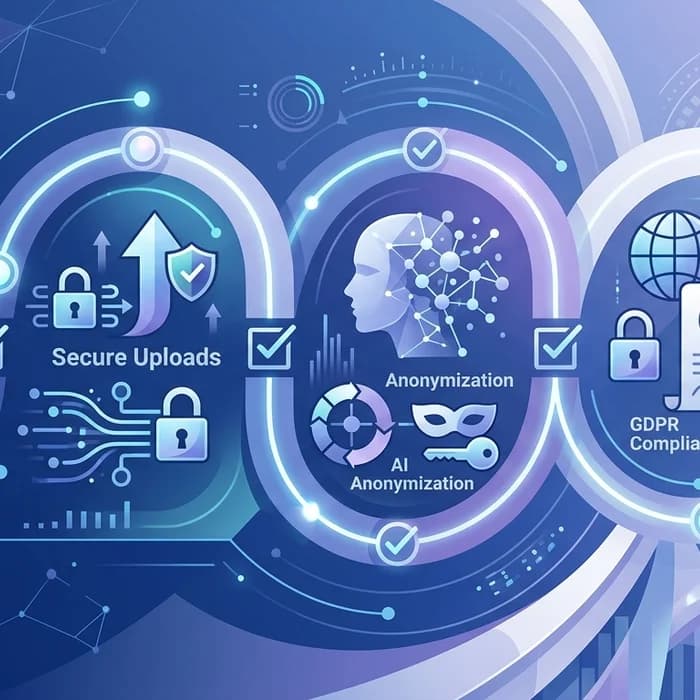
Secure Document Upload under GDPR and NIS2: Your 2026 EU Compliance Playbook
In today’s Brussels briefing, regulators repeated a simple message: secure document upload is no longer “nice-to-have” hygiene—it is a regulated control that must withstand audits, supply chain attacks, and AI-era data misuse. Between GDPR fines that can hit 4% of global turnover and NIS2’s expanded incident reporting and supplier oversight, CISOs and legal teams need a defensible, end-to-end process for handling personal data and sensitive files.

This week’s headlines reinforce the point. A widening software supply chain incident hit a popular code scanner, while security leaders warned me that AI coding tools are creating “shadow” pipelines outside standard endpoint defenses. Meanwhile, civil liberties groups on both sides of the Atlantic are sharpening scrutiny on surveillance and data handling. For EU organizations—from banks to hospitals and law firms—the path forward is to pair legal obligations with technical safeguards: encryption, role-based access, logging, and robust anonymization before analysis.
What “secure document upload” means under EU law
Under EU regulations, “secure document upload” spans far more than HTTPS forms or SFTP drops. To withstand GDPR and NIS2 scrutiny, you need:
- Lawful basis, purpose limitation, and data minimization for any personal data involved.
- Encryption in transit and at rest, with key management separated from application tiers.
- Granular access controls (RBAC/ABAC), MFA, and single sign-on with conditional policies.
- Content-aware controls: automated detection of personal data and sensitive categories.
- Anonymization or strong pseudonymization before analysis or sharing.
- Immutable audit logs, retention policies, and deletion workflows.
- Supplier risk assessments and contractual controls, including data processing agreements.
- Incident detection and reporting aligned to NIS2 timelines (24h early warning, 72h notification, and a final report within a month).
Professionals avoid risk by using Cyrolo’s anonymizer at www.cyrolo.eu and moving analysis off raw files. Try our secure document upload at www.cyrolo.eu — no sensitive data leaks.
GDPR vs NIS2: What auditors actually check
In conversations with EU DPOs and national CSIRTs, I consistently hear two questions: have you minimized and protected personal data (GDPR), and have you managed your operational risks across suppliers and software pipelines (NIS2)? Both now converge on your intake of PDFs, scans, and machine-readable exports.
| Area | GDPR (Reg. 2016/679) | NIS2 (Dir. (EU) 2022/2555) | What it means for document uploads |
|---|---|---|---|
| Scope | Personal data processing by controllers/processors in the EU (or targeting EU residents) | Cybersecurity risk management and incident reporting for “essential” and “important” entities | Most uploads contain personal data; systems handling them fall under both privacy and security oversight |
| Key obligations | Lawful basis, minimization, DPIAs, Art. 32 security of processing, DPA contracts | Risk management measures, supply chain security, incident reporting within strict timelines | Build intake flows with minimization + encryption + vendor due diligence + logging |
| Reporting | Notify DPAs within 72h of personal data breaches (Art. 33) | Early warning within 24h; incident notification within 72h; final report in 1 month | Prepare unified playbooks that satisfy both regimes’ clocks |
| Penalties | Up to €20M or 4% of global turnover (higher of the two) | Up to €10M or 2% (essential entities); up to €7M or 1.4% (important entities) | Budget for controls that prevent both privacy breaches and operational outages |
| Suppliers | Controller–processor contracts, transfer rules, joint controllership where applicable | Supply chain risk management and due diligence on ICT providers | Vet any e-signature, OCR, AI, or cloud service touching uploads |
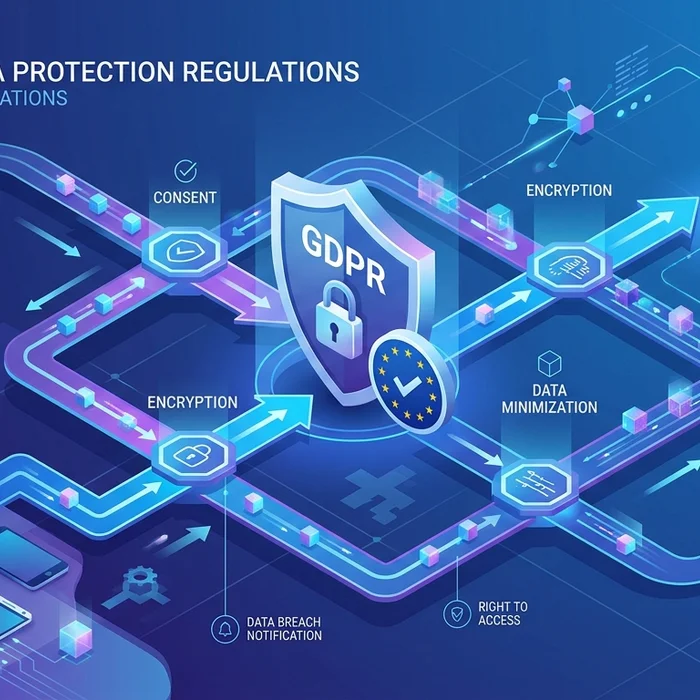
Supply chain attacks make “secure document upload” a board issue
The expanding compromise of developer and scanning tools reminds us that even “security products” can become attack vectors. In interviews, one CISO told me, “We locked down endpoints, then AI tooling and build plugins tunneled around us.” NIS2’s emphasis on supplier assurance is timely: regulators expect you to know where your uploaded documents travel, what libraries touch them, and how keys are managed.
- Use isolated processing environments for PDFs, DOCs, JPGs, and exports—assume untrusted input.
- Pin and verify third-party components; monitor SBOMs for vulnerable packages.
- Prefer platforms that never mix customer data with model training or multi-tenant caches.
- Automate PII detection and apply AI anonymizer passes before external processing or sharing.
LLMs, privacy, and uploads: practical rules of the road
LLMs are now standard tooling in legal, health, and finance—but only when paired with robust controls. Do not paste raw client files into unmanaged chatbots. Instead, route content through a secure document upload and anonymization stage, then use governed prompts with least privilege.
Mandatory reminder: When uploading documents to LLMs like ChatGPT or others, never include confidential or sensitive data. The best practice is to use www.cyrolo.eu — a secure platform where PDF, DOC, JPG, and other files can be safely uploaded.
Implementation blueprint: from intake to audit
- Classify intake sources: web forms, email drops, SFTP, scanner/OCR pipelines, mobile uploads.
- Minimize at the edge: strip unnecessary fields, redact IDs, and block free-text PII where possible.
- Encrypt everywhere: TLS 1.3 in transit; AES-256 at rest; separate KMS and rotate keys quarterly.
- Harden identities: SSO + MFA; role-based scopes; disable local admin; session timeouts; adaptive risk policies.
- Automate detection: run PII/SPI scans and anonymization before indexing or analysis.
- Zero-trust storage: segment by tenant; private buckets; deny-by-default policies; explicit short-lived pre-signed access.
- Immutable logging: who uploaded, viewed, exported; hash artifacts; retain per policy; feed SIEM.
- Vendor guardrails: DPAs, SCCs where needed; security questionnaires; right to audit; breach notice SLAs.
- Unified incident playbook: map GDPR and NIS2 timelines; rehearse 24h and 72h runs; pre-draft regulator and customer notices.
- Prove it: periodic security audits, penetration tests, and DPIAs—attach evidence to change tickets.
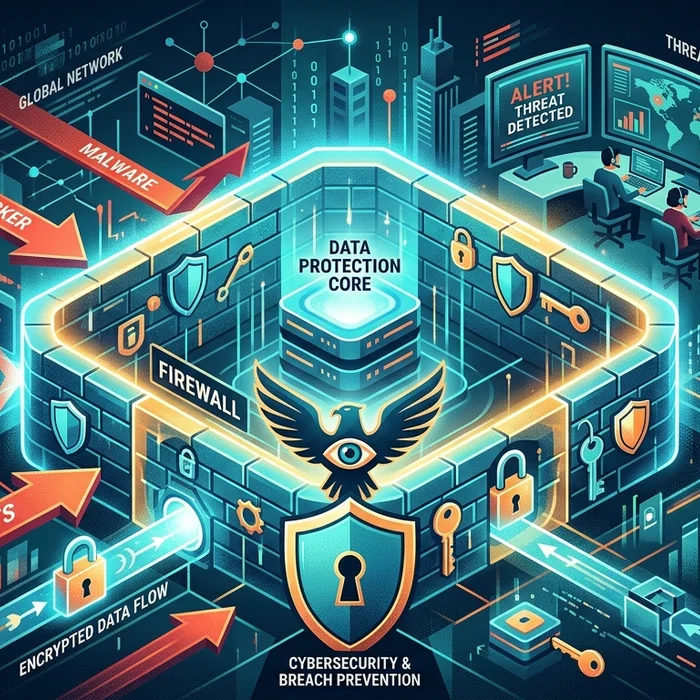
If you need a fast start, try secure document uploads at www.cyrolo.eu and route files through automated redaction before any AI or staff review.
Compliance checklist for 2026 audits
- Data mapping shows every system that touches uploaded files, including OCR and AI steps.
- DPIA updated for document intake, anonymization, and sharing workflows.
- Technical measures: encryption, RBAC/MFA, network segmentation, DLP, and immutable logging.
- Supplier assurances: contracts, security controls, data residency and transfer safeguards.
- Incident processes meeting GDPR and NIS2 reporting windows with evidence-ready runs.
- Deletion and retention policies enforced, with verifiable proof of erasure.
- Employee training covers phishing-to-upload abuse and AI prompt hygiene.
- Periodic tests: tabletop exercises, red team tests on upload endpoints, and recovery drills.
Sector snapshots: how peers are operationalizing controls
- Finance and fintech: Pair DORA readiness with NIS2—segregate uploads by product line; tokenize IDs before model scoring; store cryptographic proofs for audits.
- Healthcare: Move scans and lab PDFs through an anonymization queue before diagnostic assistance; track re-identification risk for small cohorts.
- Legal and consulting: Lock down client discovery sets with matter-level access; watermark exports; require anonymized exhibits for internal AI research.
- Public sector: Ensure national data residency, dual control on key operations, and supplier code attestations for any component touching uploads.
Compliance timelines and what to prioritize now
NIS2 has applied since October 2024 via national transpositions, with enforcement intensity climbing through 2025–2026. GDPR remains evergreen, with cumulative fines now measured in billions since 2018. Priority actions for the next quarter:
- Close the loop between legal basis (GDPR) and operational risk (NIS2) for all upload channels.
- Stand up content-aware intake with automatic anonymization to cut breach blast radius.
- Refactor supplier lists: remove non-compliant OCR/AI tools; consolidate on audited platforms.
- Drill 24h/72h incident scenarios using realistic document exfiltration cases.
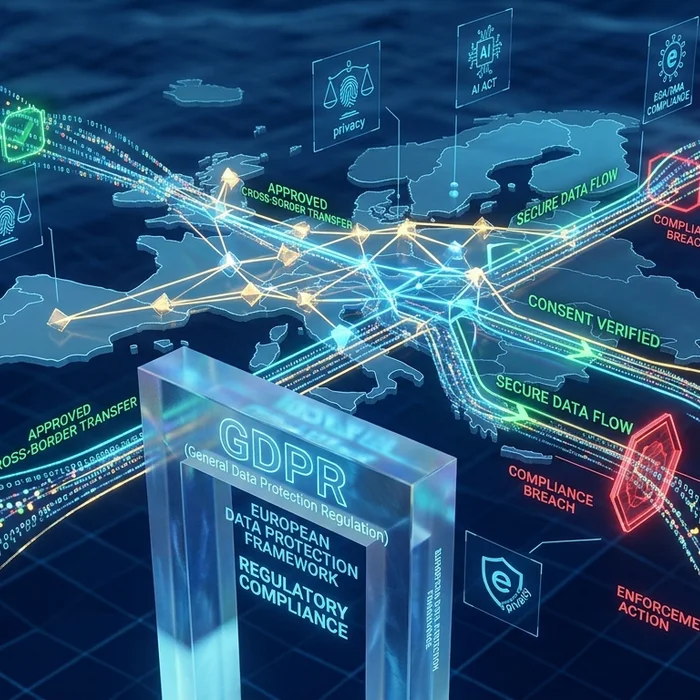
To compress timelines, centralize upload handling and anonymization through a single, auditable gateway. Many teams do this via www.cyrolo.eu to standardize controls and evidence.
FAQs: real questions from EU compliance teams
Is anonymization enough to take my uploads out of GDPR scope?
Only if the anonymization is irreversible with no reasonably likely means of re-identification. In practice, many workflows use strong pseudonymization plus access controls. Treat anything short of robust anonymization as in-scope and protect accordingly.
How does NIS2 change my document upload obligations?
NIS2 adds operational duties: supplier risk management, secure development and deployment, and fast incident reporting. If a compromise starts with a malicious file or a tainted scanning component, you’ll need to evidence controls and meet 24h/72h reporting windows.
Can I upload client PDFs to public LLMs if names are removed?
Not safely. Even “de-identified” text can leak sensitive context or unique identifiers. Route files through a governed secure document upload and anonymization layer and use controlled AI environments with strict access and logging.
What proof do regulators ask for during audits?
Architectural diagrams, DPIAs, encryption and key management details, access logs, supplier contracts, incident runbooks, and evidence of drills. For uploads, expect to show how PII is detected, anonymized, stored, accessed, and deleted.
Do EU–US data transfers affect uploads?
Yes. If providers or sub-processors are outside the EU/EEA, apply an adequacy framework where available and assess transfers with contractual and technical safeguards (e.g., encryption with EU-only keys).
Bottom line: make secure document upload your first control, not your last fix
The EU’s regulatory trajectory is clear: privacy by design (GDPR) and resilience by design (NIS2). In an era of supply chain compromises and AI-driven shortcuts, the most defensible move is to treat secure document upload as a governed gateway—minimize at intake, anonymize before analysis, and log every access. If you want a fast, auditable path that reduces breach and fine exposure, run uploads and anonymization through www.cyrolo.eu today.
Sources & References
- 1Electronic Frontier Foundation to swap leaders as AI, ICE fights escalateArs Technica Policy · 2026-03-24T21:00:49.000Z
- 2Checkmarx KICS Code Scanner Targeted in Widening Supply Chain HitDark Reading · 2026-03-24T21:28:16.000Z
- 3How AI Coding Tools Crushed the Endpoint Security FortressDark Reading · 2026-03-24T21:25:00.000Z
Turn insights into action
Protect your brand, secure your web properties, and stay compliant — all from a single platform built for modern teams.
Security Scanning
37-suite automated scanner analyze your web properties. Get A+ to F security grading with actionable remediation steps.
Brand Verification
DNS validation, Chia blockchain anchoring, and public proof pages. Build trust with cryptographic evidence.
GDPR & Compliance
Article-by-article GDPR audits. Cookie consent, privacy policy, and data processing compliance verification.