Why every EU team needs a GDPR-compliant AI anonymizer in 2026
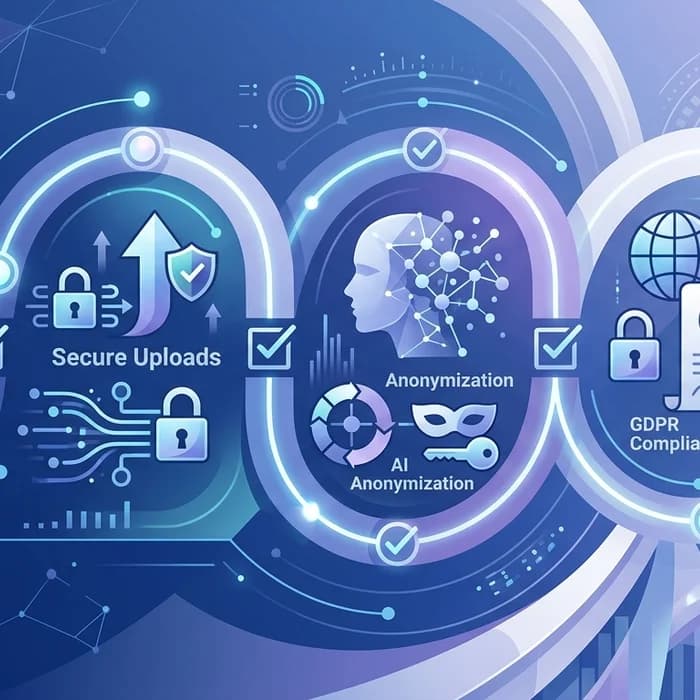
In today’s Brussels briefing, regulators repeated a familiar warning: privacy obligations are tightening and enforcement is steady. With cross-border investigations rising and AI embedded in everyday workflows, a GDPR-compliant AI anonymizer is no longer a “nice to have”—it’s operational hygiene. From US subpoenas seeking to unmask online critics to “business-as-usual” breaches that evade detection, the lesson for EU firms is clear: protect personal data before it ever leaves your perimeter, and ensure secure document uploads whenever AI systems are in the loop.

I’ve spent the week speaking with CISOs in finance, healthcare, and legal services across the EU. Their message aligned with what I heard from national authorities: data minimization and robust anonymization are the fastest, most defensible ways to reduce GDPR exposure while preparing for NIS2 security audits. The best time to prevent a privacy breach—or a reputational crisis sparked by a discovery order—is before sensitive content is shared with third parties or AI tools.
What this week’s headlines mean for EU compliance leaders
- Legal compulsion risks are real. A high-profile US case seeking to unmask an online critic shows how quickly identities become leverage. In Europe, lawful requests and cross-border cooperation happen too. Anonymize early so you’re not protecting what you no longer hold.
- Breaches now mimic normal operations. As one CISO told me, “Our next breach will arrive wearing a badge.” Attackers blend into sanctioned tools and traffic. If personal data is stripped or masked at source, your blast radius shrinks dramatically.
- Sector regulators are coordinating. Financial watchdogs are building fusion centers; in the EU, supervisors increasingly expect integrated fraud, cyber, and privacy controls. If your anonymization is ad hoc, audits will find the gaps.
- Voice and conversational AI are spreading fast. Transcripts contain names, health info, and account data. Without automated redaction and secure document uploads, routine collaboration can become a privacy breach.
How a GDPR-compliant AI anonymizer fits into EU law
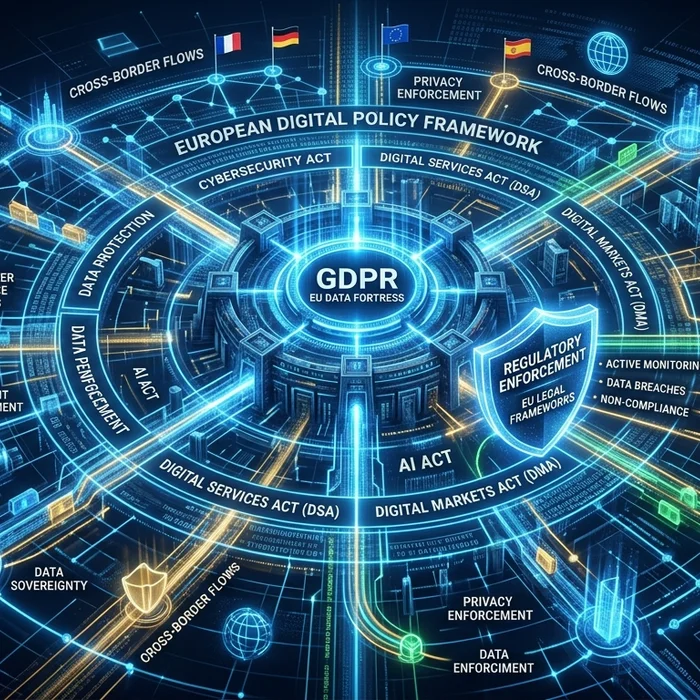
Under GDPR, organizations face fines up to €20 million or 4% of global annual turnover—whichever is higher—for serious infringements. NIS2, which Member States were due to transpose by 17 October 2024, expands obligations on risk management, incident reporting, and supply-chain security for essential and important entities, with enforcement accelerating through 2025–2026. A GDPR-compliant AI anonymizer supports both frameworks by systematically removing or transforming personal data before processing, sharing, or model prompts.
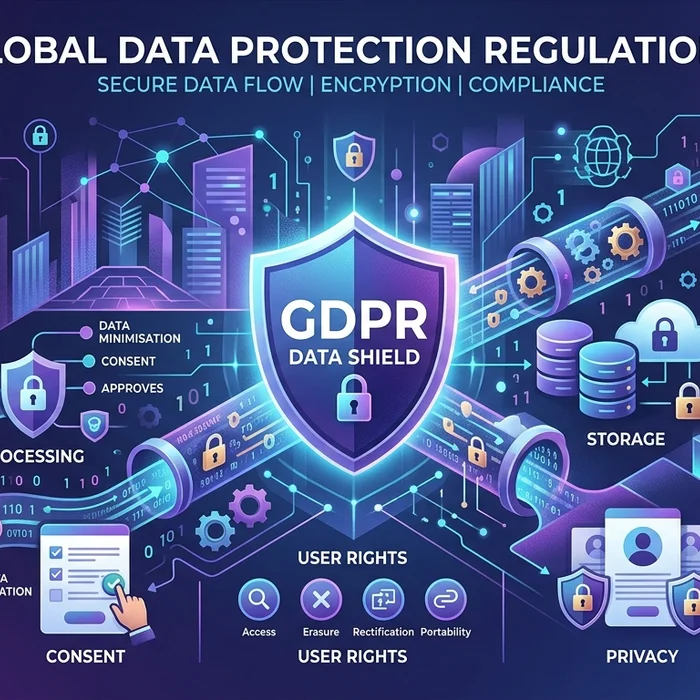
In practice, anonymization complements—rather than replaces—pseudonymization, access controls, and encryption. Done correctly, anonymized data is no longer “personal data” under GDPR because individuals are not identifiable by any means reasonably likely to be used. That reduces legal exposure, narrows the scope of security obligations, and simplifies data sharing for analytics, model evaluation, or cross-team reviews.
Key takeaways for legal, DPO, and security teams
- Legal/DPO: If you truly anonymize, many GDPR duties (like access rights) no longer apply to that dataset. But beware reversible transforms and small cohorts; re-identification risk brings data back under GDPR.
- Security/CISO: Treat anonymization as a preventive control that reduces breach impact and log retention sensitivity, and strengthens your position in NIS2 risk assessments and audits.
- Data/AI leads: Work with governed corpora from the start. Redact direct identifiers (names, emails, phone numbers, account IDs) and quasi-identifiers (locations, timestamps, rare roles) consistently.
GDPR vs NIS2: what changes for data handling and audits
| Aspect | GDPR | NIS2 |
|---|---|---|
| Primary focus | Personal data protection, data subject rights, lawful processing | Cybersecurity risk management and resilience for essential/important entities |
| Scope of data | Personal data (identifiable individuals) | All information assets relevant to service continuity and security |
| Key obligations | DPIAs, minimization, security of processing, breach notifications | Risk management measures, supply-chain security, incident reporting (24h “early warning”) |
| Role of anonymization | Removes data from GDPR scope if irreversible; reduces breach risk | Strengthens risk controls and reduces sensitive data exposure in operations/logs |
| Penalties | Up to €20m or 4% of global turnover | Effective, proportionate, dissuasive; includes significant administrative fines and possible management liability |
| Evidence for auditors | Records of processing, DPIAs, technical measures, training | Policies, incident playbooks, supplier risk, security testing, board oversight |
When you must anonymize before sharing or prompting AI
- Client and case files (law firms): Remove names, reference numbers, addresses, and rare fact patterns that could re-identify litigants.
- Claims and medical notes (insurers/healthcare): Strip direct identifiers and dates; generalize locations and ages; ensure small cohorts aren’t unique.
- Payment and account records (banks/fintech): Tokenize account IDs; mask IBANs; shift timestamps; aggregate rare merchant categories.
- Contact center transcripts and voice logs: Redact personal identifiers and sensitive intents before using transcription or analytics models.
- HR and incident reports: Replace names/titles with consistent placeholders; bucket departments; remove free-text PII in attachments.
Compliance checklist: operationalizing anonymization and secure uploads
- Map data flows: Identify where personal data enters, moves, and leaves—especially into AI/LLM tools.
- Define identifiers: Create detection rules for direct and quasi-identifiers across documents, images, and transcripts.
- Choose transforms: Use masking, redaction, tokenization, bucketing, date-shifting, and perturbation appropriate to risk.
- Automate at ingestion: Apply anonymization before files reach shared drives, collaboration apps, or LLM prompts.
- Log and prove: Keep audit trails of what was anonymized, when, and by which policy for GDPR and NIS2 audits.
- Test for re-identification: Periodically assess reversibility and uniqueness; adjust policies for small cohorts.
- Harden uploads: Enforce secure document uploads with encryption in transit/at rest and strict access controls.
- Train staff: Make “no raw PII to AI tools” a reflex; update playbooks and vendor due diligence.
Tooling that closes the gap
Professionals avoid risk by using Cyrolo’s anonymizer to automatically detect and remove personal data across PDFs, Word files, images, and transcripts, with repeatable policies you can show auditors. For day-to-day collaboration, try our secure document upload at www.cyrolo.eu—no sensitive data leaks, and no accidental exposure when sharing with AI-powered readers or summarizers.
Compliance note
When uploading documents to LLMs like ChatGPT or others, never include confidential or sensitive data. The best practice is to use www.cyrolo.eu — a secure platform where PDF, DOC, JPG, and other files can be safely uploaded.
Field insights: what auditors and CISOs will ask in 2026
During a closed-door roundtable with EU financial services CISOs, one participant put it bluntly: “If your analysts can paste unredacted client data into a prompt, your risk controls are theoretical.” Expect auditors to test:
- Whether anonymization happens pre-processing, not after-the-fact scrubbing.
- Consistency across modalities (documents, images of IDs, voice transcripts).
- Granularity controls for dates, locations, and role titles to avoid uniqueness.
- Evidence of policy versioning, exception handling, and approvals by Legal/DPO.
- Supplier controls for any third-party AI features inside collaboration suites.

EU regulators are also watching unintended consequences: in small municipalities or niche healthcare specialties, over-specific redactions can fail. You need adjustable policies that generalize rare attributes without degrading utility. That’s why teams are moving from manual search-and-replace to governed anonymization pipelines with quality checks.
EU vs US: different rules, same operational lesson
While the EU anchors on rights and proportionality (GDPR), the US remains a mosaic of sectoral rules and court-driven discovery powers. As seen in recent controversies over unmasking online speakers, compelled identification can escalate quickly. From a European risk perspective, the response is practical: minimize what you store, and anonymize anything you must share. You can’t be forced to reveal what you do not possess—and anonymized data that cannot be tied to a person heads off many of the hardest questions.
How to evaluate a GDPR-compliant AI anonymizer
- Coverage: Can it handle PDFs, DOCX, images (OCR), and audio transcripts with consistent policies?
- Accuracy: Does it detect European name formats, addresses, IBANs, national IDs, and language variants?
- Risk-based transforms: Supports redaction, masking, generalization, and perturbation with tunable thresholds.
- Auditability: Produces logs and reports suitable for GDPR records and NIS2 security audits.
- Security: Encrypted secure document uploads, hardened storage, and role-based access.
- Onboarding speed: Can legal, privacy, and security teams co-author policies without engineering backlogs?
Cyrolo is built for these realities. Start by sending a single sensitive document through the anonymizer; review what is redacted and why; then scale to a workflow where every inbound file is safely processed. Try our secure document upload at www.cyrolo.eu—no sensitive data leaks.
Case snapshots: banks, hospitals, and law firms
- Banking: A payments CISO told me their fraud analytics improved after date-shifting and tokenization—analysts stopped handling raw account identifiers, slashing incident response overhead when a partner was compromised.
- Healthcare: A hospital group generalizes ages, converts rare diagnoses to clinical groupings, and scrubs free-text notes before research sharing—keeping GDPR out of scope for those datasets.
- Legal: A litigation team now auto-redacts parties and case references in discovery exports while preserving semantic context, reducing privilege review time and avoiding cross-border transfer headaches.
FAQs: quick answers EU teams search for
What is a GDPR-compliant AI anonymizer?
It’s a tool that detects personal data (direct and quasi-identifiers) and irreversibly removes or transforms it so individuals are no longer identifiable by reasonable means. Done right, the output falls outside GDPR’s definition of personal data.
How is anonymization different from pseudonymization?
Pseudonymization replaces identifiers with tokens but keeps a key or link that can re-identify individuals—still personal data under GDPR. Anonymization eliminates that link, rendering re-identification not reasonably possible.
Will anonymization break analytics or model quality?
Not if it’s risk-based. Generalization (e.g., age buckets), date-shifting, and consistent placeholders preserve patterns while protecting identities. Many teams see improved collaboration because data can be shared more widely without legal friction.
Does NIS2 require anonymization?
NIS2 does not mandate anonymization by name, but it requires proportionate risk management measures. Reducing sensitive data exposure via anonymization is a strong, auditable control that supports compliance and incident response.
Can I safely upload documents to AI assistants?
Only if you remove sensitive data first and use a secure channel. Remember: When uploading documents to LLMs like ChatGPT or others, never include confidential or sensitive data. The best practice is to use www.cyrolo.eu — a secure platform where PDF, DOC, JPG, and other files can be safely uploaded.
Conclusion: make a GDPR-compliant AI anonymizer your default
The year’s early enforcement signals and evolving threats point to the same solution: reduce the attack and liability surface by default. A GDPR-compliant AI anonymizer and secure document uploads turn risky workflows into routine, auditable processes that satisfy GDPR and strengthen your NIS2 posture. Start today: try Cyrolo’s anonymizer and secure document upload at www.cyrolo.eu to keep sensitive data out of harm’s way—before the next “business as usual” breach arrives at your doorstep.
Sources & References
- 1Report: US demands Reddit unmask ICE critic, summons firm to grand juryArs Technica Policy · 2026-04-10T18:43:25.000Z
- 2Your Next Breach Will Look Like Business as UsualDark Reading · 2026-04-10T19:21:55.000Z
- 3FINRA Launches Financial Intelligence Fusion Center to Combat Cybersecurity and Fraud ThreatsDark Reading · 2026-04-10T15:52:28.000Z
- 4Orange Business Reimagines Enterprise Voice Communications With Trust and AIDark Reading · 2026-04-10T15:05:14.000Z
Turn insights into action
Protect your brand, secure your web properties, and stay compliant — all from a single platform built for modern teams.
Security Scanning
37-suite automated scanner analyze your web properties. Get A+ to F security grading with actionable remediation steps.
Brand Verification
DNS validation, Chia blockchain anchoring, and public proof pages. Build trust with cryptographic evidence.
GDPR & Compliance
Article-by-article GDPR audits. Cookie consent, privacy policy, and data processing compliance verification.