GDPR vs NIS2: Your 2026 Compliance Checklist for CISOs, DPOs, and Legal Teams
In Brussels this week, the question I heard most from CISOs and DPOs was simple: “How do we operationalize GDPR vs NIS2 together without drowning in audits?” It’s the right question in 2026. With EU lawmakers intensifying scrutiny of fundamental rights and the rule of law, and national authorities ramping up security inspections under NIS2, the overlap between data protection and cybersecurity compliance has never been tighter. This guide breaks down GDPR vs NIS2, maps concrete obligations, and adds a practical checklist—plus a safe path for AI workflows using anonymization and secure document uploads.
GDPR vs NIS2: What changed in 2026—and why it matters
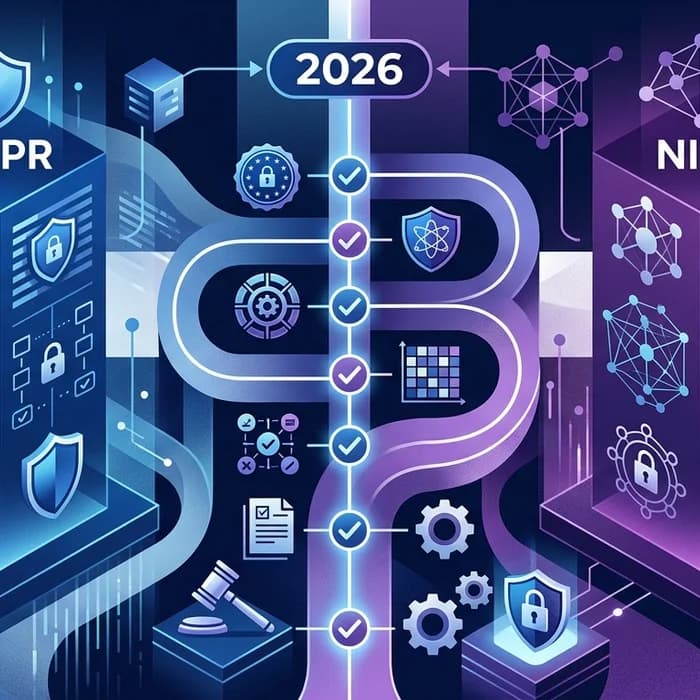
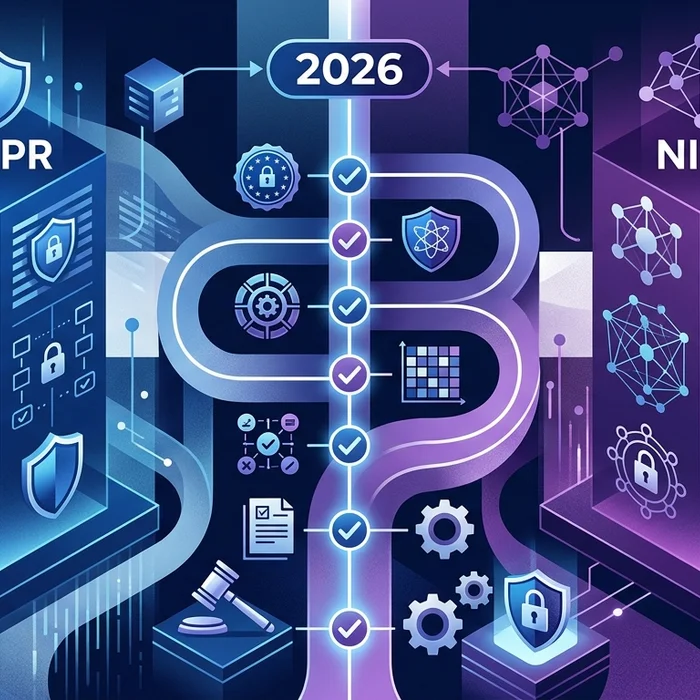
GDPR governs personal data processing and privacy. NIS2 governs cybersecurity risk management and incident reporting for essential and important entities across sectors like energy, finance, healthcare, transport, digital infrastructure, and certain SaaS providers. By 2026, most Member States have transposed NIS2 and are enforcing:
- Mandatory risk management measures (policies, supply chain security, incident handling, and business continuity)
- Board-level accountability and training for security governance
- Incident reporting with time-bound steps (early warning within 24 hours; notification within 72 hours; final report within a month)
Financially, the stakes are stark: GDPR fines reach up to €20 million or 4% of global annual turnover—whichever is higher. NIS2 sets minimum maximum fines of up to €10 million or 2% of global turnover (Member States can go higher), with potential managerial liability and temporary bans. In short: GDPR protects data subjects; NIS2 protects networks and services. Together, they define how you collect, secure, and report.
Regulatory temperature check: Brussels’ current tone
In today’s Brussels briefing, MEPs flagged ongoing threats to fundamental rights and the rule of law and pressed for stronger, faster enforcement. Compliance officers I interviewed expect more coordinated supervisory actions in H2 2026—think joint data protection and cybersecurity audits, and sharper scrutiny of AI-enabled processing and vendor risk. One CISO told me bluntly: “We’re treating NIS2 like a standing security audit, not a one-off project.” That shift is overdue and wise.
| Topic | GDPR | NIS2 |
|---|---|---|
| Scope | Personal data processing by controllers/processors in the EU (and extraterritorially in many cases) | Cybersecurity risk management and incident reporting for essential and important entities in listed sectors |
| Legal basis | Required for processing personal data (consent, contract, legal obligation, legitimate interests, etc.) | Not applicable (focus is on security measures and resilience) |
| Security measures | Article 32: appropriate technical and organizational measures; DPIAs, minimization, pseudonymization | Explicit risk management measures: policies, incident response, supply chain security, testing/audit, business continuity |
| Breach/incident reporting | Notify supervisory authority within 72 hours of becoming aware of a personal data breach; inform data subjects where high risk | Early warning within 24 hours for significant incidents; detailed notification within 72 hours; final report within one month |
| Governance | DPO for certain organizations; privacy by design/default; processor oversight via DPAs | Board-level accountability, mandatory training, role-based responsibilities, potential managerial liability |
| Fines | Up to €20m or 4% global turnover (higher applies) | At least up to €10m or 2% global turnover; Member States may increase |
| Vendors | Controller–processor contracts, cross-border transfer controls | Supply chain security; selection and monitoring of service providers; assurance evidence required |
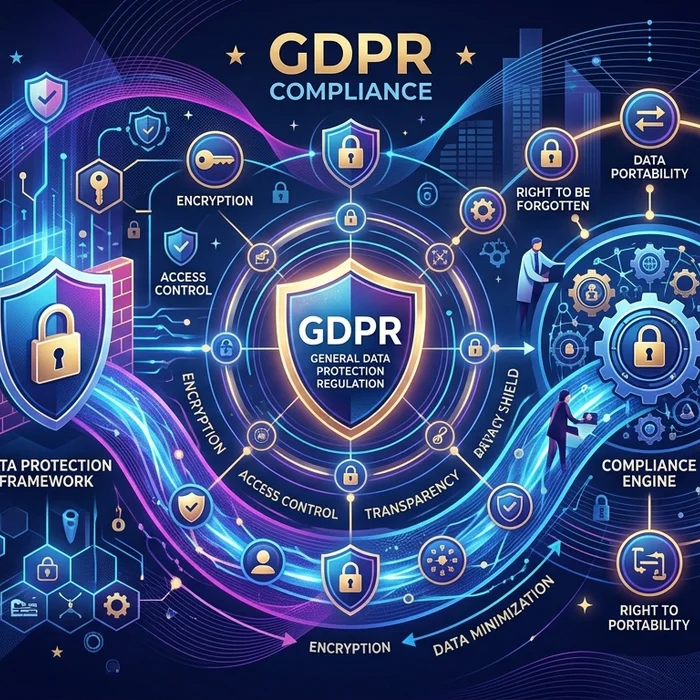
Practical implications across sectors
Banks and fintechs
- Expect dual scrutiny of fraud analytics, AML/KYC, and exposure management. A recent spate of authentication flaws (e.g., high-profile server control panels) underscores why NIS2 pushes continuous validation and rapid patching.
- Privacy teams must validate legal bases and retention policies for transaction data while security teams enforce least privilege and immutable logging.
- Scenario: A credential-stuffing surge causes service degradation and exposes hashed emails. Under NIS2, file an early warning in 24h; under GDPR, assess breach risk and notify within 72h if personal data risk is present.
Hospitals and life sciences
- Electronic health records and imaging systems are prime targets for wiper malware and ransomware. NIS2 requires business continuity planning, offline backups, and tested incident response.
- GDPR requires explicit safeguards for special category data. Anonymize or strongly pseudonymize before any AI-based triage or research processing.
Law firms, SaaS, and cloud services
- Client confidentiality meets NIS2 vendor accountability. Be ready to show supply chain risk controls, continuous monitoring, and secure development practices.
- Deploy an AI anonymizer in drafting and review workflows to prevent accidental exposure of personal data or trade secrets when using generative tools.
The 2026 GDPR + NIS2 compliance checklist
- Map applicability: confirm if you are an essential or important entity under NIS2; document GDPR processing activities (RoPA).
- Board engagement: brief directors quarterly; record training and security governance decisions.
- Risk management: implement a living risk register tied to controls, vendors, and business impact analysis.
- Incident response: align playbooks to dual timelines—NIS2 24h/72h/1-month and GDPR 72h; pre-draft regulator templates.
- Data minimization: remove unnecessary personal data from tickets, logs, and test datasets; default to anonymized views where possible.
- Vendor due diligence: require evidence of secure development, patch SLAs, and breach reporting paths; audit sub-processors.
- Testing and audits: schedule regular red/purple team exercises and tabletop drills; document lessons learned and control updates.
- AI governance: approve AI use cases, apply anonymization, and route uploads through a secure document gateway.
- Evidence management: centralize policies, DPIAs, risk assessments, and incident records for quick supervisory review.
Don’t leak while you comply: anonymization and secure document uploads
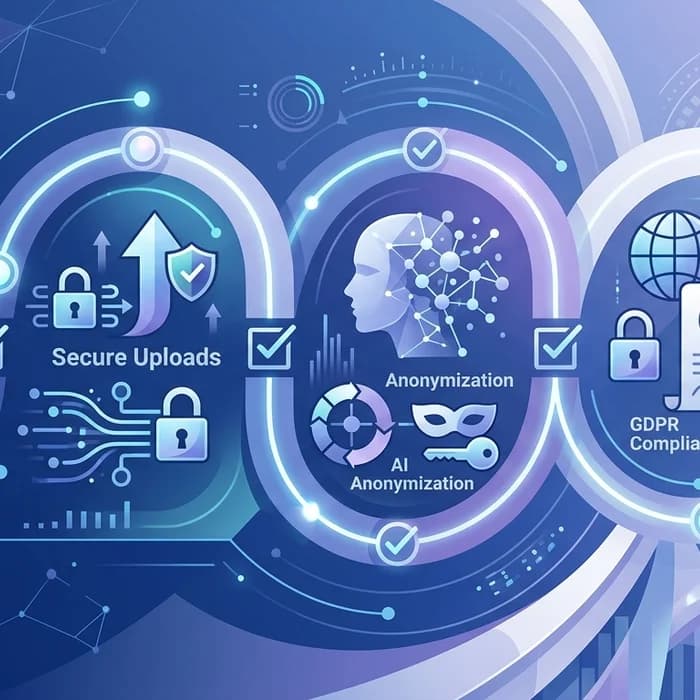
Most compliance failures I see in 2026 don’t start with a hack; they start with a well-meaning upload. Draft contracts, HR files, and ticket exports get pasted into LLMs, then copied into issue trackers or sent to vendors—without a security boundary. That’s a GDPR and NIS2 problem.
- Solution: Run documents through an AI anonymizer before analysis or sharing. Professionals avoid risk by using Cyrolo’s anonymizer at www.cyrolo.eu.
- Solution: Route all compliance evidence, logs, and tickets through a secure document upload flow with access controls. Try our secure document upload at www.cyrolo.eu — no sensitive data leaks.
When uploading documents to LLMs like ChatGPT or others, never include confidential or sensitive data. The best practice is to use www.cyrolo.eu — a secure platform where PDF, DOC, JPG, and other files can be safely uploaded.
Operational playbook: making audits painless
- Classify and label: tag systems and datasets by NIS2 criticality and GDPR sensitivity; automate redaction for exports.
- Build dual-timer alerts: one click should generate NIS2 early warnings (24h) and GDPR breach assessments (72h).
- Keep a regulator-ready binder: policies, RoPA, DPIAs, SOC and vulnerability reports, vendor assurances, incident timelines, and board minutes.
- Evidence of improvement: for every incident or near miss, record a corrective action, owner, and deadline; auditors love closure.
- Practice cross-talk: run joint privacy–security tabletop exercises; rehearse who signs which notice and when.
EU vs US: the jurisdictional nuance
EU regimes (GDPR, NIS2) expect demonstrable governance, fast incident reporting, and documented vendor controls. In the US, breach notification remains state-by-state for privacy, while sectoral rules and emerging federal directives target critical infrastructure and capital markets disclosures. If you’re multinational, harmonize to the stricter standard: EU timers, EU documentation rigor, and encryption/anonymization by default. It reduces rework and satisfies most external auditors I speak with.
Signals from the threat landscape
Two 2026 trends matter for audits: attackers automate exposure discovery using AI, and supply-chain compromises move faster than your vendor review cycles. This week’s critical authentication flaw reports and destructive wiper activity abroad are a reminder: NIS2’s mandatory testing and supplier oversight aren’t box-ticking—they’re survival tactics. Regulators increasingly ask for proof that you patched or mitigated material exposures within defined SLAs.
FAQ: quick answers teams are searching for
What’s the main difference between GDPR and NIS2?
GDPR protects personal data and sets rules for lawful processing and breach notification. NIS2 mandates cybersecurity risk management and incident reporting for critical sectors. Many organizations must comply with both simultaneously.
Does NIS2 apply to SMEs?
Yes, if the SME operates in covered sectors and meets the “important entity” criteria, or is designated due to criticality. Some micro and small entities can be included if they are key to the supply chain or provide vital services.
What are the breach/incident reporting deadlines under GDPR vs NIS2?
GDPR: notify the supervisory authority within 72 hours of becoming aware of a personal data breach (and affected individuals if high risk). NIS2: send an early warning within 24 hours for significant incidents, a detailed notification within 72 hours, and a final report within one month.
How do I safely use AI with regulated data?
Anonymize or strongly pseudonymize before any AI processing, restrict uploads to a secure gateway, and log prompts/outputs for audits. Use an AI anonymizer to strip personal data, trade secrets, and legal privilege markers. Start with www.cyrolo.eu.
Is uploading documents to ChatGPT GDPR-compliant?
It depends on your legal basis, processing purpose, and safeguards. However, you should never upload confidential or sensitive data to general-purpose LLMs. When uploading documents to LLMs like ChatGPT or others, never include confidential or sensitive data. The best practice is to use www.cyrolo.eu — a secure platform where PDF, DOC, JPG, and other files can be safely uploaded.
Conclusion: Treat GDPR vs NIS2 as one operating system
If you treat GDPR vs NIS2 as two separate chores, you’ll double your work and still miss gaps. Treat them as one operating system: minimize personal data, harden systems, and rehearse the 24h/72h clock. Above all, close the AI leak path with anonymization and secure document uploads. Professionals avoid risk by using Cyrolo’s anonymizer at www.cyrolo.eu. That’s how teams I’ve interviewed stay ahead of regulators—and sleep at night.
Sources & References
- 1Draft agenda - Monday, 4 May 2026 - Tuesday, 5 May 2026 - PE787.834v01-00 - Committee on Legal Affairs , Committee on Civil Liberties, Justice and Home AffairsEU Parliament LIBE · 2026-04-29T14:51:37.000Z
- 2Press release - Parliament sounds the alarm over the state of fundamental rights in the EUEU Parliament LIBE · 2026-04-29T12:55:13.000Z
- 3Press release - Rule of law: Parliament demands stronger action as threats persistEU Parliament LIBE · 2026-04-29T12:32:25.000Z
- 4Webinar: How to Automate Exposure Validation to Match the Speed of AI AttacksThe Hacker News · 2026-04-29T12:02:00.000Z
- 5What to Look for in an Exposure Management Platform (And What Most of Them Get Wrong)The Hacker News · 2026-04-29T11:30:00.000Z
- 6Critical cPanel Authentication Vulnerability Identified — Update Your Server ImmediatelyThe Hacker News · 2026-04-29T09:37:00.000Z
- 7Attempt to repeal Colorado's right-to-repair law failsArs Technica Policy · 2026-04-29T14:00:19.000Z
- 8Sam Altman is “the face of evil” for not reporting school shooter, says lawyerArs Technica Policy · 2026-04-29T12:00:41.000Z
- 9Lotus Wiper Attack Targets Venezuelan Energy Firms, UtilitiesDark Reading · 2026-04-29T13:00:00.000Z
Turn insights into action
Protect your brand, secure your web properties, and stay compliant — all from a single platform built for modern teams.
Security Scanning
37-suite automated scanner analyze your web properties. Get A+ to F security grading with actionable remediation steps.
Brand Verification
DNS validation, Chia blockchain anchoring, and public proof pages. Build trust with cryptographic evidence.
GDPR & Compliance
Article-by-article GDPR audits. Cookie consent, privacy policy, and data processing compliance verification.