NIS2 compliance in 2025: Lessons from password manager and supply chain breaches
In Brussels this week, the message from regulators was blunt: NIS2 compliance is now a board-level obligation, not a paperwork exercise. The timing is no accident. Fresh attacks against major password managers and leaks in a popular code marketplace have shown how a single compromised tool can cascade across thousands of European organizations. For CISOs, DPOs, and compliance leads, the 2025 reality is a tighter regulatory net across EU regulations—NIS2 and GDPR—plus higher expectations on supply chain risk management, data protection, and secure document workflows.
Why NIS2 compliance just got harder in 2025
Two developments raised the stakes. First, targeted campaigns against password managers exposed a painful truth: even “security tools” can become stepping stones for attackers. Second, issues in the developer ecosystem—like marketplace extensions and dependencies—have pushed software supply chain risk to the top of supervisory agendas.
- Attackers aim for widespread leverage: breach one tool, pivot to many customers.
- Credentials, tokens, and personal data become collateral damage, triggering GDPR obligations.
- Incident timelines compress: you’ll need early warning, triage, and reporting in hours, not days.
In today’s Brussels briefing, regulators emphasized supply chain due diligence and continuous monitoring as cornerstones for 2025 inspections. A CISO I interviewed put it plainly: “Assume one of your trusted tools will get popped. Your job is to make sure it doesn’t take you down with it—and that you can prove it to your regulator.”
What NIS2 requires in practice
NIS2 applies across “essential” and “important” entities in sectors from finance and healthcare to digital infrastructure and managed services. Core expectations include:
- Risk management: policies for identity and access, encryption, secure development, vulnerability management, logging, and backup/BCP.
- Supply chain security: vendor risk assessments, contractual security clauses, and evidence of continuous oversight.
- Incident reporting: early warning within 24 hours, an update within 72 hours, and a final report within one month for “significant” incidents.
- Governance and accountability: management oversight, training, and potential liability for serious negligence.
- Detection and response: centralized logging, correlation, and documented playbooks.
GDPR vs NIS2: who does what?
Organizations often confuse the two. GDPR is about personal data, while NIS2 is about service resilience and cybersecurity risk. In reality, you’ll need to handle both—fast.
| Topic | GDPR | NIS2 |
|---|---|---|
| Scope | Personal data processing | Network and information systems of essential/important entities |
| Who it applies to | Controllers and processors | Sector-based entities (energy, finance, health, digital providers, MSPs, etc.) |
| Core obligations | Lawful basis, data minimization, DPIAs, rights, security of processing | Risk management, supply chain controls, incident reporting, governance |
| Incident reporting timelines | Notify supervisory authority within 72 hours of personal data breach (when required) | Early warning in 24 hours, incident notification in 72 hours, final report in 1 month |
| Fines | Up to €20M or 4% global turnover | Up to €10M or 2% global turnover (member state nuances apply) |
| Data vs. service focus | Protection of personal data | Continuity and resilience of essential/important services |
| Vendor/supply chain | Processor due diligence and contracts | Explicit supply chain risk management and oversight |
| Management liability | Accountability principle | Management oversight and possible personal liability for serious failings |
| International transfers | SCCs/adequacy, transfer risk assessments | Not a transfer regime; focuses on security posture and incident response |
| Evidence/logging | Demonstrate compliance with records and DPIAs | Demonstrate operational security, logging, and exercised playbooks |
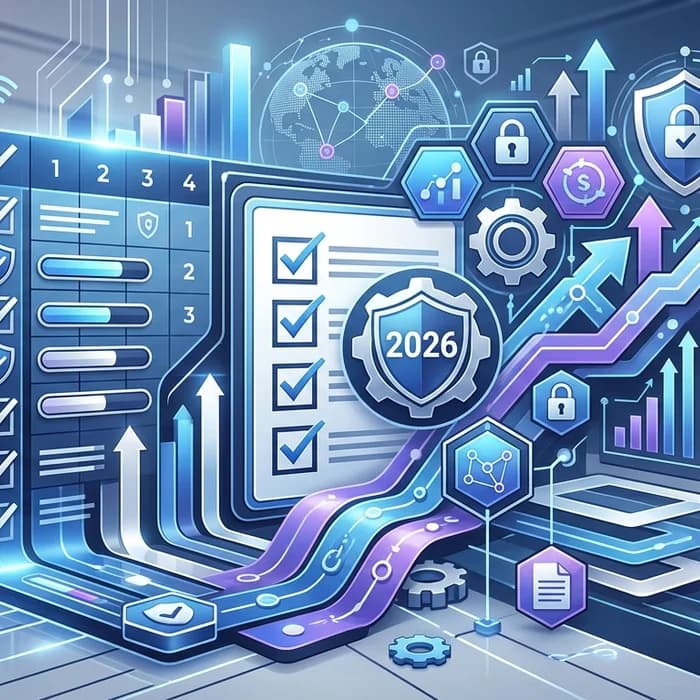
NIS2 compliance checklist for CISOs and DPOs
- Map applicability: confirm entity classification (essential/important) and services in scope.
- Update policies: MFA by default, least privilege, encryption at rest/in transit, secure development lifecycle.
- Supply chain controls: tier vendors; require incident SLAs, logging, SBOMs, and third-party attestations.
- Detection and logging: centralize logs for endpoints, cloud, identity, and SaaS; define retention for forensics.
- Incident reporting playbook: 24h/72h/30-day templates; regulator contact trees; cross-border coordination.
- Business continuity: tested backups (immutable/offline), tabletop exercises, recovery objectives.
- GDPR alignment: DPIAs for high-risk processing; breach triage integrating personal data assessment.
- Training and accountability: board briefings, role-based training, named owners for each control domain.
- Evidence management: secure, access-controlled repositories for logs, reports, and legal holds.
Handling personal data under GDPR while meeting NIS2
Many “security” workflows inadvertently collect personal data: logs with usernames, customer IDs, or even health and financial details in tickets. If you are centralizing evidence for audits or breach reports, apply data minimization by default and strip out identifiers where possible.
- Minimize before you share: redact names, emails, and IDs from screenshots and PDFs sent to vendors.
- Use secure transfer: avoid sending evidence via email; use access-controlled repositories with audit trails.
- Segment responders: grant least privilege for incident rooms; log and review access.
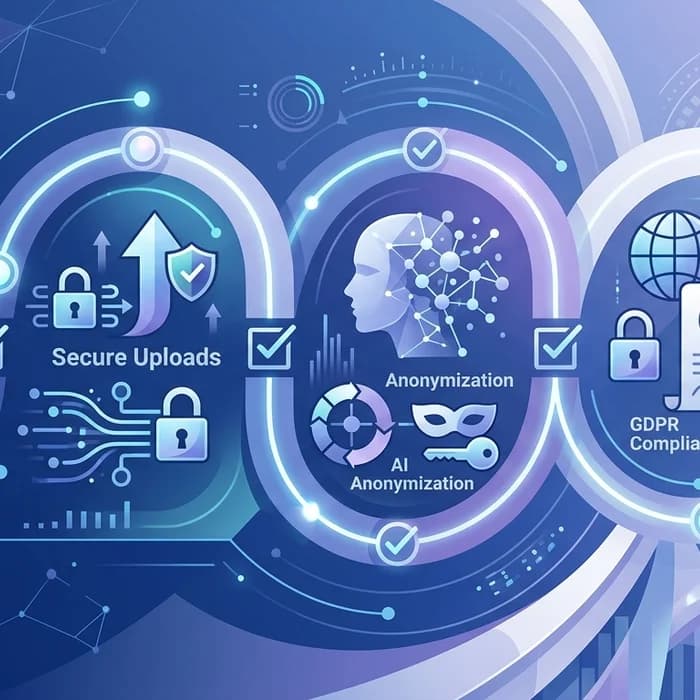
Professionals avoid risk by using Cyrolo’s anonymization to remove personal data from evidence packets while preserving forensic value. It allows teams to meet GDPR’s data protection principles and NIS2’s reporting timelines without accidental leakage.
Safe AI and document workflows—without the privacy headache
AI assistants are increasingly used to summarize logs, draft incident reports, or review policies. That creates a high-risk moment: uploading regulated content to external LLMs. The fix is simple—control the channel and minimize the data.
- Scrub first: run files through an AI anonymizer to remove names, emails, addresses, client numbers, and free-text PII.
- Then review: use a secure document workflow so only the minimum necessary text reaches any AI tool.
- Keep an audit trail: record who uploaded what, when, and to which system for compliance audits.
Try our AI anonymizer and secure document upload at www.cyrolo.eu—no sensitive data leaks, just faster, safer workflows for CISOs, legal, and audit teams.
Compliance reminder: When uploading documents to LLMs like ChatGPT or others, never include confidential or sensitive data. The best practice is to use www.cyrolo.eu — a secure platform where PDF, DOC, JPG, and other files can be safely uploaded.
Costs, fines, and timelines you should track
- NIS2 fines: up to €10 million or 2% of worldwide annual turnover, with member-state-specific enforcement approaches now active in 2025.
- GDPR fines: up to €20 million or 4% of worldwide annual turnover; data breach notification remains a parallel obligation.
- Supervision: sector regulators are conducting targeted audits on supply chain controls, logging, and incident playbooks in Q4 2025.
- Insurance pressure: cyber insurers increasingly require evidence of MFA, EDR, offsite backups, and vendor risk programs aligned to NIS2.
The hidden cost isn’t only fines; it’s downtime, customer churn, and legal spend. In recent interviews with European banks and mid-market MSPs, the common pain is fragmented evidence trails. The quick win: standardize secure intake of logs, reports, and screenshots—then anonymize and share as needed.
EU vs US: disclosure and liability
The EU’s approach (GDPR + NIS2) emphasizes prescriptive controls, supply chain security, and structured incident reporting. The US leans into disclosure: listed companies must report material cyber incidents within four business days to securities regulators, while sectoral regulators issue guidance and enforcement. Both regimes increasingly look at executive accountability.
- EU: document the control environment, exercise incident playbooks, and prove supplier oversight.
- US: demonstrate prompt materiality analysis and timely public disclosures in addition to technical controls.
- Global firms: harmonize to the strictest standard—EU for controls, US for disclosure cadence.
Real-world scenario: password manager compromise meets NIS2
Imagine a law firm designated “important” under NIS2. A breach of its password manager exposes vault metadata and some decrypted entries from weak master passwords. What happens next?
- Containment: rotate credentials, invalidate tokens, and perform targeted threat hunting.
- Assessment: does this impact service continuity or confidentiality at a level that meets the NIS2 “significant incident” threshold?
- Reporting: if significant, file the 24-hour early warning, 72-hour update, and one-month final report; if personal data is at risk, notify the DPA under GDPR.
- Supply chain: require the vendor’s incident report, logs, and remediation proof; reassess their security attestation.
- Communication: brief clients and regulators with anonymized evidence that demonstrates control and transparency.
This is exactly where streamlined, privacy-safe evidence handling pays off. Teams use anonymization to redact client identifiers and secure document uploads to keep a provable audit trail—accelerating response without compounding risk.
Frequently Asked Questions
What is the fastest way to start NIS2 compliance if we haven’t begun?
Begin with scoping and a gap assessment: identify essential/important services, map controls to NIS2, and prioritize identity, logging, backup, and incident reporting. Stand up an incident playbook that meets the 24h/72h/30-day cadence and test it.
Do we need separate teams for GDPR and NIS2?
No, but you need clear owners. Most organizations create a joint task force led by the CISO and DPO. Use shared workflows for evidence and breach triage, with data minimization applied at every step.
How do we handle third-party breaches under NIS2?
Treat them as your own risk. Require vendor notifications, logs, and remediation artifacts; reassess their security posture; and determine whether the impact on your services triggers NIS2 reporting.
Can we use AI to write incident reports?
Yes—if you minimize and control the data. Anonymize content first and use secure upload paths. Always maintain an audit trail of what was shared with which tool.
What evidence do regulators actually want to see?
Policies in force, exercised playbooks, centralized logs, supply chain risk assessments, contractual clauses, and post-incident reports with timelines and actions taken.
Conclusion: make NIS2 compliance your competitive edge
NIS2 compliance in 2025 rewards the prepared: organizations that can prove supply chain oversight, log integrity, and rapid, privacy-safe reporting will move faster than attackers and calmer than competitors. Standardize your workflows, minimize personal data exposure, and build an audit trail you can hand to a regulator with confidence. To accelerate without risk, use anonymization and secure document uploads at www.cyrolo.eu—and turn compliance into trust with customers, partners, and supervisors.
Sources & References
- 1Cyberattackers Target LastPass, Top Password ManagersDark Reading · 2025-10-16T20:33:11.000Z
- 2Leaks in Microsoft VS Code Marketplace Put Supply Chain at RiskDark Reading · 2025-10-16T19:54:20.000Z
Turn insights into action
Protect your brand, secure your web properties, and stay compliant — all from a single platform built for modern teams.
Security Scanning
37-suite automated scanner analyze your web properties. Get A+ to F security grading with actionable remediation steps.
Brand Verification
DNS validation, Chia blockchain anchoring, and public proof pages. Build trust with cryptographic evidence.
GDPR & Compliance
Article-by-article GDPR audits. Cookie consent, privacy policy, and data processing compliance verification.