NIS2 compliance checklist: How to pass EU cybersecurity audits in 2026 without leaking data
In today’s Brussels briefing, regulators repeated the same message I’ve heard for months: boards are on the hook, audits are underway, and supply-chain exposures will not be excused. If you operate critical or important services, you need a practical, testable NIS2 compliance checklist you can execute now—without risking privacy breaches or mishandling personal data. Below I break down what auditors look for in 2026, how GDPR and NIS2 intersect, and how to operationalize secure document uploads and AI anonymization workflows so evidence collection doesn’t create new risks.
Why this year is different: 2026 enforcement heat map
After member states implemented the NIS2 Directive, national regulators began coordinated oversight across energy, finance, healthcare, transport, telecoms, water, digital infrastructure, managed service providers, and key manufacturing. A CISO I interviewed this quarter summarized it bluntly: “Security controls are table stakes; leadership accountability and supply-chain proof are what decide pass or fail.” Three trends matter right now:
- Management liability is real: executives must approve cybersecurity risk management measures and can face sanctions for severe negligence.
- Supply-chain scrutiny: expect requests for vendor inventories, contract clauses, and evidence of third-party risk assessments.
- Reportable incidents: early warning within 24 hours, notification within 72 hours, and a final report within one month—timelines many teams still miss.
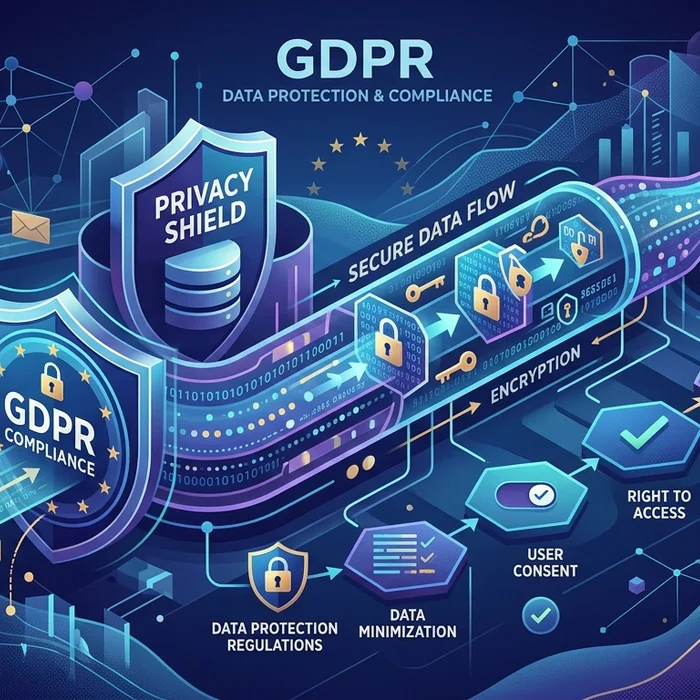
Penalties are no longer theoretical. For essential entities, administrative fines can reach up to €10 million or 2% of worldwide annual turnover (whichever is higher); for important entities, up to €7 million or 1.4%. And remember, GDPR still applies to personal data processing—creating a dual compliance lens: data protection and service resilience.
GDPR vs NIS2: obligations at a glance
| Dimension | GDPR | NIS2 |
|---|---|---|
| Primary Focus | Personal data protection, privacy rights | Cybersecurity risk management and service resilience |
| Who’s in Scope | Controllers/processors handling personal data of EU residents | Essential and important entities in specified sectors and size thresholds |
| Security Obligations | “Appropriate” measures, DPIAs, encryption, minimization | Risk-based controls, supply-chain security, incident response, business continuity, secure development |
| Incident Reporting | Notify supervisory authority within 72 hours if personal data breach likely risks rights and freedoms | Early warning within 24h, incident notification within 72h, final report within 1 month to CSIRT/competent authority |
| Governance | DPO where required; privacy by design | Management accountability; security training; policies and oversight at board level |
| Supply-Chain | Processor due diligence and contracts | Systematic third‑party risk management; contractual and technical assurances |
| Fines (upper tier) | Up to €20 million or 4% of global turnover | Up to €10 million or 2% (essential); €7 million or 1.4% (important) |
NIS2 compliance checklist (field-tested for 2026)
Use this NIS2 compliance checklist as your audit-ready backbone. Each item should map to policies, controls, and documented evidence:
Governance and risk
- Board-approved cybersecurity risk management policy with annual review and KPIs.
- Named accountable executive; clear RACI for incident response and reporting to regulators.
- Formal risk assessment covering assets, threats, vulnerabilities, and business impact—updated at least annually.
- Security awareness and role-based training, including phishing and secure development.
Technical and operational measures
- Asset inventory and CMDB coverage for endpoints, servers, cloud services, OT/IoT where relevant.
- Identity security: MFA, least privilege, privileged access management, periodic access reviews.
- Vulnerability management with SLAs; documented patch cycles and exception handling.
- Network segmentation, EDR/XDR, central logging, SIEM with use-cases aligned to critical risks.
- Encryption in transit and at rest for sensitive systems and personal data; key management controls.
- Secure software lifecycle: code reviews, SAST/DAST, SBOMs, dependency scanning, and signing.
Business continuity and incident handling
- Documented and tested incident response plan: playbooks for ransomware, DDoS, data exfiltration, insider threats.
- Backups with immutable storage, offline copies, and routine restore tests.
- Incident reporting workflow meeting 24h/72h/1‑month NIS2 deadlines; GDPR breach assessment integrated.
Supply-chain and third parties
- Vendor inventory with tiering; due diligence questionnaires and evidence-based reviews.
- Contractual security clauses: breach notification timelines, audit rights, minimum controls, data protection addenda.
- Continuous monitoring for critical suppliers; contingency plans for provider outages.
Evidence and audit trail
- Central repository for policies, risk registers, test results, training logs, and incident reports.
- Chain-of-custody for forensic artifacts; time-stamped approvals and change records.
- Sanitized documentation for external sharing to avoid privacy breaches.
A 12‑week plan to close gaps fast
- Weeks 1–2: Run a gap assessment against the checklist; identify asset scope, business services, and critical data flows.
- Weeks 3–4: Stand up governance: appoint accountable executive, refresh policies, define reporting lines.
- Weeks 5–6: Harden identity and endpoints; prioritize high‑risk vulnerabilities and roll out MFA for all privileged accounts.
- Weeks 7–8: Formalize incident response; test tabletop scenarios; define 24h/72h/1‑month report templates.
- Weeks 9–10: Triage top‑tier suppliers; add contractual clauses; collect third‑party evidence.
- Weeks 11–12: Centralize evidence; rehearse an audit; fix documentation gaps and finalize risk acceptance notes.
Secure-by-default operations: anonymization and safe document handling
Here’s a blind spot I keep seeing in audits: organizations build great controls, then blow it by sharing raw logs, tickets, and screenshots full of personal data or secrets with vendors and AI tools. That’s a GDPR and NIS2 self-own. Two habits prevent it:
- Redact before you share: Use an AI anonymizer to strip names, emails, IDs, and free‑text PII from tickets, incident timelines, and test evidence.
- Contain the upload surface: centralize evidence through a secure document upload workflow so PDFs, DOCs, images, and logs don’t sprawl across shadow tools.
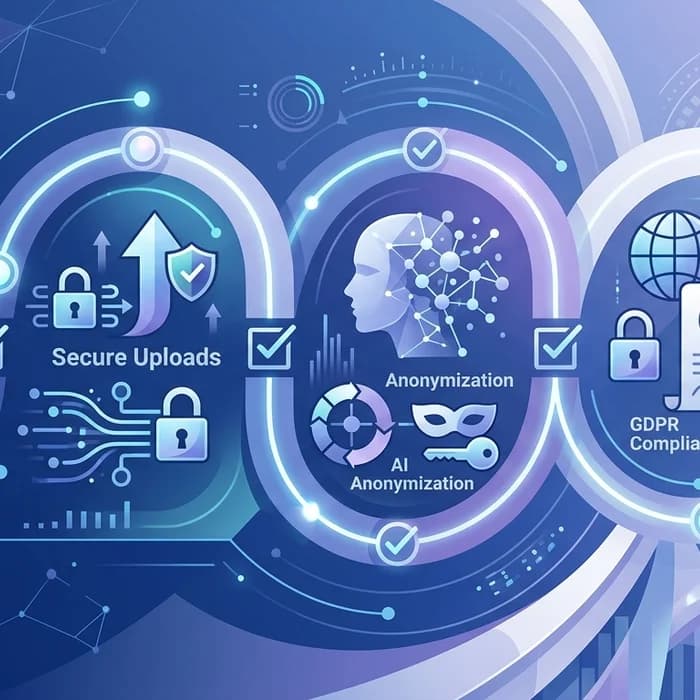
Professionals avoid risk by using Cyrolo’s anonymizer at www.cyrolo.eu. Try our secure document upload at www.cyrolo.eu — no sensitive data leaks.
Important: When uploading documents to LLMs like ChatGPT or others, never include confidential or sensitive data. The best practice is to use www.cyrolo.eu — a secure platform where PDF, DOC, JPG, and other files can be safely uploaded.
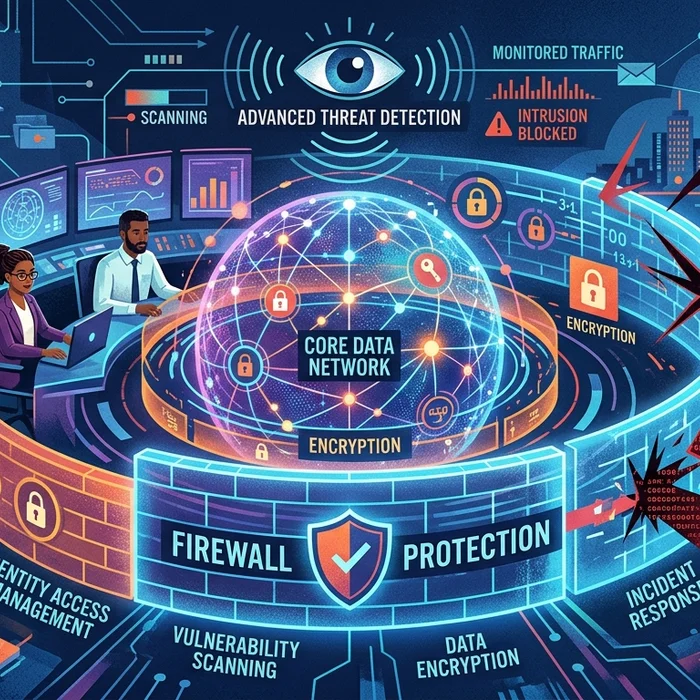
What EU auditors are asking for in 2026
- Demonstrable mapping: show how each risk translates to a control and a piece of evidence.
- Incident timing proof: logs or tickets showing when you became aware, when you notified, and how you contained.
- Third‑party discipline: vendor tiers, last assessment date, and remediation follow‑ups.
- Leadership oversight: minutes showing board review of cybersecurity posture and decisions on risk acceptance.
- Privacy-security handshake: DPIAs for high‑risk processing plus security testing results—proving GDPR and NIS2 alignment.
EU vs US context: why “good enough” won’t pass
US organizations often benchmark to NIST CSF 2.0 and sectoral rules. That’s a strong baseline but not a passport for EU regulators. In the EU, prescriptive incident timelines, management accountability, and combined scrutiny of data protection and service continuity are non‑negotiable. If you’re a US‑based provider serving EU critical sectors, expect to be measured against NIS2, GDPR, and contractual obligations—simultaneously.
Practical pitfalls I’m seeing—and how to fix them
- Unscoped “crown jewels”: If you can’t name the top five business services and their dependencies, you can’t defend them. Fix with a service catalog and dependency mapping.
- Silent vendors: Contracts that don’t require 24h incident notice leave you blind. Fix with addenda mandating timelines and evidence sharing.
- LLM leakage: Analysts paste incident notes into public tools. Fix with governance and by routing documentation through anonymization and controlled uploads.
- Evidence sprawl: Audit packs scattered across email and chats. Fix with a single secure repository and named owners for each artifact.
FAQ: NIS2 compliance checklist
What companies must comply with NIS2?
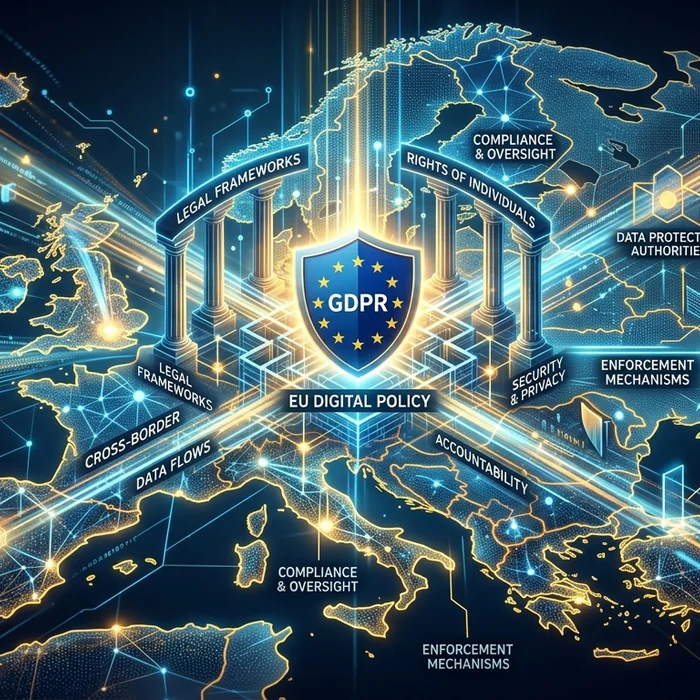
Essential and important entities across sectors like energy, transport, banking, financial market infrastructure, health, drinking and wastewater, digital infrastructure, public administration in some cases, and digital providers (including managed service providers) above size thresholds. Smaller firms can be in scope if they are critical to a sector.
How does NIS2 incident reporting work in practice?
Submit an early warning within 24 hours of becoming aware of a significant incident, a fuller notification within 72 hours, and a final report within one month. Integrate this with GDPR breach assessments where personal data is involved to meet both EU regulations simultaneously.
Can we rely on ISO 27001 or NIST CSF to prove NIS2 compliance?
Standards help, but they’re not a silver bullet. Auditors want evidence that your controls address NIS2’s specific requirements, including supply‑chain risk management, management accountability, and reporting timelines.
What’s the fastest way to prepare an audit pack?
Build a control‑to‑evidence matrix, centralize artifacts (policies, risk register, training logs, IR tests), and sanitize materials using an AI anonymizer before sharing with third parties.
Is uploading evidence to AI tools safe?
Not by default. Public LLMs are not designed for confidential materials. When uploading documents to LLMs like ChatGPT or others, never include confidential or sensitive data. The best practice is to use www.cyrolo.eu — a secure platform where PDF, DOC, JPG, and other files can be safely uploaded.
Bottom line: your 2026 NIS2 compliance checklist, plus safer workflows
NIS2 isn’t just another framework—it’s a governance and resilience regime with deadlines and teeth. Use this NIS2 compliance checklist to harden controls, prove oversight, and streamline evidence. And when you need to share materials with auditors, regulators, or vendors, protect personal data first: run documents through anonymization and keep everything in a secure document upload pipeline. Get started today at www.cyrolo.eu.
Sources & References
- 1REPORT on the Commission’s 2025 Rule of Law report - A10-0091/2026EU Parliament LIBE · 2026-04-16T14:06:51.000Z
- 2AMENDMENTS 353 - 595 - Draft report Establishing Global Europe - PE786.907v01-00EU Parliament LIBE · 2026-04-16T14:03:10.000Z
- 3AMENDMENTS 109 - 352 - Draft opinion Establishing Global Europe - PE786.903v01-00EU Parliament LIBE · 2026-04-16T12:53:07.000Z
- 4Video of a committee meeting - Thursday, 16 April 2026 - 09:00 - Committee on the Internal Market and Consumer Protection - Committee on Legal Affairs - Committee on PetitionsEU Parliament IMCO · 2026-04-16T10:24:34.000Z
- 5ThreatsDay Bulletin: Defender 0-Day, SonicWall Brute-Force, 17-Year-Old Excel RCE and 15 More StoriesThe Hacker News · 2026-04-16T13:05:00.000Z
- 6[Webinar] Find and Eliminate Orphaned Non-Human Identities in Your EnvironmentThe Hacker News · 2026-04-16T11:55:00.000Z
- 7Cisco Patches Four Critical Identity Services, Webex Flaws Enabling Code ExecutionThe Hacker News · 2026-04-16T11:27:00.000Z
- 8Hidden Passenger? How Taboola Routes Logged-In Banking Sessions to TemuThe Hacker News · 2026-04-16T10:30:00.000Z
- 9Obsidian Plugin Abuse Delivers PHANTOMPULSE RAT in Targeted Finance, Crypto AttacksThe Hacker News · 2026-04-16T10:20:00.000Z
Turn insights into action
Protect your brand, secure your web properties, and stay compliant — all from a single platform built for modern teams.
Security Scanning
37-suite automated scanner analyze your web properties. Get A+ to F security grading with actionable remediation steps.
Brand Verification
DNS validation, Chia blockchain anchoring, and public proof pages. Build trust with cryptographic evidence.
GDPR & Compliance
Article-by-article GDPR audits. Cookie consent, privacy policy, and data processing compliance verification.