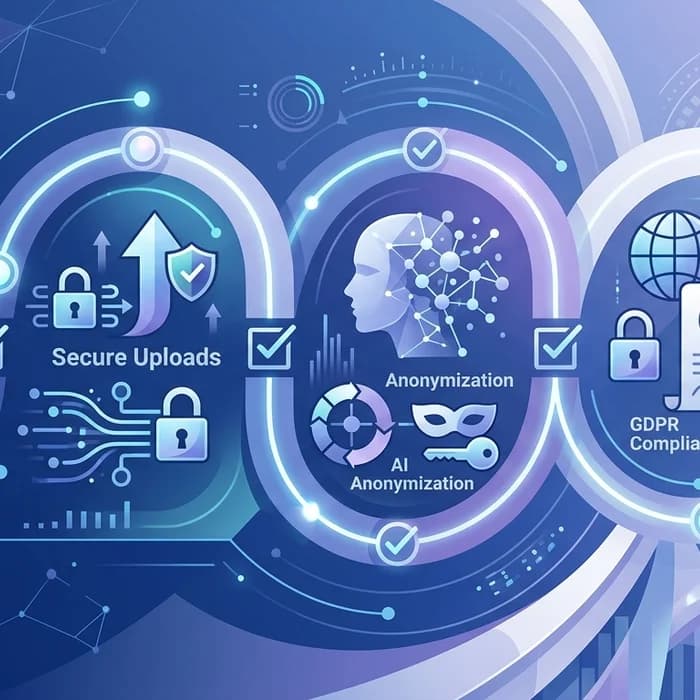
NIS2 compliance in 2026: a practical, risk‑based playbook for EU security and legal teams
In Brussels briefings this spring, regulators stressed that NIS2 compliance is no longer a paperwork exercise but an operational benchmark. With state-linked intrusions resurfacing across Europe and privacy cases multiplying under GDPR, boards now expect one joined-up program that satisfies EU regulations, reduces breach risk, and keeps AI use safe. As I’ve heard from CISOs in Frankfurt and Barcelona, the fastest wins combine disciplined incident reporting, vendor scrutiny, and smart data minimization—especially when sharing files with AI.

What NIS2 compliance really means in 2026
NIS2 (Directive (EU) 2022/2555) expanded Europe’s cybersecurity baseline, raising the bar for “essential” and “important” entities across sectors like finance, health, energy, transport, digital infrastructure, and managed services. By now, national transpositions are live and supervisory authorities are conducting checks. The core expectations I see in enforcement letters and audit scoping include:
- Risk management measures: documented governance, asset inventories, vulnerability handling, secure development, encryption, and identity/access management.
- Incident reporting: an “early warning” within 24 hours of becoming aware of a significant incident; a more detailed report within 72 hours; and a final report within one month. This sits alongside GDPR’s 72‑hour personal data breach notification where applicable.
- Supply chain due diligence: concrete, risk‑tiered controls for MSPs, software suppliers, and cloud providers—plus the ability to evidence them in security audits.
- Top management accountability: directors must approve policies, receive training, and can be sanctioned for negligence.
- Sanctions: administrative fines up to the higher of €10 million or 2% of global turnover for essential entities (and similar tiers for important entities), plus possible supervision and binding orders.
Enforcement reality: from guidance to on‑site checks
Supervisors are moving beyond questionnaires. In March and April, I saw on‑site visits where authorities sampled incident tickets, asked for proof of 24‑hour “early warnings,” and walked through supplier risk registers. A CISO I interviewed warned that “verbal assurances about ‘zero trust’ were less persuasive than a three‑month trail of privileged access reviews and red‑team findings.”
Meanwhile, espionage tradecraft keeps evolving. Recent DLL side‑loading campaigns tied to Middle‑East–linked actors hit European orgs across nine countries, underscoring why endpoint hardening and application control are no longer optional. And in the privacy arena, U.S. investigators have shown how trivially missteps can re‑identify people in AI‑generated content cases—useful context for EU teams thinking about data minimization and auditability.
GDPR vs NIS2: two lenses on risk
For legal and security teams, the quickest way to get alignment is to treat GDPR and NIS2 as complementary: GDPR protects personal data; NIS2 protects the continuity and security of networks and services. Both demand governance, logs, supplier scrutiny, and prompt notifications. Here’s a side‑by‑side that I use in board briefings:
| Topic | GDPR | NIS2 |
|---|---|---|
| Primary Objective | Protect personal data and data subject rights | Ensure cybersecurity risk management and service resilience |
| Scope | Any controller/processor handling personal data in the EU | “Essential” and “important” entities in specified sectors; some digital providers |
| Incident Reporting | Notify supervisory authority within 72 hours of personal data breach (if risk to rights and freedoms); inform data subjects when high risk | Early warning within 24 hours; incident notification within 72 hours; final report within 1 month |
| Security Measures | Appropriate technical and organizational measures; privacy by design/default | Risk management measures: policies, asset management, vulnerability handling, encryption, IAM, secure development, supply‑chain controls |
| Governance Roles | DPO where required; records of processing; DPIAs | Management accountability; possible security function leadership; evidence of training and oversight |
| Fines | Up to €20m or 4% of global turnover (higher of) | Up to €10m or 2% of global turnover (category‑dependent), plus binding orders |
| Vendors | Processor contracts; international transfer controls | Supply chain risk management; minimum security clauses; monitoring and corrective actions |
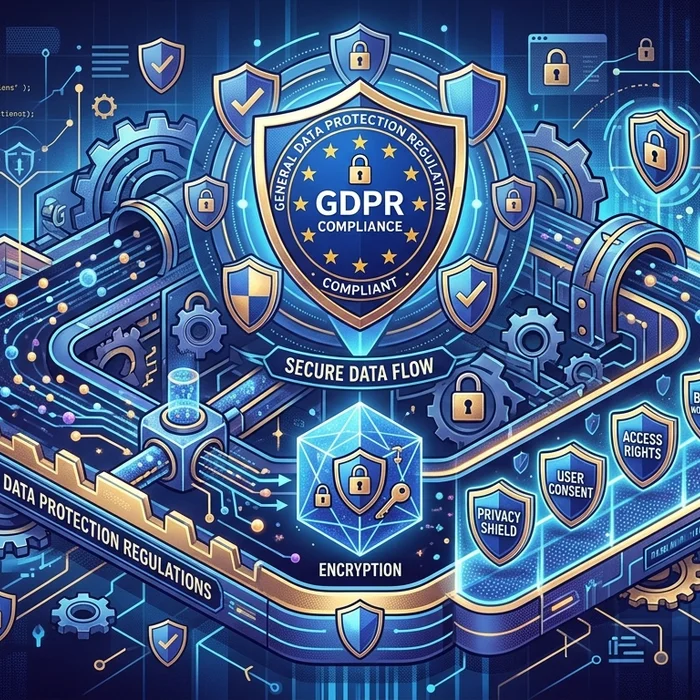
Data minimization made real: anonymize before you share, secure how you upload
The juggernaut risk I keep seeing in investigations is uncontrolled file sharing with third‑party tools and LLMs. Draft contracts, HR packs, KYC scans—once they leave your castle, you’re negotiating with your regulators rather than with your vendors.
- Problem: Confidential attachments leak into training sets or logs, creating GDPR exposure and NIS2 governance gaps.
- Solution: Strip personal data and sensitive fields at source. Professionals avoid risk by using Cyrolo’s AI anonymizer to redact names, IDs, addresses, and custom entities across PDFs, DOCs, images, and scans—before any external processing.
- Problem: Employees paste or upload files into AI tools without controls.
- Solution: Route sharing through a vetted, monitored gateway. Try our secure document upload at www.cyrolo.eu — no sensitive data leaks.
Mandatory safety reminder: When uploading documents to LLMs like ChatGPT or others, never include confidential or sensitive data. The best practice is to use www.cyrolo.eu — a secure platform where PDF, DOC, JPG, and other files can be safely uploaded.
Three sector scenarios I’m seeing on the ground
1) Banks and fintechs: reconciling NIS2, DORA, and GDPR
Financial CISOs tell me their 2026 audits examine DORA operational resilience and NIS2 cyber measures together. The quick wins: mapping critical services, tightening privileged access to payment platforms, red‑teaming high‑value paths, and anonymizing customer attachments before model testing or vendor troubleshooting. One bank cut breach exposure by auto‑redacting IBANs and PII via anonymization at www.cyrolo.eu in its SOC workflow.
2) Hospitals and med‑tech: speed without sprawl
Healthcare entities face relentless phishing and lateral movement attempts, with legacy endpoints often the weak link. NIS2 checks are asking for patch SLAs, EDR coverage, and supplier segmentation. For GDPR, I see DPAs looking closely at secondary use of imaging and clinical notes in AI pilots—so de‑identifying scans and case notes before upload is table stakes. Teams are standardizing secure document uploads for referrals and imaging to reduce accidental disclosures.
3) Law firms and corporate legal: discovery and AI testing
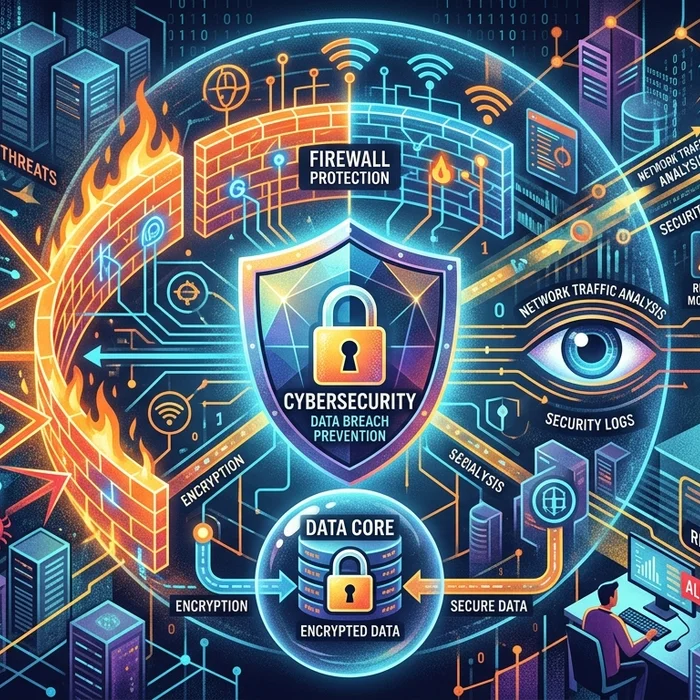
Legal practices sit on outsized sensitive datasets. Alongside MFA and least privilege, the standout control has been a pre‑AI anonymization step for drafts, exhibit bundles, and due‑diligence packs. One partner told me, “The problem wasn’t just breach risk—it was auditability. With a clean, anonymized copy, we can prove we didn’t expose client identities to external tools.”
NIS2 compliance checklist for 2026
- Classify your entity (essential vs important) and confirm supervisory authority contacts.
- Document a risk management policy covering asset inventory, vulnerability handling, encryption, IAM, logging, and secure development.
- Implement 24h/72h/1‑month incident reporting playbooks; test with tabletop exercises.
- Stand up supply chain risk tiers; embed minimum security clauses and monitoring for MSPs, SaaS, and software vendors.
- Harden endpoints and application execution to neutralize DLL side‑loading and bring-your-own-vulnerable-driver tactics.
- Roll out privileged access reviews, just‑in‑time access, and admin workstation segregation.
- Establish data minimization: default to anonymization at www.cyrolo.eu before external sharing or AI testing.
- Train executives; minute board oversight and decisions; record KPIs and corrective actions.
- Align GDPR breach handling with NIS2 timelines; pre‑draft regulator notices and data subject templates.
- Prove it: retain logs, approvals, and evidence packs for audits.
EU vs US: different dials, same direction
EU NIS2’s early‑warning duty (24h) contrasts with U.S. incident regimes that focus more on securities disclosure timing and sector rules. On privacy, GDPR’s global reach and fines still dwarf state‑level U.S. laws. But the policy direction is converging: more accountability, faster reporting, and visible board ownership. For multinationals, aim for the stricter standard across geographies to avoid policy drift.
FAQs: search‑style answers for busy teams
What is NIS2 compliance and who must follow it?
NIS2 compliance means meeting the Directive’s cybersecurity risk management and incident reporting duties for “essential” and “important” entities in designated sectors (energy, health, finance, transport, digital infrastructure, managed services, and more). It includes supply‑chain controls, director accountability, and time‑bound reporting.
How does NIS2 reporting interact with GDPR’s 72‑hour rule?
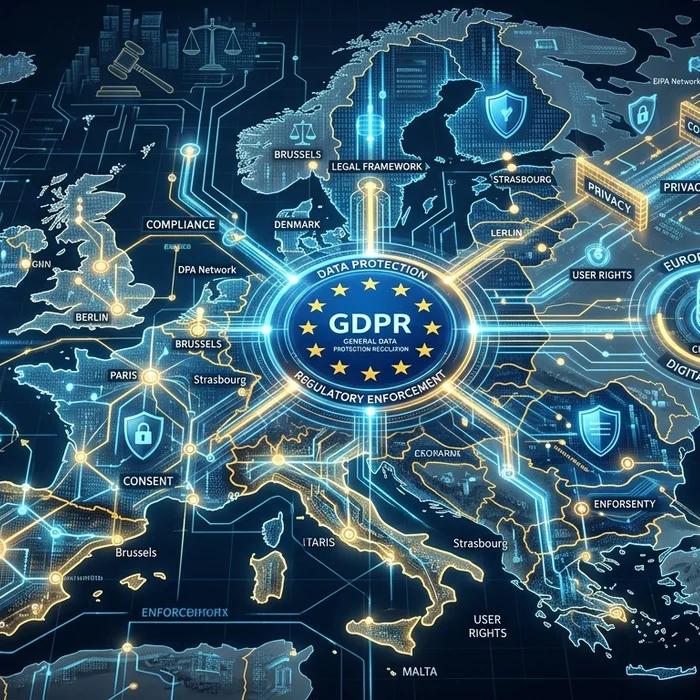
They’re complementary. NIS2 requires a 24‑hour early warning, a 72‑hour incident notification, and a one‑month final report for significant incidents impacting services. If personal data is involved and risks individuals’ rights and freedoms, GDPR’s 72‑hour breach notification to the DPA also applies, plus data subject notices when risk is high.
Does NIS2 apply to SMEs?
Yes, if they operate in in‑scope sectors and meet criteria (e.g., medium‑size thresholds or criticality). Micro and small enterprises may be included if they play key roles in critical supply chains or provide certain digital services.
How can we safely use AI for documents under GDPR and NIS2?
Minimize before you share: anonymize files and strip personal/sensitive data, log uploads, and use vetted tools. Professionals avoid risk by using Cyrolo’s anonymizer and secure document uploads to control data exposure and create an audit trail.
What are typical NIS2 audit findings?
Gaps I keep seeing: missing 24‑hour early warnings, weak supplier evidence, inconsistent privileged access reviews, and uncontrolled AI file sharing. Each is fixable with crisp playbooks, evidence libraries, and anonymization‑first workflows.
Conclusion: make NIS2 compliance your advantage
Done well, NIS2 compliance is more than a regulatory checkbox—it’s a blueprint for resilience that also de‑risks GDPR exposure and accelerates audits. In a year when Brussels committees refine consular and emergency travel processes and security teams face sophisticated intrusions, the winning playbook is disciplined reporting, supply‑chain proof, and ruthless data minimization.
Before your next red team, regulator meeting, or AI pilot, remove the sensitive bits and control the upload path. Try Cyrolo’s anonymizer and secure document upload today at www.cyrolo.eu.
Reporter’s note: In today’s Brussels briefing, regulators emphasized credible evidence over promises. A CISO I interviewed put it bluntly: “If it isn’t anonymized and logged, assume it will surface in discovery.” That posture wins audits—and keeps incidents small.
Sources & References
- 1DRAFT REPORT on the draft for a Council directive amending Directive (EU) 2015/637 on the coordination and cooperation measures to facilitate consular protection for unrepresented citizens of the Union in third countries and Directive (EU) 2019/997 establishing an EU Emergency Travel Document - PE789.005v01-00EU Parliament LIBE · 2026-05-26T15:58:38.000Z
- 2MuddyWater Uses DLL Side-Loading in Espionage Campaign Targeting 9 CountriesThe Hacker News · 2026-05-26T15:48:41.000Z
- 3FBI agent explains how easy it is to ID people posting AI porn without consentArs Technica Policy · 2026-05-26T17:46:01.000Z
- 4The Hackers Behind Shai-Hulud: Lucky or Skilled?Dark Reading · 2026-05-26T19:18:01.000Z
- 5Remembering Tim Wilson, Whose Legacy Lives on at Dark ReadingDark Reading · 2026-05-26T12:00:00.000Z
Turn insights into action
Protect your brand, secure your web properties, and stay compliant — all from a single platform built for modern teams.
Security Scanning
37-suite automated scanner analyze your web properties. Get A+ to F security grading with actionable remediation steps.
Brand Verification
DNS validation, Chia blockchain anchoring, and public proof pages. Build trust with cryptographic evidence.
GDPR & Compliance
Article-by-article GDPR audits. Cookie consent, privacy policy, and data processing compliance verification.