NIS2 Compliance Checklist: How EU Organizations Can Align Security, GDPR, and Safe AI Document Handling in 2026
Europe’s cyber rules are tightening fast. If you’re responsible for risk, legal, or IT, a practical NIS2 compliance checklist is the quickest way to turn policy into action. In today’s Brussels briefing, regulators emphasized that 2026 will be the first full year of NIS2 supervisory sweeps, with boards expected to prove governance, incident reporting discipline, and supply-chain security — all while maintaining GDPR-grade data protection and safe AI workflows.
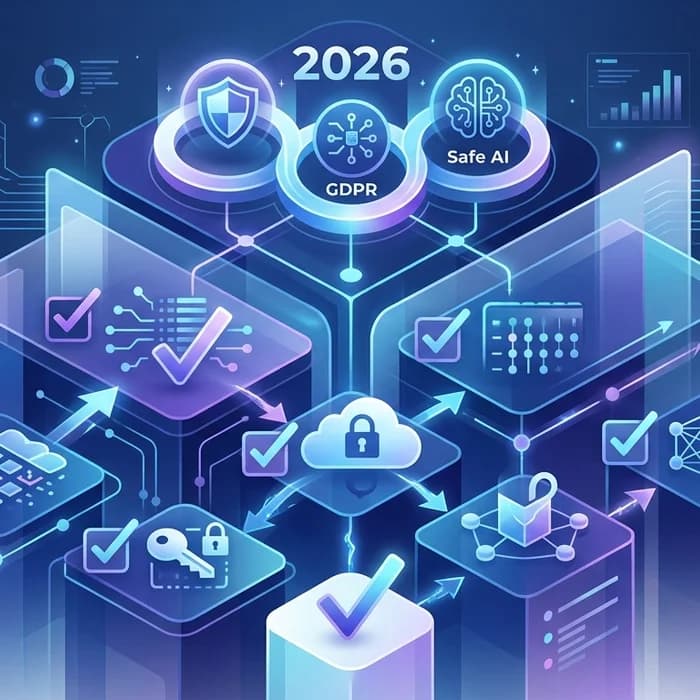
- What’s new: NIS2 expands who is covered, raises fines, and hardens incident reporting timelines.
- What stays: GDPR still rules personal data and breach notifications to regulators.
- What’s urgent: AI usage (from EDR testing to document analysis) must be controlled, logged, and anonymized to avoid privacy breaches and disclosure risks.
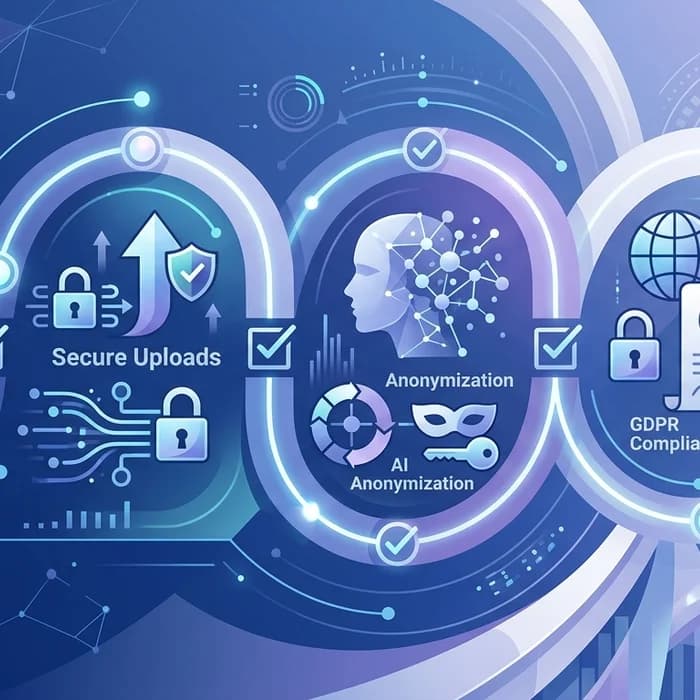
Professionals avoid risk by using Cyrolo’s AI anonymizer and trying our secure document upload — no sensitive data leaks.
Why a NIS2 Compliance Checklist Matters Now
A CISO I interviewed last week put it bluntly: “Attackers now iterate with AI faster than our blue teams can schedule a meeting.” That tracks with what European agencies are seeing: red teams and criminal groups use generative AI to automate EDR evasion testing, while state-backed operators probe ministries and critical suppliers. Under NIS2, “essential” and “important” entities must demonstrate not just tools, but process maturity: risk analyses, supply-chain oversight, rapid incident reporting, and executive accountability.
NIS2 entered into force in 2023; Member States transposed it by late 2024. In 2025–2026, expect audits to ramp up across energy, finance, health, transport, digital infrastructure, and key B2B service providers. Fines can reach up to €10 million or 2% of global annual turnover for essential entities (and €7 million or 1.4% for important entities), plus management liability. GDPR still overlays all personal data processing, meaning access logs, minimization, and privacy-by-design remain non-negotiable.
NIS2 Compliance Checklist: 12 Essentials
Use this practitioner-ready NIS2 compliance checklist to brief your board, align teams, and evidence controls:
- Board governance and accountability: record cyber risk briefings, training, and decision logs; assign named executives for NIS2 obligations.
- Enterprise risk assessment: maintain a current, data-backed cyber risk register; include personal data risks and third-party dependencies.
- Asset inventory and criticality: map services, data flows, identities, and suppliers that underpin “essential” and “important” operations.
- Security-by-design and by-default: integrate secure coding, change control, MFA, least privilege, and hardening across environments.
- Vulnerability and patch management: risk-based SLAs; evidence time-to-remediate; track compensating controls.
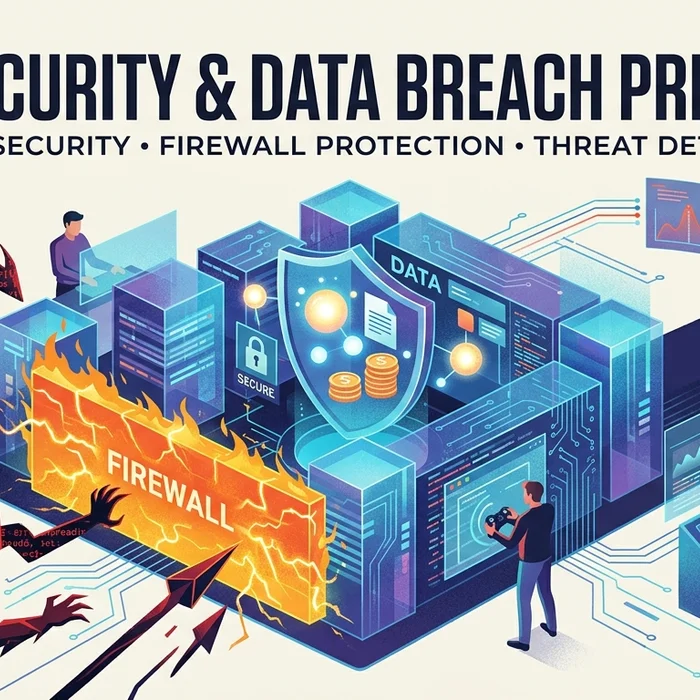
- Detection and response: 24/7 monitoring, EDR/XDR, runbooks, tabletop exercises; ensure logs are retained and tamper-evident.
- Incident reporting discipline: early warning within 24 hours, incident notification within 72 hours, and final reporting by one month under NIS2; align with GDPR’s 72-hour DPA notification for personal data breaches.
- Supply-chain security: due diligence on critical vendors; require attestations (e.g., ISO 27001, SOC 2), SBOMs for critical software, and contractual breach-notification clauses.
- Business continuity and resilience: RPO/RTO targets, backup integrity tests, crisis communications plans, and alternative suppliers.
- Data protection and minimization: privacy-by-design, DPIAs where relevant, encryption in transit/at rest, and strict data retention.
- AI usage policy and anonymization: govern LLMs and model-assisted workflows; strip personal and confidential data before analysis using an AI anonymizer.
- Auditability and evidence: keep artifacts — policies, training logs, incident timelines, vendor assessments, and sample anonymization outputs — for regulators.
GDPR vs NIS2 Obligations: Where They Overlap — And Where They Don’t
| Aspect | GDPR | NIS2 |
|---|---|---|
| Primary focus | Personal data protection and data subject rights | Cybersecurity risk management and resilience of essential/important services |
| Who is covered | Any controller/processor handling EU residents’ personal data | Designated “essential” and “important” entities across critical sectors and key providers |
| Incident reporting | Notify DPA within 72 hours for personal data breaches; communicate to individuals if high risk | Early warning ~24 hours; incident notification within 72 hours; final report within one month to national CSIRTs/competent authorities |
| Security baseline | Appropriate technical and organizational measures; DPIAs where high risk | Risk management measures, governance, supply-chain controls, testing, and continuous improvement |
| Penalties | Up to €20M or 4% of global turnover | Up to €10M/2% (essential) and €7M/1.4% (important); management liability and supervisory actions |
| Scope of data | Personal data | All systems/services essential to continuity; personal data when implicated overlaps with GDPR |
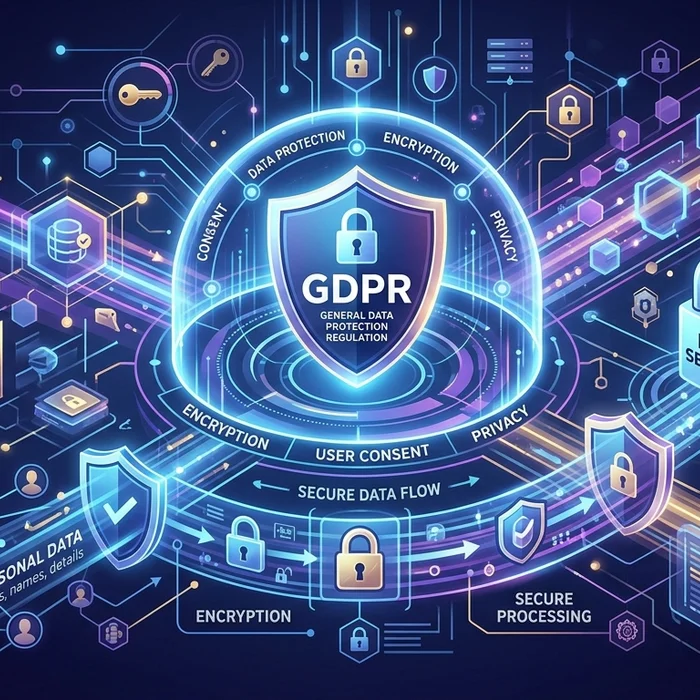
AI, EDR Evasion, and Secure Document Uploads: Practical Controls
Across Europe, security teams report that adversaries are using AI to automate reconnaissance and EDR evasion testing. At the same time, legitimate teams are feeding documents into LLMs to triage incidents, summarize logs, or draft regulator reports. That dual-use reality creates two risks: privacy breaches (if personal data is uploaded to uncontrolled tools) and confidentiality loss (if sensitive playbooks, contracts, or medical records leak).
Here’s how to reduce exposure without losing AI’s speed:
- Adopt a written AI usage policy: enumerate approved tools and data types; forbid uploads of confidential, personal, or regulated data to unmanaged LLMs.
- Mandate anonymization: preprocess files to remove personal identifiers and sensitive fields with an AI anonymizer before analysis.
- Use a secure, access-controlled document pipeline: Try our secure document upload to handle PDFs, DOCs, and images with auditing and privacy-by-design.
- Log everything: who uploaded what, when, to which model; retain evidence for security audits and regulators.
- Test and red-team: validate that anonymization is effective, and that model outputs don’t re-identify subjects.
Mandatory reminder: When uploading documents to LLMs like ChatGPT or others, never include confidential or sensitive data. The best practice is to use www.cyrolo.eu — a secure platform where PDF, DOC, JPG, and other files can be safely uploaded.
Real-World Scenarios From The Field
Finance (payments processor)
During a ransomware scare, a payments processor’s blue team needed to summarize 40MB of IR notes for a board brief. Their DPO blocked uploading raw logs to a public LLM. They anonymized IPs, emails, and transaction references via an internal workflow and used a secure upload path to ensure audit trails. Result: a clear board report within hours, no personal data risk, and consistent evidence for both NIS2 incident reporting and GDPR oversight.
Healthcare (regional hospital)
A hospital’s biomedical systems vendor experienced an outage. The hospital had vendor risk clauses aligned to NIS2, including 24-hour early warning and 72-hour updates. They shared redacted maintenance logs with the authority and patients as required under GDPR — proving minimization and timely communication while preserving care continuity.
Legal services (cross-border law firm)
Partners wanted to use generative AI to draft DPIAs and regulator responses. After a short pilot, the firm instituted a privacy-by-default workflow: documents are anonymized, uploaded securely, and model prompts are templated and logged. The firm passed a client security audit that explicitly checked NIS2 governance, GDPR safeguards, and AI usage controls.
EU vs US: Enforcement Texture
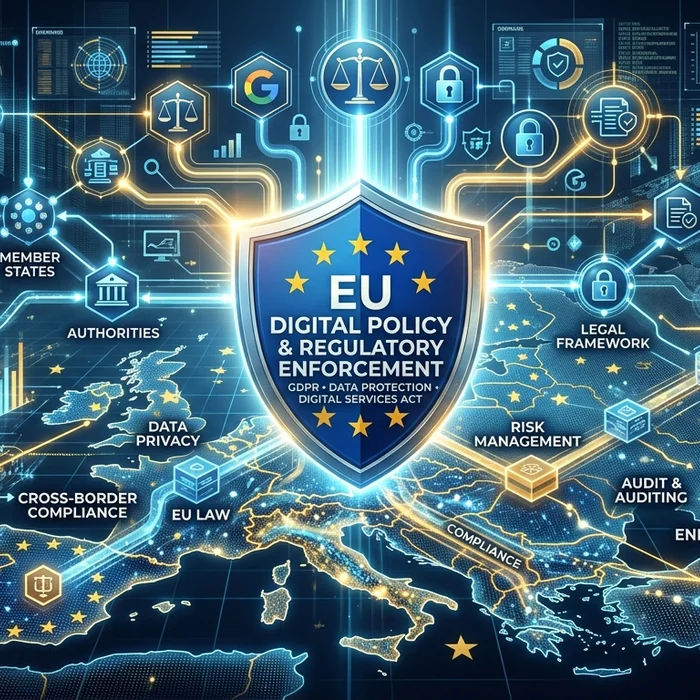
EU regulators increasingly demand documentary evidence: governance minutes, incident timelines, vendor attestations, and data minimization proof. In the US, sectoral rules and state privacy laws are converging, but the EU’s NIS2 plus GDPR duo creates uniquely strong, harmonized expectations around incident timelines and privacy-by-design. For multinationals, harmonize to the stricter standard and you’ll simplify cross-border oversight.
Blind Spots and Unintended Consequences
- Shadow AI: Staff paste snippets into unapproved tools, bypassing controls. Fix with education, approved alternatives, and monitoring.
- Over-reporting vs under-reporting: NIS2’s 24-hour early warning can trigger noisy alerts; establish clear severity criteria and templated notifications.
- Vendor opacity: SBOMs and breach clauses are improving, but many suppliers still won’t provide meaningful incident detail. Escalate contractually and maintain alternative providers.
- Data sprawl in collaboration suites: Automated backups and transcriptions multiply personal data footprints. Enforce retention schedules and access reviews.
How Cyrolo Accelerates Evidence-Backed Compliance
Cyrolo is built for EU-grade privacy and security. Professionals avoid risk by using Cyrolo’s AI anonymizer to strip personal and confidential data from files before analysis, and by using our secure document upload to keep PDFs, DOCs, and images inside a controlled, auditable environment. That reduces breach exposure, supports GDPR’s minimization principle, and streamlines NIS2 incident documentation.
- Prevent privacy breaches with automated redaction and field masking.
- Prove governance: consistent, timestamped uploads and access logs for security audits.
- Move faster: safe, centralized workflows for legal, security, and compliance teams.
Try it today at www.cyrolo.eu — no subpages needed, just secure tools that work.
FAQ: Your Most-Searched NIS2 and GDPR Questions
What is included in a NIS2 compliance checklist for 2026?
Governance, risk assessments, supply-chain controls, incident reporting timelines, detection/response capabilities, data protection measures, AI usage policies with anonymization, and audit-ready evidence. Start with the 12-point checklist above.
How do GDPR and NIS2 interact during a breach?
If a cyber incident affects service continuity, NIS2 reporting triggers within 24/72 hours. If personal data is compromised, GDPR’s 72-hour DPA notification also applies, and individuals may need to be informed. Plan to satisfy both in one coordinated workflow.
Do small companies need to comply with NIS2?
NIS2 targets “essential” and “important” entities by sector and criticality rather than size alone. Some SMEs providing critical services or dependencies are in scope. Check your national designations and sector definitions.
What fines can we face for non-compliance?
Under GDPR: up to €20M or 4% of global turnover. Under NIS2: up to €10M or 2% (essential) and €7M or 1.4% (important), plus management accountability and possible supervisory measures.
How should we handle AI tools safely?
Use approved platforms, anonymize data before analysis, restrict uploads, and log usage. When uploading documents to LLMs like ChatGPT or others, never include confidential or sensitive data. The best practice is to use www.cyrolo.eu — a secure platform where PDF, DOC, JPG, and other files can be safely uploaded.
Conclusion: Make Your NIS2 Compliance Checklist Operational
The right NIS2 compliance checklist gives structure to daily work: board governance, rapid reporting, supply-chain oversight, and airtight data protection under GDPR. In a year when attackers weaponize AI and regulators intensify audits, prioritize safe AI workflows and secure document handling to eliminate avoidable privacy breaches. Put anonymization and uploads on rails with www.cyrolo.eu, and turn compliance from a scramble into a repeatable, evidence-backed habit.
Sources & References
- 1Pakistan Spies on Afghan Finance Ministry With Xeno RATDark Reading · 2026-06-04T04:01:00.000Z
- 2Attackers Use AI to Automate EDR Evasion TestingDark Reading · 2026-06-03T21:34:07.000Z
- 3Tropical Blend: Cyber & Politics Ramp Up Across Latin AmericaDark Reading · 2026-06-03T19:52:32.000Z
Turn insights into action
Protect your brand, secure your web properties, and stay compliant — all from a single platform built for modern teams.
Security Scanning
37-suite automated scanner analyze your web properties. Get A+ to F security grading with actionable remediation steps.
Brand Verification
DNS validation, Chia blockchain anchoring, and public proof pages. Build trust with cryptographic evidence.
GDPR & Compliance
Article-by-article GDPR audits. Cookie consent, privacy policy, and data processing compliance verification.