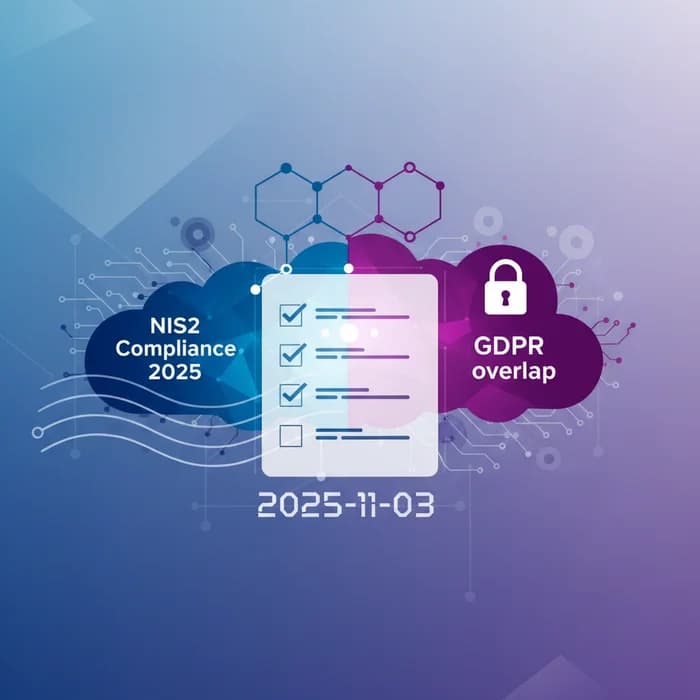
NIS2 Compliance: The 2025 Executive Briefing for CISOs, DPOs, and Counsel
Brussels, 3 November — In today’s committee corridor conversations, MEPs and national experts repeated a familiar warning: NIS2 compliance is now a board-level priority, not a back-office project. Between new EU regulations, tougher security audits, and cross-border coordination, the cost of getting it wrong stretches from multi-million-euro fines to weeks of operational disruption. Add the daily reality of AI tools in the workplace and a surge in privacy breaches, and the need for practical, secure workflows—like anonymization and secure document uploads—becomes undeniable.
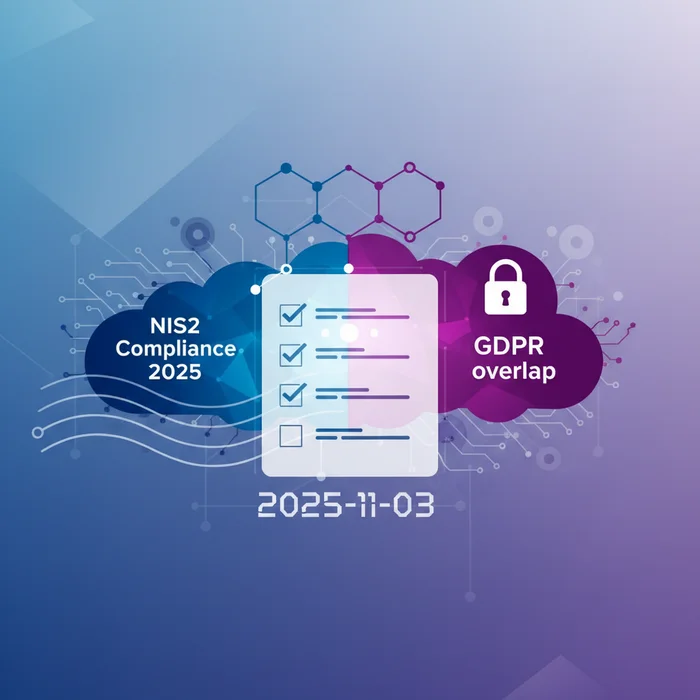
What NIS2 compliance really requires in 2025
When lawmakers adopted the NIS2 Directive (EU) 2022/2555, they expanded the cybersecurity perimeter across energy, transport, financial services, health, digital infrastructure, public administration, and more. “Important” and “essential” entities must prove they have proportional technical and organizational measures in place, and management can be held personally accountable for persistent non-compliance.
- Scope: More sectors and medium-sized entities are in scope compared to the original NIS.
- Risk Management: Documented risk analysis, supply-chain security, business continuity, crisis management, and secure development practices.
- Incident Reporting: Early warning to competent authorities within 24 hours; an incident notification within 72 hours; a final report typically within one month.
- Penalties: For essential entities, up to €10 million or 2% of worldwide annual turnover; for important entities, up to €7 million or 1.4%.
- Governance: Leadership training and oversight are mandatory—boards must understand cyber risks and demonstrate oversight.
In today’s Brussels briefing following the LIBE Committee session, several regulators emphasized a recurring failure mode: organizations invest in tools but lack disciplined processes, especially for vendor oversight and data minimization. A CISO I interviewed last week put it bluntly: “We can patch our own house fast; it’s the supplier who touches production data with an AI plugin at midnight that keeps me awake.”
GDPR vs NIS2: obligations at a glance
Many teams still treat GDPR and NIS2 as separate universes. In reality, they interlock: GDPR focuses on personal data protection; NIS2 on service resilience and security. Both expect evidence-ready governance and auditable controls.
| Topic | GDPR | NIS2 |
|---|---|---|
| Primary focus | Protection of personal data and data subject rights | Cybersecurity risk management and resilience of essential/important services |
| Who enforces | Data Protection Authorities (DPAs) | National competent authorities, CSIRTs, and the EU Cooperation Group |
| Scope trigger | Processing personal data in the EU or of EU residents | Entity falls into listed sectors or meets size/importance criteria |
| Incident reporting | Notify DPAs within 72 hours of a personal data breach if risk to rights | Early warning within 24 hours; notification within 72 hours; final report ~1 month |
| Fines | Up to €20M or 4% of global turnover | Up to €10M/2% (essential) or €7M/1.4% (important) |
| Data minimization & anonymization | Core principle; anonymization removes data from GDPR scope | Not a core principle but reduces breach impact and reporting scope |
| Third-party risk | Processor due diligence and contracts | Supply-chain security and cascading obligations to critical suppliers |
| Accountability | Records of processing, DPIAs, DPO (where required) | Executive responsibility, policies, testing, audits, training |
The blind spots regulators flagged this week
After today’s LIBE exchanges and recent IMCO site visits, three themes are defining 2025 oversight across EU regulations:
- LLM and GenAI drift: Staff paste live customer data into generative tools without guardrails. Regulators view this as a preventable privacy breach risk and a governance failure.
- Children’s data: With global privacy networks increasing sweeps of child-directed services, design defaults and profiling safeguards are under the microscope.
- Supply-chain transparency: Authorities want evidence that vendor risk is continuously monitored, not just “assessed at onboarding.”
The message is consistent: if your organization can’t demonstrate data minimization and hardened workflows for everyday tasks—sharing a PDF for review, sending a contract to an AI assistant, or triaging tickets with third-party LLMs—expect tough questions in audits and post-incident inquiries.
NIS2 compliance checklist (practical and auditable)
- Asset inventory: Maintain live inventories of systems, data flows, and vendor connections.
- Risk analysis: Update at least annually; tie risks to specific controls, owners, and deadlines.
- Access hardening: MFA, least privilege, privileged access monitoring, and rapid offboarding.
- Vulnerability management: Patch timelines by asset criticality; measure mean-time-to-remediate.
- Logging and detection: Centralize logs; test alert fidelity; ensure retention aligns with legal and forensic needs.
- Incident playbooks: Include 24h early warning, 72h notification, containment, and executive comms.
- Business continuity: Run scenario-based exercises; document recovery time objectives.
- Supply-chain due diligence: Security clauses, SBOMs where relevant, breach cooperation terms, and continuous monitoring.
- Data classification and minimization: Tag personal data versus anonymized data; restrict use in non-production.
- AI governance: Approve tools, log prompts, restrict uploads, and require anonymization before sharing.
- Secure handling of documents: Mandate secure document uploads for PDFs, DOCs, and images; block shadow channels.
- Training and drills: Annual cyber hygiene and role-based training for engineers, legal, and support teams.
- Board oversight: Briefings on top risks, test results, and investment gaps; record decisions.
How anonymization and secure document uploads accelerate NIS2 and GDPR
From hospitals to fintechs and law firms, the fastest way to shrink breach exposure is to stop moving raw personal data around. Two high-yield moves pay off across GDPR and NIS2:
- Automate anonymization: Strip names, IDs, addresses, and free-text PII before analysis or sharing with AI tools. Professionals avoid risk by using Cyrolo’s anonymizer at www.cyrolo.eu.
- Enforce secure uploads: Replace email attachments or shadow LLM pastes with a controlled pipeline. Try our secure document upload at www.cyrolo.eu — no sensitive data leaks.
In one recent banking scenario relayed to me by a CISO, a risk analyst pasted a merchant dispute narrative into an external chatbot to “summarize the dispute code map.” That text contained transaction fragments and partial IBANs. The fix wasn’t a blanket AI ban; it was a hardened workflow that forced anonymization upstream and allowed only vetted, logged uploads for any file leaving the perimeter.
Compliance note: When uploading documents to LLMs like ChatGPT or others, never include confidential or sensitive data. The best practice is to use www.cyrolo.eu — a secure platform where PDF, DOC, JPG, and other files can be safely uploaded.
Field notes from the front line
- European hospital group CIO: “Data minimization cut our incident scope in half. Anonymized clinical notes meant we didn’t trigger GDPR notification in several cases.”
- General counsel at a fintech: “Our NIS2 audit turned on two things: supply-chain evidence and documented incident playbooks. The tech was fine—the paperwork was not.”
- DPO at a law firm: “Associates love AI. We didn’t fight it; we forced anonymization by default and routed all document uploads through a secure hub. That kept us inside client outside-counsel guidelines.”
EU vs US: different levers, same pressure
While the EU leans on NIS2, GDPR, and sectoral rules, US enforcement momentum is rising through state privacy laws and sector regulators. The effect for multinational teams is convergence: risk-based security programs, incident transparency, and demonstrable vendor oversight. The smartest organizations document once and map controls to multiple regimes—reducing replanning and audit fatigue.
FAQ: NIS2 compliance, GDPR overlap, and daily workflows
What is the fastest way to start NIS2 compliance if we’re behind?
Stand up a documented risk assessment, incident reporting playbooks (24h/72h), and supply-chain due diligence. Close easy gaps first: MFA, logging coverage, and secure document handling with mandatory anonymization before data leaves your perimeter.
Does NIS2 require a DPO like GDPR?
No. GDPR may require a DPO depending on processing activities. NIS2 requires management accountability and security governance but not a DPO per se. Many organizations appoint a security governance lead to coordinate audits and reporting.
If we anonymize data, do GDPR obligations disappear?
Properly anonymized data falls outside GDPR, but the bar is high. Test against re-identification risk and document methods. Anonymization still helps NIS2 by reducing incident impact and reporting scope. Use a controlled workflow via www.cyrolo.eu to prevent leaks.
How do we handle employees using LLMs?
Approve specific tools, restrict uploads, require secure document uploads, and log usage. Train staff to remove personal data first. Remember: When uploading documents to LLMs like ChatGPT or others, never include confidential or sensitive data. The best practice is to use www.cyrolo.eu.
Do we have to report every cyber incident within 24 hours?
NIS2 expects an early warning within 24 hours for significant incidents affecting service provision. Establish criteria in advance and rehearse decision trees so legal, security, and operations can act quickly.
Conclusion: Make NIS2 compliance your everyday routine—quietly and securely
The fastest path to sustainable NIS2 compliance is to reduce risk at the edges: fewer raw personal data copies, fewer uncontrolled vendors, and fewer ad hoc uploads to AI tools. Turn secure, logged workflows into muscle memory. Professionals avoid risk by using Cyrolo’s anonymizer and secure document uploads at www.cyrolo.eu. Build your evidence trail now—so when regulators call, you can show your work and keep services running.
Sources & References
- 1Video of a committee meeting - Monday, 3 November 2025 - 14:30 - Committee on Civil Liberties, Justice and Home AffairsEU Parliament LIBE · 2025-11-03T17:24:03.000Z
- 2Other events - Visit to Denmark and Sweden - 15-09-2025 - Committee on the Internal Market and Consumer ProtectionEU Parliament IMCO · 2025-11-03T18:26:02.000Z
- 3GPEN announces 10th annual compliance sweep on popular children's websitesIAPP Daily Dashboard · 2025-11-03T13:12:02.000Z
- 4Where should privacy sit within an organization? Legal or compliance is bestIAPP Daily Dashboard · 2025-11-03T09:20:10.000Z
- 5CPPA executive director discusses enforcement priorities, helping consumers exercise rightsIAPP Daily Dashboard · 2025-11-03T09:15:14.000Z
- 6Consumer Reports' cybersecurity lab tests security of personal devicesIAPP Daily Dashboard · 2025-11-03T09:10:40.000Z
- 7Japan's DPA considers introducing fines for data use violationsIAPP Daily Dashboard · 2025-11-03T09:05:42.000Z
- 8Malicious VSX Extension "SleepyDuck" Uses Ethereum to Keep Its Command Server AliveThe Hacker News · 2025-11-03T18:08:00.000Z
- 9Trump on why he pardoned Binance CEO: “Are you ready? I don’t know who he is.”Ars Technica Policy · 2025-11-03T19:15:21.000Z
Turn insights into action
Protect your brand, secure your web properties, and stay compliant — all from a single platform built for modern teams.
Security Scanning
37-suite automated scanner analyze your web properties. Get A+ to F security grading with actionable remediation steps.
Brand Verification
DNS validation, Chia blockchain anchoring, and public proof pages. Build trust with cryptographic evidence.
GDPR & Compliance
Article-by-article GDPR audits. Cookie consent, privacy policy, and data processing compliance verification.