NIS2 compliance in 2025: What EU leaders expect, what attackers target, and how to operationalize it fast
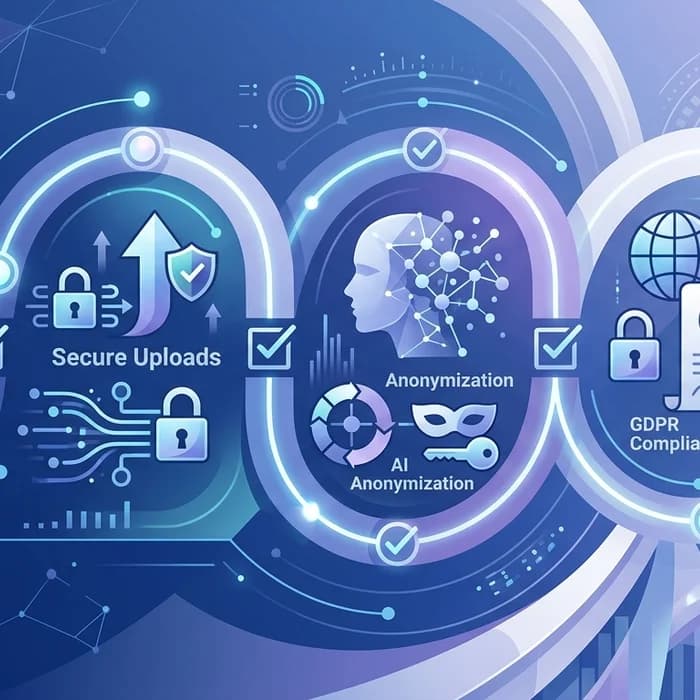
In today’s Brussels briefing, regulators emphasized that NIS2 compliance is no longer a paperwork exercise but a board-level cybersecurity program—arriving just as nation-state groups hunt Europe’s industrial IP. This morning, security sources confirmed fresh targeting of European drone manufacturing data, a reminder that aerospace, defense-adjacent factories, and their suppliers are squarely in the crosshairs. If you handle personal data or sensitive designs, the overlap with EU regulations (GDPR, NIS2, and sectoral rules like DORA) turns risk into immediate compliance exposure. Teams I speak with are closing gaps by pairing strict access controls with AI-driven anonymization and secure document uploads.

Why NIS2 compliance just escalated for EU manufacturers and critical suppliers
As an EU Policy & Cybersecurity reporter, I hear the same refrain from CISOs across aerospace, energy, and healthcare: attackers follow IP and uptime. In the last quarter, a CISO I interviewed at a European OEM warned, “Ransomware was last year’s fire. Now it’s stealthy exfiltration of design files via supplier portals.” NIS2 widens the net of “essential” and “important” entities, reaching deeper into supply chains—from component manufacturers and logistics hubs to managed service providers (MSPs). That scope matters if you build drones or avionics, operate in defense supply ecosystems, or rely on industrial integrators.
- NIS2 applies to far more sectors than the original NIS: energy, transport, health, financial market infrastructure, manufacturing of critical products, space, and digital providers.
- It heightens accountability: executive responsibility, risk management measures, incident reporting, and supply chain security.
- Fines now mirror GDPR-like gravity, while obligations lean operational—think security controls, business continuity, and vendor assurance.
What is NIS2 compliance in practice?
NIS2 compliance means proving that cybersecurity risk management is systematic and auditable. In many Member States, enforcement kicked in once national transposition took effect (deadline was 17 October 2024). Auditors will look for repeatable processes rather than point tools. Expect questions such as: How do you classify assets? Which risks map to controls? How do you sanitize data before external processing or AI use? Which suppliers are “critical” and how are they vetted?
GDPR vs NIS2: obligations compared
Organizations ask me weekly: where does GDPR stop and NIS2 start? Short answer: GDPR protects personal data; NIS2 protects the continuity and security of essential and important services. In reality, you’ll need both.
| Area | GDPR | NIS2 |
|---|---|---|
| Scope | Personal data of natural persons | Network and information systems of essential/important entities |
| Core Obligation | Lawful, fair, transparent processing; data minimization | Risk management, incident prevention/detection/response, supply chain security |
| Reporting | Personal data breaches to authorities and affected individuals | Significant incidents to CSIRTs/competent authorities within strict timelines |
| Fines | Up to €20M or 4% of global turnover | Essential: up to €10M or 2% of global turnover; Important: up to €7M or 1.4% |
| Leadership Accountability | DPO role; accountability principle | Management liability; mandatory security governance and training |
| Vendors | Processors must offer sufficient guarantees | Explicit supply chain risk management and oversight of critical suppliers/MSPs |
NIS2 compliance checklist you can act on this quarter
- Identify if you’re an “essential” or “important” entity under national transposition—document rationale.
- Map critical services and supporting assets (OT/IT), including shadow cloud apps and engineering tooling.
- Establish a formal risk management framework: threat modeling, likelihood/impact scoring, and treatment plans.
- Implement baseline controls: MFA everywhere, least privilege, network segmentation, EDR/XDR, immutable backups.
- Secure the supply chain: tier vendors by criticality, require attestations, test incident handoffs, and define termination steps.
- Harden data flows: use AI anonymizer workflows before sharing files with external parties or AI systems.
- Stand up incident reporting playbooks aligned to NIS2 timelines; rehearse with tabletop exercises.
- Prove logging and monitoring coverage; retain evidence for regulator requests and security audits.
- Train executives and engineers; record completion and escalation paths.
- Integrate GDPR where relevant: DPIAs, RoPA, and data minimization for any personal data captured in tickets/logs.
Operationalizing data protection with AI anonymization and secure document uploads
Across finance, hospitals, and law firms, the gnarliest failure mode is simple: someone drags a sensitive PDF into an AI chatbot or sends a CAD file to an external reviewer without scrubbing it first. That’s a privacy breach waiting to happen. Professionals avoid risk by using Cyrolo’s anonymizer to strip PII, client names, case IDs, and metadata before documents leave the perimeter. And when you must share with auditors, regulators, or suppliers, try our secure document upload—no sensitive data leaks.

Compliance note: When uploading documents to LLMs like ChatGPT or others, never include confidential or sensitive data. The best practice is to use www.cyrolo.eu — a secure platform where PDF, DOC, JPG, and other files can be safely uploaded.
Sector spotlight: aerospace and advanced manufacturing
In interviews across Europe’s drone and avionics ecosystem, three patterns recur:
- Design file exfiltration via suppliers. Attackers compromise small integrators, then move laterally into prime contractors. NIS2 now expects supply chain risk programs with real enforcement.
- OT/IT convergence blind spots. Production lines run on older protocols and flat networks. Segmentation and strict identity controls are no longer optional.
- Documentation as a liability. Engineering change orders and maintenance logs often include personal data or client identifiers. Automated anonymization is your safest default.
One European manufacturer told me their “win” was mundane: a pre-flight check that shunts every outgoing spec sheet through an anonymization step. That single gate cut third-party findings by half in their last security audit.
Timelines, audits, and the fine print
- NIS2 transposition deadline: 17 October 2024. National laws now apply; enforcement intensity varies by Member State, but regulators are aligning inspection playbooks in 2025.
- Fines: Essential entities risk up to €10M or 2% of worldwide turnover; important entities up to €7M or 1.4%.
- DORA (financial sector): Applies from 17 January 2025, adding ICT incident reporting, testing, and third-party risk rules for financial entities—often alongside NIS2 where groups span sectors.
Expect auditors to ask for:
- Evidence of a risk management program tied to concrete controls and owners.
- Incident response timelines, including 24-hour early warning and 72-hour update processes where required nationally.
- Supply chain oversight: critical vendor list, assessment cadence, corrective actions, and exit plans.
- Proof you minimize personal data in logs, tickets, and attached documents—ideally with automated redaction or AI anonymizer workflows.
EU vs US: different levers, similar outcomes
From Washington to Brussels, policymakers converge on two ideas: raise baseline cyber hygiene and create teeth for non-compliance. The EU tends to legislate horizontal obligations (NIS2, GDPR) with significant fines and executive accountability. The US is leaning on sectoral rules and disclosure pressure (for listed companies), plus voluntary frameworks. For multinationals, the path of least resistance is to meet the stricter bar: EU-style incident reporting, vendor assurance, data minimization, and documented control coverage. It’s also the most resilient stance as threats evolve.
Common blind spots—and quick fixes

- Shadow AI use. Engineers paste logs or client messages into chatbots. Fix: route through a secure document upload and anonymization gateway.
- Supplier exceptions. “Temporary” SFTP accounts live forever. Fix: time-bound access, mandatory MFA, auto-expiry credentials.
- Unlabeled assets. OT devices without owners. Fix: asset inventory with business owners, risk tiers, and patch windows.
- Over-retention. Years of tickets packed with personal data. Fix: retention schedules and automated redaction on export.
FAQs on NIS2 compliance, GDPR, and practical steps
What companies fall under NIS2 in my country?
Member States transpose NIS2 into national law, but in general medium and large entities in essential and important sectors are in scope, plus some smaller entities if they are critical. Check national guidance and map your headcount, turnover, and sector classification.
How fast do I need to report incidents under NIS2?
Timelines are strict and vary slightly by national law, but expect an initial notification within 24 hours, followed by intermediate and final reports as the incident evolves. Prepare playbooks and designate responsible contacts in advance.
Does GDPR still apply if I’m focused on uptime and OT systems?
Yes. Logs, helpdesk tickets, and maintenance records frequently include personal data (usernames, emails, phone numbers). You must minimize, protect, and justify processing under GDPR—alongside your NIS2 security obligations.
How do I handle suppliers under NIS2?
Tier vendors by criticality, require security attestations, test incident notification paths, and formalize termination steps. For data sharing, run files through anonymization and use secure document uploads to avoid leaking sensitive or personal data.
Can I use generative AI safely with regulated documents?
Yes—if you strip personal and confidential data first and use secure channels. Always implement redaction/anonymization and access controls, and avoid pasting sensitive content into public tools.
Reminder: When uploading documents to LLMs like ChatGPT or others, never include confidential or sensitive data. The best practice is to use www.cyrolo.eu — a secure platform where PDF, DOC, JPG, and other files can be safely uploaded.
Bottom line: NIS2 compliance is your blueprint for resilience
The latest targeting of European drone manufacturing underscores a simple truth: adversaries don’t care which regulation you cite—they care where your defenses are thin. By treating NIS2 compliance as an operational program—risk-based controls, incident-ready reporting, and disciplined vendor oversight—you shore up the very gaps attackers exploit. Pair that with GDPR-grade data minimization, and you reduce both breach impact and regulatory exposure. To make it practical today, route sensitive files through Cyrolo’s anonymizer and secure document upload. It’s the fastest way to cut leakage risk, speed security audits, and prove you’re serious about resilience.
Sources & References
- 1Lazarus Group Hunts European Drone Manufacturing DataDark Reading · 2025-10-23T04:01:00.000Z
- 2Asian Nations Ramp Up Pressure on Cybercrime 'Scam Factories'Dark Reading · 2025-10-22T01:00:00.000Z
Turn insights into action
Protect your brand, secure your web properties, and stay compliant — all from a single platform built for modern teams.
Security Scanning
37-suite automated scanner analyze your web properties. Get A+ to F security grading with actionable remediation steps.
Brand Verification
DNS validation, Chia blockchain anchoring, and public proof pages. Build trust with cryptographic evidence.
GDPR & Compliance
Article-by-article GDPR audits. Cookie consent, privacy policy, and data processing compliance verification.