NIS2 compliance: The 2026 playbook for AI, GDPR, and incident reporting
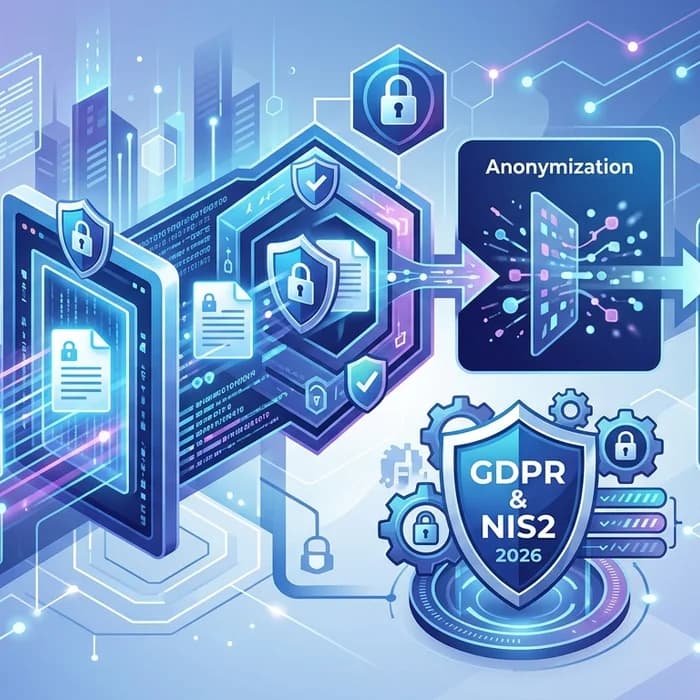
In today’s Brussels briefing, regulators emphasized that NIS2 compliance is now in full enforcement mode across the EU, with national authorities prioritizing AI usage, third‑party risk, and incident reporting discipline. After Europe’s cybersecurity agency engaged with frontier AI researchers to scrutinize high‑risk models, and amid fresh controversy over legal threats in zero‑day disclosures, the direction of travel is unmistakable: boards must operationalize security and privacy controls that stand up to audits. If your teams are processing personal data through AI, start with strict data minimization—professionals are reducing risk by using anonymization and secure document uploads before any model interaction.

- Fines now bite: up to €10 million or 2% of global turnover for essential entities under NIS2; GDPR remains up to €20 million or 4%.
- Incident timers are strict: early warning in 24 hours, notification within 72 hours, final report in 1 month.
- AI workflows are in scope: anonymization and secure file handling are becoming baseline controls.
Compliance reminder: “When uploading documents to LLMs like ChatGPT or others, never include confidential or sensitive data. The best practice is to use www.cyrolo.eu — a secure platform where PDF, DOC, JPG, and other files can be safely uploaded.”
What NIS2 compliance means in 2026
NIS2 expands the EU’s network and information security regime to thousands of “essential” and “important” entities across energy, health, finance, digital infrastructure, managed services, public administration, and more. Member states were due to transpose by October 2024; by mid‑2026, most national frameworks are active, regulators are conducting thematic reviews, and the first high‑profile sanctions are underway.
- Scope: Broader than the 2016 NIS, capturing key suppliers and managed service providers.
- Governance: Boards are accountable; management can face temporary bans in serious cases.
- Measures: Risk management, incident handling, supply‑chain security, encryption, secure development, vulnerability disclosure policy, and business continuity.
- Fines: Up to €10m/2% for essential entities; up to €7m/1.4% for important entities.
NIS2 compliance for AI: What regulators expect now
In recent weeks, EU cybersecurity officials highlighted the need for visibility into AI model access and prompt‑in/data flows. ENISA’s engagement with frontier‑model labs underscores the scrutiny on model risk, red‑teaming, and data governance. A CISO I interviewed in a large EU bank put it bluntly: “LLMs are now part of our critical tooling. We treat every upload as a data exfiltration risk unless proven otherwise.”
Data minimization and anonymization by default
Before routing files to AI assistants or document analyzers, strip personal data and sensitive fields. This protects individuals, slashes breach impact, and demonstrates GDPR and NIS2 risk reduction. Teams are standardizing on an AI anonymizer to redact names, addresses, IDs, health references, and free‑text PII in batch. Professionals avoid risk by using Cyrolo’s anonymizer at www.cyrolo.eu.

Secure document uploads with audit trails
Security audits increasingly ask: where did the data go, who accessed it, and what leaves the EU? Centralize file intake with secure document uploads, preserve logs, and keep raw content within a controlled EU boundary. Try our secure document upload at www.cyrolo.eu — no sensitive data leaks.
GDPR vs NIS2: Obligations compared
| Topic | GDPR | NIS2 | Practical Tip |
|---|---|---|---|
| Primary focus | Personal data protection and data subject rights | Cybersecurity risk management and service continuity | Run joint privacy-security risk reviews for AI use cases |
| Scope | Controllers/processors handling personal data | Essential/important entities and key suppliers | Map entities and suppliers, not just data flows |
| Incident reporting | Notify DPAs within 72 hours if risk to rights/freedoms | Early warning 24h; notification 72h; final report in 1 month | Test timers; align playbooks for dual reporting |
| Fines | Up to €20m or 4% of global turnover | Up to €10m or 2% (essential); €7m or 1.4% (important) | Model worst‑case penalties in board briefings |
| Data minimization | Explicit legal principle | Implied via risk reduction/security measures | Operationalize anonymization for AI pipelines |
| Vulnerability disclosure | Not central | Requires policies and coordinated disclosure | Stand up a VDP and avoid chilling security research |
Incident reporting: 24h, 72h, 1‑month — and zero‑day lessons
NIS2’s timers are unforgiving. File an early warning within 24 hours once you believe a significant incident may have occurred; provide an update within 72 hours; deliver the final report within one month. This runs in parallel with GDPR breach notification where personal data is at risk. The recent backlash over aggressive legal posturing in zero‑day handling is a caution: chilling researchers slows coordinated disclosure and can worsen your NIS2 posture. Build a safe‑harbor vulnerability disclosure policy, and rehearse your notification workflow quarterly.
- Define “significant” using your national transposition and sectoral guidance.
- Keep contact points current with your national CSIRT/competent authority.
- Pre‑draft templates for early warning, 72‑hour updates, and final reports.
- Log AI‑related security events distinctly to support root‑cause analysis.
NIS2 compliance checklist (ready to use)
- Asset inventory covers AI tools, plugins, and data connectors.
- Data classification rules flag personal and sensitive data before any AI use.
- Anonymization pipeline in place for documents and text prompts (use a trusted anonymizer).
- Secure document upload gateway with access controls and audit logs (centralize uploads).
- Supplier due diligence on AI/LLM vendors; EU data residency reviewed.
- Encryption in transit/at rest; key management documented.
- Vulnerability disclosure policy (VDP) published and triage defined.
- Incident reporting playbook aligned with 24h/72h/1‑month timelines.
- Secure development lifecycle (threat modeling, SAST/DAST, SBOMs).
- Backup/restore and business continuity tests at least semi‑annually.
- Security awareness training includes AI prompt hygiene and data handling.
- Board reporting: quarterly KPIs on incidents, patch latency, AI data exposure.

Sector snapshots: How this lands in real teams
- Banks and fintechs: Model risk meets cyber risk. Use anonymized trade confirmations and loan docs for AI summaries; prohibit raw client PII in prompts.
- Hospitals: Clinical notes and imaging metadata must be de‑identified; strict role‑based access on AI copilots; incident drills involve the DPO and medical leads.
- Law firms: Matter files require redaction prior to any AI drafting aid; log every upload with client/matter IDs for audit defense.
- Managed service providers: Proof of controls is contract‑critical; maintain a VDP and clear incident notification SLAs with customers.
EU vs US: Diverging expectations you should plan for
The EU runs a dual‑track regime: GDPR for personal data rights and NIS2 for operational resilience. In the US, cybersecurity rules are fragmented: sectoral laws and, for listed firms, market‑driven disclosure (e.g., rapid material incident reporting) without a single NIS2‑style baseline. For global teams, build to the stricter standard: keep EU‑grade incident timers, data minimization, and supplier controls, then tailor for local disclosure nuances.
Choosing tools that cut risk — fast
Regulators are not prescriptive about brands, but they are clear on outcomes: minimize data exposure, control document flows, and retain evidence. That’s why privacy‑by‑design workflows are standardizing around two pillars:
- Automated anonymization to purge PII before AI processing. Anchor your workflow with an anonymization tool you can run consistently across teams.
- Secure file ingress so every PDF, DOC, JPG, or email goes through a governed intake with logs. Try secure document uploads at www.cyrolo.eu — keep sensitive content from spilling into uncontrolled systems.
Professionals avoid risk by using Cyrolo’s anonymizer at www.cyrolo.eu. Try our secure document upload at www.cyrolo.eu — no sensitive data leaks.
FAQ: NIS2 compliance, AI, and GDPR

What is NIS2 compliance in plain terms?
It means your organization can demonstrate mature cybersecurity risk management, rapid incident reporting (24h/72h/1‑month), supplier oversight, and continuity planning. It’s broader than GDPR and focuses on service resilience as much as data protection.
Does NIS2 apply to AI vendors and users?
Yes, if they fall within the “essential” or “important” categories (including many digital infrastructure and managed service providers). Even if you’re not directly in scope, customers will flow NIS2‑aligned security obligations to you by contract.
How does anonymization help with GDPR and NIS2?
Anonymization reduces personal data exposure (GDPR principle) and lowers breach impact and reportability (NIS2 risk management). Use an AI anonymizer so uploads and prompts don’t carry raw PII.
What are the NIS2 incident reporting deadlines?
Submit an early warning within 24 hours, an initial notification within 72 hours, and a final report within 1 month. Maintain playbooks and templates to hit these timers consistently.
Should SMEs worry if they’re not “essential” or “important”?
If you’re in a critical supply chain, customers will require NIS2‑grade controls. Expect audits of your AI data handling, document upload practices, and vulnerability disclosure processes.
Conclusion: Make NIS2 compliance your competitive edge
As enforcement matures, NIS2 compliance is becoming a board‑level differentiator. Build trust by proving that AI is governed, documents are handled securely, and incidents are reported on time with full forensics. Start today: anonymize before you analyze and centralize your uploads. The safest route is to use www.cyrolo.eu for anonymization and secure document uploads—close the gaps before auditors find them.
Sources & References
- 1Press release - Deal on new EU rules on migrant returnsEU Parliament LIBE · 2026-06-01T20:13:00.000Z
- 2Anthropic to Open Mythos AI to EU's ENISADark Reading · 2026-06-01T21:07:48.000Z
- 3Microsoft's Zero-Day Legal Threats Spark BacklashDark Reading · 2026-06-01T18:52:26.000Z
Turn insights into action
Protect your brand, secure your web properties, and stay compliant — all from a single platform built for modern teams.
Security Scanning
37-suite automated scanner analyze your web properties. Get A+ to F security grading with actionable remediation steps.
Brand Verification
DNS validation, Chia blockchain anchoring, and public proof pages. Build trust with cryptographic evidence.
GDPR & Compliance
Article-by-article GDPR audits. Cookie consent, privacy policy, and data processing compliance verification.