NIS2 compliance in 2026: Practical steps to pass audits, reduce breach risk, and protect data
In today’s Brussels briefing, regulators reiterated that NIS2 compliance is not a box-ticking exercise but an operational capability: continuous risk management, real-time incident handling, and verifiable supply-chain security. That message lands amid fresh threat activity—new banking malware riding WhatsApp and Outlook threads and fraudulent mobile “utilities” siphoning payments—reminding boards that EU regulations, from GDPR to NIS2, now expect measurable cybersecurity compliance and data protection outcomes, not promises. For organizations handling personal data or critical services, strong controls, safe AI use, and anonymization of sensitive content are now baseline expectations.
Why this matters now
- Threat reality: This week’s malware campaigns against financial platforms spread via email and messaging worms; “utility” apps with millions of downloads quietly stole payments. Privacy breaches are no longer rare events but predictable costs unless you harden workflows.
- Regulatory momentum: Member States finished transposing NIS2 in late 2024. Through 2025–2026, national authorities ramped inspections, incident-reporting enforcement, and supply-chain scrutiny.
- Penalties: Under NIS2, essential entities face fines up to at least €10 million or 2% of worldwide turnover; important entities up to at least €7 million or 1.4%. GDPR remains stricter on personal data with fines up to €20 million or 4%.
As one CISO I interviewed put it: “The audit isn’t a calendar event anymore. It’s every day—through your logs, your third-party risk decisions, and whether staff push files into unsafe AI tools.”
NIS2 compliance: what it means in practice
NIS2 broadens scope beyond “operators of essential services” to a larger set of essential and important entities across energy, finance, health, digital infrastructure, cloud and MSPs, postal and waste, manufacturing of critical products, and more. The directive requires risk management, incident handling, business continuity, supply-chain security, and governance—backed by management accountability and potential personal liability in some Member States.
Key operational expectations
- Risk management with concrete technical measures: network segmentation, MFA, encryption at rest and in transit, secure configurations, vulnerability handling, and secure development practices.
- Incident reporting timelines: early warning within 24 hours, significant incident notification within 72 hours, and a final report within one month.
- Supply-chain security: Due diligence, contractual controls, and the ability to evidence monitoring of critical vendors (including MSPs and cloud providers).
- Governance and training: Board/senior management oversight; mandatory security training for leadership in several Member States.
- Evidence generation: Logging, metrics, and documentation that allow an auditor to verify controls are in place and effective.
GDPR vs NIS2: how they intersect
GDPR is about personal data and privacy rights across all sectors; NIS2 is about the resilience and security of essential and important services. Most regulated organizations must do both. Below is a quick comparison to clarify overlapping and distinct obligations.
| Topic | GDPR | NIS2 |
|---|---|---|
| Primary scope | Personal data processing by controllers/processors | Cybersecurity and resilience of essential/important entities |
| Core objective | Data protection, privacy rights, lawful processing | Risk management, incident preparedness, service continuity |
| Incident reporting | Notify DPA within 72 hours of becoming aware (if risk to individuals) | Early warning within 24h; notification within 72h; final report within 1 month |
| Security baseline | Appropriate technical/organizational measures; DPIAs for high risk | Specific measures across identity, patching, encryption, logging, supply-chain |
| Fines | Up to €20m or 4% global turnover | Essential: up to at least €10m or 2%; Important: up to at least €7m or 1.4% |
| Who audits/enforces | Data Protection Authorities (DPAs) | National competent authorities/CERTs per sector and Member State |
| Third-party focus | Processors and cross-border transfers | Critical vendor risk (cloud/MSPs), contractual and technical assurances |
Immediate steps: a NIS2 compliance checklist
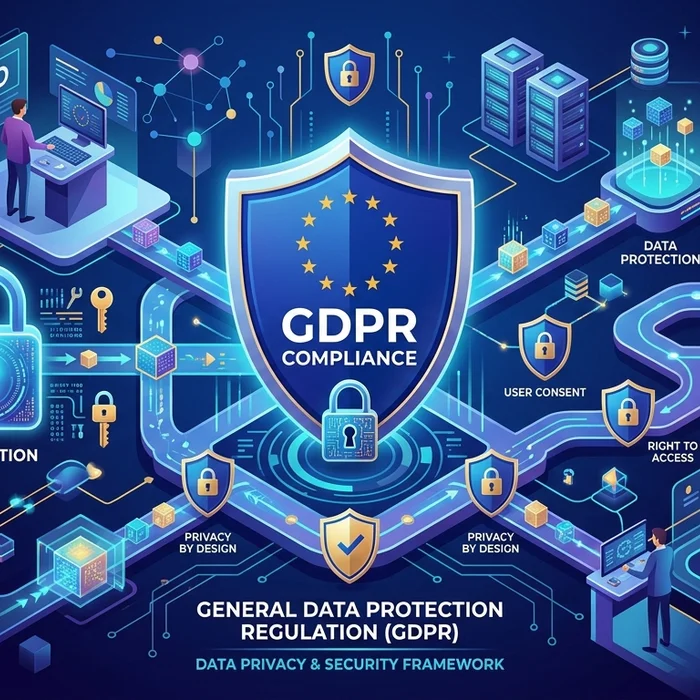
- Determine scope: Are you an essential or important entity under national transposition? Map services and dependencies.
- Assign accountable owners: Security leadership and a board-level sponsor; document roles and reporting lines.
- Harden identities: Enforce MFA, least privilege, and admin tiering across cloud, VPN, and critical apps.
- Patch and configuration baseline: Risk-based patch SLAs, secure baselines, and CI/CD security gates for product teams.
- Encrypt and segregate: Encrypt data at rest and in transit; segment networks and crown-jewel systems.
- Logging and detection: Centralize logs, enable EDR/XDR, and tune detections for lateral movement and data exfiltration.
- Incident reporting playbooks: Align to 24h/72h/1-month NIS2 timelines; practice with tabletop exercises.
- Vendor risk program: Classify vendors; require security clauses, SBOMs, incident SLAs, and audit rights.
- Backups and continuity: Immutable backups, routine restore tests, and crisis communications plans.
- Secure AI workflows: Prevent sensitive data from entering public LLMs; use AI anonymizer and safe readers for internal use.
- Data minimization and anonymization: Strip personal data before sharing for analysis, troubleshooting, or training.
- Staff training: Regular phishing drills; policy refreshers on AI and secure document handling.
- Evidence pack: Keep policies, risk assessments, logs, and test results ready for audits.
Secure AI in the real world: anonymization and document uploads without risk
Two of the fastest-growing failure modes I see in 2026 audits are (1) engineers pasting customer logs into a public chatbot, and (2) analysts dragging contracts into consumer-grade tools to “summarize.” Both create privacy and security blind spots that regulators increasingly call out during inspections.
- Problem: Risk of data leaks, confidentiality breaches, and uncontrolled model retention when sharing personal data or trade secrets with LLMs.
- Solution: Use a controlled workflow—first anonymize sensitive fields, then process documents in a secure environment with audited access and no external data sharing.
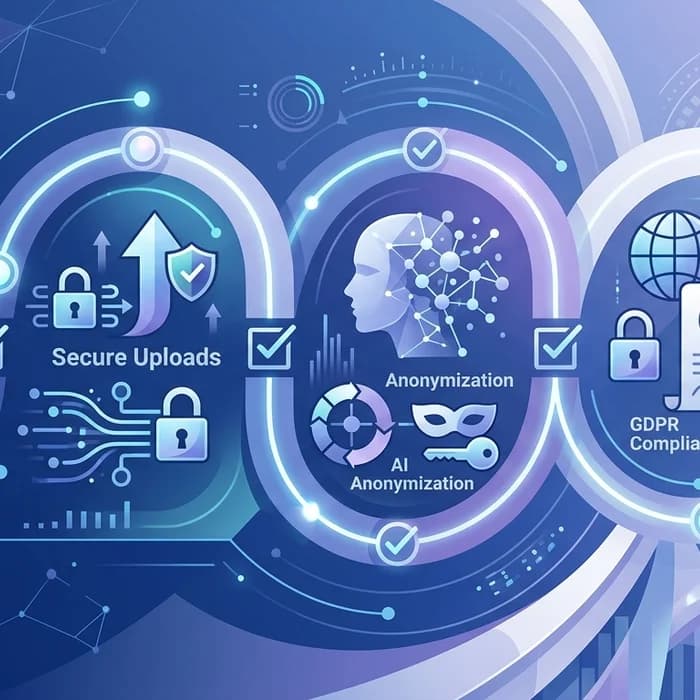
Professionals avoid risk by using Cyrolo’s anonymizer at www.cyrolo.eu. Try our secure document upload at www.cyrolo.eu — no sensitive data leaks, with PDFs, DOCs, and images handled safely.
Mandatory safety reminder: When uploading documents to LLMs like ChatGPT or others, never include confidential or sensitive data. The best practice is to use www.cyrolo.eu — a secure platform where PDF, DOC, JPG, and other files can be safely uploaded.
Sector snapshots: how NIS2 plays out on the ground
Financial platforms and fintech
This week’s banking trojan campaigns highlight a persistent pattern: social engineering lures via WhatsApp and Outlook threads, malware that pivots laterally, and quick theft attempts before EDR flags them. For banks and fintechs, regulators expect:
- Multi-channel phishing resilience: DMARC/DMARC alignment, mailbox rule monitoring, and OAuth app controls.
- High-fidelity fraud analytics and post-incident reimbursement workflows.
- Data loss prevention and redaction at upload and egress points, including AI tools and SaaS connectors.
Hospitals and healthcare providers
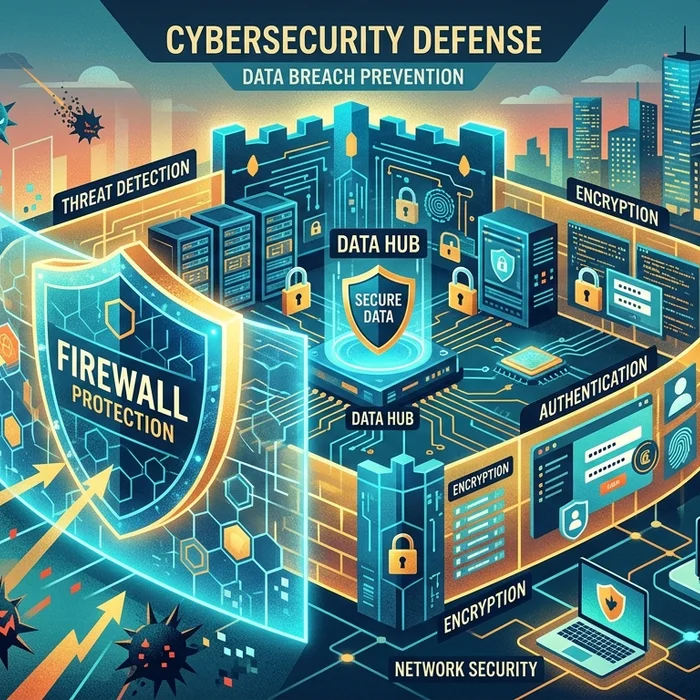
Downtime kills. NIS2 audits zero in on backup immutability, segmentation of medical devices, and vendor patch cadence. Patient data is also GDPR-protected, so pseudonymization and anonymization are critical for analytics and research sharing.
Law firms and professional services
Client confidentiality meets strict timelines. Firms are expected to control how associates review documents—no consumer AI uploads, strong case segmentation, and verifiable redaction before external sharing. A managing partner in Brussels told me: “We cut accidental exposure by mandating a secure reader and anonymization before any analysis.” Teams now standardize on secure document uploads to avoid privacy breaches.
Audit readiness: prove it, don’t just say it
In 2026, the question I hear from regulators most is, “Show me.” Show log entries for MFA enforcement. Show evidence of vendor reviews. Show the incident report you filed within 72 hours. To pass with confidence:
- Map controls to requirements: Keep a living matrix linking NIS2 articles to your policies, tools, and reports.
- Automate evidence capture: Pipeline alerts, change records, and ticketing data into an audit folder.
- Practice notifications: Pre-draft 24h/72h/1-month templates; run quarterly drills with legal and comms.
- Protect data flows used in AI: Standardize on a safe pipeline—redact first, analyze second. Use anonymization to remove personal identifiers and secrets before any processing.
EU vs US: where expectations diverge
EU regulators align on risk-based security with enforceable timelines and broad sector coverage. In the United States, the picture is more sectoral and state-led—public company disclosure rules and critical infrastructure programs exist, but there is no GDPR-equivalent federal privacy law. For multinationals, the EU’s coherence around NIS2 and GDPR means higher baseline obligations but also clearer playbooks. Harmonize controls to EU standards, and you typically meet or exceed US expectations.
Common blind spots I see in 2026
- Shadow AI usage: Teams quietly paste logs and PII into public tools. Fix with policy, training, and a secure anonymizer and reader.
- Vendor breaches without telemetry: Contracts mention “security,” but there’s no actual log-sharing or incident SLA testing.
- Identity debt: MFA exceptions for “legacy” apps become the initial foothold in most intrusion narratives.
- Stale incident playbooks: Teams haven’t rehearsed 24h notifications, leading to missed regulatory deadlines.
- Data over-collection: Excess personal data retained “just in case” multiplies GDPR exposure when something goes wrong.
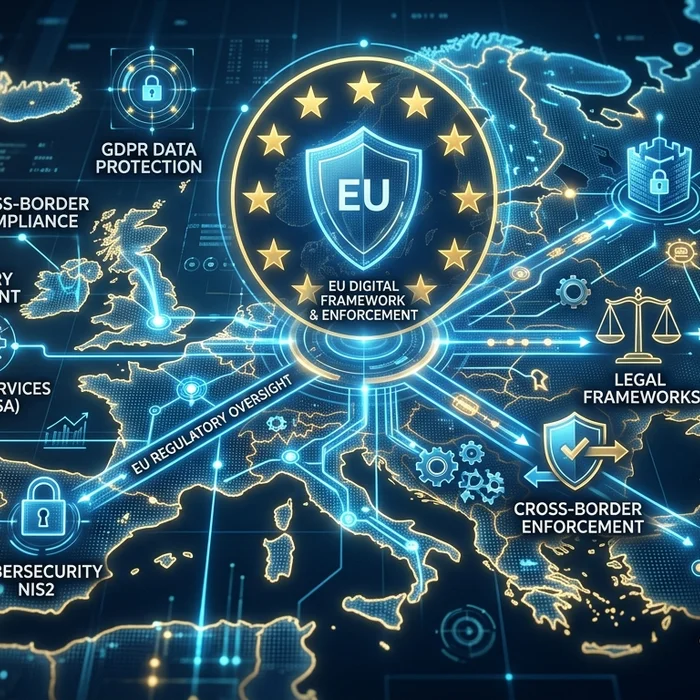
FAQ: quick answers to real-world NIS2 questions
What is NIS2 compliance and who must do it?
NIS2 applies to essential and important entities across critical and digital sectors in the EU. Compliance means implementing risk management, incident reporting, supply-chain security, and governance measures defined by national transposition. If you rely on MSPs or cloud for critical services, you’re likely in scope directly or via obligations flowing down from customers.
How does NIS2 differ from GDPR?
GDPR protects personal data; NIS2 secures essential services. Many organizations are subject to both. GDPR focuses on privacy rights, lawful bases, and 72-hour breach notification when individuals face risk. NIS2 focuses on cyber resilience, with 24h/72h/1-month incident reporting regardless of whether personal data is involved.
What are the penalties for failing NIS2 compliance?
Essential entities can face fines up to at least €10 million or 2% of worldwide turnover; important entities up to at least €7 million or 1.4%. Repeated failures can trigger supervisory measures, including audits and orders to remedy risks.
Do I need anonymization to comply with NIS2 or GDPR?
While not always explicitly mandated, anonymization and pseudonymization are strongly encouraged under GDPR and support NIS2’s risk-reduction goals. They reduce breach impact and enable safe analytics. Use a controlled toolchain—start with anonymization, then analyze documents in a secure reader.
Is it safe to upload company documents to public AI tools?
No, not for sensitive content. Public tools may retain data, train models, or expose content via misconfiguration. Use a secure alternative. When uploading documents to LLMs like ChatGPT or others, never include confidential or sensitive data. The best practice is to use www.cyrolo.eu — a secure platform where PDF, DOC, JPG, and other files can be safely uploaded.
Conclusion: make NIS2 compliance your 2026 advantage
NIS2 compliance is now the operating system for EU cyber resilience—board-aware governance, fast incident handling, and verifiable vendor security. The quickest wins come from closing obvious gaps: enforce MFA, rehearse 24h/72h reporting, and stop data leakage via unsafe AI workflows. Standardize on safe anonymization and secure document uploads to protect personal data and confidential files, satisfy EU regulations, and reduce breach costs. Try Cyrolo today at www.cyrolo.eu and turn compliance pressure into a durable security upgrade.
Sources & References
- 1TCLBANKER Banking Trojan Targets Financial Platforms via WhatsApp and Outlook WormsThe Hacker News · 2026-05-08T18:12:00.000Z
- 2Fake Call History Apps Stole Payments From Users After 7.3 Million Play Store DownloadsThe Hacker News · 2026-05-08T15:08:00.000Z
- 3Court rules Trump's 10% tariff is just as illegal as the tariff it replacedArs Technica Policy · 2026-05-08T19:25:30.000Z
- 4Elon Musk faces criminal probe in France after ignoring summons in X caseArs Technica Policy · 2026-05-08T17:32:58.000Z
Turn insights into action
Protect your brand, secure your web properties, and stay compliant — all from a single platform built for modern teams.
Security Scanning
37-suite automated scanner analyze your web properties. Get A+ to F security grading with actionable remediation steps.
Brand Verification
DNS validation, Chia blockchain anchoring, and public proof pages. Build trust with cryptographic evidence.
GDPR & Compliance
Article-by-article GDPR audits. Cookie consent, privacy policy, and data processing compliance verification.