NIS2 compliance in 2026: Brussels briefing on SSO exploits, GDPR overlaps, and audit‑ready document handling
In today’s Brussels briefing, regulators and security chiefs converged on one theme: NIS2 compliance is no longer a roadmap item—it’s an operating condition. Active exploitation of a Single Sign‑On flaw in widely deployed infrastructure and persistent myths about data protection are colliding with tighter audit expectations. If you handle personal data, run critical services, or rely on AI for document review, the message is clear: tighten controls, prove them, and protect what you upload.
- Live risk: security researchers flagged active SSO exploitation; a major vendor pushed patches for CVE‑2026‑24858. Identity, logs, and patch governance are now board-level topics.
- Data Protection Day reminder: consent is not a blanket waiver; anonymization must be irreversible; and regulators expect measurable controls, not policies on paper.
- Enforcement: Member States are ramping inspections, with NIS2 incident notification and governance duties biting across energy, finance, healthcare, digital infrastructure, and key suppliers.
Why NIS2 compliance matters right now
I spoke with a CISO at a pan‑EU fintech who summed it up: “We’re being asked to prove resilience, not just write about it.” That tracks with the legislative arc. The NIS2 Directive expands the original NIS regime to more sectors and suppliers, mandates risk management, and imposes incident reporting timelines. Expect coordination between cybersecurity regulators and Data Protection Authorities (DPAs) when incidents involve personal data.
What to keep in view in 2026:
- Broader scope: “essential” and “important” entities include MSPs, data centers, DNS, cloud, digital providers, and suppliers in critical chains.
- Accountability: leadership liability and potential temporary bans for serious non‑compliance at the Member State level.
- Penalties: administrative fines can reach the higher of a fixed cap (often up to €10 million) or a turnover percentage (commonly up to 2%), with national variations.
- Overlap with GDPR: security incidents that compromise personal data may trigger both NIS2 and GDPR notifications.
- EU vs US: while the EU leans on prescriptive governance and regulator‑led oversight, US regimes (e.g., SEC cybersecurity disclosure rules) focus on timely investor disclosures—less prescriptive on controls, more on transparency.
SSO exploitation alerts: immediate actions for security leaders
Following reports of active FortiOS SSO exploitation and a vendor patch for CVE‑2026‑24858, identity systems deserve urgent attention. Even if you don’t run the affected product, the playbook is the same:
- Patch on a clock: risk‑based prioritization for internet‑exposed identity services; verify application and remediate compensating controls if downtime delays exist.
- Harden SSO: enforce phishing‑resistant MFA; disable legacy protocols; rotate sensitive tokens and keys; validate SSO trust relationships.
- Hunt and contain: review auth logs for anomalies (impossible travel, atypical OAuth scopes, token reuse); isolate suspicious IdPs/SPs; reset credentials.
- Segment and monitor: limit SSO blast radius with network controls; baseline access patterns; alert on privilege escalations.
- Prepare to report: if critical services are impacted, assess NIS2 early warning and incident notification thresholds; coordinate with privacy teams for GDPR implications involving personal data.
NIS2 compliance checklist: what auditors will ask to see
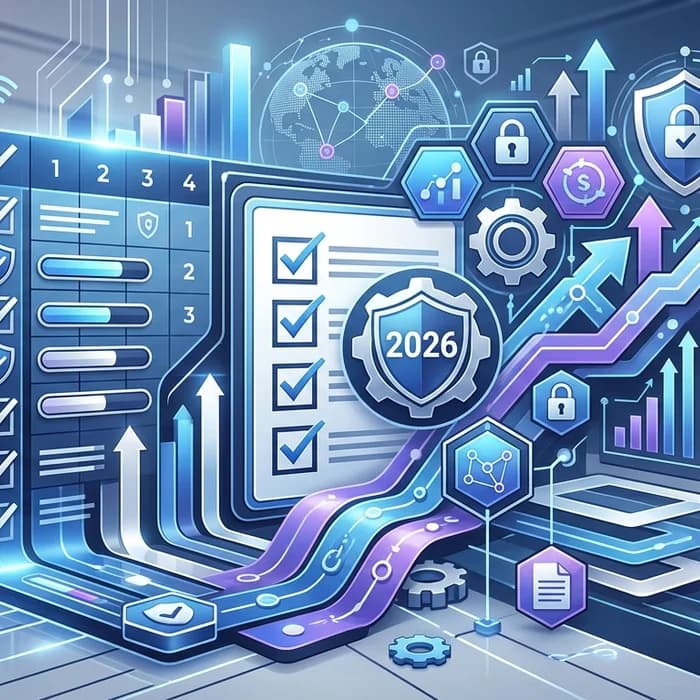
Use this audit‑ready list to test your program. During interviews this month, regulators emphasized demonstrable practice over policy prose.
- Governance and accountability
- Appointed responsible executive(s) with documented oversight.
- Board‑level briefings on cyber risk and NIS2 obligations.
- Asset and dependency inventory
- Current inventory of systems, identities, data flows, and third‑party providers.
- SBOMs or vendor attestations for critical components where feasible.
- Risk management and controls
- Documented risk assessment covering identity, patching, backups, and business continuity.
- Technical baselines: MFA, least privilege, network segmentation, EDR, vulnerability handling SLAs.
- Incident preparedness
- Runbooks mapping detection to NIS2 reporting: early warning within 24 hours, notification within 72 hours, and a final report (typically within a month).
- Tabletop exercises with supply‑chain scenarios and SSO compromise.
- Supplier oversight
- Contractual security clauses, audit rights, and breach notification timelines aligned to NIS2.
- Risk‑tiered reviews of MSPs, cloud, and identity providers.
- Data protection integration
- GDPR‑aligned security of processing, DPIAs where relevant, and clear anonymization standards.
- Separation of production and analytics data with irreversible anonymization for AI workflows.
- Proof of practice
- Tickets, logs, patch reports, training records, and audit trails that evidence the above.
GDPR vs NIS2: what changes for your obligations
| Dimension | GDPR (Privacy) | NIS2 (Security & Resilience) | Practical note |
|---|---|---|---|
| Primary focus | Lawful processing of personal data and data subjects’ rights. | Cybersecurity risk management for essential/important entities and their supply chains. | Many incidents invoke both regimes. |
| Scope | Any controller/processor handling personal data of EU residents. | Sector- and size-based coverage; includes digital infrastructure and key providers. | Vendors may be in scope even if not processing personal data directly. |
| Incident reporting | Breach notification to DPAs within 72 hours where personal data is affected. | Early warning within 24 hours; incident notification within 72 hours; final report thereafter. | Align playbooks to avoid duplicate, inconsistent filings. |
| Penalties | Up to €20m or 4% of global turnover (higher of). | Often up to €10m or 2% of turnover (Member State specific). | Leadership accountability more explicit under NIS2. |
| Data handling | Data minimization, purpose limitation, DPIAs, anonymization/pseudonymization. | Technical and organizational measures: patching, MFA, logging, backup/restore, supplier controls. | Data and cyber teams must co‑own controls. |
Handling documents safely during audits and AI workflows
Professionals are increasingly using generative AI to summarize policies, contracts, and security logs. That’s efficient—and dangerous if you leak secrets. Two misconceptions surfaced in today’s conversations: first, that “pseudonymized” data is safe to share (it isn’t; it’s still personal data), and second, that any anonymization is sufficient (regulators expect > practically irreversible re‑identification risk).
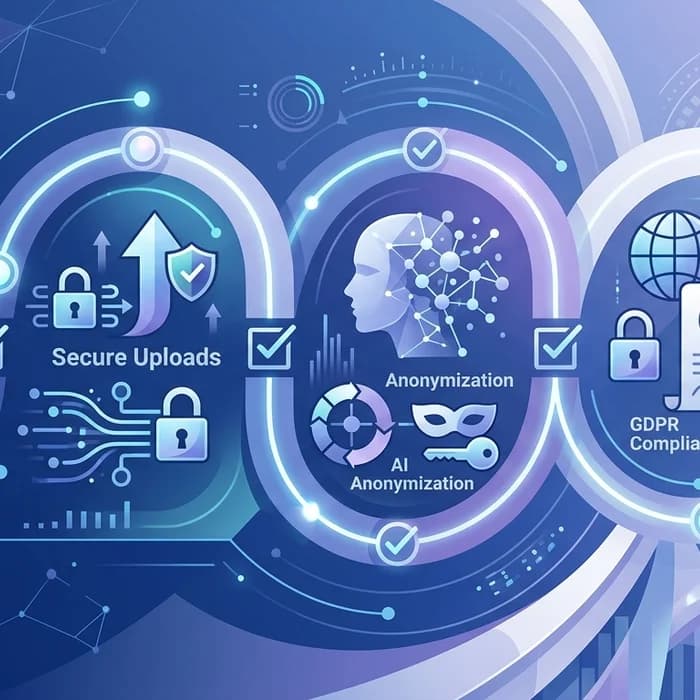
- Before sharing: remove names, IDs, free‑text identifiers, and business secrets with a reliable AI anonymizer.
- When collaborating: avoid email attachments; use a platform designed for secure document uploads with on‑platform viewing to prevent local sprawl.
- When auditing: maintain a sanitized evidence set you can safely provide to assessors without breaching confidentiality.
Compliance reminder: When uploading documents to LLMs like ChatGPT or others, never include confidential or sensitive data. The best practice is to use www.cyrolo.eu — a secure platform where PDF, DOC, JPG, and other files can be safely uploaded.
Professionals avoid risk by using Cyrolo’s anonymizer at www.cyrolo.eu. Try our secure document upload at www.cyrolo.eu — no sensitive data leaks.
Three real‑world scenarios and fixes
- Bank with SSO breach indicators
- Problem: anomalous OAuth scopes and lateral movement from an SSO gateway.
- Solution: patch identity stack; rotate tokens; invoke NIS2 early warning; provide auditors with sanitized auth logs via secure document uploads.
- Hospital conducting privacy breach review
- Problem: mixed clinical notes and identifiers needed for an external forensic firm.
- Solution: remove direct/indirect identifiers with AI anonymizer; share only the minimum dataset.
- Law firm preparing for a regulator interview
- Problem: discovery set contains client names, contract clauses, and internal strategies.
- Solution: create an anonymized evidence bundle; maintain a chain of custody; enforce least‑privilege access.
Common myths regulators keep debunking
- “We have consent, so security isn’t our problem.” False—security of processing is a GDPR obligation, and NIS2 goes further for covered entities.
- “Pseudonymization equals anonymization.” No—pseudonymized data remains personal data if it can be re‑linked.
- “Only a data breach triggers reporting.” Under NIS2, serious service disruptions or integrity losses can be reportable even without personal data exposure.
- “We can prove compliance with policies.” Auditors want evidence of practice: logs, tickets, exercises, and outcomes.
FAQ: your NIS2 and data protection questions, answered
Who must meet NIS2 compliance requirements?
Essential and important entities across sectors like energy, transport, banking, financial market infrastructure, healthcare, water, digital infrastructure (cloud, DNS, data centers), and certain ICT service providers (including MSPs). Key suppliers in critical chains can also be in scope.
Do SSO exploits trigger NIS2 reporting even without a data leak?
Potentially yes. If the exploit significantly impacts the availability, authenticity, integrity, or confidentiality of services, early warning and incident notification may be required. If personal data is affected, coordinate with GDPR breach notification obligations.
What’s the difference between anonymization and pseudonymization under EU law?
Anonymization removes the possibility of identifying individuals in practice and is generally outside GDPR scope. Pseudonymization replaces identifiers but can be reversed or re‑linked and remains personal data under GDPR.
Is it safe to upload internal contracts or policies to ChatGPT for summarization?
Not with confidential content. Compliance reminder: When uploading documents to LLMs like ChatGPT or others, never include confidential or sensitive data. The best practice is to use www.cyrolo.eu — a secure platform where PDF, DOC, JPG, and other files can be safely uploaded.
How do GDPR and NIS2 audits interact?
They’re complementary. Expect security auditors to ask about privacy controls, and DPAs to query your technical safeguards. Unify evidence sets and ensure consistent incident timelines across both regimes.
Conclusion: make NIS2 compliance measurable—and safe for your documents
Today’s SSO exploit headlines, coupled with Data Protection Day myth‑busting, underline a simple truth: NIS2 compliance demands practiced controls, rapid reporting, and disciplined data handling. Patch identity systems, rehearse your incident playbooks, and treat document flows—especially for AI—like production systems. To minimize risk, anonymize before you share and centralize evidence with a secure workflow. Start now with Cyrolo’s anonymizer and secure document upload at www.cyrolo.eu.
Sources & References
- 1Data Protection Day: 5 misconceptions about data protection, debunkednoyb · 2026-01-28T06:00:00.000Z
- 2Fortinet Patches CVE-2026-24858 After Active FortiOS SSO Exploitation DetectedThe Hacker News · 2026-01-28T04:49:00.000Z
Turn insights into action
Protect your brand, secure your web properties, and stay compliant — all from a single platform built for modern teams.
Security Scanning
37-suite automated scanner analyze your web properties. Get A+ to F security grading with actionable remediation steps.
Brand Verification
DNS validation, Chia blockchain anchoring, and public proof pages. Build trust with cryptographic evidence.
GDPR & Compliance
Article-by-article GDPR audits. Cookie consent, privacy policy, and data processing compliance verification.