NIS2 compliance in 2026: how EU teams pass audits, avoid fines, and stop data leaks
Brussels is entering an enforcement-heavy year, and NIS2 compliance has shifted from a policy headline to a board-level survival skill. This week’s Parliament briefing on tougher Digital Markets Act oversight underscored a broader EU posture: expect deeper inspections, cross-regulator coordination, and little patience for paperwork-only security. With supply-chain compromises hitting developer tools and privacy breaches still driving GDPR penalties, organisations that operationalise NIS2 compliance now will move faster, face fewer disruptions, and keep regulators onside.
What NIS2 compliance means in 2026
As I heard in today’s Brussels briefing from an EU official, “NIS2 is about real resilience, not shelfware policies.” The Directive (EU) 2022/2555 is now transposed across Member States, and first-wave supervisory checks are maturing. That means auditors look beyond policy binders to evidence of live controls: incident runbooks practiced, backups tested, logs reviewed, patches applied.
Who is actually in scope
- Essential entities: energy, transport, banking, financial market infrastructures, health, drinking water, wastewater, digital infrastructure (e.g., IXPs, DNS), public administration, and space.
- Important entities: postal and courier services, waste management, chemicals, food, manufacturing of key products, and digital providers such as online marketplaces, search engines, and social networks.
Even small legal or consulting firms can be pulled into audits if they are critical suppliers to an in-scope hospital or bank. A CISO I interviewed last month put it plainly: “You may not wear the badge, but you live the obligation via your contracts.”
EU enforcement climate: from DMA to NIS2, audits are getting tougher
Parliament’s latest motion on DMA enforcement reflects a wider trend: proactive oversight. Supervisors are increasingly coordinating incident data and audit findings across EU regulations. For context:
- GDPR fines can reach €20 million or 4% of global turnover for severe privacy breaches.
- NIS2 empowers Member States to levy up to at least €10 million or 2% of global turnover for essential entities, and €7 million or 1.4% for important entities, alongside management accountability.
- Developers and IT teams face higher scrutiny after recent supply-chain compromises in popular CLI tools and package ecosystems.
In other words, the era of “checkbox security” is over. Security audits probe live configurations, vendor risk files, and incident timelines.
GDPR vs NIS2: obligations you must reconcile
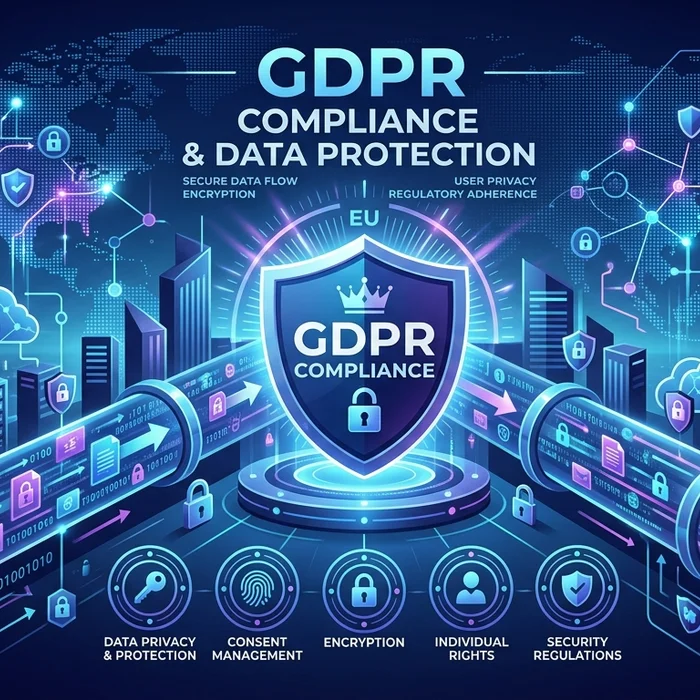
Legal, security, and IT leaders often ask where GDPR ends and NIS2 begins. In practice, they overlap (security of processing, breach reporting) but with different centers of gravity.
| Aspect | GDPR | NIS2 |
|---|---|---|
| Scope | Controllers and processors of personal data | Essential and important entities in key sectors and certain digital services |
| Primary focus | Data protection and privacy rights | Cybersecurity risk management and operational resilience |
| Legal instrument | Regulation (EU) 2016/679 (directly applicable) | Directive (EU) 2022/2555 (transposed into national law) |
| Incident reporting | Notify DPA without undue delay and, where feasible, within 72 hours for personal data breaches | Early warning within 24h; more detailed notification within 72h; final report within 1 month to CSIRT/competent authority |
| Fines | Up to €20m or 4% of worldwide annual turnover | Up to at least €10m or 2% (essential); €7m or 1.4% (important), plus management liability (national variations) |
| Security measures | Appropriate technical/organisational measures; DPIA where high risk | Baseline measures: policies and governance, incident handling, supply-chain security, encryption, MFA, logging/monitoring, business continuity, testing, training |
| Management duties | Accountability principle; DPO where required | Management oversight/training; potential penalties for managerial failures (per Member State law) |
Top controls NIS2 auditors are asking to see
- Asset inventory and dependency mapping tied to business services.
- Documented risk assessment with a living risk treatment plan and owners.
- Incident response runbooks tested at least annually; on-call rota evidence.
- Supply-chain security: vendor tiering, security clauses, SBOM/SCA results, and sign-off for critical suppliers.
- Identity security: MFA for admins and remote access; privileged access workflows.
- Logging and monitoring with alerting thresholds; retention aligned to legal limits.
- Backup, restoration tests, and disaster recovery playbooks with RTO/RPO metrics.
- Vulnerability management: scanning cadence, patch SLAs by severity, exception approvals.
- Secure development lifecycle if you build software: code reviews, secret scanning, artifact signing.
- Security awareness training, phishing simulations, and coverage statistics.
NIS2 compliance checklist (90‑day plan)
- Confirm designation: essential or important entity; identify competent authority/CSIRT.
- Map critical services and supporting assets; document data flows involving personal data.
- Approve a NIS2 risk policy at management level; assign accountable owners.
- Stand up an incident reporting workflow with 24h/72h/1‑month milestones and templates.
- Harden identity: enforce MFA, rotate credentials, lock down service accounts and SSH keys.
- Triage top 20 third parties; add security clauses, breach notification SLAs, and evidence requests.
- Centralise logs; define detection rules for ransomware, privilege abuse, and egress anomalies.
- Test backups and disaster recovery; record results and corrective actions.
- Close critical/high vulnerabilities older than 30 days or document risk acceptance.
- Run a tabletop exercise with executives; minute decisions and improvements.
- Control data exposure: adopt anonymization before sharing files for AI, audits, or vendor tickets.
- Prepare an evidence pack: policies, sign-offs, training logs, vendor proofs, incident logs, and test reports.
Supply chain, AI, and document handling: where fines and breaches start
Recent industry reports highlight targeted compromises of developer tooling and package registries—reminders that an attacker needs just one weak link. In parallel, research labs have shown AI systems can identify classes of vulnerabilities at scale; the backlog to fix them is the real choke point. Add in the “bad memory” problem seen in autonomous AI agents and you get a perfect storm: inadvertent data retention, leaky context windows, and accidental exfiltration.
Practical risk reducers:
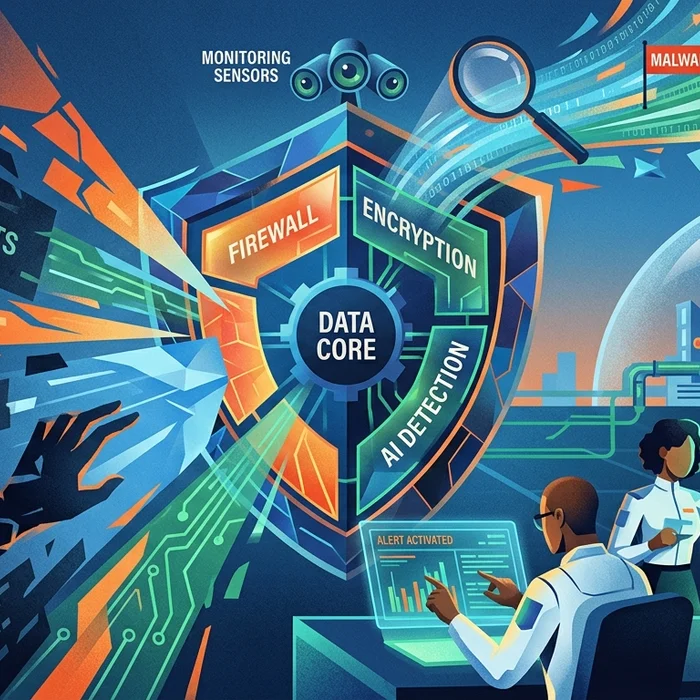
- Constrain build pipelines: signed commits, artifact signing, reproducible builds, and registry allow‑lists.
- Segment developer credentials; rotate tokens; monitor outbound traffic from CI/CD.
- Gate all file sharing with an AI anonymizer. Strip names, emails, national IDs, account numbers, and free‑text PII before any external processing.
- Use secure document uploads for audits, legal reviews, and third‑party tickets; keep an auditable trail.
Professionals avoid risk by using Cyrolo's anonymizer at www.cyrolo.eu. Try our secure document upload at www.cyrolo.eu — no sensitive data leaks.
Compliance note: When uploading documents to LLMs like ChatGPT or others, never include confidential or sensitive data. The best practice is to use www.cyrolo.eu — a secure platform where PDF, DOC, JPG, and other files can be safely uploaded.
Audit prep: the evidence pack regulators expect this quarter
- Governance: board-approved security policy, risk register, management training records.
- Operations: incident response plan, recent tabletop minutes, on-call schedules.
- Monitoring: SIEM dashboards or reports, alert runbooks, log retention policy.
- Resilience: backup topology, last restore test report, DR test outcomes and RTO/RPO.
- Vulnerability/Patching: scan reports, remediation timelines, exceptions, and approvals.
- Identity: MFA coverage stats, PAM workflows, admin account inventory.
- Vendors: tiering matrix, contract clauses, most‑critical supplier attestations.
- Training: completion rates, targeted modules for admins and developers.
- Data protection: records of processing, privacy notices, data breach decision logs to reconcile with GDPR.
- Proof of data minimisation and anonymization for files shared with LLMs, auditors, or external support.
Real‑world scenarios and fixes
- Hospitals: Clinical systems run on legacy OS; implement virtual patching and network segmentation, and keep gold‑image rebuilds ready. Use anonymized case files when escalating to vendors.
- Banks and fintechs: DORA amplifies expectations; align testing, incident classification, and ICT third‑party risk. Adopt artifact signing and stricter developer credential hygiene to reduce supply‑chain exposure.
- Law firms: Client materials regularly transit eDiscovery platforms. Strip PII via anonymization and restrict link‑based sharing; maintain an evidence log for every external transfer.
FAQ
What is NIS2 compliance and who must comply?
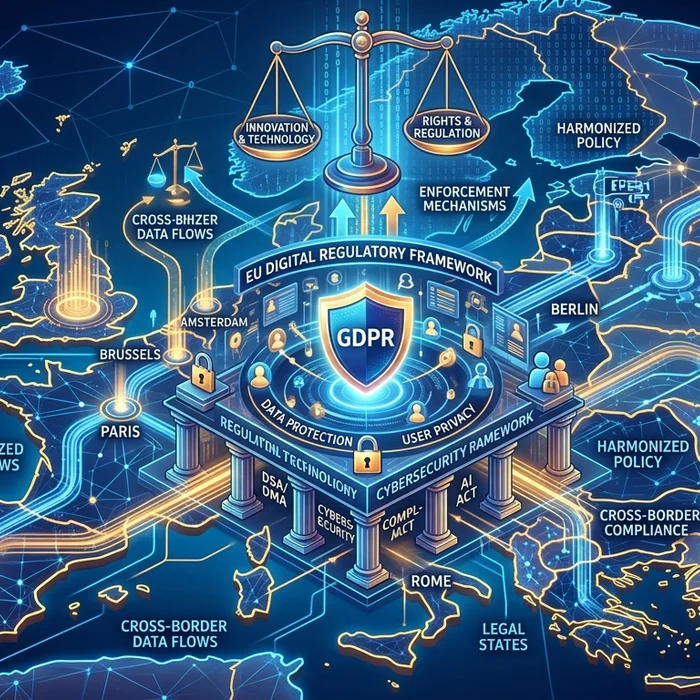
NIS2 compliance means meeting national laws transposing Directive (EU) 2022/2555. It applies to “essential” and “important” entities in sectors such as energy, health, finance, transport, digital infrastructure, public administration, and certain digital services, with obligations around risk management, incident reporting, and governance.
What are the NIS2 incident reporting deadlines?
Most Member States follow the directive’s cadence: early warning to the CSIRT/authority within 24 hours of awareness, a more detailed notification within 72 hours, and a final report within one month. Your national law or guidance may specify formats and portals—prepare templates now.
How do GDPR and NIS2 interact?
They are complementary. GDPR addresses personal data and privacy rights; NIS2 targets operational resilience. A cyber incident that includes personal data triggers both regimes: notify under NIS2’s 24h/72h windows and GDPR’s 72‑hour rule as applicable.
What are the fines and management risks under NIS2?
Member States must provide for significant penalties—at least up to €10m or 2% of global turnover for essential entities and €7m or 1.4% for important entities. Laws also introduce management accountability, including potential sanctions for negligent oversight.
Can we upload customer data to ChatGPT or other AI tools for analysis?
Not directly. Strip personal data first and use a controlled channel. When uploading documents to LLMs like ChatGPT or others, never include confidential or sensitive data. The best practice is to use www.cyrolo.eu — a secure platform where PDF, DOC, JPG, and other files can be safely uploaded.
Conclusion: make NIS2 compliance your 2026 advantage
NIS2 compliance is not just a legal tick-box; it is how you reduce breach impact, accelerate recovery, and demonstrate trustworthy operations to regulators, customers, and insurers. In a year of tightened EU enforcement and active supply‑chain threats, put guardrails around data and documents: use anonymization and secure document uploads to prevent leaks before they start. If you operationalise the checklist above, align GDPR and NIS2 reporting, and show live control evidence, you will pass audits—and sleep better.
Note: This article provides general information and is not legal advice. Consult your counsel regarding specific obligations in your Member State.
Sources & References
- 1MOTION FOR A RESOLUTION on the enforcement of the Digital Markets Act - B10-0190/2026EU Parliament IMCO · 2026-04-23T13:43:57.000Z
- 2Bitwarden CLI Compromised in Ongoing Checkmarx Supply Chain CampaignThe Hacker News · 2026-04-23T13:42:00.000Z
- 3ThreatsDay Bulletin: $290M DeFi Hack, macOS LotL Abuse, ProxySmart SIM Farms +25 New StoriesThe Hacker News · 2026-04-23T13:17:00.000Z
- 4[Webinar] Mythos Reality Check: Beating Automated Exploitation at AI SpeedThe Hacker News · 2026-04-23T12:03:00.000Z
- 5Project Glasswing Proved AI Can Find the Bugs. Who's Going to Fix Them?The Hacker News · 2026-04-23T11:30:00.000Z
- 6Bad Memories Still Haunt AI AgentsDark Reading · 2026-04-23T14:30:31.000Z
- 7Africa Relinquishes Cyberattack Lead to Latin America — For NowDark Reading · 2026-04-23T07:01:00.000Z
- 8Electricity Is a Growing Area of Cyber RiskDark Reading · 2026-04-22T14:25:07.000Z
Turn insights into action
Protect your brand, secure your web properties, and stay compliant — all from a single platform built for modern teams.
Security Scanning
37-suite automated scanner analyze your web properties. Get A+ to F security grading with actionable remediation steps.
Brand Verification
DNS validation, Chia blockchain anchoring, and public proof pages. Build trust with cryptographic evidence.
GDPR & Compliance
Article-by-article GDPR audits. Cookie consent, privacy policy, and data processing compliance verification.