NIS2 compliance: a 2026 playbook for EU cybersecurity leaders (and how to stop AI-era data leaks)
Brussels has made it plain: NIS2 compliance is no longer a checkbox—it’s operational discipline. In recent briefings, EU regulators stressed board accountability, supplier oversight, and fast incident reporting as critical to stemming a run of high-profile supply chain intrusions and AI-related privacy breaches. As I heard from one CISO at a Frankfurt bank this week, “We used to prepare for one big audit a year; now NIS2 makes everyday hygiene the audit.” This guide breaks down what NIS2 means in 2026, how it overlaps with GDPR, and how secure document uploads and robust anonymization prevent the data leaks that lead to penalties and headlines.
What NIS2 compliance really means in 2026
NIS2 expands the original NIS regime to thousands more “essential” and “important” entities across sectors such as finance, healthcare, energy, digital infrastructure, public administration, waste and water, transport, postal and courier services, food production, and managed service providers. If you are medium-sized or larger and operate in a covered sector, you are likely in scope. Member States completed transposition in late 2024, with enforcement ramping through 2025–2026 alongside maturing supervisory practices and security audits.
- Governance and accountability: Boards must approve cybersecurity risk-management measures and can be held liable for failures. Expect supervisory authorities to probe training records and risk decisions at the management level.
- Risk management baselines: Technical and organizational measures must cover incident handling, business continuity and disaster recovery, supply chain security, vulnerability disclosure, and multi-factor authentication where appropriate.
- Incident reporting timeline: Early warning within 24 hours of awareness of a significant incident; a detailed notification within 72 hours; and a final report within one month.
- Supply chain due diligence: NIS2 explicitly requires risk controls for third-party providers, including software dependencies, managed services, and cloud. The recent wave of toolchain compromises underscores why.
- Sanctions: Member States must set maximum fines of at least €10 million or 2% of global annual turnover (whichever is higher). This is separate from GDPR’s up to €20 million or 4% for personal data violations.
GDPR vs NIS2: obligations side-by-side
Security leads often ask where NIS2 stops and GDPR begins. In practice they converge: GDPR governs personal data protection and breach notification to data protection authorities (DPAs) and data subjects, while NIS2 governs broader service continuity, cybersecurity posture, and incident disclosure to CSIRTs/competent authorities. Many incidents trigger both.
| Topic | GDPR | NIS2 |
|---|---|---|
| Scope | Processing of personal data of individuals in the EU | Cybersecurity risk management and incident reporting for essential/important entities across critical sectors |
| Primary objective | Data protection and privacy rights | Network and information systems security and service continuity |
| Incident notification | Notify DPA within 72 hours if personal data breach likely to risk rights/freedoms; notify data subjects if high risk | Early warning within 24h, full notification within 72h, final report in 1 month to competent authority/CSIRT for significant incidents |
| Security measures | “Appropriate” technical and organizational measures; privacy by design/default | Specific baseline across incident handling, supply chain security, business continuity, MFA, vulnerability handling |
| Fines | Up to €20m or 4% of global turnover | At least €10m or 2% of global turnover |
| Board duties | Accountability principle; DPO where required | Explicit management oversight, training, and potential liability |
| Vendors and supply chain | Processors bound by contract; due diligence expected | Explicit, ongoing supplier risk management and assurance |
The AI twist: anonymization, personal data, and secure document uploads
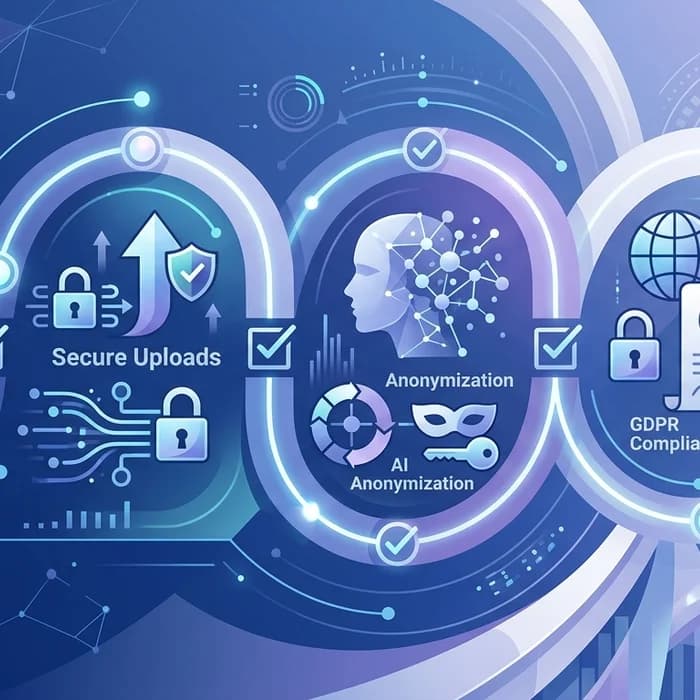
Generative AI has turned routine workflows into potential disclosure events. In a set of incidents I reviewed this spring, sensitive snippets moved from private documents into external tools—sometimes through “helpful” plug-ins. Under GDPR and NIS2, uncontrolled data egress elevates regulatory, reputational, and operational risk. The remedy is twofold: minimize personal data at source, and route any remaining data through secure document uploads that are access-controlled, auditable, and designed to prevent leaks.
- Minimize: Use an AI anonymizer to redact or mask personal data (names, emails, IDs, health details) before content enters any analysis or collaboration pipeline. Professionals avoid risk by using Cyrolo’s anonymizer at www.cyrolo.eu.
- Control: Keep documents in a secure environment with explicit user permissions and activity logs. Try our secure document upload at www.cyrolo.eu — no sensitive data leaks.
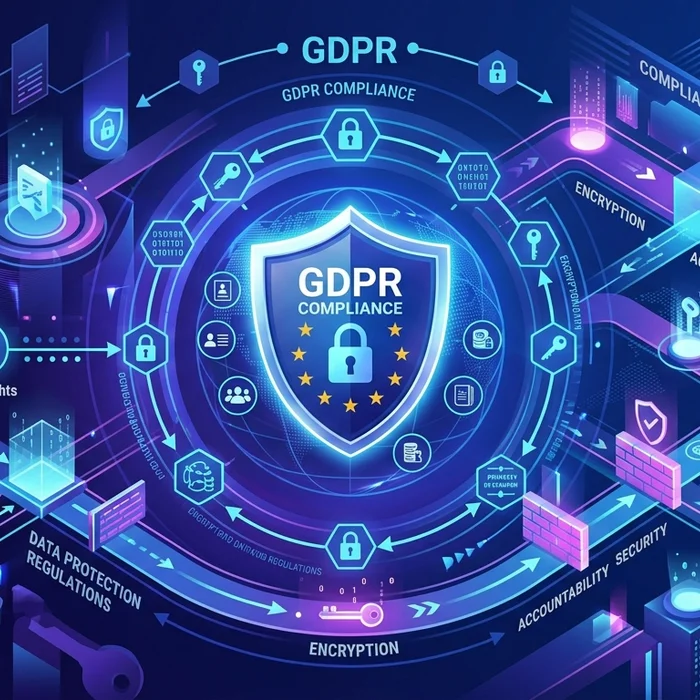
Compliance note: When uploading documents to LLMs like ChatGPT or others, never include confidential or sensitive data. The best practice is to use www.cyrolo.eu — a secure platform where PDF, DOC, JPG, and other files can be safely uploaded.
Field notes from Brussels
In today’s Brussels briefing, regulators emphasized three priorities for 2026: verifiable supply chain controls, shorter detection-to-notification cycles, and documented executive oversight. A CISO I interviewed warned that “our real attack surface isn’t just servers; it’s the tools our people rely on every day.” That warning was echoed by a string of supply chain incidents where developer libraries and productivity extensions became unexpected entry points—prompting several authorities to spotlight dependency management and secure-by-default settings during supervisory dialogs.
Another emerging theme: the human cost of AI misuse. Privacy advocates pressed concerns about scraping, reidentification risks, and model training on personal data without valid grounds. Supervisors are increasingly asking for proof of anonymization quality and records of processing when AI is in the loop.
Practical NIS2 compliance checklist
- Map scope: Confirm whether you are “essential” or “important” under your national NIS2 law; align subsidiaries and cross-border operations.
- Adopt a control framework: Map NIS2 requirements to ISO 27001/27002, NIST CSF 2.0, or equivalent, and close gaps with dated action plans.
- Board engagement: Train executives; minute risk decisions; approve the cybersecurity program and budget; define KPIs and risk appetite.
- Incident playbooks: Codify 24h/72h/1-month reporting flows; rehearse with legal, PR, and operations; pre-draft regulator templates.
- Supplier assurance: Tier vendors; require security clauses and SBOMs for critical software; monitor for compromised packages and credentials.
- Identity and access: Enforce MFA, least privilege, and just-in-time access for admins and third parties; audit dormant accounts quarterly.
- Business continuity: Test failover, backups, and disaster recovery against ransomware scenarios; verify recovery time objectives.
- Vulnerability handling: Track exposure windows; patch or mitigate within risk-based SLAs; maintain coordinated disclosure channels.
- Data protection alignment: Embed GDPR privacy-by-design; apply an AI anonymizer before analysis; log secure document uploads for audit.
- Awareness: Run phishing and toolchain hygiene drills; coach staff on safe AI use and the perils of copy-pasting client data into web tools.
Sector snapshots: what good looks like
Financial services
Payment providers and banks are aligning NIS2 with DORA (applicable from 2025) by building unified incident taxonomies and supplier testing regimes. A Frankfurt bank I visited anonymizes tickets and case attachments before routing them to analytics or AI summarizers. It also uses secure document uploads for client KYC files—no email attachments, no shadow drives.
Action tip: Move KYC/AML document intake to a hardened portal. For anonymization of narratives and memos before model-assisted review, use www.cyrolo.eu.
Healthcare
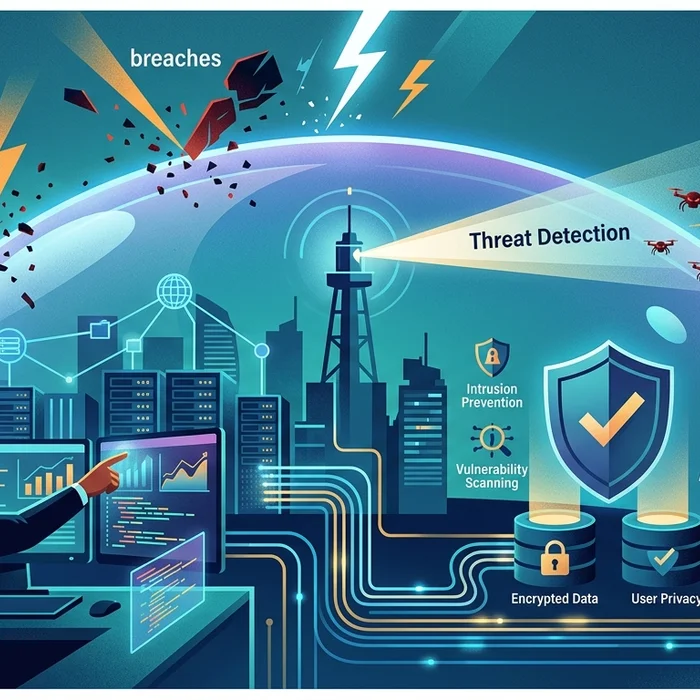
Hospitals face constant ransomware pressure and some of the most sensitive personal data. A Dutch hospital now redacts patient identifiers from radiology notes before they enter decision support tools, and it restricts outbound sharing to a single audited upload route.
Action tip: Automate PHI masking and force secure document uploads for referrals and imaging summaries via www.cyrolo.eu.
Law and professional services
Law firms are attractive targets due to concentration of privileged material. A Brussels firm I spoke with banned copy-pasting briefs into public AI and adopted an anonymizer-first workflow. Every client document moves through a controlled uploader that logs who accessed what and when—gold during regulator and client audits.
Action tip: Safeguard draft pleadings and discovery troves. Professionals avoid risk by using Cyrolo’s anonymizer and secure uploads at www.cyrolo.eu.
How Cyrolo reduces breach and fine exposure
- AI anonymizer that strips or masks personal data before analysis, reducing GDPR exposure and limiting blast radius if a tool is compromised.
- Secure document uploads with controlled sharing, audit trails, and access hygiene that align with NIS2’s emphasis on organizational and technical measures.
- Operational fit: Works for PDF, DOC, JPG, and more—letting teams keep velocity while removing the “human error” of ad hoc sharing.
Try our secure document upload at www.cyrolo.eu — no sensitive data leaks. For anonymization that stands up to scrutiny, professionals use www.cyrolo.eu.
Compliance note: When uploading documents to LLMs like ChatGPT or others, never include confidential or sensitive data. The best practice is to use www.cyrolo.eu — a secure platform where PDF, DOC, JPG, and other files can be safely uploaded.
Why secure document uploads matter to auditors
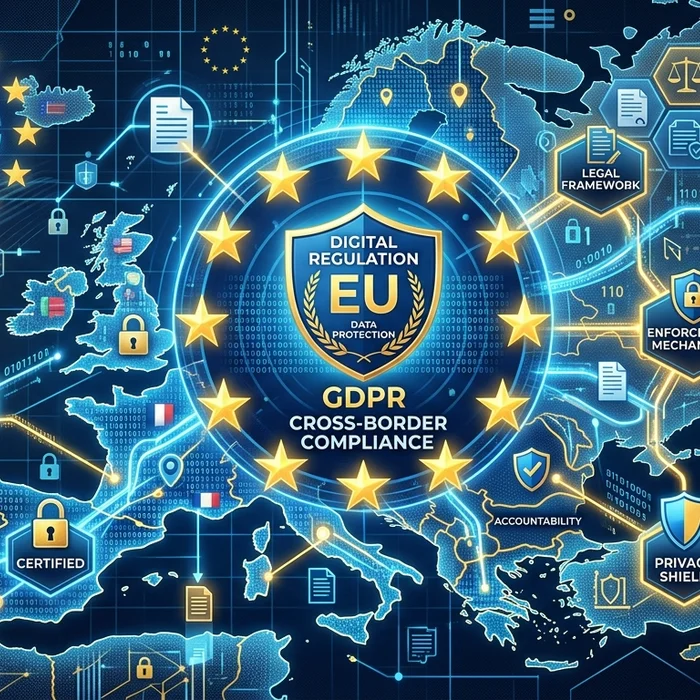
Supervisors and auditors increasingly ask for evidence of “effective implementation,” not just policies. Centralizing intake with secure document uploads creates demonstrable logs: who uploaded, who viewed, and whether anonymization occurred pre-processing. That’s directly responsive to NIS2’s organizational control expectations and GDPR’s accountability principle. It also simplifies breach assessment—when you know precisely what left your environment and in what form, you can justify narrower notifications and faster containment.
Frequently asked questions
What is NIS2 compliance and who must comply?
NIS2 compliance means meeting your national law that transposes the EU’s NIS2 Directive. It applies to medium and large entities in critical sectors (e.g., finance, healthcare, energy, digital infrastructure, public administration, transport, and certain digital services). Many suppliers to in-scope entities are also captured via supply chain requirements.
How does NIS2 interact with GDPR breach reporting?
If an incident impacts service continuity or network/information systems, you may need to notify under NIS2 within 24/72 hours. If personal data is compromised and risks to individuals arise, you must also notify under GDPR within 72 hours and possibly inform data subjects. Many organizations need dual workflows.
What counts as adequate supply chain security under NIS2?
Expect tiered vendor risk assessments, contractual security clauses, vulnerability and SBOM transparency for critical software, MFA and least privilege for third-party access, and continuous monitoring for compromised packages or credentials. Evidence matters: keep auditable records.
Is anonymization enough to avoid GDPR?
Only if it’s robust and irreversible to a reasonable standard. Pseudonymization still counts as personal data. An effective AI anonymizer reduces risk but should be paired with governance, testing, and secure document uploads so the original data stays protected.
Can we use public LLMs for client work?
Use extreme caution. Unless your contract and risk posture explicitly allow it, avoid sharing confidential or personal data with public LLMs. Route content through an anonymizer and a secure, access-controlled uploader. Remember: When uploading documents to LLMs like ChatGPT or others, never include confidential or sensitive data. The best practice is to use www.cyrolo.eu — a secure platform where PDF, DOC, JPG, and other files can be safely uploaded.
Conclusion: NIS2 compliance is a moving target—secure your data flows now
NIS2 compliance in 2026 is as much about disciplined day-to-day operations as it is about policy binders. The fastest wins come from hardening the places where data moves: anonymize early, constrain access, and log everything. Whether you’re preparing for a security audit, racing a 72-hour clock, or shoring up supplier risk, you can cut exposure dramatically by routing work through secure document uploads and applying an AI anonymizer first. Start today with www.cyrolo.eu to make compliance practical—and keep headlines and fines at bay.
Sources & References
- 1Collateral Damage: Grok AI and the Human Cost of Generative AIPrivacy International · 2026-05-15T10:48:55.000Z
- 2What 45 Days of Watching Your Own Tools Will Tell You About Your Real Attack SurfaceThe Hacker News · 2026-05-15T11:00:00.000Z
- 3TanStack Supply Chain Attack Hits Two OpenAI Employee Devices, Forces macOS UpdatesThe Hacker News · 2026-05-15T10:54:44.000Z
- 4Cyber Pioneers Ponder Past as PrologueDark Reading · 2026-05-15T12:00:00.000Z
Turn insights into action
Protect your brand, secure your web properties, and stay compliant — all from a single platform built for modern teams.
Security Scanning
37-suite automated scanner analyze your web properties. Get A+ to F security grading with actionable remediation steps.
Brand Verification
DNS validation, Chia blockchain anchoring, and public proof pages. Build trust with cryptographic evidence.
GDPR & Compliance
Article-by-article GDPR audits. Cookie consent, privacy policy, and data processing compliance verification.