NIS2 compliance in 2026: a practical EU playbook for CISOs, DPOs, and legal teams
In Brussels this spring, regulators again put board accountability and incident reporting under the spotlight—clear signals that NIS2 compliance has moved from “planning” to “prove it.” As an EU Policy & Cybersecurity Reporter covering GDPR, NIS2, and AI governance, I’ve been speaking with CISOs, DPOs, and counsel who now face parallel obligations: harden critical systems, evidence controls, and protect personal data while using AI safely. This guide distills what matters in 2026, how to avoid fines, and where quick wins exist—especially around anonymization and secure document workflows.

What NIS2 compliance means in 2026
NIS2 expands the original NIS Directive with stricter risk management, board oversight, and incident reporting across essential and important entities—spanning finance, healthcare, transport, digital infrastructure, and managed services. In practice, that means:
- Documented, risk-based security measures (patching, identity, monitoring, supply-chain controls).
- Board-level responsibility and potential liability for cybersecurity.
- Mandatory incident reporting (early notification within 24 hours, detailed report within 72 hours, and a final report as required by national transpositions).
- Regular testing, audits, and demonstrable security culture, including staff training.
Enforcement is real. Penalties under national laws implementing NIS2 can reach up to €10 million or 2% of worldwide turnover for essential entities (and up to €7 million or 1.4% for important entities). Add GDPR’s top-tier penalties—up to €20 million or 4% of turnover—and the risk of missteps quickly compounds.
GDPR vs. NIS2: obligations compared for 2026 planning
| Area | GDPR | NIS2 |
|---|---|---|
| Primary scope | Processing of personal data across sectors | Security and resilience of network and information systems in critical sectors |
| Key objective | Protect rights and freedoms of data subjects | Reduce systemic cyber risk and ensure service continuity |
| Legal basis | Lawful basis required for processing personal data | Risk management and security measures mandated regardless of personal data |
| Incident reporting | 72-hour breach notification to DPAs when personal data is at risk | Early notification (often within 24 hours) and detailed reporting timelines for significant incidents |
| Governance | DPO role required in certain cases; DPIAs for high risk | Board-level accountability; regular audits, testing, and training |
| Supply chain | Processor due diligence and contracts | Explicit third-party and supply-chain risk management duties |
| Fines | Up to €20M or 4% global turnover | Up to €10M or 2% (essential); up to €7M or 1.4% (important) |
Takeaway: GDPR protects personal data; NIS2 protects services and systems. Most critical organizations must meet both—simultaneously.
NIS2 compliance checklist: the essentials your board will ask for
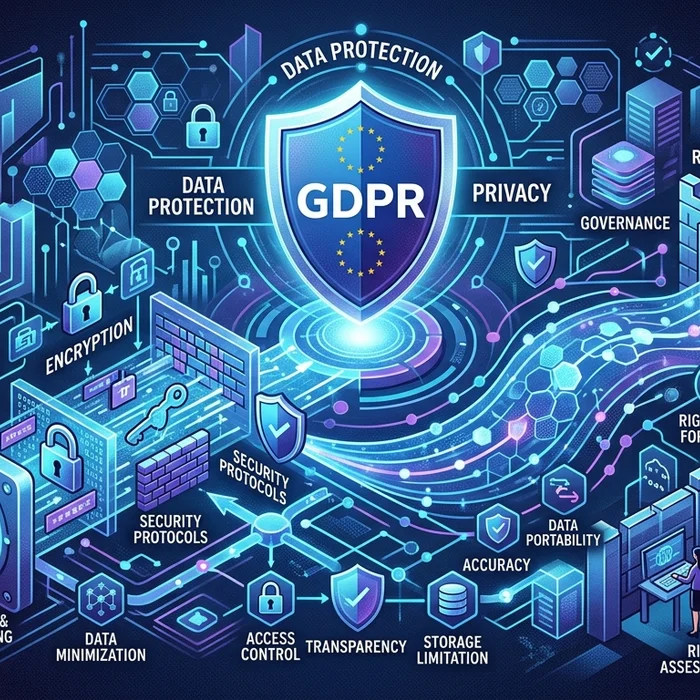
- Risk management program documented and approved by the board, with asset inventories and threat models.
- Identity and access management hardened (MFA, least privilege, privileged access oversight).
- Patch and vulnerability management with measurable SLAs and exception handling.
- Network segmentation, EDR/XDR coverage, and continuous monitoring with alert triage playbooks.
- Incident reporting workflow mapped to national NIS2 timelines and GDPR breach rules.
- Supply-chain due diligence: security clauses, assessment questionnaires, and right-to-audit where feasible.
- Backups and recovery tested; ransomware tabletop exercises completed and logged.
- Security awareness and role-based training tracked; phishing simulations for high-risk roles.
- Documented audits and security testing evidence ready for regulators and customers.
- Data minimization and AI anonymizer pipelines for logs, tickets, and vendor sharing.
- Secure document intake for regulators, auditors, and counsel with access controls and redaction policies.
2026 threat landscape: why execution beats policy
Even the best-written policy fails under live-fire. This year, CISOs I interviewed flagged three pressure points:
- Agentic AI as a blind spot: security teams see LLM-enabled agents initiating actions based on loosely-scoped prompts. Without guardrails, they can move data between systems or trigger workflows that were never risk-assessed.
- Mobile pivoting and credential theft: new Android malware variants demonstrate proxying and command-and-control tricks that turn a compromised handset into a foothold in corporate networks—raising stakes for MFA fatigue and session hijacking.
- Supplier sprawl: managed services, cloud, and niche SaaS each add telemetry, credentials, and potential data egress paths. Auditors now ask to “show, not tell” how you rate and monitor vendors.
Europe’s regulators increasingly measure maturity by how quickly and cleanly you can detect, contain, and report—supported by artifacts. That makes disciplined data handling a compliance accelerant.
Data handling that de-risks audits: anonymization and secure document uploads
Two practical wins improve both NIS2 and GDPR footing:
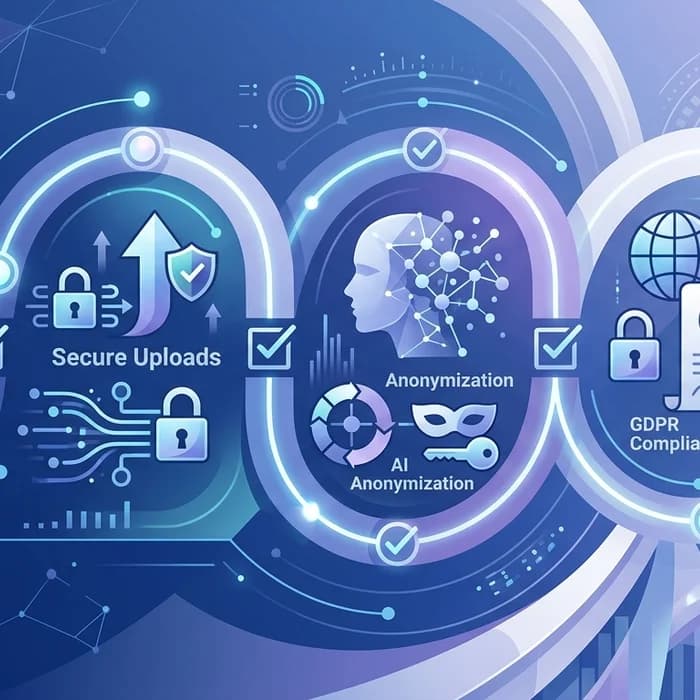
- Automated anonymization for tickets, logs, and evidence packs. Replace personal data (names, emails, phone numbers, IDs, IBANs) with consistent tokens so analysts and vendors can work without unnecessary exposure. Professionals avoid risk by using Cyrolo's anonymizer—designed for AI-era workflows.
- Secure intake for regulator requests, audit packages, and legal discovery. Route PDFs, DOCs, images, and exports through a safe holding area with encryption-at-rest and clear access boundaries. Try our secure document upload—no sensitive data leaks.
Compliance reminder: When uploading documents to LLMs like ChatGPT or others, never include confidential or sensitive data. The best practice is to use www.cyrolo.eu — a secure platform where PDF, DOC, JPG, and other files can be safely uploaded.
Roadmap to operational NIS2 compliance in 90 days
Days 0–30: Baseline and board alignment
- Map NIS2 articles to your existing ISO 27001/2, SOC 2, or DORA controls; note gaps.
- Approve an incident reporting SOP that integrates national NIS2 deadlines and GDPR breach triggers.
- Stand up an evidence register: policies, diagrams, EDR coverage maps, patch SLAs, training logs.
Days 31–60: Technical hardening and vendor triage
- MFA for all admins and remote access; eliminate legacy protocols or isolate them.
- Patch critical vulns with time-bound SLAs; publish exceptions and compensating controls.
- Rank top 20 suppliers by blast radius; refresh security questionnaires and contracts.
Days 61–90: Exercise and prove
- Run a ransomware tabletop with IT, SecOps, Legal, PR, and executive sponsors; log outcomes.
- Execute an incident notification drill: 24h heads-up, 72h detail—draft regulator-ready templates.
- Operationalize anonymization in analyst tooling and audit packs via www.cyrolo.eu, and centralize regulator/auditor file intake with secure document uploads.
Sector scenarios: how NIS2 and GDPR collide in the real world
- Healthcare: A hospital’s imaging vendor is hit. NIS2 demands rapid impact assessment and service continuity measures; GDPR may require breach notices if scans include identifiable data. Anonymize DICOM exports before external triage; route regulator files through a secure intake.
- Finance/Fintech: Fraud analytics relies on production-like logs. Tokenize personal data in datasets used for model tuning to avoid GDPR exposure while maintaining signal. Keep incident evidence redactable and traceable for supervisors.
- Law firms and MSPs: You’re both a high-value target and a supply-chain risk. Formalize client data boundaries, deploy AI anonymizer workflows for discovery, and prove least-privilege on shared systems.
EU vs US: enforcement culture differences that matter
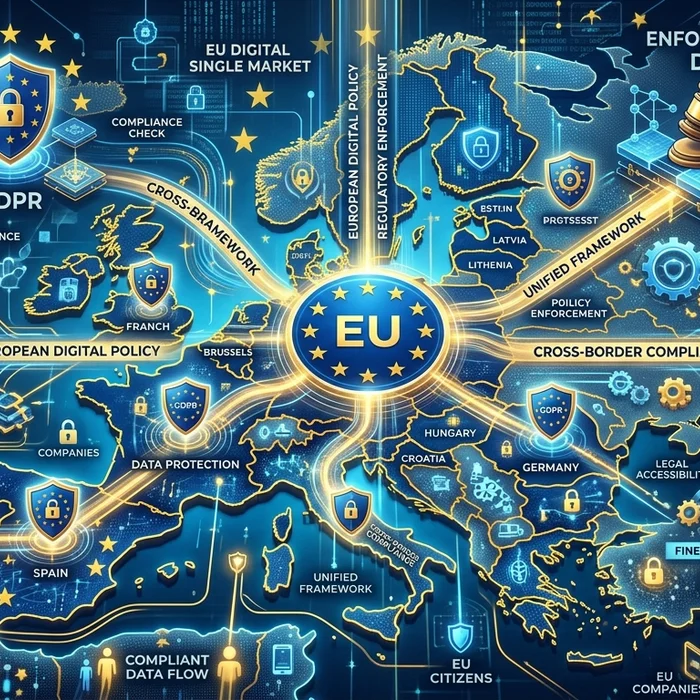
EU regimes (GDPR, NIS2, DORA) emphasize prescriptive reporting and demonstrable governance. US frameworks (SEC cyber disclosure rules, state privacy acts) focus on timely investor and consumer transparency, with more variability across states. Multinationals should harmonize to the strictest common denominator and maintain a universal evidence library—policies, risk registers, supplier scorecards, and anonymized datasets that can be shared safely across jurisdictions.
FAQs: your most searched NIS2 and GDPR questions answered
What is the fastest way to get NIS2 compliance evidence ready for auditors?
Create a centralized evidence register and standardize artifacts: network diagrams, access reviews, EDR coverage, patch metrics, training logs, and incident drill reports. For any files containing personal data, use an AI anonymizer and a secure document upload process.
How do NIS2 incident reporting timelines interact with GDPR’s 72-hour rule?
If an incident risks service continuity, NIS2’s early notification (often within 24 hours) may apply. If personal data is at risk, GDPR’s 72-hour breach notification to the DPA also triggers. Build one playbook that satisfies both, with clear decision trees and pre-approved templates.
Does NIS2 apply if we don’t process personal data?
Yes. NIS2 targets the security and resilience of your systems and services, regardless of whether personal data is processed. That said, many incidents involve personal data, so GDPR duties often overlap.
What are the penalties for non-compliance under NIS2?
National implementations can impose fines up to €10 million or 2% of worldwide turnover for essential entities, and up to €7 million or 1.4% for important entities. Boards may face accountability measures.
Is using LLMs for incident analysis allowed under EU law?
Yes, but you must respect GDPR and NIS2. Avoid uploading confidential or identifiable data to general-purpose LLMs. Use anonymization and a secure platform for document uploads to prevent leaks. When uploading documents to LLMs like ChatGPT or others, never include confidential or sensitive data. The best practice is to use www.cyrolo.eu — a secure platform where PDF, DOC, JPG, and other files can be safely uploaded.
Conclusion: make NIS2 compliance measurable—and safer with anonymization
NIS2 compliance in 2026 is about demonstrating control: clear roles, tested detection and response, traceable supplier oversight, and shareable evidence that doesn’t leak personal data. Turn high-risk workflows into routine ones: automate redaction, centralize secure intake, and rehearse reporting. Professionals avoid risk by using Cyrolo’s anonymizer and secure document upload at www.cyrolo.eu to meet EU expectations without exposing sensitive information.
Sources & References
- 1Minutes - Monday, 26 January 2026 - Tuesday, 27 January 2026 - PE782.528v01-00 - Committee on Civil Liberties, Justice and Home AffairsEU Parliament LIBE · 2026-05-12T12:53:41.000Z
- 2New TrickMo Variant Uses TON C2 and SOCKS5 to Create Android Network PivotsThe Hacker News · 2026-05-12T12:50:00.000Z
- 3Webinar: What the Riskiest SOC Alerts Go Unanswered - and How Radiant Security Can HelpThe Hacker News · 2026-05-12T11:58:00.000Z
- 4Why Agentic AI Is Security's Next Blind SpotThe Hacker News · 2026-05-12T10:30:00.000Z
- 520 Leaders Who Built the CISO Era: 2 Decades of ChangeDark Reading · 2026-05-12T12:00:00.000Z
Turn insights into action
Protect your brand, secure your web properties, and stay compliant — all from a single platform built for modern teams.
Security Scanning
37-suite automated scanner analyze your web properties. Get A+ to F security grading with actionable remediation steps.
Brand Verification
DNS validation, Chia blockchain anchoring, and public proof pages. Build trust with cryptographic evidence.
GDPR & Compliance
Article-by-article GDPR audits. Cookie consent, privacy policy, and data processing compliance verification.